The Cell: The Unit of Life
Every living thing begins its life as a single cell. A unicellular organism such as Amoeba feeds, breathes, moves and produces young, and all of that happens inside that one cell. The body of a multicellular organism is instead built from millions of tiny units. Those tiny units are called cells. The structure of an organism starts from cells, and its life processes are also carried out by cells. This is why the cell is called the structural and functional unit of the body of an organism.
A cell is the smallest structural and functional unit that builds the body of a living thing.
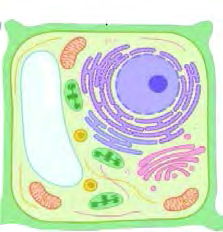
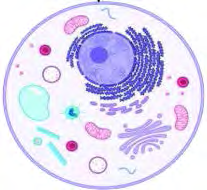
In a unicellular organism, life processes such as respiration, nutrition, excretion, growth, movement and reproduction are all completed inside one cell. In developed, multicellular organisms these different jobs are done by separate groups of cells. To carry out one particular job, cells of the same kind, or of different kinds, join together into a group.
From Cells to Tissues, Organs and Systems
Such a group of cells is called a tissue. Different tissues join to form an organ, such as a leaf, a root or a flower. A group of organs works together to do one special job, and such a group of organs is called a system. In this way the body of an organism builds a ladder of organisation: cells make tissues, tissues make organs and organs make systems.
A tissue is a group of cells of the same kind, or of different kinds, formed to carry out one particular job.
To keep an organism's life cycle running, many activities go on inside its body all the time. All of these activities of a living thing are called life processes. In developed organisms a separate system has evolved to run each life process.
Nutrition: taking in and using food
Respiration: releasing energy from food
Photosynthesis: green parts making food
Transport: moving water, minerals and food
Excretion: throwing out waste materials
Reproduction: producing young of one's own kind
All the activities that keep an organism's life cycle running, such as nutrition, respiration, transport, excretion and reproduction, are called life processes.
Histology is the branch of biology that studies tissues.
Plant bodies and animal bodies contain tissues doing different jobs, so tissues are of two types: plant tissue and animal tissue.
Plant Tissue
Just as in the thin peel of an onion, every part of a plant body is made of groups of similar or different plant cells. Such a group of cells is called plant tissue. A plant body holds many kinds of plant tissue to run its many different jobs. Based on whether or not their cells can divide, plant tissues are divided into two kinds: meristematic tissue and permanent tissue.
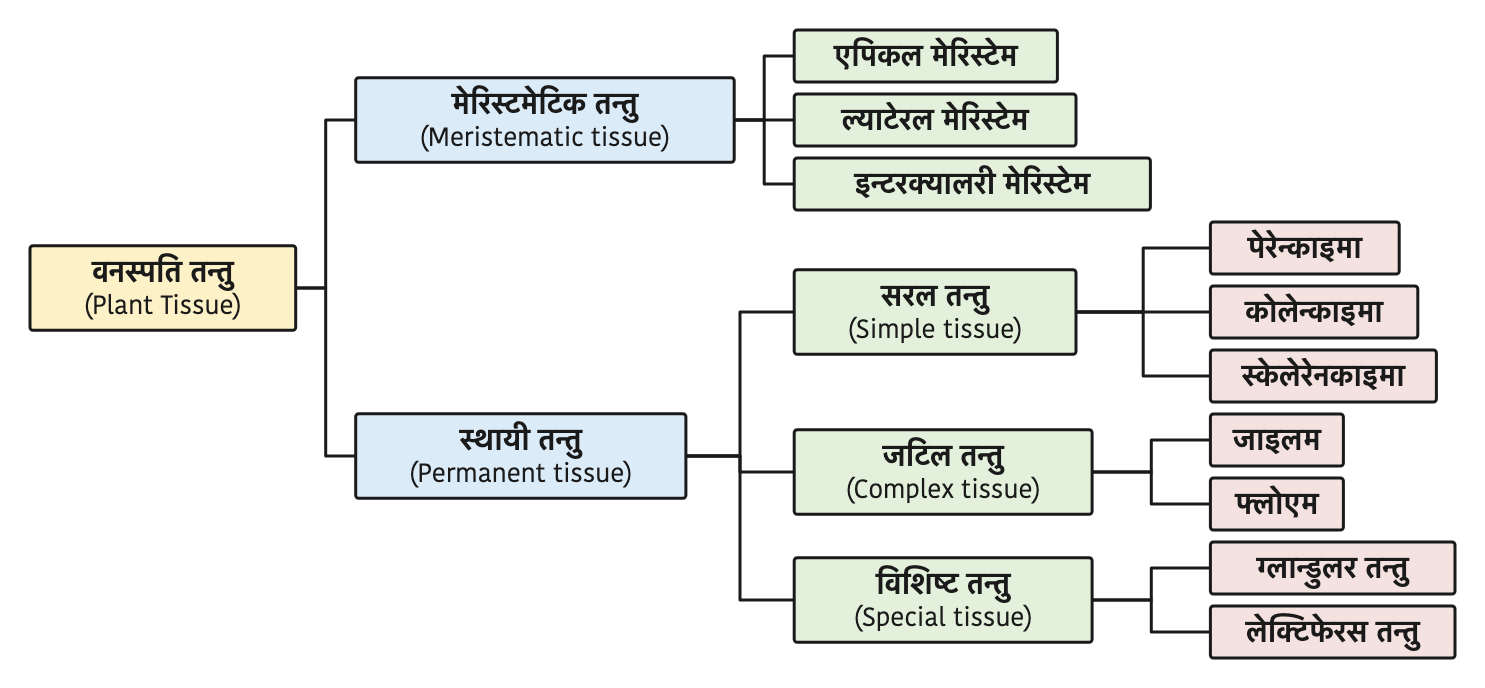
Meristematic Tissue
Among the many kinds of cells in a plant body, some cells keep the ability to divide. The process in which a mature cell divides and forms new cells is called cell division. Tissue made of cells that can divide is called meristematic tissue. In this tissue there are no intercellular spaces, the cell walls are thin, and each cell has a large nucleus and dense cytoplasm. Meristematic cells divide and turn into cells of other types. This tissue is found in the growing regions of a plant, and its main job is the growth and development of the plant. Based on where it is found, meristem is of three types: apical meristem, lateral meristem and intercalary meristem.
Meristematic tissue is plant tissue made of cells that have the ability to divide.
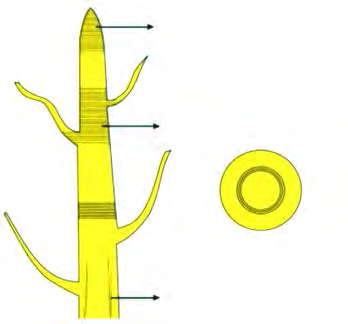
Apical meristem: when a plant grows, it is the tip that is seen lengthening. The meristematic tissue found at the tips of the stem and root is called apical meristem. It increases the length of the stem and root, and because of that the plant grows taller. If the tip of a plant is pinched off, that plant's height stops increasing.
Lateral meristem: meristematic tissue also lies along the sides of the root and the stem. The meristematic tissue lying inside the bark of the stem and root, along the side and parallel to the main axis, is called lateral meristem. It increases the thickness of the root and the stem.
Intercalary meristem: meristematic tissue is also present just above and below the nodes on a plant's stem. That tissue is called intercalary meristem. It increases the length of the internodes.
| Meristem | Where it sits | Main job |
| Apical meristem | At the tips of the stem and root | Increases length, so the plant grows taller |
| Lateral meristem | Along the sides of the stem and root, parallel to the main axis | Increases the thickness of the root and stem |
| Intercalary meristem | Just above and below the nodes | Increases the length of the internodes |
The apical meristem lives in the tip itself. So a plant whose tip is pinched off stops growing taller, though the meristems along its sides keep it growing thicker.
Permanent Tissue
Once the cells of meristematic tissue lose their ability to divide, they turn into permanent tissue. The cells found in permanent tissue normally do not divide. They have a definite shape and size. Their cell walls may be thick or thin, and the tissue may be made of living cells or of dead ones. The permanent tissues found in plants are of three types: simple tissue, complex tissue and special tissue.
Permanent tissue is plant tissue made of cells that have lost the ability to divide and have taken a definite shape and size.
Looking at Tissue: A Temporary Slide
The tissues inside a plant cannot be seen with the bare eye. To look at them, an extremely thin section of the stem is cut and placed under a microscope. The thinner the section, the more light passes through it and the more clearly the cells show. A stain such as safranin colours the cell walls, which makes the build of the tissue stand out. Glycerine keeps the section from drying, and once a cover slip is lowered on so that no air gets in, the temporary slide is ready.
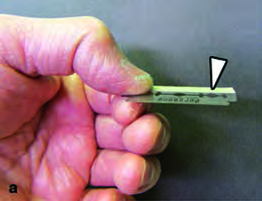
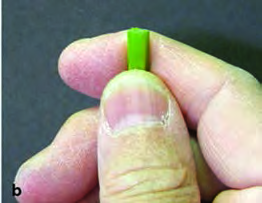
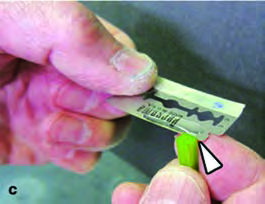
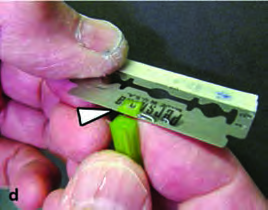
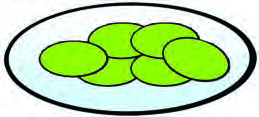
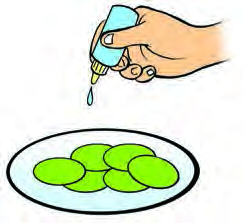
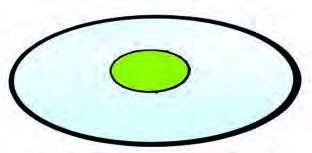
While cutting sections, keep the edge of the blade pointed away from your fingers and cut only the stem. Take your teacher's help whenever you need it.
Simple Tissue
Simple permanent tissues are made of cells of only one kind, so their build is very simple. These tissues protect the plant, support it, and make and store food materials. According to the build of their cells they are of three types: parenchyma, collenchyma and sclerenchyma.
Parenchyma
Parenchyma tissue is made of living cells with thin walls. Its cells are round and oval in shape, and there are intercellular spaces between them. This kind of tissue lies in the soft parts of the stem, root, leaves, flowers and fruit. It is also found in the pith, and inside the xylem and phloem.
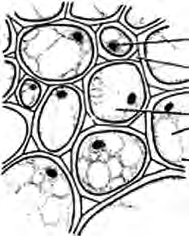
The parenchyma of leaves and green stems carries chloroplast, and that tissue is also called chlorenchyma. It makes food by the process of photosynthesis, and so it helps the plant make food, store it and stay well nourished. In the leaves of plants that float on water, the spaces between the cells are filled with air. Parenchyma with air pockets between its cells is called aerenchyma, and it helps hydrophytes, the plants that live in water, to float.
Chlorenchyma is parenchyma tissue that contains chloroplast.
Aerenchyma is parenchyma tissue with pockets of air between its cells.
Collenchyma
This tissue is made of living cells with thickened cell walls. Carbohydrate materials such as cellulose and pectin collect at the corners of the cells, which is what makes the walls thick. This tissue lies in the epidermis of the stem and in the petiole of leaves. Its main job is to bring mechanical support to the growing organs of a plant and to give the plant flexibility. Some collenchyma tissue carries chloroplast, and that tissue helps in photosynthesis.
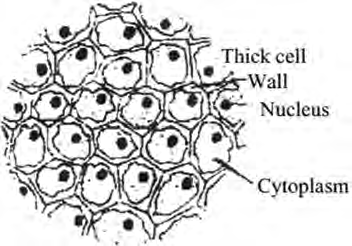
Sclerenchyma
This tissue is made of dead cells with thick cell walls. The cells are long, narrow and spindle shaped. The wall is built of cellulose or of lignin, and the cells contain no protoplasm. In the middle of each cell there is only a narrow empty space, the narrow lumen. This tissue is found in the veins of the root, stem and leaves, and in the layer that forms the hard covering of fruits and seeds. By shape, plants carry two kinds of sclerenchyma: fibres and sclereids. Its main job is to make the plant firm and hold it upright, and it gives the plant both flexibility and hardness.
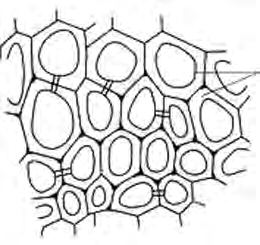
| Tissue | Cells | Cell wall | Where it is found | Main job |
| Parenchyma | Living | Thin | Soft parts of stem, root, leaves, flowers and fruit; pith, xylem and phloem | Making and storing food |
| Collenchyma | Living | Thickened at the corners by cellulose and pectin | Epidermis of the stem and petiole of leaves | Giving mechanical support and flexibility |
| Sclerenchyma | Dead | Thick, of cellulose or lignin | Veins, and the hard covering of fruits and seeds | Making the plant firm and holding it straight |
Complex Tissue
Complex tissues are made of groups of living and dead cells of different kinds. They are built from two or more simple tissues joined together, which is why their build is somewhat complex. Their main job is conduction, carrying materials through the plant, so they are also called vascular tissue. Complex tissue is of two types: xylem and phloem.
Vascular tissue is complex tissue built from two or more simple tissues whose main job is conduction.
Xylem
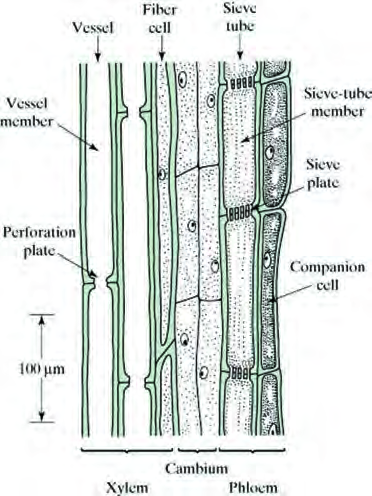
Xylem tissue is made of dead cells. It is built from four kinds of elements: vessels, tracheids, xylem fibre and xylem parenchyma. Because xylem gives the plant its hardness, it is also called wood. This tissue lies in the inner layers of the root, stem, leaves and other parts of the plant. Xylem carries water and minerals from the root to the different parts of the plant.
Phloem
Phloem tissue is made of living cells. It too is built from four kinds of elements: sieve tubes, companion cells, phloem parenchyma and phloem fibre. This tissue is found in all parts of the plant, such as the root, stem and leaves. It is also called bast. It carries the food prepared in the leaves to the different parts of the plant, and along with storing food it also gives the plant mechanical support.
| Point | Xylem | Phloem |
| Cells | Made of dead cells | Made of living cells |
| Elements | Vessels, tracheids, xylem fibre, xylem parenchyma | Sieve tube, companion cell, phloem parenchyma, phloem fibre |
| What it carries | Water and minerals from the root to the parts of the plant | Food made in the leaves to the parts of the plant |
| Other name | Wood | Bast |
Students very often swap the jobs of xylem and phloem. Xylem is made of dead cells and carries water and minerals from the root. Phloem is made of living cells and carries the food made in the leaves.
Special Tissue
Plants carry particular tissues for doing various special jobs, and these are called special tissues. They are formed when simple tissues transform. The cells of these tissues do the work of excretion and secretion. They are of two types: glandular tissue and lactiferous tissue.
Glandular tissue is made of a group of glandular cells of one kind. These tissues produce enzymes, hormones, digestive juices, oil, resin, gum and other such materials. They are found in plants such as datura, holy basil and pine.
Lactiferous tissue is made of cells of a special kind. It produces latex, a milky liquid, and gum is made from latex. Lactiferous tissue is found in plants such as the peepal tree, poinsettia, jackfruit, the rubber plant and madar, all of which ooze a milky juice when cut.
The full lesson is waiting for you
The notes are free to read in full. A free account opens the rest of the practice, and tracks your progress and confidence score for every subject. Presentations and videos need approval from Learn Yeti.