Glands and the glandular system
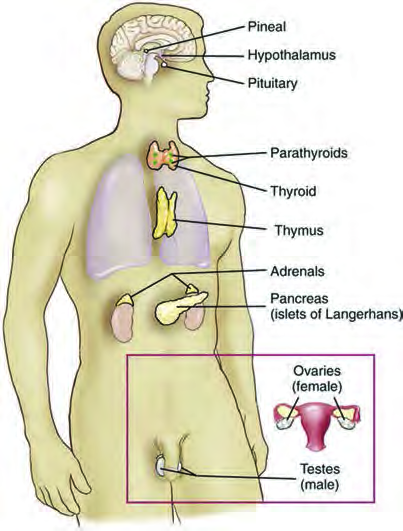
The human body contains many glands. A gland is a structure that makes and releases a secretion the body needs. Glands produce hormones, enzymes and juices. These secretions make the different activities of the body run smoothly and keep us healthy. The secretions of this system help in digestion, in reproduction and in the removal of wastes from the body.
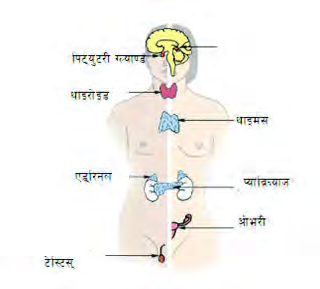
The group of all the different glands found in our body is called the glandular system.
Glands are divided into two kinds according to the path their secretion takes to reach its place of work: exocrine glands, whose secretion travels along a duct, and endocrine glands, which have no duct at all.
Exocrine glands
A gland whose secretion travels along its own separate duct to the place where it is needed is called an exocrine gland.
The sweat glands, the salivary glands and the tear glands are examples of exocrine glands. Sweat reaches the surface of the skin through a duct, saliva reaches the mouth through a duct and tears reach the eye the same way. The juices these glands release play an important part in life processes such as digestion and excretion. Such a juice may also contain enzymes, and an enzyme works as a biological catalyst, speeding up the chemical reactions of the body.
Endocrine glands and hormones
An endocrine gland has no duct to carry its secretion away. What it makes passes straight into the blood and is carried through the blood vessels to different parts of the body. This secretion is called a hormone. A hormone is made in one gland, but its place of work is somewhere else in the body. That is why a hormone is called a chemical messenger. Hormones stimulate the cells of the body and the work of other glands.
A hormone is the secretion of an endocrine gland. All the endocrine glands taken together make up the endocrine gland system.
The pituitary gland, the thyroid gland, the parathyroid glands and the adrenal glands are all endocrine glands. When the amount of a hormone rises or falls away from what the body needs, problems appear. Growth and development suffer, the ability to reproduce falls, and different kinds of diseases take hold.
Some glands do both jobs at once. Part of what they make mixes into the blood and reaches its workplace that way, while another part travels along a duct. Because such glands produce both enzymes and hormones, they are called mixed glands. The pancreas and the gonads are examples of mixed glands.
Functions of hormones
- Hormones bring about physical, mental and psychological development.
- Hormones stimulate and control the working of different organs.
- Hormones control the production of sperm and egg cells.
- Hormones develop the sexual characteristics of a person.
- Hormones control the ability to reproduce.
- Hormones balance the amount of calcium and phosphorus in the body.
Glands, positions and hormones at a glance
| Endocrine gland | Place in the body | Hormones produced |
| Pituitary gland | At the base of the brain | Growth hormone, stimulating hormones |
| Thyroid gland | Inside the neck | Thyroxine, triiodothyronine, calcitonin |
| Parathyroid glands | In the neck, behind the thyroid gland | Parathormone |
| Adrenal glands | On the upper part of each kidney | Adrenaline, cortisone |
| Pancreas | Behind the stomach, close to the duodenum | Insulin, glucagon |
| Gonads: testes and ovaries | Lower part of the abdomen | Testosterone, oestrogen, progesterone |
Pituitary gland
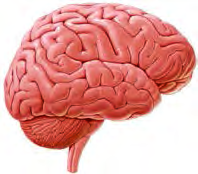
The pituitary gland is about the size and shape of a pea. It sits inside the skull at the lower part of the brain. It mainly produces stimulating hormones and growth hormone. The chief work of its hormones is to bring about physical and mental growth and to stimulate the other glands into action. Because it coordinates and controls the work of every other gland, the pituitary is also called the master gland.
Growth hormone drives a person's physical and mental growth. If too little of it is produced, the person remains very short. This condition is called dwarfism. If the body produces too much of it, the person grows unusually tall. That condition is called gigantism.
Thyroid gland
The thyroid gland is shaped like a butterfly. It lies in the neck with one lobe spread on the right of the windpipe and one on the left, and the two lobes are joined by a thin membrane of connective tissue. This gland produces three hormones: thyroxine \( (T_4) \), triiodothyronine \( (T_3) \) and calcitonin.
Thyroxine affects the activity of the body's cells and drives physical growth and development. About 65% of the thyroxine hormone is iodine. Our food must therefore contain enough iodine, and this is why the salt we eat has iodine mixed into it. When iodine is lacking, the thyroid gland swells up in the neck. This swelling is called goitre.
When thyroxine falls short, the person becomes physically and mentally weak, the skin turns dry, sweating decreases, speech becomes slurred and the voice grows hoarse. When there is too much thyroxine, the rate of metabolism rises: the person sweats heavily, feels hungrier, loses weight, becomes mentally restless and the eyes begin to bulge outward. Calcitonin, the third hormone, carries extra calcium out of the blood and deposits it in the bones, keeping the amount of calcium in the blood balanced.
Since about 65% of thyroxine is iodine, using iodised salt in everyday food is enough to protect a person from goitre.
Parathyroid glands
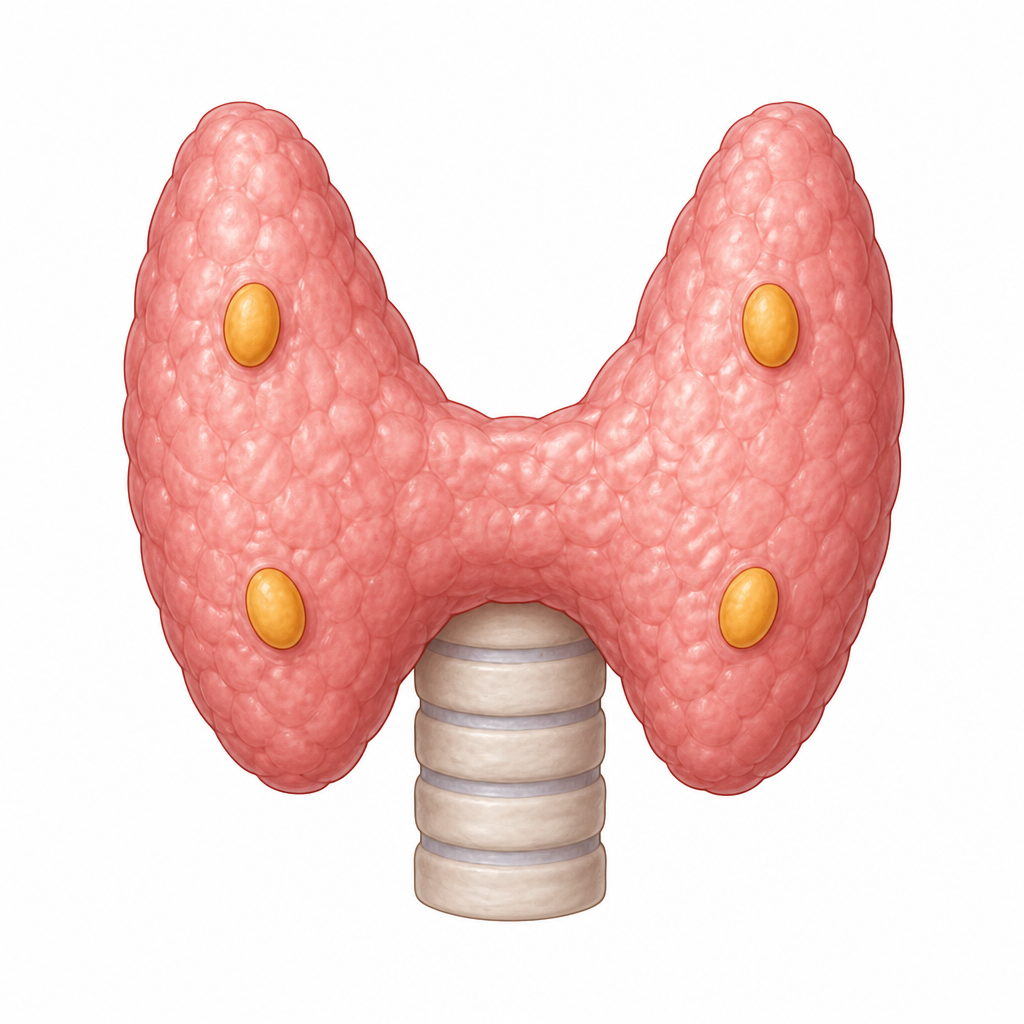
The parathyroid glands lie behind the thyroid gland, and there are four of them. They produce a hormone called parathormone. This hormone exchanges calcium between the blood and the bones and raises the amount of calcium in the blood. When there is too much parathormone, tumours form and stones develop in the kidneys. When there is too little, the calcium level of the blood falls and the muscles cramp and contract. This condition is called tetany.
Adrenal glands
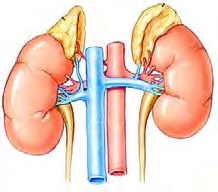
There is one adrenal gland on the upper part of each kidney. The adrenal glands produce the hormones adrenaline and cortisone. Adrenaline prepares the body to face a sudden danger: the moment a threat appears, it is this hormone that sets the heart racing and makes the body ready to act at once. Cortisone also does the work of a sex hormone. When adrenaline is produced in excess, blood pressure rises. When too little is produced, the person becomes weak, blood pressure falls, the sugar level of the blood drops and the person feels nausea.
Pancreas
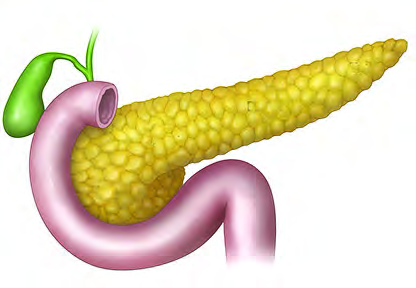
The pancreas is one of the largest glands in the human body. It lies behind the stomach, inside the loop of the duodenum, and it is 12 to 15 cm long. Because it produces both pancreatic juice and hormones, it is called a mixed gland. The pancreatic juice it makes contains several kinds of enzymes, and these enzymes help in digestion.
The two hormones the pancreas makes, glucagon and insulin, work against each other, so they are called antagonistic hormones. Insulin controls the amount of glucose in the blood and brings it down, while glucagon raises the amount of glucose in the blood. When the body lacks insulin, the glucose level of the blood climbs. This condition is called diabetes. A person with diabetes feels more hunger, more thirst, and passes urine more often. When there is too much insulin, the glucose level of the blood falls too far, and the person suffers dizziness, collapses, or has a stroke.
Students often swap the jobs of insulin and glucagon. Insulin lowers the glucose in the blood and glucagon raises it. Diabetes is caused by too little insulin, not by too much.
Gonads
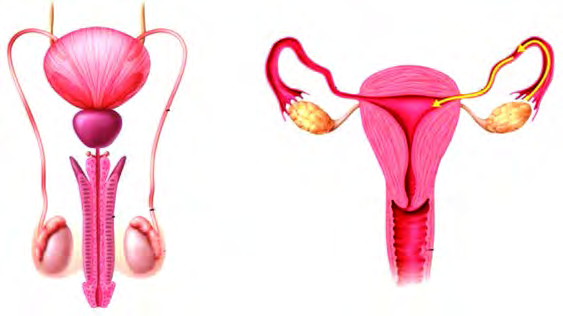
The testes of the male and the ovaries of the female are together called the gonads. Because the gonads make the reproductive cells and also produce sex hormones, they too are mixed glands.
Testes: the two ball shaped glands lying on the two sides of the scrotum of a male are called the testes. They produce semen and also the hormone testosterone. Testosterone helps in the production of semen and in the development of the secondary sexual characters of a man, such as the growth of the beard and moustache, the growth of the penis and the deepening of the voice.
Ovaries: the two egg shaped organs lying beside the oviducts on the two sides of a woman's lower abdomen are called the ovaries. The ovaries produce egg cells and also the sex hormones oestrogen and progesterone. These hormones help in the production of eggs and in the development of the sexual characters seen in a woman.
When hormones go wrong
The amount of every hormone has to stay right. The moment a hormone rises above or falls below what the body needs, a definite disease or condition appears. The table below joins the main disorders of this topic to their causes.
| Disease or condition | Cause | Gland concerned |
| Dwarfism | Too little growth hormone | Pituitary |
| Gigantism | Too much growth hormone | Pituitary |
| Goitre | Too little iodine in the food | Thyroid |
| Tetany | Too little parathormone, so blood calcium falls | Parathyroid |
| Diabetes | Too little insulin, so blood glucose rises | Pancreas |
The full lesson is waiting for you
The notes are free to read in full. A free account opens the rest of the practice, and tracks your progress and confidence score for every subject. Presentations and videos need approval from Learn Yeti.