We live among organic compounds
You wash your hands with soap in the morning, eat rice and lentils, put on a cotton shirt, then ride a diesel bus to school. One thing repeats through all of this. Soap, rice, lentils, cotton and diesel are all made of organic compounds. Most of the things we use every day contain compounds of carbon. If we go looking for where they hide, we find six big areas: food, clothing, medicine, energy production, agriculture and cosmetics. In this topic we walk through these six areas one by one.
Compounds that carbon forms with elements such as hydrogen, oxygen and nitrogen are called organic compounds. Carbohydrate, protein, methane and urea are examples.
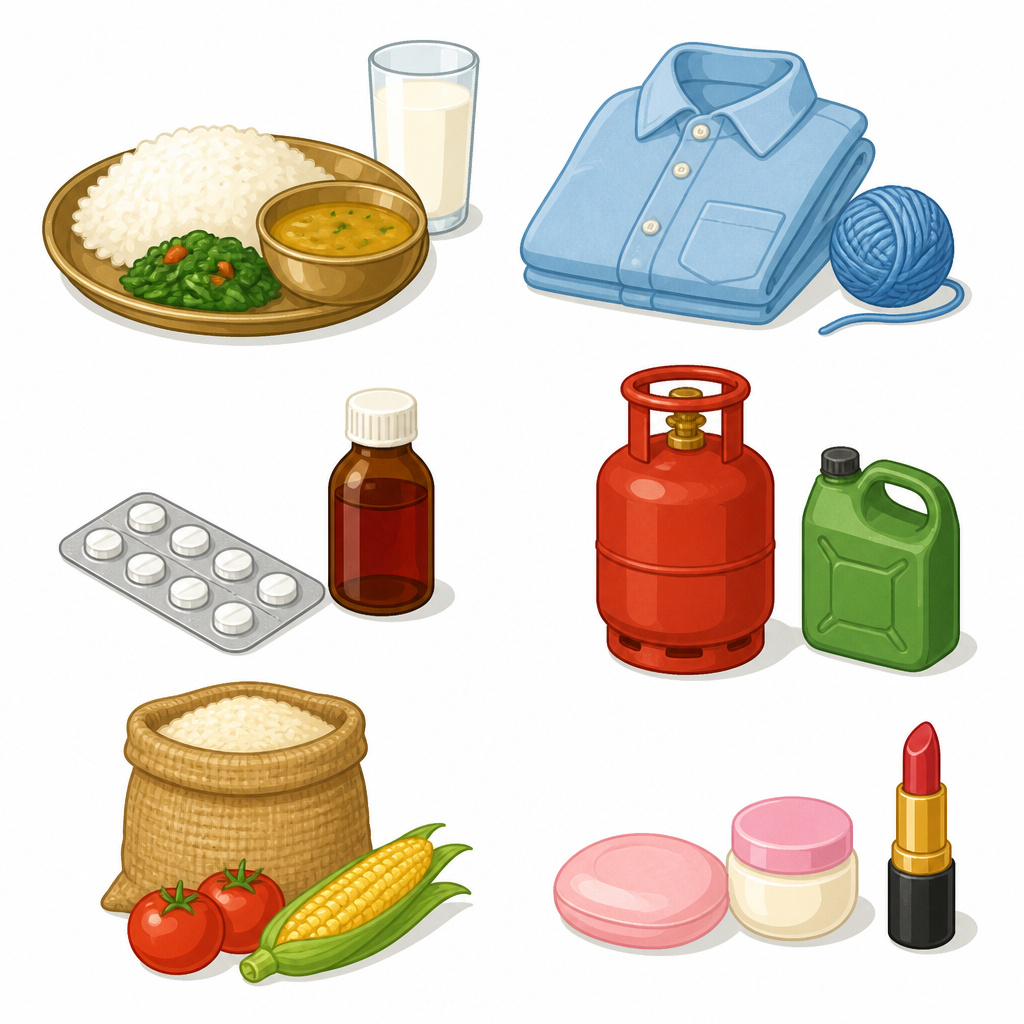
Most of the things we use in daily life are made of organic compounds, so a single day of our routine cannot run without them.
Food
In our daily life we eat lentils, rice, vegetables, fish, meat, milk, curd, fruit and more. All of these foods contain organic compounds such as carbohydrate, protein and vitamins. The carbohydrate in rice and bread gives the body energy to work. The protein in lentils, milk, fish and meat builds the body and repairs damaged tissue. The vitamins in vegetables and fruit give the body its power to fight disease. In other words, every dish on our plate is a store of organic compounds.
Clothing
The clothes we wear are made from materials of many kinds, such as cotton, silk, jute and wool. Cotton comes from a plant, jute from the bark of a plant, silk from the silkworm and wool from the fleece of sheep. All of these materials are made of different kinds of organic compounds. So from the sweater that keeps us warm in winter to the thin cotton shirt worn in summer, every fibre that covers our body is a gift of organic compounds.
Medicine
Most of the medicines we swallow or apply to the body when we fall ill are made from organic compounds. Whether it is a tablet that brings a fever down, a cough syrup, or an ointment spread on a wound, the main part of nearly all of them is a compound of carbon. Medicine factories combine different organic compounds to prepare new medicines. So even to stay healthy and to heal, we depend on organic compounds.
Energy production
Diesel, petrol, kerosene and spirit are substances made from organic compounds. They are used to produce energy and to run vehicles. Buses and trucks burn diesel, motorcycles burn petrol, lamps and stoves in villages burn kerosene, and spirit is burned in laboratories. Beyond these, the LPG gas burned in kitchens and even firewood are burning organic materials too. All of them catch fire easily and release a large amount of heat energy when they burn, which is why the whole world uses them as fuels.
Never burn coal or firewood inside a room with the windows and doors shut in winter. When oxygen runs short, poisonous carbon monoxide gas forms, and it can take a person's life.
Farm produce and materials used in agriculture
Farm products of many kinds, such as lentils, rice, vegetables and fruit, contain organic compounds like carbohydrate, protein and vitamins. Every grain a farmer brings home from the field is really a heap of organic compounds built by a plant. And that is not all: the various feed materials, pesticides and vitamins used in farming also contain organic compounds. The pesticide that protects a crop from insects and the feed given to farm animals both contain compounds of carbon. So both what grows in the field and what is put into the field are tied to organic compounds.
Cosmetics
Most of the cosmetics used for beauty contain organic compounds. The cream applied to the face, the shampoo that washes hair, the soap for hands and face, the lipstick and the perfume are all built mainly from compounds of carbon. Almost every item we reach for while getting ready in front of a mirror has organic compounds doing the work.
The six areas at a glance
Placing all six areas in one table shows clearly how far organic compounds spread through our life.
| Area | Examples | Organic compounds |
| Food | Lentils, rice, vegetables, fish, meat, milk, curd, fruit | Carbohydrate, protein, vitamins |
| Clothing | Cotton, silk, jute and woollen cloth | Organic compounds that form the fibres |
| Medicine | Medicines swallowed or applied to the body | Organic compounds the medicines are made from |
| Energy production | Diesel, petrol, kerosene, spirit | Organic compounds that burn as fuel |
| Agriculture | Crops, pesticides, feed materials | Carbohydrate, protein, vitamins and others |
| Cosmetics | Cream, soap, shampoo, lipstick | Organic compounds the cosmetics are made from |
Why petrol removes grease
One interesting property of organic compounds is useful in everyday life. Organic compounds usually do not dissolve in water, but they dissolve easily in organic solvents. If grease or oil stains your clothes, soapy water alone struggles to remove it, because grease is an organic substance and it does not dissolve in water. Put a little petrol on the same stain and the grease dissolves into the petrol and lifts away, because petrol is itself an organic solvent. This rule, that organic substances dissolve in organic solvents, is what cleans machine parts and removes stains from cloth.
An organic substance dissolves in an organic solvent, not in water. That is why petrol removes a grease stain.
The full lesson is waiting for you
The notes are free to read in full. A free account opens the rest of the practice, and tracks your progress and confidence score for every subject. Presentations and videos need approval from Learn Yeti.