The Same Carbon, the Same Chemistry
The coal burning in a stove, the graphite inside a pencil and the diamond set in a ring look nothing like one another. Yet all three are made of a single element, carbon. Their outward qualities such as colour, shine and hardness differ, but the atoms that take part in a chemical reaction are carbon atoms in every case. The way an element behaves when it reacts with other substances is called its chemical property, and this behaviour belongs to the atoms, not to the shape of the object. Burn graphite or burn a diamond, and in the end the very same gas is produced.
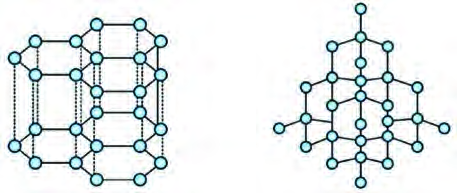
Carbon shows four main chemical properties. Each one is examined below, together with its equations.
- Combustion, that is, burning in oxygen
- Reaction with metals to form carbides
- The reducing property
- Reaction with steam to form water gas
Combustion
Carbon burns in oxygen, and what it burns into is decided by how much oxygen is available. In the presence of plenty of oxygen, carbon burns completely and gives carbon dioxide along with heat. This is why charcoal in a stove with a good air supply burns with a bright flame:
\[ C + O_2 \rightarrow CO_2 + \text{heat} \]
When only a little oxygen is available, the carbon cannot burn completely and carbon monoxide is formed instead:
\[ 2C + O_2 \rightarrow 2CO + \text{heat} \]
The amount of oxygen decides the product. Plenty of oxygen gives carbon dioxide, and limited oxygen gives carbon monoxide.
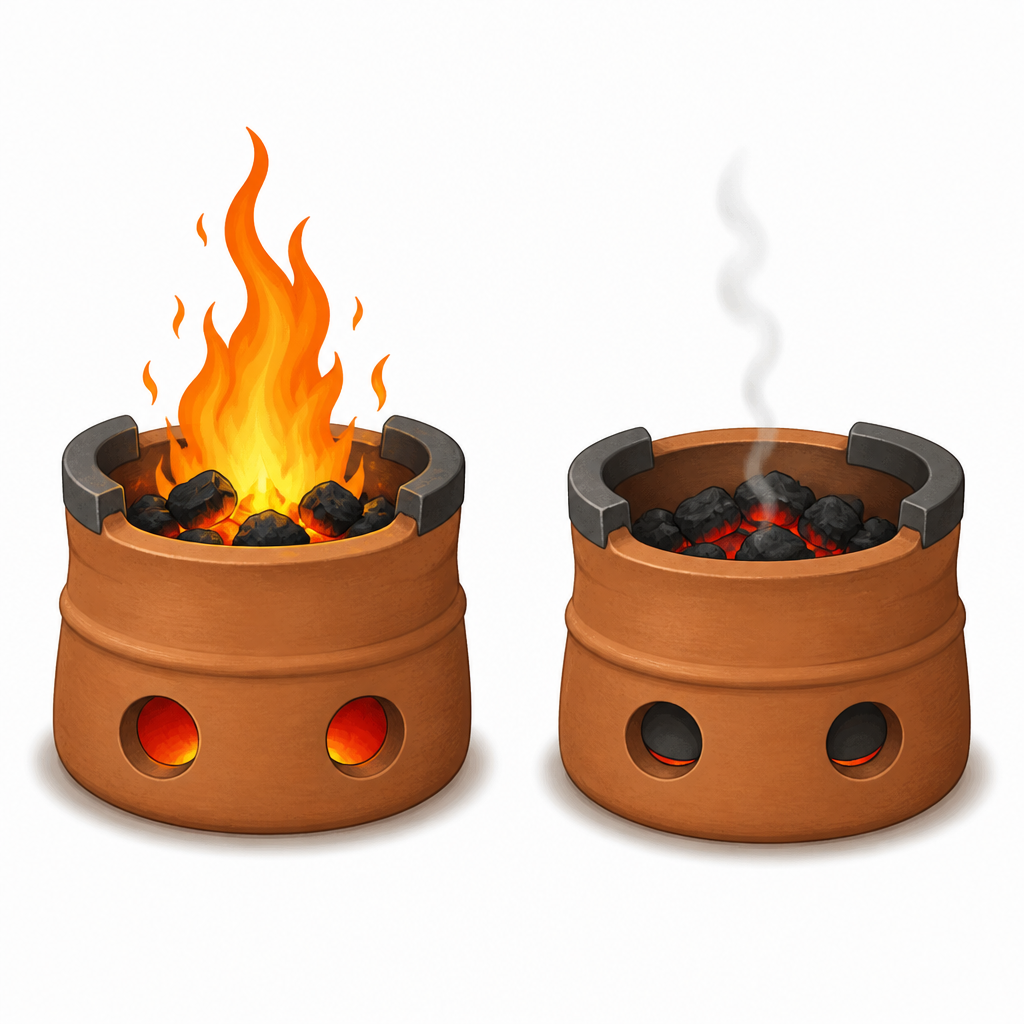
Carbon monoxide is a colourless, odourless and poisonous gas. When coal burns in a closed room, the oxygen runs low, this gas forms, and it can kill a sleeping person. A room where coal or wood is burnt must always have a way for fresh air to move in and out.
Reaction with Metals: Carbides
When active metals such as aluminium, iron, lithium and calcium are heated with carbon, the carbon reacts with them and forms metal carbides. In words: active metal + carbon → metal carbide.
A compound formed when a metal combines with carbon is called a carbide.
Heating aluminium with carbon gives aluminium carbide:
\[ 4Al + 3C \xrightarrow{\text{heat}} Al_4C_3 \]
Heating iron with carbon gives iron carbide:
\[ 3Fe + C \xrightarrow{\text{heat}} Fe_3C \]
Heating lithium with carbon gives lithium carbide:
\[ 2Li + 2C \xrightarrow{\text{heat}} Li_2C_2 \]
Heating calcium with carbon gives calcium carbide:
\[ Ca + 2C \xrightarrow{\text{heat}} CaC_2 \]
A carbide and a carbonate are not the same thing. A carbide contains only a metal and carbon, such as CaC₂. A carbonate contains oxygen as well as carbon, such as CaCO₃. Swapping these two names is a mistake many students make in exams.
Reducing Property
The chemical process of removing oxygen from the oxide of an element is called the reducing property.
Carbon itself is an element that is eager to join with oxygen. So when carbon is heated with the oxide of a less active metal, it pulls the oxygen of that oxide towards itself and sets the metal free. In other words, carbon helps to extract metals from the oxides of less active metals. In words: metal oxide + carbon → metal + carbon monoxide. Iron, zinc and lead are freed from their oxides in exactly this way:
\[ Fe_2O_3 + 3C \xrightarrow{\text{heat}} 2Fe + 3CO \]
\[ ZnO + C \xrightarrow{\text{heat}} Zn + CO \]
\[ PbO + C \xrightarrow{\text{heat}} Pb + CO \]
Carbon also reacts with some non metal oxides. Here the oxygen is removed and a carbide is formed as well. Heating silicon dioxide with carbon gives silicon carbide:
\[ SiO_2 + 3C \xrightarrow{\text{heat}} SiC + 2CO \]
In the same way, heating calcium oxide with plenty of carbon gives calcium carbide:
\[ CaO + 3C \xrightarrow{\text{heat}} CaC_2 + CO \]
The substance that takes away another substance's oxygen is the reducing agent. Because carbon is cheap and easy to find, it is widely used for extracting metals.
Reaction with Steam: Water Gas
If steam is passed over carbon heated to a temperature of about 1000°C, the carbon pulls the oxygen out of the steam. Carbon monoxide and hydrogen gas are produced:
\[ C + H_2O \rightarrow CO + H_2 \]
The mixture of carbon monoxide gas and hydrogen gas is called water gas.
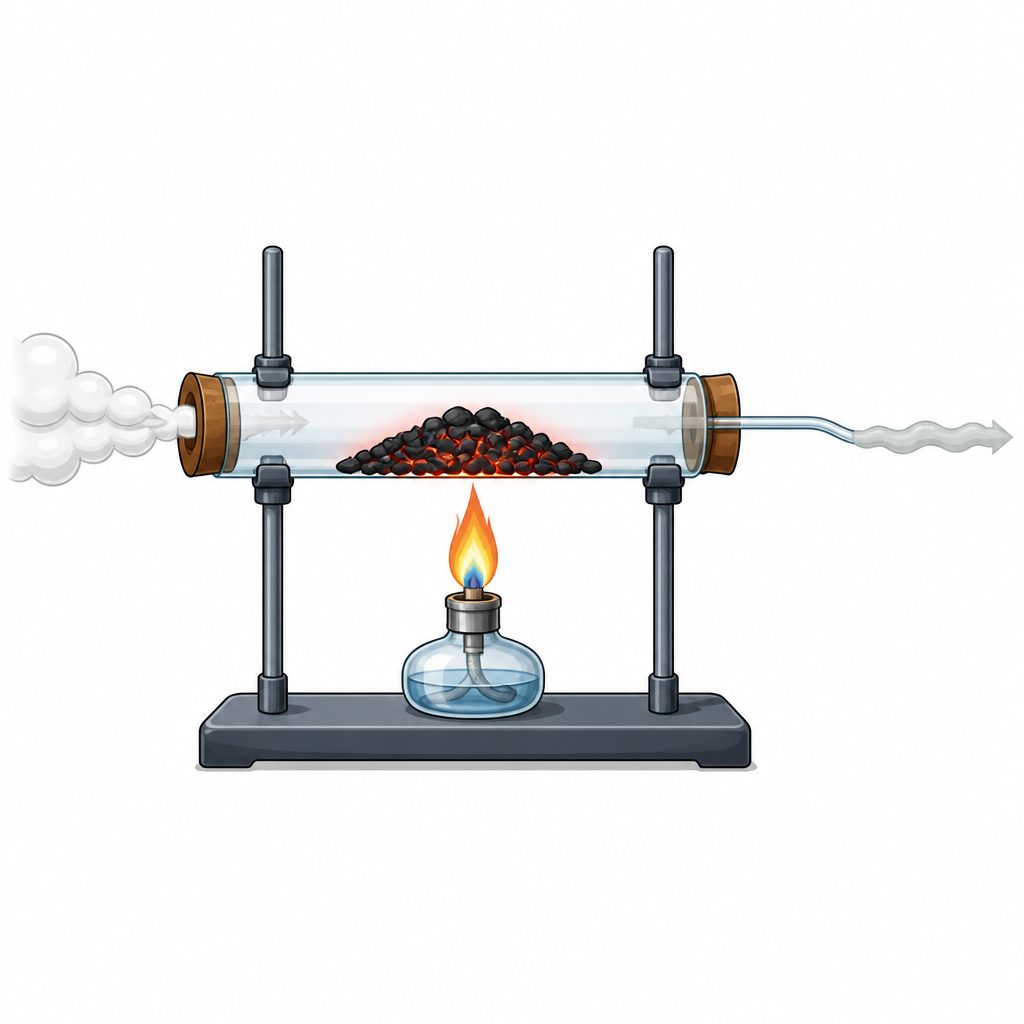
Carbon monoxide and hydrogen are both gases that can burn, so water gas is used as a fuel in industry. Notice that here too the carbon has snatched the oxygen, this time from water, so this reaction is another example of carbon's reducing property at work.
The Four Properties at a Glance
| Property | Reacts with | Product | Example |
| Combustion | Oxygen | CO₂ or CO, with heat | C + O₂ → CO₂ + heat |
| Reaction with metals | Active metals | Metal carbide | Ca + 2C → CaC₂ |
| Reducing property | Metal oxides | Metal and CO | ZnO + C → Zn + CO |
| Reaction with steam | Steam, at about 1000°C | CO + H₂ (water gas) | C + H₂O → CO + H₂ |
Looking at the four properties side by side, one common thread appears. In combustion carbon joins with oxygen itself, in its reducing property it snatches oxygen from other substances, and in the steam reaction it pulls the oxygen out of water. Most of carbon's chemical behaviour can be understood from this one attraction towards oxygen. The reaction with metals follows a different pattern, where carbon joins directly with a metal to make a carbide.
The full lesson is waiting for you
The notes are free to read in full. A free account opens the rest of the practice, and tracks your progress and confidence score for every subject. Presentations and videos need approval from Learn Yeti.