Things that leave a black mark
The coal that burns in a stove, the soot that collects on the bottom of a cooking pot and the charcoal made by charring wood are all things we see around the house. All three have the same colour, a deep black, and all three leave a black stain on the finger that touches them. This is not a coincidence. Coal, soot and charcoal are all made of carbon, and that is why they are black. Three things found in three different places are pointing us towards one single element.
Burning things tell the same story. Firewood gives off black smoke as it burns. A burning candle sends up a plume of black smoke. Sugar left on heat chars into a black lump. Smoke, soot and char: where does all this black material come from? Every one of these examples raises the same question: what is this black substance, and where is it hiding?
What kind of element carbon is
The word carbon comes from Latin, where it means charcoal. The name itself points at the element's most familiar form. Carbon is generally black in colour and it burns easily in air. It is not a metal; it is a non-metal. People today make heavy use of diamond, graphite and other materials that are built of carbon and nothing else. Carbon is also the main element of every organic compound, which is why it is so widely studied and so widely used.
Carbon is an unusual black coloured non-metal whose atomic number is 6 and whose atomic weight is 12.
Atomic number 6 and atomic weight 12 are like carbon's identity card. Learn both, and keep them apart in your mind, because one counts the protons inside the atom while the other states the atom's weight.
The clue in the black smoke
When carbon burns, it gives off a black plume or black smoke along with heat and light. This behaviour hands us a simple way of testing whether a substance contains carbon. If an object gives off a black plume or black smoke while burning, and the solid left behind after burning is black, then we know that the substance contains carbon. The black smoke of firewood, the sooty plume of a candle and the black char of overheated sugar are all examples of this one rule.
A substance that gives off black smoke while burning and leaves a black solid behind afterwards contains carbon. This is the simple test for recognising carbon.
Do any burning or heating only under the supervision of a teacher or a guardian. A heated spoon and melted sugar are extremely hot, and melted sugar sticks to skin, so never touch either of them.
Carbon found as the element itself
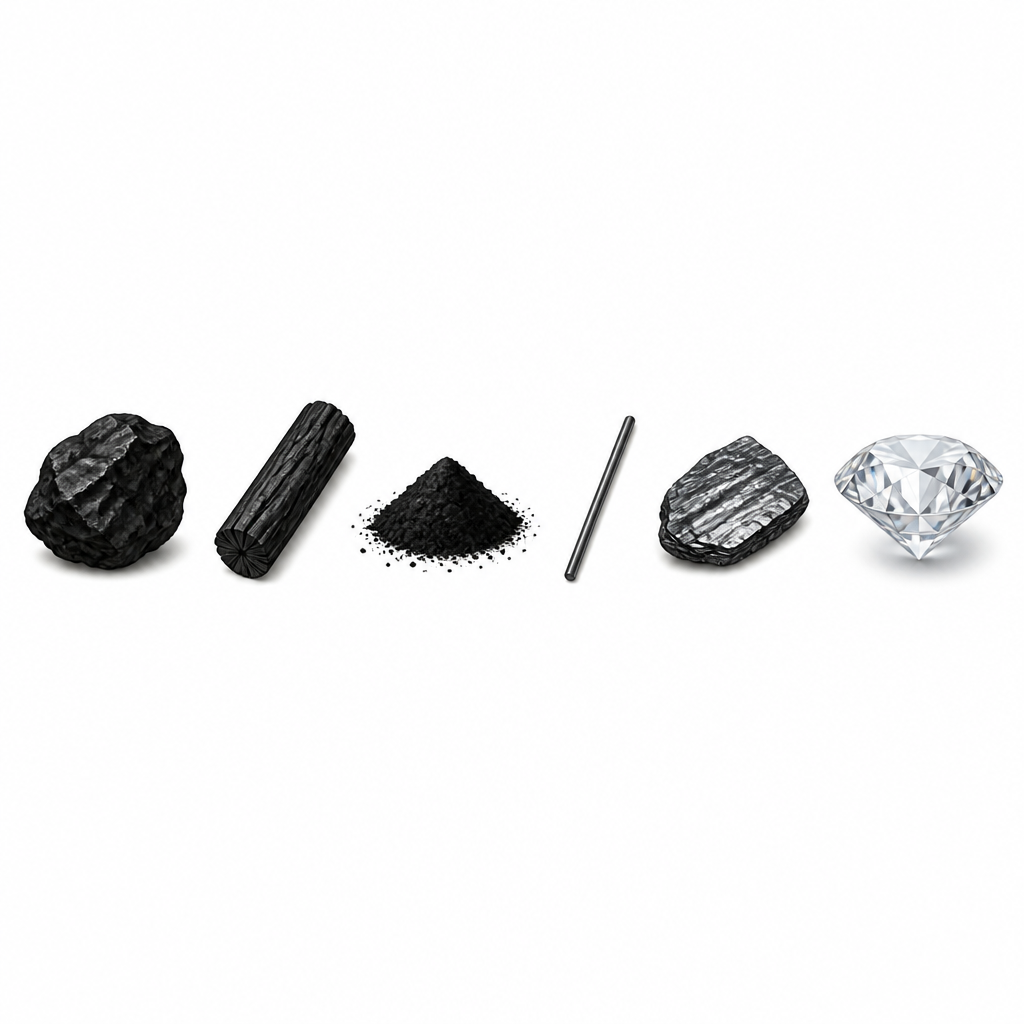
In some places carbon is found on its own, as the pure element, not joined to any other element. Coal, soot and charcoal are the most familiar examples. The lead inside a pencil and the black rod inside a dry cell are also made of carbon. Diamond, graphite and graphene are likewise materials built of carbon and nothing else. Although they are all one element, these materials look and behave very differently: charcoal cooks food, graphite writes in a pencil, and diamond sparkles in jewellery.
Sources of carbon
The body of every kind of living creature contains carbon in the form of many different compounds. That is why carbon is called the basis of the structure of living things. Carbon does not stop at living bodies either. The food we eat, the clothes we wear, and the tables, chairs, pens and pencils we use all contain carbon compounds. From the moment we wake to the moment we sleep, most of the things we touch carry carbon in one form or another.
The sources of carbon can be sorted into two main groups. First come the sources where carbon exists as the pure element. Second come the sources where carbon has combined with other elements to form compounds. The compounds themselves fall into two families: inorganic compounds and organic compounds.
Carbon as inorganic and organic compounds
As inorganic compounds, carbon is found in carbonates, bicarbonates and carbides, in minerals and rocks, and in gases such as CO₂ and CO. As organic compounds, carbon sits inside countless things of daily life: the carbohydrates and proteins in food, fatty substances such as oil and ghee, petrol, urea, vitamins, medicines, and even silk, paper and soap. Gases such as methane, ethane and LPG are organic compounds too. The table below gathers these sources in one place:
| Form in which carbon is found | Examples |
| As the free element | coal, soot, charcoal, diamond, graphite, graphene |
| As inorganic compounds | carbonates, bicarbonates, carbides (such as CaC₂ and SiC), minerals, rocks, and gases such as CO₂ and CO |
| As organic compounds | carbohydrates, proteins, fatty substances (oil, ghee), petrol, urea, vitamins, medicines, silk, paper, soap and so on, plus hydrocarbon gases such as methane, ethane and LPG |
Proof in a spoon of sugar
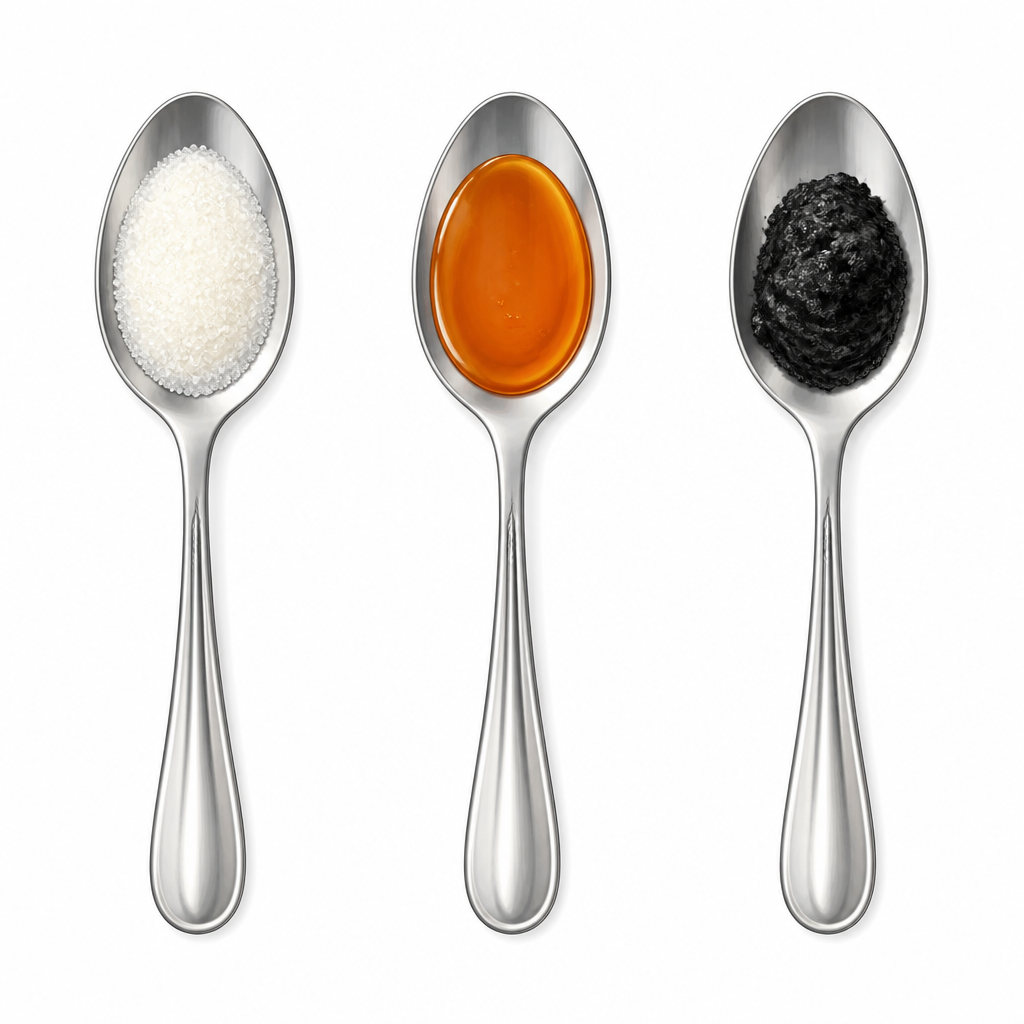
That wood and sugar contain carbon is something the eyes can confirm. Burning a piece of wood leaves behind black charcoal. Put a little sugar in a spoon and heat it, and the sugar first melts, its colour turning a golden brown. At this point a sweet smell begins to rise. Keep heating, and the sugar chars completely black, leaving only a substance with an unpleasant smell. That black material, born out of white sugar, is the carbon that was hiding inside the sugar all along. In this way it is confirmed that both wood and sugar contain carbon.
The stage at which heated sugar gives off a sweet smell is called caramel.
The black substance with an unpleasant smell that remains when sugar is heated on and on is called sugar charcoal.
The full lesson is waiting for you
The notes are free to read in full. A free account opens the rest of the practice, and tracks your progress and confidence score for every subject. Presentations and videos need approval from Learn Yeti.