Information and Communication Technology in Everyday Life
Listening to the news on the radio in the morning, calling a friend on a mobile phone, checking the weather on television in the evening and searching the internet for homework are all uses of information and communication technology. Most of us could hardly get through a day without these tools. So it is worth knowing how each one works and which tool suits which job.
Information and communication technology (ICT): the group of devices and systems used to collect, store and send information from one place to another.
Many of these tools change information into a signal before sending it. Some signals travel along a wire. Others travel through space as electromagnetic waves. Satellites play a large part in television, radio, telephone, internet, GPS and weather forecasting.
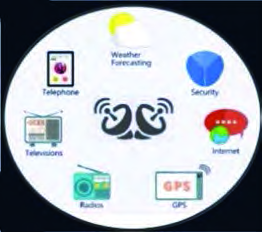
The tools are easiest to study in four families:
- Magazines, radio and television: tools that carry information to many people at once
- Telephone, fax and mobile phone: tools that let two people in different places talk or exchange documents
- Internet, Wi-Fi and email: tools that join computers and devices into networks
- GPS technology: a way of finding a location with the help of satellites
Magazines, Radio and Television
Newspapers and magazines give us information and general knowledge about our surroundings and about places around the world. They print news and articles on the economy, politics, sport and entertainment, as well as pieces written simply to add to our knowledge. A reader can pick the subjects that interest them. A paper has to be printed and carried by hand, though, so it takes time to reach a distant village.
Radio reaches far more people than print does. A radio signal spreads through space as electromagnetic waves, so news, information, educational programmes, songs, stories and poems reach listeners over a very wide area at the same moment. In a mountain village where no newspaper arrives, a small radio set still brings the morning news.
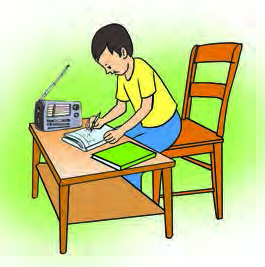
Guglielmo Marconi of Italy was the first to prove that a radio signal could be sent over a long distance.
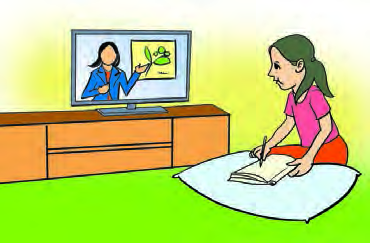
Television gives both sound and pictures. Through it we watch daily events in our country and the world, weather reports, and programmes on education, research, science, nature and entertainment. We can watch a football match being played on another continent live, from our own sitting room. Programmes broadcast from many countries reach the television in our home by radio waves.
| Tool | Form of information | How it reaches us |
| Newspaper or magazine | Printed words and pictures | Printed copies are carried to readers |
| Radio | Sound only | Electromagnetic waves through space |
| Television | Sound and moving pictures | Radio waves |
Telephone, Fax and Mobile Phone
A telephone lets two people in different places talk to each other. Sound itself cannot travel along a wire, so the telephone first changes it into an electrical signal. This is the order in which it happens:
- Step 1: The microphone of one telephone picks up the speaker's voice.
- Step 2: The voice is changed into an electrical signal.
- Step 3: The signal travels along the wire to the other telephone.
- Step 4: The other telephone changes the signal back into sound, and the listener hears it.
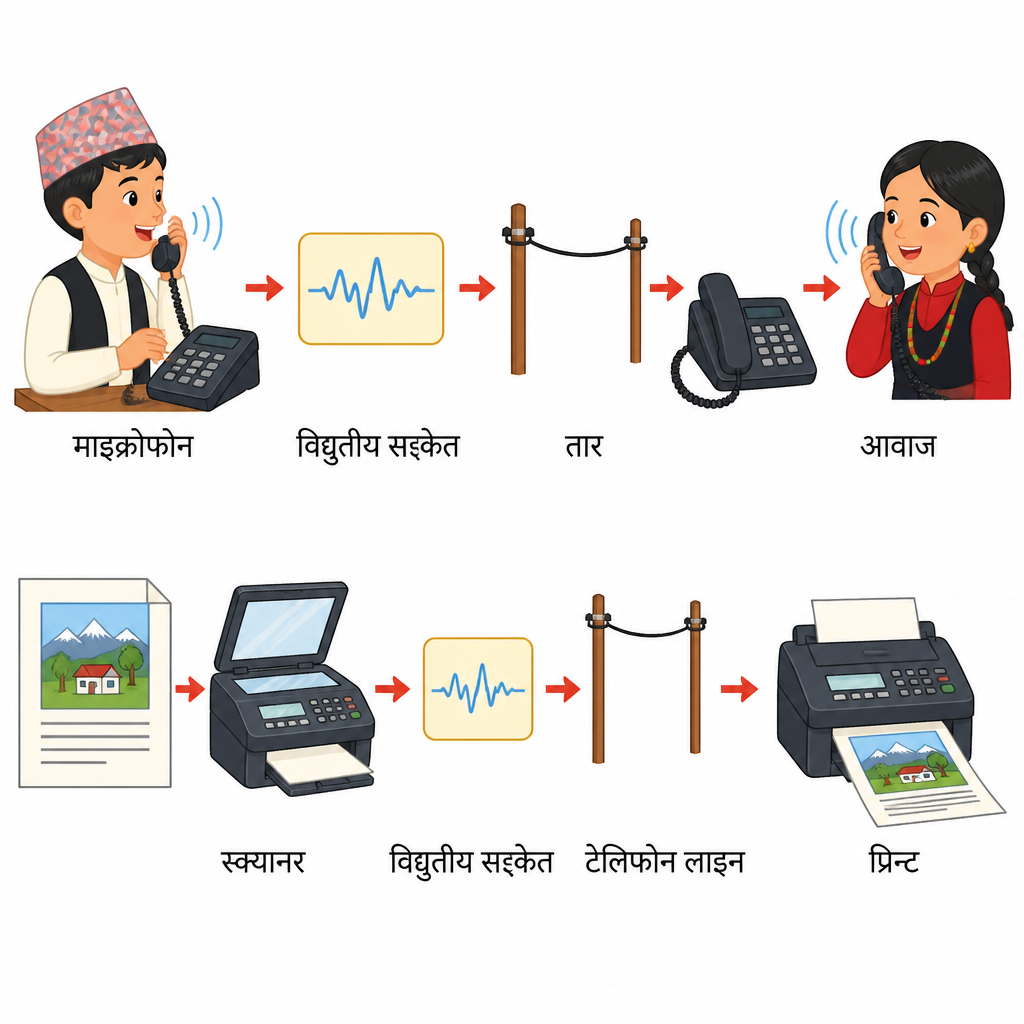
Fax: a system that sends information in the form of pictures and written letters from one place to another through a telephone line.
A fax sends an exact copy of a written or printed page to another place. It works like this:
- Step 1: The sending machine, called the transmit machine, uses a scanner to change the pictures or letters on the paper into an electrical signal.
- Step 2: The signal travels through the telephone line to the machine at the other end.
- Step 3: The receiving machine changes the signal back into the original pictures or letters and prints them.
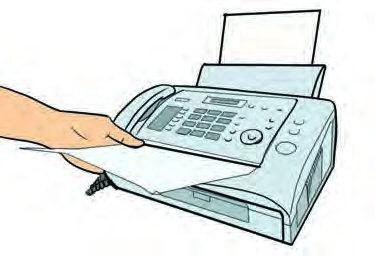
The fax was invented by Alexander Bain of Scotland in 1842. In 1924 a photograph was sent by fax for the first time, from Cleveland to New York.
The mobile phone made talking and sending typed messages much easier. A home telephone is tied to its wire, but a mobile phone goes in a pocket and works almost anywhere, because it uses radio waves instead of a wire.
Mobile phone: a device that changes sound into an audio signal and sends it as radio waves, and that changes radio signals it receives back into sound.
Internet, Wi-Fi and Email
Internet: the largest computer network in the world.
A computer can join this network through mobile data, Wi-Fi, or a wire or telephone line supplied by an internet service provider. Once connected, we can use the right internet tool to get information stored on computers all over the world. To learn about photosynthesis, for example, we only need to type the word into a search engine such as Google, Yahoo or Bing.
Search engine: a service that finds the information we ask for among everything stored on the internet, such as Google, Yahoo or Bing.
Some of the main uses of the internet are:
- Communication: messages, video calls and email
- Finding learning materials
- Entertainment
- Using online services such as mobile banking, booking tickets and paying bills
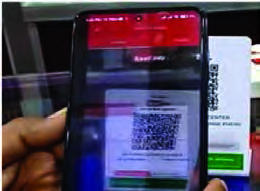
Paying at a shop by scanning a QR code with a mobile banking app, instead of handing over cash, is one of these online services.
Wi-Fi: short for Wireless fidelity; a wireless networking system in which devices connect to each other through radio waves.
Devices that have Wi-Fi can pass data, such as files, to one another without any cable, and can connect to the internet. Laptops, smart phones, smart televisions and routers all have Wi-Fi. At home, a router takes the internet line and spreads it as radio waves to every device nearby. Two smart phones can also swap a file directly using Wi-Fi, Bluetooth or a file-sharing app.
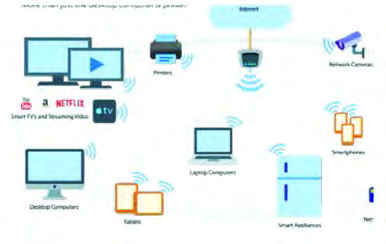
Wi-Fi and the internet are not the same thing. Wi-Fi is only a way of joining devices together without wires. If the router is not connected to the internet, the Wi-Fi can be on while the internet does not work at all, though phones can still pass files to each other.
Email: a written message sent through the internet that reaches its destination the moment it is sent.
A letter sent by post can take days, but an email reaches any corner of the world in a moment. That makes it a reliable means of modern communication. Computer files such as photographs or documents can be attached and sent along with an email.
GPS Technology
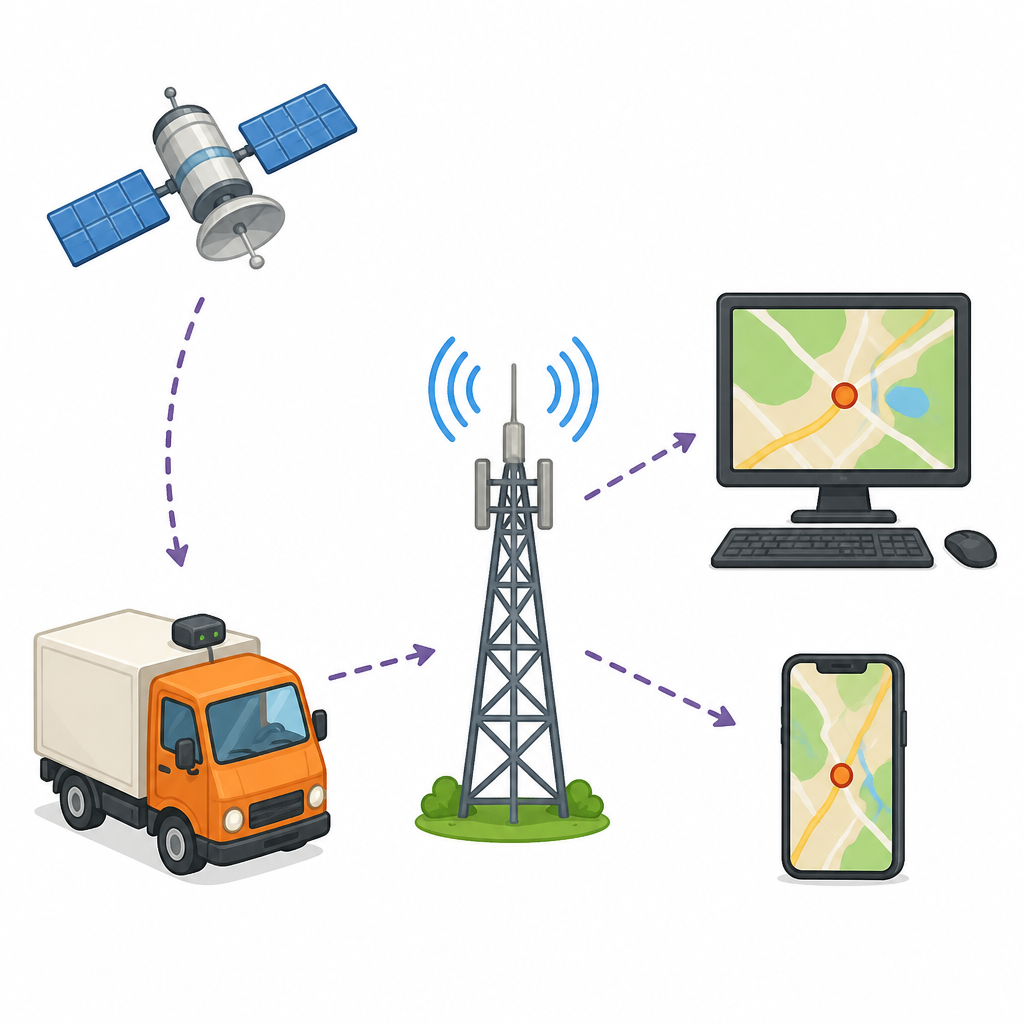
GPS navigation: the technology by which a GPS-enabled device works out its distance from more than two GPS satellites, using the waves it receives from them, and so finds its own location.
GPS is a satellite-based radio navigation system owned by the United States of America (USA). It is run by the United States Space Force. Its satellites are spread in orbits all round the Earth, so a receiver anywhere on the planet can pick up signals from several of them at once.
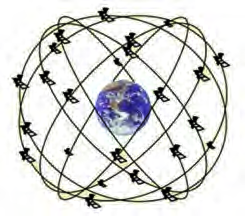
Knowing the distance from just one satellite only tells a device that it lies somewhere at that distance from the satellite, not exactly where. When the distances from more than two satellites are put together, there is only one point that fits all of them, and that point is the device's location.
A GPS device does not send its position up to the satellites. It only receives waves from them and works out its own position. One or two satellites are not enough; it needs more than two.
GPS is not the only such system. Several other countries have launched navigation systems of their own, including:
- Russian Global Navigation Satellite System (GLONASS)
- European Union Galileo positioning system
- Chinese Compass navigation system
- Indian Regional Navigational Satellite System
GPS was first built for military use, but today it is used in many fields. Its main uses are:
- Tracking vehicles, for example seeing where a delivery truck has reached
- Tracking the route a person has walked, as a child's GPS watch does
- Finding roads and places, as a car's navigation screen does
- Controlling flights
- Tracking animals and birds
- Studying the movement of tectonic plates
- Surveying the Earth's surface
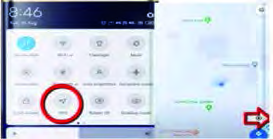
A smart phone has GPS too. Swiping down from the top of the screen shows a Location button. Once it is turned on, a map application shows exactly where the phone is on the map.
Comparing the Tools
Setting all the tools side by side makes it clear how each one carries information and what it is best for.
| Tool | How the information travels | Main use |
| Newspaper or magazine | Printed copies carried to readers | News, articles and general knowledge |
| Radio | Electromagnetic waves | News, music, stories and poems |
| Television | Radio waves | News, weather, education and live sport |
| Telephone | Electrical signal along a wire | Conversation between two people |
| Fax | Electrical signal along a telephone line | Sending copies of pictures and writing |
| Mobile phone | Radio waves | Calls and messages |
| Internet and email | A worldwide computer network | Searching, sending messages and files, online services |
| Wi-Fi | Radio waves between nearby devices | Moving files and connecting to the internet without wires |
| GPS | Waves from satellites | Finding locations and tracking |
The full lesson is waiting for you
The notes are free to read in full. A free account opens the rest of the practice, and tracks your progress and confidence score for every subject. Presentations and videos need approval from Learn Yeti.