What Telecommunication Is
A boy in Kathmandu calls his father in Jumla on a mobile phone. Hundreds of kilometres lie between them, yet the father hears his son's voice almost at once. A radio at home brings news from a distant station, and a television shows a football match being played in another country as it happens. In none of these does the message itself travel. It is first turned into a signal, and the signal is sent. The system that does this is called telecommunication.
Telecommunication: the system of sending a communication signal from one place to another through wires, optical fibre, waves and similar means, using different kinds of technology.
Many things we use every day are examples of telecommunication:
- broadcasts from radio and television
- the telephone
- the fax machine
- the mobile phone
- communication over the internet
Telecommunication uses electrical and electromagnetic technology. A voice, a picture or a line of text cannot be thrown across a country as it is. It is first changed into an electrical signal, and that signal is then sent along a wire or carried by electromagnetic waves.
Wires and Waves That Carry Signals
In a telephone, the sound of your voice is changed into an electrical signal, and this signal travels along a wire to the other end. The telephone at the other end changes the signal back into sound.
In 1875 Alexander Graham Bell invented a simple model of the telephone that sent sound from one place to another as an electrical signal.
Not every message needs a wire. Radio waves carry the signals broadcast by local radio and television stations. Microwaves are used for mobile phone signals, for radar, and for communicating with satellites out in space. Both are electromagnetic waves, so they need no wire to travel.
| Carrier | What it carries |
| Wire | the electrical signal of a telephone |
| Radio waves | signals of local radio and television |
| Microwaves | mobile phone signals, radar, communication with satellites |
Telecommunication in Daily Life
When you pay in a shop by scanning a QR code with a phone, telecommunication is at work. The payment message travels as a signal from the phone to the bank and from the bank to the shopkeeper.

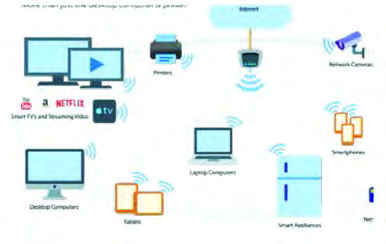
At home or at school, a Wi-Fi router links computers, laptops, phones, smart televisions and printers without any wire. The router sends out waves and each device picks them up.
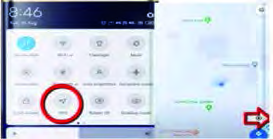
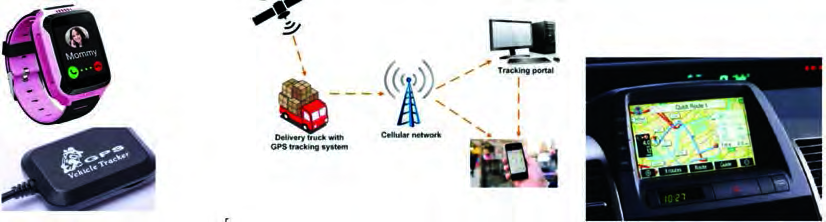
Turning on location in a phone lets it receive signals from satellites in space. On the same idea, a GPS tracker shows where a vehicle is, and a screen in a car shows the road ahead.
The Working Principle of Telecommunication
In a telecommunication system, information is sent from one place to another through electronic and optical devices. Whether it is a mobile phone or a radio station, every telecommunication system has three main parts: the transmitter, the transmission channel and the receiver.
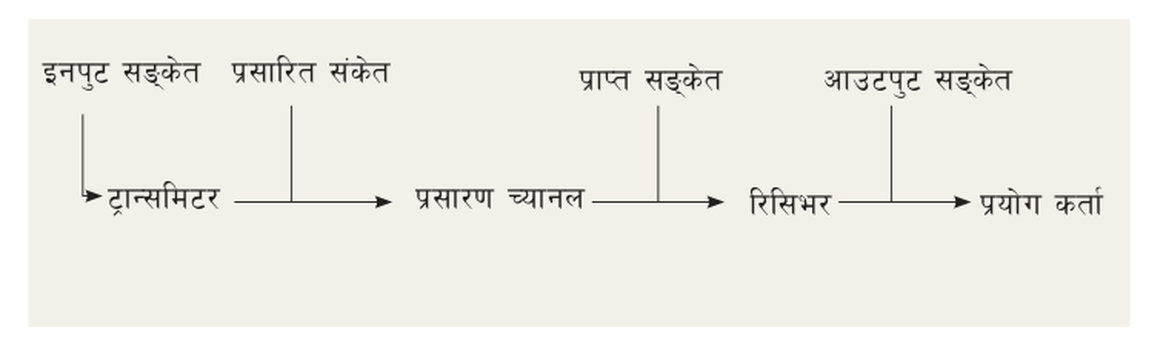
Transmitter: the part that takes information from a microphone, a TV camera or a computer, processes it with electrical devices, and produces a communication signal that can be sent from one place to another.
Transmission channel: the path along which the signal travels from the transmitter to the receiver. It may be radio waves, a microwave beam, a metallic cable or an optical fibre.
Receiver: the part that picks up the transmitted signal and changes it into the form that is wanted, such as sound, pictures or text.
Information makes its journey in this order:
- Information comes from a microphone, a TV camera or a computer. This is called the input.
- The transmitter processes the input and produces a communication signal. The signal may carry sound, pictures or computer data.
- The signal travels through the transmission channel.
- The receiver picks up the signal and changes it into the form that is needed. This is the output signal.
- The user hears the sound, watches the picture or reads the message.
Take the radio news as an example. In the studio, the newsreader speaks into a microphone, which is the input. The station's transmitter turns the voice into a signal and sends it out from an antenna as radio waves, so here the radio waves are the channel. The radio set in your home is the receiver: it catches the waves and turns them back into sound. You, listening, are the user.
How Signals Reach Far Places
Signals leaving the antenna of a transmitter can reach a receiver in three ways:
- Some signals go straight through the air as electromagnetic waves to the receiver antenna. The local FM radio we listen to reaches us this way.
- Some signals rise to the ionosphere, a charged layer high in the atmosphere, bounce back from it, and spread over the Earth up to a certain distance.
- For very long distances, the signal is sent up as electromagnetic waves to a communication satellite, which sends it back down over a large part of the Earth.
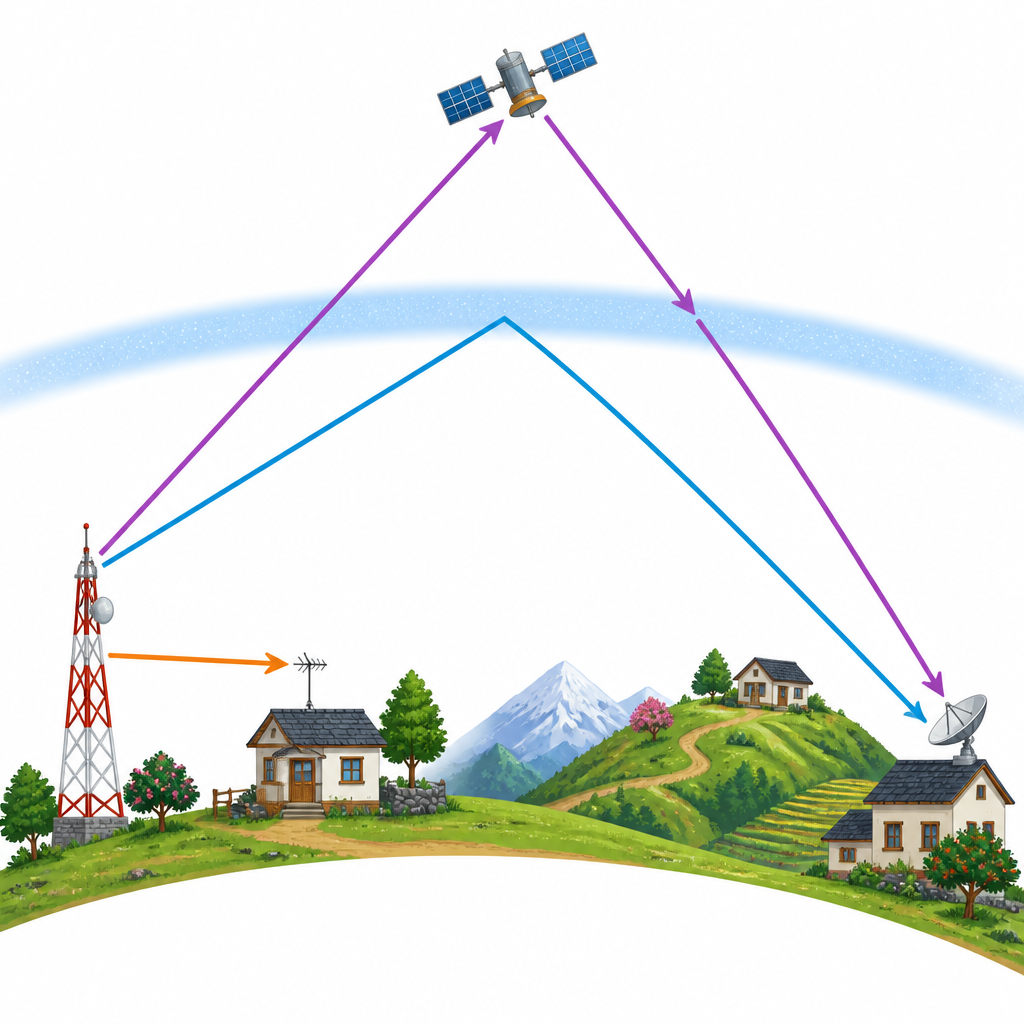
Communication satellites have made worldwide communication and live broadcasting easy. Watching a cricket match on another continent at the very moment it is played, while sitting in Nepal, is possible because of them.
Modulation and Demodulation
The signal that carries our information is weak, so on its own it cannot spread over a large area. Audio frequency, the frequency of sound signals, is also far lower than radio frequency. So telecommunication borrows the strength of a powerful radio wave, and changes either the frequency or the amplitude of that wave to match the information being sent.
First, a radio signal of one steady frequency is produced. This steady wave is the one that will carry the information.
Carrier wave: a powerful radio signal of one steady frequency, produced so that it can carry information over a long distance.
Modulation: the process of changing the frequency or the amplitude of the carrier wave according to the displacement of the audio signal.
Think of the carrier wave as a bus. The information signal is a passenger who cannot walk far alone. Modulation puts the passenger on the bus, and demodulation lets the passenger off at the destination.
The modulated carrier wave is sent out through different channels. Because it is powerful, it travels a long way. In a radio set, a TV or a router, the information signal is then separated from the carrier wave again, according to how the carrier was changed.
Demodulation: the process in a receiver of taking the information signal back out of the modulated carrier wave.
Sound data and picture data are different in nature. So in television, the sound and the picture are modulated separately, and then both are sent out through a single channel.
The picture below follows a voice through a radio station, one stage at a time:
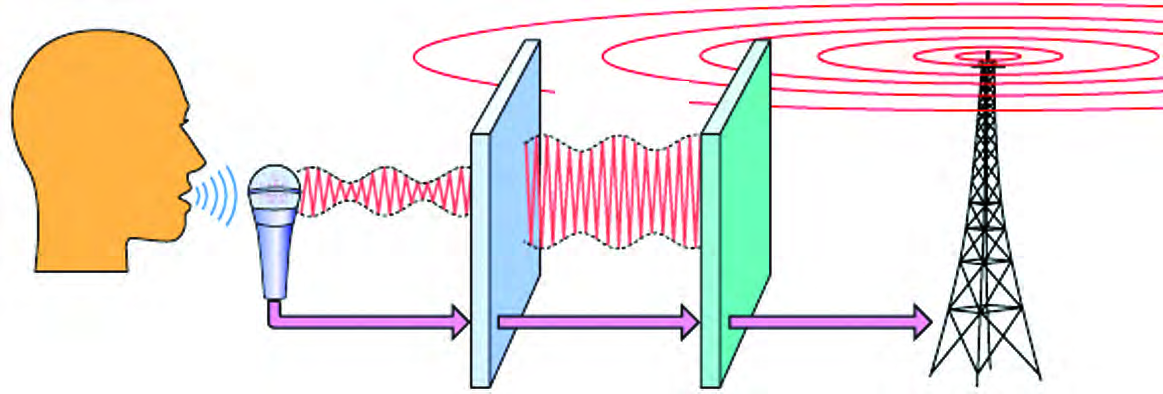
- A person speaks, and the sound wave reaches the microphone.
- The microphone turns the sound wave into a weak electrical signal.
- The audio amplifier makes that signal stronger.
- The transmitter combines the signal with the carrier wave. This is modulation.
- The broadcasting antenna sends the modulated wave out in all directions.
Amplitude Modulation (AM)
Amplitude modulation (AM): modulation in which the amplitude of the carrier wave is changed according to the displacement of the audio signal, while its frequency is kept constant.
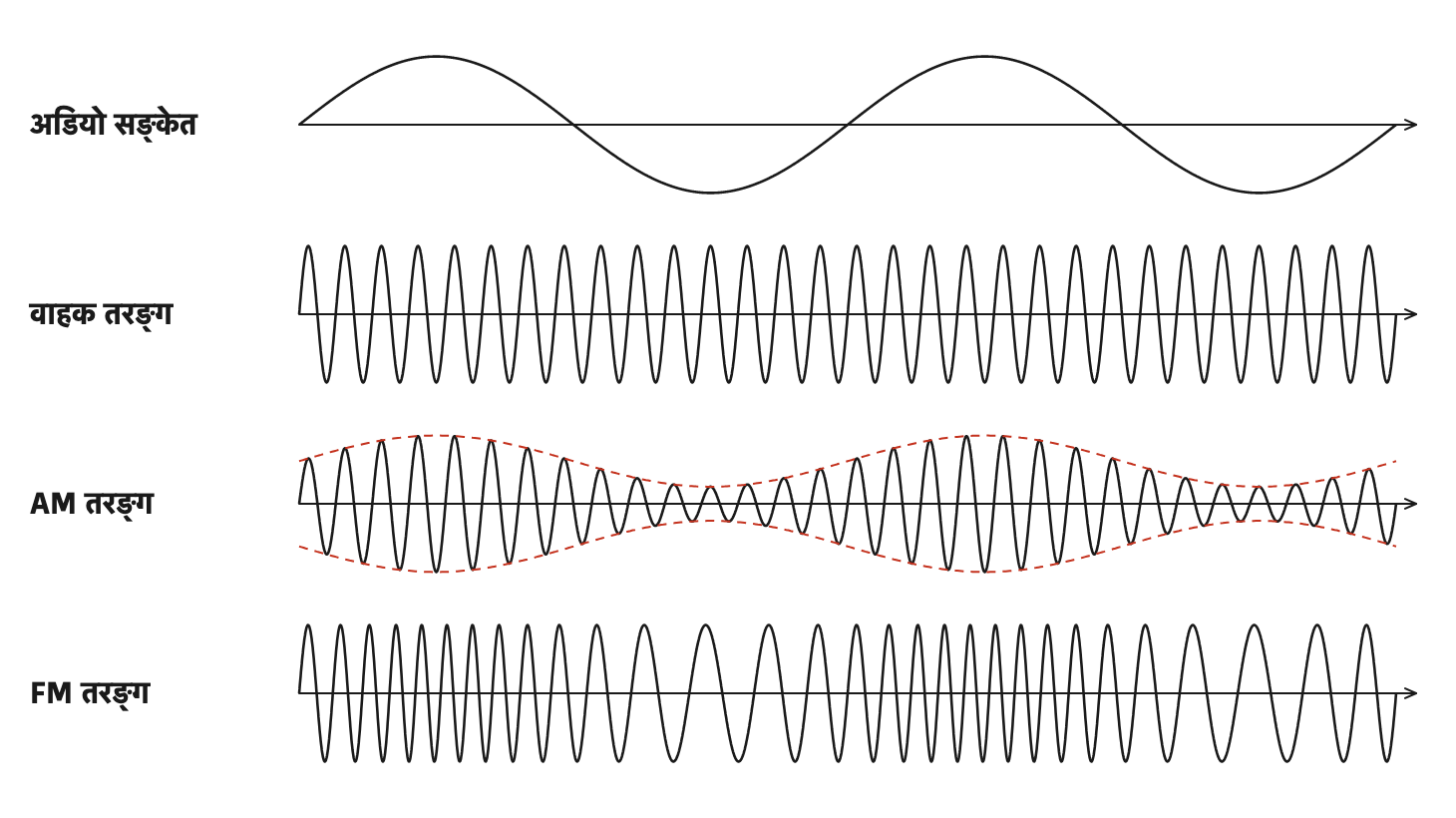
In AM, the height of the wave, its amplitude, grows and shrinks with the sound, but the number of waves arriving each second stays the same. AM is used to broadcast waves of medium and long wavelength. The frequency range of AM radio is 535 kHz to 1705 kHz. In Kathmandu, Radio Nepal broadcasts on AM at 792 kHz.
AM waves can go straight from one antenna to another, and they are also easily reflected by the ionosphere, so an AM broadcast can reach very far. The surroundings affect it, however, so AM radio is heard more clearly at night than during the day.
Frequency Modulation (FM)
Frequency modulation (FM): modulation in which the frequency of the carrier signal is changed according to the displacement of the audio signal, while its amplitude is kept constant.
In FM, the height of the wave never changes. Instead, following the sound, the waves crowd closer together at some moments and spread further apart at others. FM waves have a high frequency, so they are not reflected by the ionosphere.
Television and FM radio use these high frequency waves, and they are sent straight from one antenna to another. Their reach is therefore limited to a certain distance, which depends on the shape of the land and the height of the transmitter tower. A tall hill in the way blocks the signal, and a taller tower sends it further. What does arrive is heard clearly. The frequency range of FM radio is 88 MHz to 108 MHz, and Radio Nepal broadcasts FM at 100 MHz.
AM and FM Compared
| Point | Amplitude modulation (AM) | Frequency modulation (FM) |
| What changes | amplitude of the carrier wave | frequency of the carrier wave |
| What stays constant | frequency | amplitude |
| Frequency range | 535 kHz to 1705 kHz | 88 MHz to 108 MHz |
| At the ionosphere | easily reflected | not reflected |
| Reach | very far | only a limited distance |
| Clarity | affected by surroundings, clearer at night | heard clearly |
| Radio Nepal | 792 kHz (Kathmandu) | 100 MHz |
The name tells you what changes. In amplitude modulation the amplitude changes and the frequency stays constant. In frequency modulation the frequency changes and the amplitude stays constant. Do not swap them. Also, the AM range is given in kHz and the FM range in MHz, so always write the unit.
The full lesson is waiting for you
The notes are free to read in full. A free account opens the rest of the practice, and tracks your progress and confidence score for every subject. Presentations and videos need approval from Learn Yeti.