What Robotics Means
Robotics began from a simple idea: build a machine that can do the work a person cannot do, or cannot do safely. Robotics is an interdisciplinary branch of computer, science and engineering. It includes the design, construction, operation and use of robots. The goal of robotics is to design machines that are able to help human beings. Robotics is not built out of one subject alone. It brings together mechanical engineering, electrical engineering and computer engineering, and it draws on the field of mathematics as well.
Robotics: the interdisciplinary branch of computer, science and engineering that covers the design, construction, operation and use of robots, which are machines built to help people.
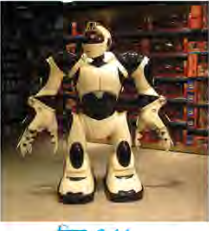
Robotics develops machines that assist people and can copy the actions a person makes. Where a job is too dangerous for a human being, a robot can be sent in to do it instead. Robots are used to dispose of explosive substances, to carry out tasks in space according to instructions sent to them, to work at great depths in the sea, and to control radiation or to work safely in places where radiation is present.
The Two Main Parts of a Robot: Hardware and Software
A robot looks as though it decides for itself what to do, but that ability did not come on its own. The power to work automatically is developed in a robot through computer programming. In simple language, computer programming is understood as software. A robot has mainly two parts, software and hardware.
Hardware is the physical structure of the robot. People can build it in whatever shape they choose, and it can be touched physically. That is why some robots look like human beings while others look like ordinary machines. Whatever job a robot is built for, the computer programming inside it is written to suit that need. The robot then carries out its work as a robotic application.
| Part | What it is and how you know it |
| Hardware | The physical structure of the robot: arms, wheels, camera, motor. It can be seen and touched. |
| Software | Computer programming, put in simple language. It tells the robot what to do and when. It cannot be touched. |
Robotic process Automation (RPA): a process that imitates the way a human being carries out a task. Working on that same basis, machines that have intelligence can also be built.
A robot and robotics are not the same thing. A robot is the machine itself, the object you could put on a table. Robotics is the branch of study that designs, builds and operates that machine. When a question asks what robotics is, define the branch of study, not the machine.
Where Robots Are Used
Robots are put to work in the following areas, and these are some of the important jobs they do:
- To control fires
- To work alongside people in factories and to build machines such as automobiles
- To deliver goods that have been ordered online, which is happening in many places today
- To work without panic in dangerous situations such as floods, landslides and earthquakes, and so to save human lives
- To defuse explosive substances laid in war zones, and other tasks of that kind
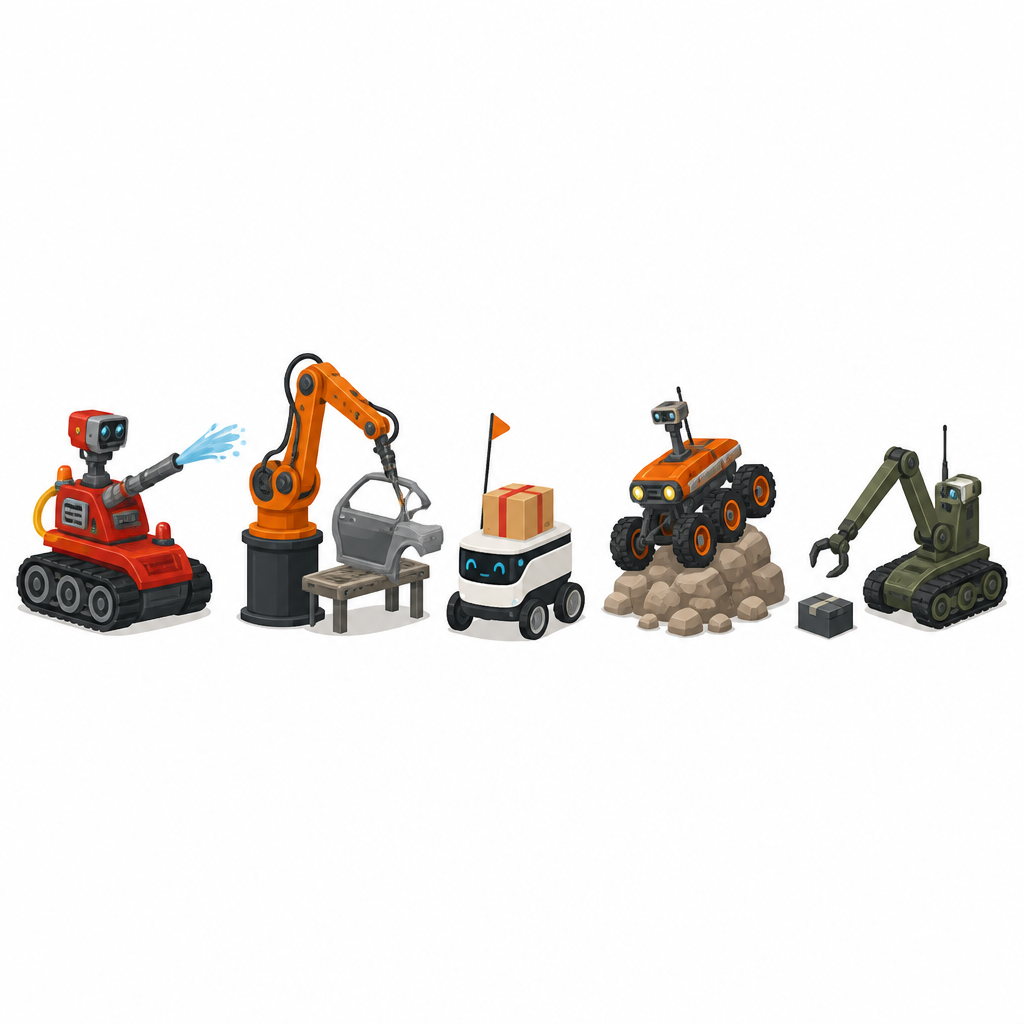
A robot does not get tired, does not feel fear and does not panic. That is why a robot is sent into the places where sending a person would put a life at risk.
What Virtual Reality Is
The name virtual reality is made of two words joined together, virtual and reality. The word virtual means artificial, and reality means the condition a person actually experiences. So the words virtual reality mean, at their root, an artificial reality. Virtual Reality, written in short as VR, is the computer technology that develops an artificial environment.
In virtual reality the human senses, that is sight, touch, smell and hearing, are imitated. The computer is designed to serve as a doorway into an artificial world. The computer produces a three dimensional image or an environment, and the person interacts with it in a physical way by using special electronic equipment such as a special helmet or sensors, glasses and gloves. That technology is virtual reality.
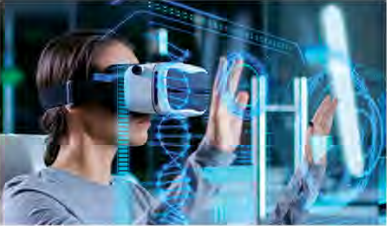
One point deserves care here. Virtual reality does not merely let a person watch, the way a film does. It lets the person take part. When the head turns, the view turns with it, and when a gloved hand moves, the artificial object seems to be touched. Special equipment is needed for exactly that reason.
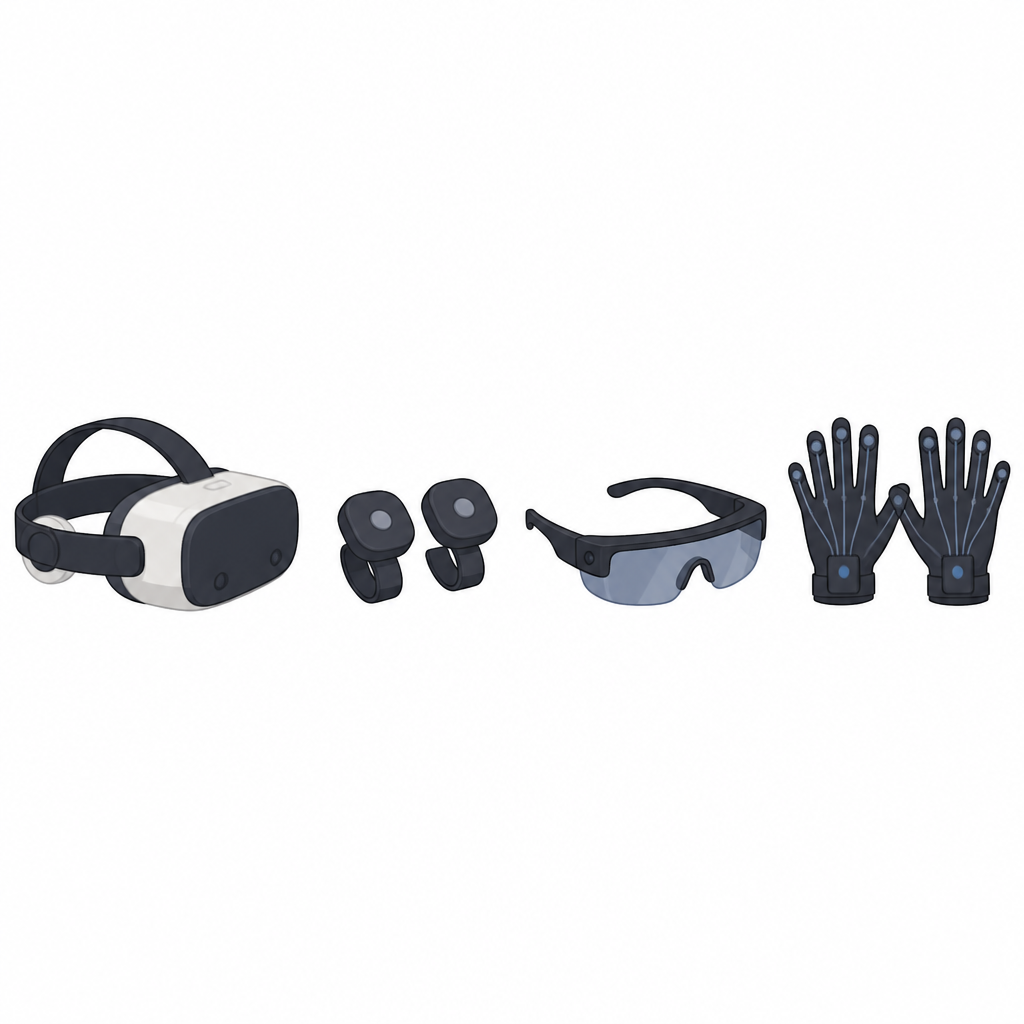
Virtual reality reaches into architecture, medicine, art, sports and entertainment, among other fields. In all of these it helps to give new and exciting information. So virtual reality is an artificial environment, and that environment is created by using computer software and hardware. Virtual reality is not possible without the use of multimedia technology.
Virtual Reality (VR): an artificial environment created by using computer software and hardware, inside which a person can interact in a physical way with the help of special equipment.
Examples of virtual reality include various virtual reality applications such as robot navigation, construction, modelling and airplane simulation. It is also used by putting a smart phone into a head set.
Putting Virtual Reality to Work
Virtual reality technology copies the scenes of real life. The technology is now being used by armies, in sport, in mental health care and in many parts of our everyday life. Some of its uses in different fields are given below.



1. VR in the Military
Virtual reality is used a great deal in the military field. The armies of developed countries use it in their training. It is used for flying in a war zone, and for copying dangerous training situations safely so that soldiers can practise them. The technology is also used in the treatment of post traumatic stress disorder, written in short as PTSD. This treatment is called Virtual Reality Exposure Therapy, or VRET. It is regarded as essential for soldiers who have returned from battle.
Virtual Reality Exposure Therapy (VRET): the method used in treating post traumatic stress disorder, in which the patient is placed inside a safe artificial environment and helped to face the fear there.
2. VR in Education
Virtual reality is used in education too, for teaching and learning activities. With this technology students can be taken on a virtual field trip, for example into a museum, or on a journey through the solar system, and they can be given the artificial experience of travelling back into different ages of history. Virtual classroom teaching is also growing in use today.
3. VR in Sport
Coaches and players can use virtual reality technology to train effectively. A player can watch and experience a particular situation from a game again and again, and improve his or her performance a little more each time. The technology is also being used to improve the experience of the people who watch a live sports event.
Several sports broadcasters have begun to stream live games through virtual reality, and arrangements are being made to sell virtual tickets for live sports events. This can give people anywhere in the world the chance to watch any sports event they wish. It can also let a person who cannot afford to travel and spend enjoy the live broadcast from their own place at a small cost.
4. VR in Mental Health
Virtual reality technology is used in virtual reality exposure therapy. Besides that, it is being used in the treatment of emotional illnesses such as anxiety and phobia. For example, a patient suffering from anxiety can use virtual reality to meet the feeling of tension and to meditate, so that the ability to face that tension grows stronger. Virtual reality technology can give the patient a safe environment in which to face what frightens them.
5. VR in Medical Training
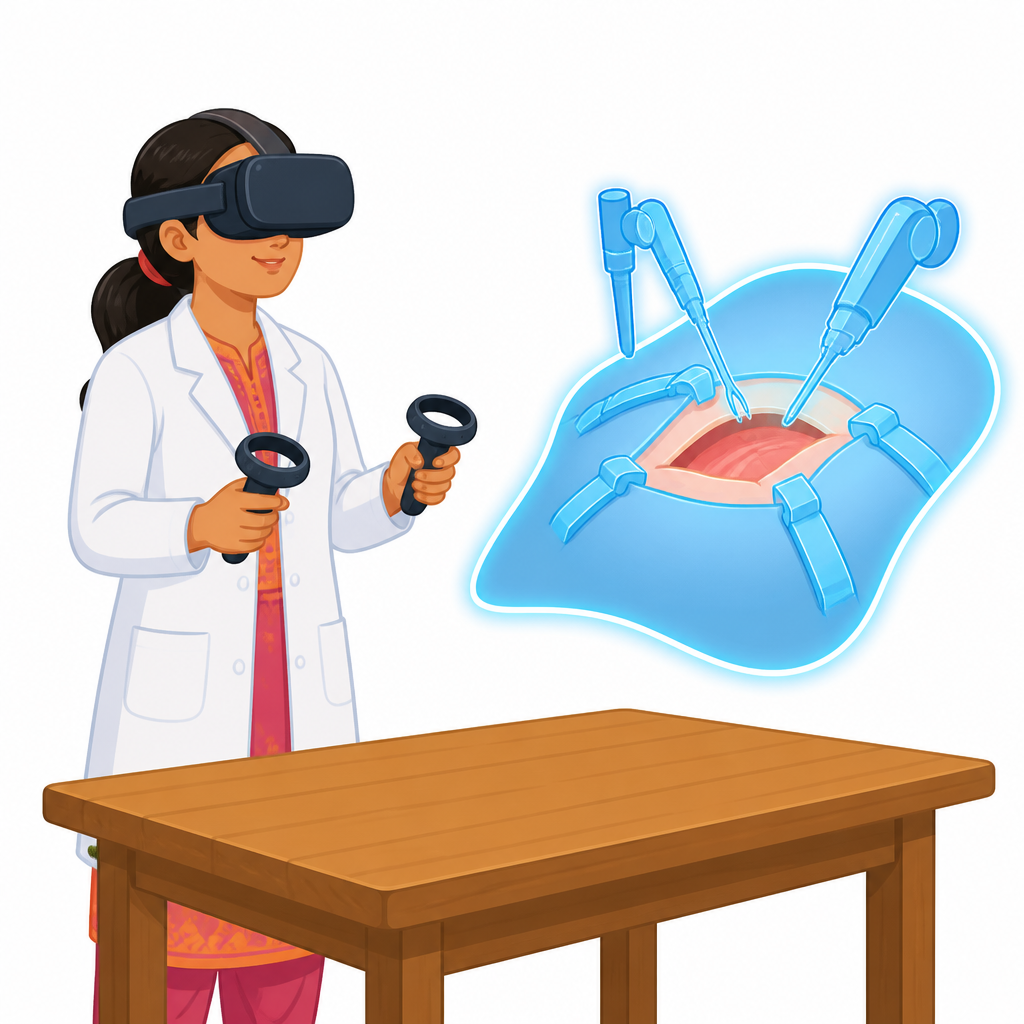
Students of medicine and dentistry use virtual reality to practise surgery. Practising in this way reduces the risk of any harm being done. Carrying out medical practice through virtual reality helps to raise the quality of medical training, and at the same time it brings down the cost of that training.
6. VR in Fashion and Architecture
Virtual reality is being used in the field of fashion these days as well. It is used to display different fashion products, and also to develop the layout of a shop. Some world famous brands have taken up the technology to give customers the experience of fashion and to attract them through advertisement.
Virtual reality applications give an architect the information needed to present ideas and designs together with their scale. Housing blocks, commercial buildings and construction projects of every such kind can gain from the use of virtual reality, because it can include the safety precautions and can visualise a virtual environment in which every side of the project is explained.
Other Fields Already Using VR
The use and the capacity of this technology have no fixed limit. Besides the uses given above, virtual reality is also being used in entertainment, in research, in health and safety, in heritage and archaeology, in fine arts, in marketing, and in music and concerts.
Military: risky training and treatment for PTSD
Education: virtual field trips and virtual classrooms
Sport: practice for players and a better experience for viewers
Mental health: treating anxiety and phobia
Medical training: safe practice of surgery
Fashion: product display and shop layout
Architecture: presenting a building design to scale
Robotics hands over to a machine the dangerous work that human arms and legs would otherwise do. Virtual reality carries the eyes, ears and hands of a person into an artificial world. The purpose of both is the same: to keep people safe and to make work easier.
The word virtual means artificial. It does not mean fake or false. A virtual classroom is a real lesson in which real learning happens, but the environment around it is made by a computer. Answers go wrong when this difference is missed.
The full lesson is waiting for you
The notes are free to read in full. A free account opens the rest of the practice, and tracks your progress and confidence score for every subject. Presentations and videos need approval from Learn Yeti.