Can a Machine Think Like a Person?
You ask your phone about the weather and it answers. You look at a pair of shoes in an online shop, and soon similar shoes start appearing on your screen. A video site suggests the next video you are likely to enjoy. No person is sitting somewhere doing these jobs. A machine is studying what you do and making a decision. The technology that lets a machine understand, learn and decide in this way is called artificial intelligence.
What Artificial Intelligence Is
Artificial intelligence (AI): the ability of a machine to behave like a human being.
AI is an emerging technology, which means it is new and still growing fast. With AI, a machine understands intelligence and human abilities and uses them to do work. At first, AI was thought of only as a way of copying human intelligence. Today it has grown in many directions. AI can take on many kinds of work, connect people and devices more closely, and help us produce more in less time.
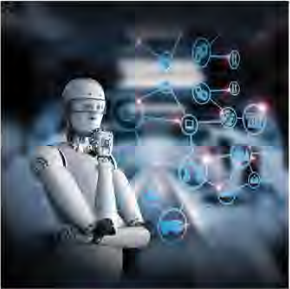
The power of AI is growing quickly, and the number of places it is used grows every day. It has also had a large effect on scientific discovery, because AI can sort through in a short time the kind of data that would take people years to study.
Three Kinds of AI
Not every AI is equally capable. According to how much it is able to do, AI is divided into three kinds.
Narrow or weak AI: AI that is dedicated to only one task. A computer program that only plays chess is an example. However well it plays, it cannot do anything else.
General AI: AI that can work the way a human does, understanding and doing many different kinds of task.
Super AI: AI that is more intelligent than human beings.
How AI Behaves, With Examples
Artificial intelligence works in a way similar to the human brain. It can understand human feelings and beliefs, and it can interact socially, the way people talk and respond to one another. Some excellent examples of AI are:
- Self-driving car: a car that needs no driver. It watches the road, other vehicles and people, and decides by itself when to move, stop and turn.
- Ordinary robot: a machine that carries out the work it has been given.
- Chatbot: a computer program that answers questions typed or spoken to it, replying the way a person would.
A few years ago a female robot named Sophia, built in Hong Kong, was brought to Nepal for the first time. This human-like robot uses AI. In Nepal, Sophia gave a speech about how science and technology can help control corruption. Because she could talk with people and answer their questions, Sophia is a good example of AI interacting socially.
Not every robot is AI. An ordinary robot is programmed to repeat the same job again and again. A robot with AI can learn from its own experience and do tasks it was never programmed for in advance.
Where AI Is Used
AI is now used in many parts of society, and it makes daily life easier and simpler. The main fields, and what AI does in each, are shown in the table below.
| Field | What AI does there |
| Astronomy | Helps us understand how the universe began, how it works and how things move in it. |
| Health care | Helps doctors with treatment and warns when a patient's condition is getting worse. |
| Games and sport | Plays strategy games such as chess, where the machine considers a huge number of possible positions. |
| Finance | Runs automatic chatbots, algorithm trading and machine learning tools. AI and the finance industry complete each other. |
| Data security | Keeps the data of offices and companies safer as cyber attacks keep increasing. |
| Social media | Stores and organises the huge data of billions of profiles on sites like Facebook, Twitter and Snapchat, and studies that data to find what each user needs. |
| Travel and transport | Arranges trips and suggests hotels, flights and the best routes. Travel companies use chatbots that reply to customers quickly, like a person would. |
| Robotics | Ordinary robots only repeat set jobs, but AI makes intelligent robots that work from their own experience without being programmed in advance. |
| Agriculture | Farming needs resources, labour, money and time. AI is used here for farm robots, watching over crops and predicting what will happen. |
| Education | AI chatbots talk with students as teaching assistants. In future AI may work as a personal virtual tutor for each student. |
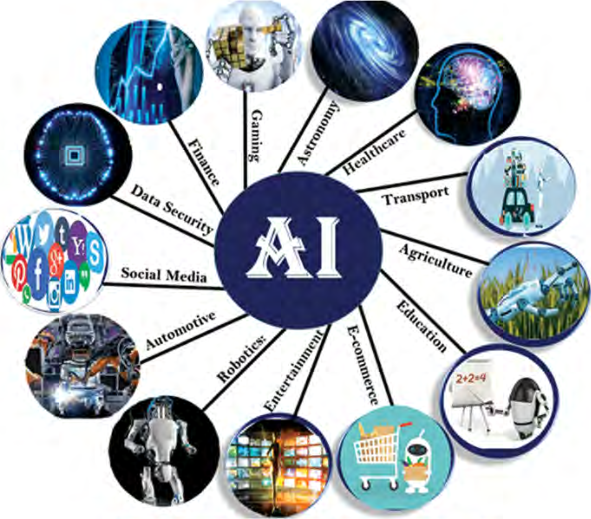
The same AI idea can serve many fields at once. Chatbot technology, for example, is used by banks, travel companies and schools alike.
What Cloud Computing Is
Not long ago, keeping your photos or files meant storing them on a computer's hard drive or on a pen drive. If that device broke or was lost, the files went with it. Today many people keep their files on the Internet and open them from any phone or computer. That is cloud computing at work.
Cloud computing: a kind of computing service provided with the help of the Internet.
Cloud computing offers services such as servers, storage, databases, networking, software and analytics, which means studying data to find useful patterns. It is one of the newest technologies based on the Internet. Instead of keeping files on a hard drive or another storage device near you, cloud storage keeps them in a database far away. As long as an electronic device can reach the web, the data and software programs it needs are available to it through the cloud.
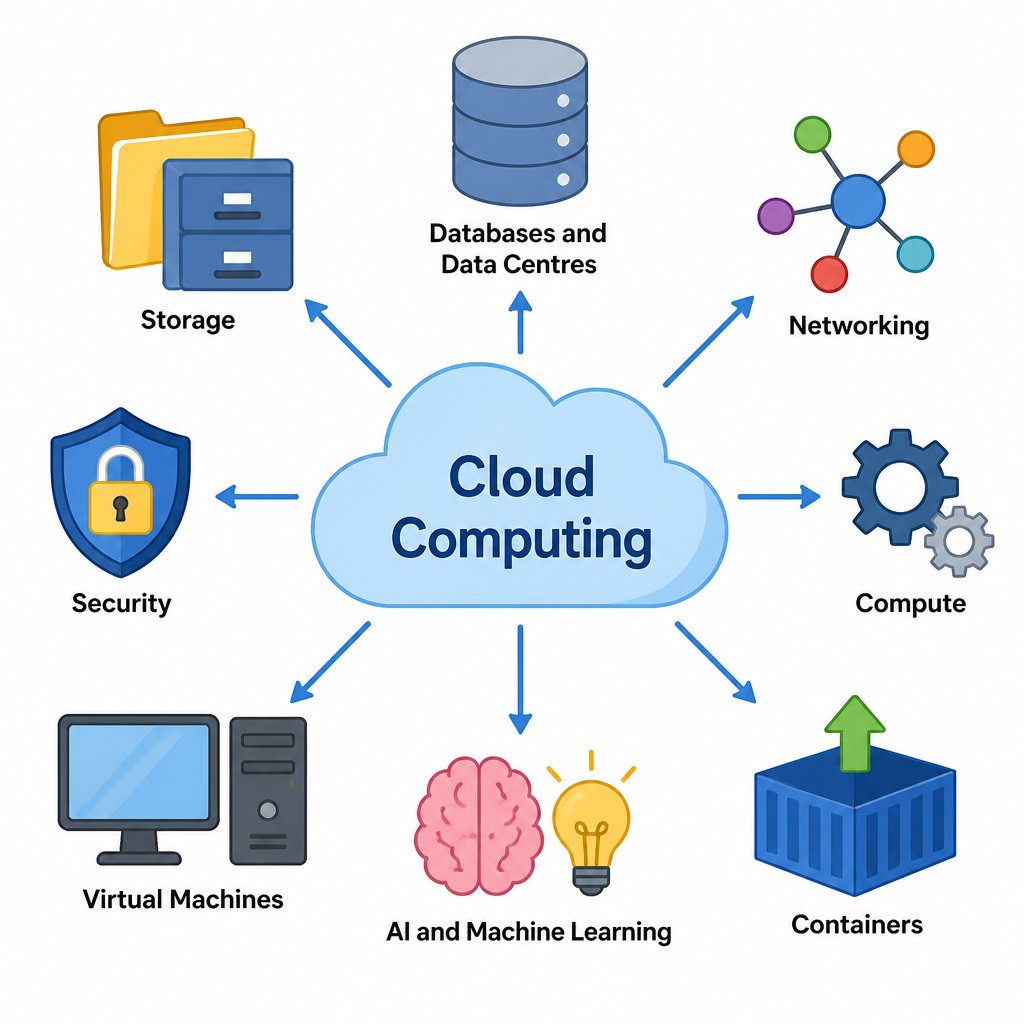
The cloud here is not a cloud in the sky, and data does not float in the air. It is kept on large server computers owned by companies, far from us and reached only through the Internet. We never see those servers, which is why the place is called the cloud or a virtual space.
Cloud computing has become a popular choice because of its cost, savings, room to grow, speed, efficiency, performance and security. Data or information kept in the cloud, that is, in a virtual space, can be seen and used from anywhere.
Cloud Providers, Public Cloud and Private Cloud
Cloud service provider: a company that provides cloud computing services.
Public cloud: a cloud service offered over the Internet to anyone who pays the fee.
Private cloud: a cloud service provided only to a fixed number of people.
| Point | Public cloud | Private cloud |
| Who uses it | Anyone who pays | Only a fixed group of people |
| How it is offered | Openly over the Internet | Only to the chosen users |
| Example | Online storage that anyone can buy | A cloud a bank runs for its own staff only |
We usually pay for cloud services according to how much we use them. It works like an electricity bill: use more and you pay more, use less and you pay less. In Nepal, cloud service providers such as Datahub, Silver Lining and Cloud Himalaya are at work.
Benefits of Cloud Computing
The main benefits of cloud computing are these:
- Low cost: it cuts the large starting cost of buying hardware and software and of setting up a data centre on your own site. A small school can keep its student records in the cloud without building a server room of its own.
- Global scale: the service can be reached whenever it is needed, from any place in the world.
- More productivity: it saves the time and money spent on setting up hardware, running software and managing IT. The time saved can go into discovery and research in other areas of IT.
- Reliability: a cloud provider keeps copies of data at more than one place in its network, so backing up data, recovering lost data and keeping a business running are easier and cheaper.
AI makes a machine think, while cloud computing delivers computing services anywhere through the Internet. Many AI services actually run in the cloud.
The full lesson is waiting for you
The notes are free to read in full. A free account opens the rest of the practice, and tracks your progress and confidence score for every subject. Presentations and videos need approval from Learn Yeti.