Finding the Probability of One Draw
Probability measures how likely an event is. When every outcome is equally likely, the probability of an event E is the number of outcomes favourable to E divided by the total number of outcomes in the sample space S:
\[ P(E) = \frac{n(E)}{n(S)} \]
A bag holds 5 red, 7 green and 4 blue balls. Apart from their colour the balls are identical, so every ball has the same chance of being picked. Altogether there are \( 5 + 7 + 4 = 16 \) balls. Let R be the event that a red ball is drawn. Here \( n(R) = 5 \) and \( n(S) = 16 \).
The probability that the first ball drawn is red is:
\[ P_1(R) = \frac{n(R)}{n(S)} = \frac{5}{16} \]
The small 1 in \( P_1(R) \) marks the first draw. Now suppose the first ball did come out red, and a second ball is about to be drawn. What happens next hangs on a single decision: does the first ball go back into the bag or not? Those two choices produce two different kinds of events.
Drawing a Second Ball with Replacement
With replacement: the object drawn is put back into the bag or group before the next draw, so every draw is made from the full, unchanged group.
The red ball that came out first is put back and the bag is shaken well. Now find the probability that the second ball is red.
Step 1: The ball has been returned, so the bag is full again. Counting all the balls:
\[ n(S) = 16 \]
Step 2: The returned ball was red, so counting the red balls gives the same number as before:
\[ n(R) = 5 \]
Step 3: Putting these counts into the probability formula for the second draw:
\[ P_2(R) = \frac{n(R)}{n(S)} = \frac{5}{16} \]
This answer is exactly equal to \( P_1(R) \). Before the second draw the bag was just as it was before the first, so the first result left no trace behind. Whether the first ball was red, green or blue, the second draw always starts from 16 balls of which 5 are red.
Drawing a Second Ball without Replacement
Without replacement: the object drawn is kept out, so the next draw is made from a smaller group.
Start again with the same full bag. This time the first ball comes out red and is kept out. Find the probability that the second ball is red.
Step 1: One ball is outside the bag, so subtracting it from the total:
\[ n(S) = 16 - 1 = 15 \]
Step 2: The ball kept out was red, so subtracting it from the red balls:
\[ n(R) = 5 - 1 = 4 \]
Step 3: Putting the new counts into the probability formula for the second draw:
\[ P_2(R) = \frac{n(R)}{n(S)} = \frac{4}{15} \]
\( \frac{4}{15} \) is not equal to \( \frac{5}{16} \). As decimals, \( \frac{4}{15} \approx 0.267 \) and \( \frac{5}{16} = 0.3125 \), so a second red has become less likely. Had the first ball been green and kept out, the bag would hold 15 balls with all 5 red ones still inside, and the chance of red on the second draw would be \( \frac{5}{15} = \frac{1}{3} \), which is higher. Either way, the second probability is decided by what came out first.
Without replacement, the total \( n(S) \) always drops by 1. The favourable count \( n(E) \) drops only when the object kept out belongs to that event. Reducing both every time, or forgetting to reduce one, are the two slips students make most.
Comparing the Two Conditions
In both conditions the chance of a red first ball is the same. The difference shows up only on the second draw. The table sets the two conditions side by side.
| What we look at | With replacement | Without replacement |
| Balls in the bag for the first draw | 16 | 16 |
| Red balls for the first draw | 5 | 5 |
| \( P_1(R) \) | \( \frac{5}{16} \) | \( \frac{5}{16} \) |
| Balls in the bag for the second draw | 16 | 15 |
| Red balls for the second draw | 5 | 4 |
| \( P_2(R) \) | \( \frac{5}{16} \) | \( \frac{4}{15} \) |
| Does the first event affect the second? | No | Yes |
| Kind of events | Independent | Dependent |
With replacement, the first event had no effect on whether the second happened. Without replacement, the first event changed what was inside the bag, and so it changed the probability of the second event too.
Independent and Dependent Events
Independent events: two or more events in which the occurrence or non-occurrence of any one event does not affect the occurrence or non-occurrence of any other.
Dependent events: two or more events in which the occurrence of any one event affects the occurrence of the others.
Replacing an object restores the sample space, so draws with replacement are independent. Keeping it out shrinks the sample space, so draws without replacement are dependent.
Independent does not mean the events cannot happen together. A head on a coin and a 4 on a die can happen at the same moment, and they are still independent. Events that cannot happen together are called mutually exclusive, which is a different idea.
Example 1: A Coin and a Die Together
Question: A coin is tossed and a die is rolled at the same time. What kind of events are getting a head (H) on the coin and a 4 on the die?
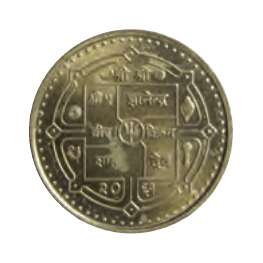
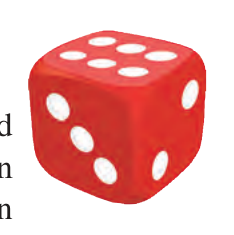
Solution: The coin can show a head (H) or a tail (T). The die can show any number from 1 to 6. The coin and the die are two separate objects, and the die has no way of knowing how the coin landed. The probability of a head stays \( \frac{1}{2} \) whatever the die shows, and the probability of a 4 stays \( \frac{1}{6} \) whatever the coin shows. Since neither event affects the other, they are independent events.
Example 2: Two Kings from a Deck
Question: Two cards are drawn one after another, without replacement, from a well shuffled deck of 52 playing cards. What kind of events are both cards being a king (K)?
Step 1: Let K be the event of drawing a king. A deck has 4 kings, so \( n(K) = 4 \) and \( n(S) = 52 \). The probability that the first card is a king is:
\[ P_1(K) = \frac{4}{52} = \frac{1}{13} \]
Step 2: The first king is not put back, so subtracting it from the deck:
\[ n(S) = 52 - 1 = 51 \]
Step 3: The card kept out was a king, so subtracting it from the kings:
\[ n(K) = 4 - 1 = 3 \]
Step 4: Finding the probability that the second card is a king and simplifying by 3:
\[ P_2(K) = \frac{3}{51} = \frac{1}{17} \]
\( \frac{1}{17} \) is different from \( \frac{1}{13} \). The probability of a king on the second draw depends on whether a king came on the first, so these are dependent events. Had the first card been put back and the deck shuffled again, the second probability would again be \( \frac{4}{52} = \frac{1}{13} \) and the events would be independent.
Example 3: Marbles from a Box
Question: A box holds 3 white and 5 black marbles. Two marbles are drawn one after another, and the first one is black. Find the probability that the second is also black in each case below, and name the kind of events.
- (a) The first marble is put back.
- (b) The first marble is kept out.
Step 1: The box holds \( 3 + 5 = 8 \) marbles. Let B be the event of a black marble. The probability of black on the first draw is:
\[ P_1(B) = \frac{5}{8} \]
Step 2: In case (a) the marble goes back, so the box again has 8 marbles with 5 black. The second probability is:
\[ P_2(B) = \frac{5}{8} \]
The probability did not change, so the events in case (a) are independent.
Step 3: In case (b) one black marble is kept out, so the box has 7 marbles left with 4 black. The second probability is:
\[ P_2(B) = \frac{4}{7} \]
Since \( \frac{4}{7} \) differs from \( \frac{5}{8} \), the events in case (b) are dependent.
How to Decide Which Kind of Event It Is
In any problem, ask one question: does the first result change what is available for the second? If it does not, the events are independent; if it does, they are dependent. The situations below show the rule at work.
- Actions with separate objects, such as tossing two coins or a coin and a die together: independent.
- Rolling one die twice: independent, because the first number does not remove any of the six faces.
- Drawing from one group with replacement: independent.
- Drawing from one group without replacement: dependent.
- Choosing a class monitor and then an assistant monitor from the same class, where the person already chosen cannot be chosen again: dependent.
The full lesson is waiting for you
The notes are free to read in full. A free account opens the rest of the practice, and tracks your progress and confidence score for every subject. Presentations and videos need approval from Learn Yeti.