The Basic Skills of Netball
Netball is a team game played with the hands. A player holding the ball is not allowed to run with it, and cannot stand holding it for long either. So there is only one way to carry the ball from one end of the court to the other: by passing it quickly and accurately to teammates. Once the ball reaches the opponent's net, a player throws it into the net to score. And when a player has the ball but no teammate is free, the player keeps one foot still and turns to look for a new direction. That gives every netball player three basic skills to learn:
- 1. Passing: giving the ball to a teammate
- 2. Shooting: sending the ball into the net
- 3. Pivoting: turning while one foot stays fixed
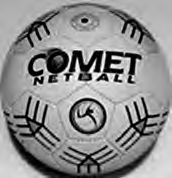
Only when players are good at these three skills can a team plan and use a game strategy together. So each skill is learned first, one at a time, and then the skills are joined together into the way a team plays.
1. Passing
Pass: the throwing of the ball by one player to another player of the same team, so that the team keeps control of the ball and can score as many points as possible.
The situation on a netball court changes every moment. Sometimes a teammate is close, sometimes far away. Sometimes an opponent stands right in front, blocking the way, and sometimes a teammate has moved behind an opponent. No single kind of pass works in all of these situations, so a player has to choose a different pass for each one. To win, a pass must be controlled, which means the ball arrives exactly in the teammate's hands. It should also be skilful and attractive: clean, smooth, and hard for the opponent to read.
Six passes are used in netball: the chest pass, the bounce pass, the overhead pass, the lob pass, the sling pass and the hip pass. The first three are made with both hands and the last three with one hand.
Before every pass, ask two questions: where is my teammate, and where is the opponent? The answers decide which pass to use.
(a) Chest Pass
Chest pass: holding the ball in both hands straight in front of one's own chest and pushing it with a sharp thrust so that it reaches the teammate at the height of their chest.
The chest pass is used mainly when a teammate is close by. The ball travels in a straight line from chest to chest, so it arrives quickly and is easy to catch. If the teammate is far away, or an opponent stands in between, a ball on that straight path can be stopped, so a different pass is chosen then. In a chest pass the body moves like this:
- A: Hold the ball in both hands straight in front of your chest.
- B: Look at your teammate and step forward towards them.
- C: As you step, push both hands forward and give the ball a sharp thrust.
- D: When your arms are fully straight the ball leaves your hands and flies to your teammate's chest height.
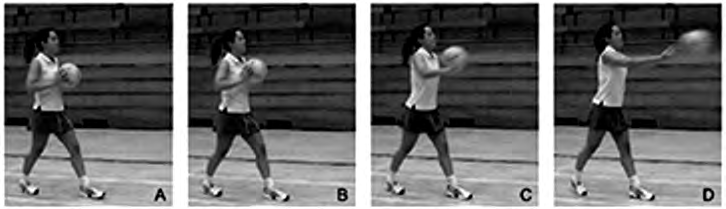
Catching a chest pass matters just as much as throwing one. To catch it, spread the fingers of both hands, point the thumbs towards your own chest, and let the ball settle firmly into your palms. Spread fingers cover a large part of the ball, so it does not slip out of the hands.
(b) Bounce Pass
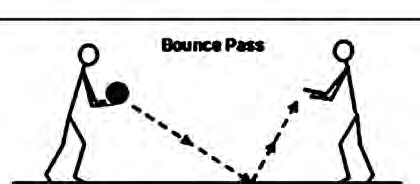
Bounce pass: holding the ball with both hands at the level of the belly or waist and thrusting it so that it bounces once on the ground and then reaches the teammate.
The bounce pass is used to get past an opponent and reach a teammate who is close by. An opponent who is blocking usually has their arms raised, ready to stop a ball in the air. A ball that goes low and bounces off the ground passes underneath those arms, which makes it hard to stop. The ball is thrown with just enough force that after the bounce it rises into the teammate's hands.
(c) Overhead Pass
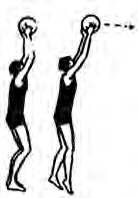
Overhead pass: holding the ball with both hands, taking it behind the head, bringing it up straight above the head and throwing it in the direction of the teammate.
This pass is usually used when an opponent is standing in front of the passer and the teammate is free. Because the ball is released from above the head, it goes over the head of the opponent in front. So the bounce pass finds a way under the opponent's arms, and the overhead pass finds a way over the opponent's head.
(d) Lob Pass
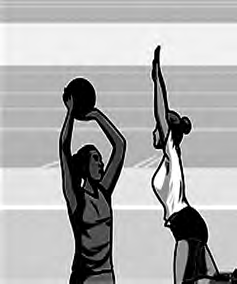
Lob pass: when an opponent is in between and the teammate is behind that opponent, throwing the ball with one hand from above so that it travels in a high U-shaped curve.
In a lob pass the ball does not travel straight. It rises high, clears the opponent's head and raised arms, and then drops down into the hands of the teammate standing behind. The path it makes is a high curved U shape. Because the ball is thrown from above with one hand, judging both its height and its distance takes practice. If it is too low, the opponent can jump and catch it; if it is too long, it sails over the teammate's head.
(e) Sling Pass
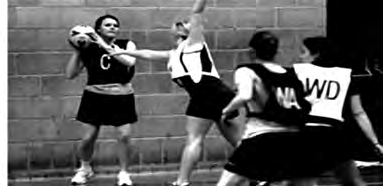
Sling pass: when teammates are to the right or left, passing the ball with one hand from the shoulder so that it reaches the teammate near their chest.
In a sling pass the arm swings out sideways from the shoulder and slings the ball across. When a teammate is not in front but out to the right or left, sending the ball sideways straight from the shoulder is quicker than turning the whole body to make a chest pass. Since only one hand throws, the palm must hold and control the ball well.
(f) Hip Pass
Hip pass: a pass like the sling pass, except that the ball is thrown from below the waist, near the hip, to the teammate at their waist.
The hip pass is a low pass to the side. Because the ball leaves from below the waist and only travels to the teammate's waist, it stays well below the opponent's raised arms. It is useful for giving the ball quickly and quietly to a teammate close by at the side.
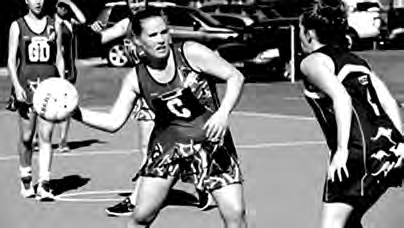
The sling pass and the hip pass are both one-handed passes to the side, so many students think they are the same. The difference is where the ball leaves the hand: a sling pass leaves from the shoulder and reaches the teammate's chest, while a hip pass leaves from below the waist near the hip and reaches the teammate's waist.
The Six Passes Side by Side
| Pass | Hands | Where the ball leaves from | When it is used |
| Chest pass | Both | In front of the chest, to the teammate's chest | Teammate is close |
| Bounce pass | Both | Belly or waist height, bounced once on the ground | Getting past an opponent to a nearby teammate |
| Overhead pass | Both | From behind the head, brought straight above it | Opponent in front and teammate free |
| Lob pass | One | From above, in a high U-shaped curve | Opponent in between and teammate behind |
| Sling pass | One | From the shoulder, to the teammate's chest | Teammates to the right or left |
| Hip pass | One | From below the waist near the hip, to the teammate's waist | A low pass to a teammate at the side |
2. Shooting
Shooting: throwing the ball during play with the aim of sending it into the net.
Shot: the chance, during play, to throw the ball into the opponent's net without being blocked.
Passing carries the ball to the net, but only shooting turns it into points. Because scoring points by shooting is a player's final aim, shooting is an important skill. A team may make ten good passes and bring the ball right up to the net, but if the shot misses, all that work earns nothing. The shooter lifts the ball above the head, eyes on the ring, and releases it towards the net, while the opponent stretches up to block the way.
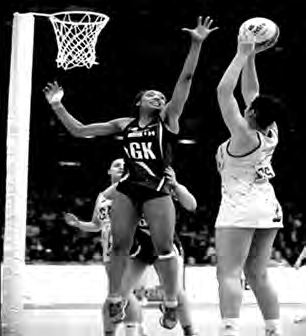
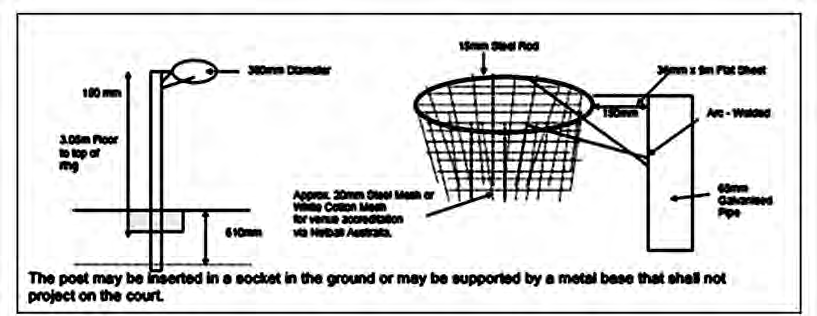
The target of every shot is the ring of the net. The ring sits high above the floor and is small, so both the height and the direction of the ball must be exactly right.
3. Pivoting
During play, any player may stand holding the ball in both hands for only 3 seconds. Sometimes, while holding the ball, a player cannot pass because the way is blocked, or no teammate is free because the opponents are marking them. In that moment the player turns on the spot to look for a free teammate in another direction. This turning is called pivoting.
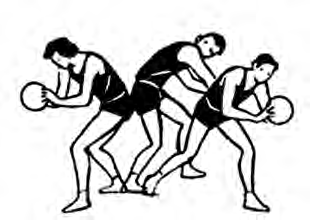
Pivoting: when a player holding the ball in both hands cannot pass, or no teammate is free, keeping one foot fixed like a peg in the ground and turning the other foot to the right or left. This must be done within 3 seconds.
A rope tied to a peg can swing all the way round, but the peg itself never leaves its place. In pivoting, the fixed foot is the peg and the other foot is the swinging rope. Pivoting is done like this:
- 1. Stand holding the ball firmly in both hands.
- 2. Keep one foot planted on the ground like a peg.
- 3. Step the other foot to the right or left, turning your body with it.
- 4. While turning, look for a teammate who is free.
- 5. Pass the ball with a suitable pass before 3 seconds are up.
In the hurry to turn, many players lift or shift the fixed foot as well, or keep hold of the ball for more than 3 seconds. Both are against the rules. The fixed foot must stay on the ground like a peg, and the ball must be passed within 3 seconds.
Game Strategy
In netball, the team whose players can put different game strategies into use during play is the team most likely to win. Players may know how to play and may be skilled, yet if they cannot make and use a plan as a group when the game needs it, the team can still lose. Seven good players each playing their own way are weaker than seven players following one plan together. Netball has two main kinds of strategy: offensive strategy and defensive strategy.
(a) Offensive Strategy
Offensive strategy: the team's planned effort, with teammates working in harmony and coordination, to put as many balls as possible into the opponent's net.
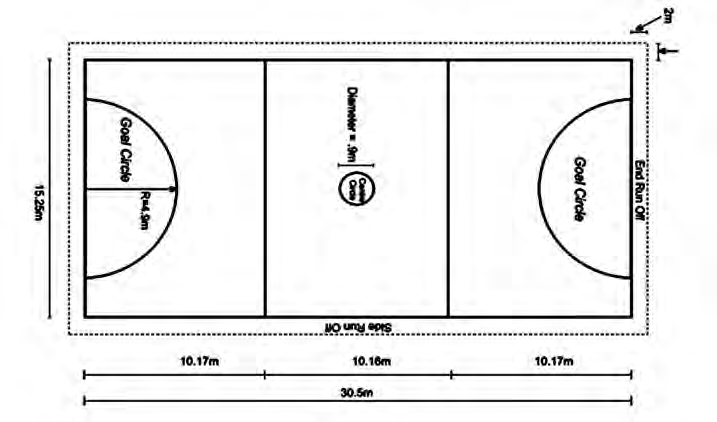
The main aim of netball is to score points by putting as many balls as possible into the opponent's net. Every method a team uses for this is part of its offensive strategy. For example: a quick chest pass when a teammate is close, an overhead or bounce pass to get round an opponent in front, a lob pass when a teammate has moved behind an opponent, and finally getting the ball to the shooter inside the goal circle to take a shot. None of this can be done by one player alone. It works only when teammates move together, so that as one player passes, another has already moved into a free space.
(b) Defensive Strategy
Defensive strategy: the strategy of protecting one's own side from the opponent's attacks, holding the opponent to as low a score as possible, and creating a situation in which the opponent can make as few attacks on one's own net as possible.
Scoring many points is not enough on its own; stopping the opponent from scoring matters just as much. In a defensive strategy players mark the opposing players closely, stand in the path of their passes with arms raised, and do not let the shooter take an easy shot. The aim is that the opponent cannot even bring the ball into one's own goal circle. A good team plays both strategies together, attacking and defending in turn.
| Point | Offensive strategy | Defensive strategy |
| Aim | Put as many balls as possible into the opponent's net | Hold the opponent to as low a score as possible |
| Which net | The opponent's net | One's own net |
| Depends on | Harmony and coordination among teammates | Protecting one's own side from attack |
Skill wins a pass or a shot; strategy wins the game.
The full lesson is waiting for you
The notes are free to read in full. A free account opens the rest of the practice, and tracks your progress and confidence score for every subject. Presentations and videos need approval from Learn Yeti.