The Basic Skills of Badminton
Owning a racket and a shuttlecock does not make someone a badminton player. The shuttlecock stays in the air for only a moment, and in that moment a player has to hit it the right way, send it to the right part of the opponent's court, and get ready for the next shot. Doing this again and again needs a small set of basic skills. A player without them can swing as hard as they like and still watch the shuttlecock land in the net or outside the court. Badminton has five basic skills:
- Grip: the way the racket is held
- Service: the shot that starts play
- Stroke: any hit of the shuttlecock with the racket
- Stance: keeping the body balanced and ready
- Footwork: moving the feet to reach the shuttlecock
The five skills work together. A good stance lets a player move off quickly. Good footwork brings them close to the shuttlecock. The right grip holds the racket the proper way. Only then does a stroke or a service go where it is meant to go.
Grip: Holding the Racket
Grip: the way a player holds the badminton racket is called the grip, or gripping.
A racket has to be held so that hitting and returning the shuttlecock feels easy and light. Held awkwardly, it tires the arm on every shot and sends the shuttlecock the wrong way. That is why gripping is counted as an important skill in badminton. The hand always holds the racket at its handle, the part below the shaft.
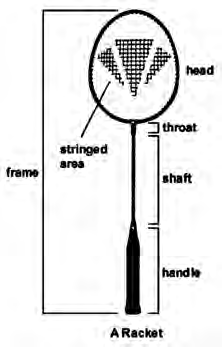
During a game the shuttlecock sometimes comes to the right side of the body and sometimes to the left. Holding the racket the same way for both makes one of those shots weak, so there are generally two kinds of grip.
Forehand grip: the position of the hand, or the way of holding the racket, used to return a shuttlecock that comes to the right side of the body.
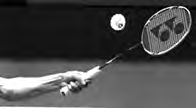
Backhand grip: the way of holding the racket used during play to return a shuttlecock that comes to the left side.
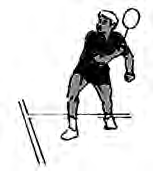
During a rally a player watches where the shuttlecock is heading and switches quickly between the forehand and the backhand grip. The backhand grip is also the grip used for the flick service.
Service: Starting the Play
Service: the shot in which a player hits the shuttlecock with the racket so that it falls in the right place in the opponent's court.
The server holds the shuttlecock in one hand and the racket in the other. A service that does not land in the right place gives the point to the opponent, so the server must be able to put the shuttlecock exactly where it belongs in the opponent's court. There is more than one way to serve. Depending on where the opponent is standing and whether the game is singles or doubles, a player chooses from several kinds of service.
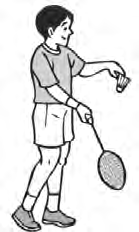
The Four Kinds of Service
- (a) Short and low service
- (b) Long and high service
- (c) Drive or shooting service
- (d) Flick service
These services take different paths through the air. The low serve crosses the net and drops almost at once. The flick serve passes over the opponent's head towards the back. The high serve climbs highest of all and falls at the far end of the court. Seen from above, they also land in different parts of the opponent's court.
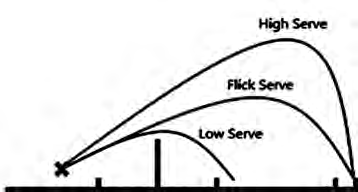
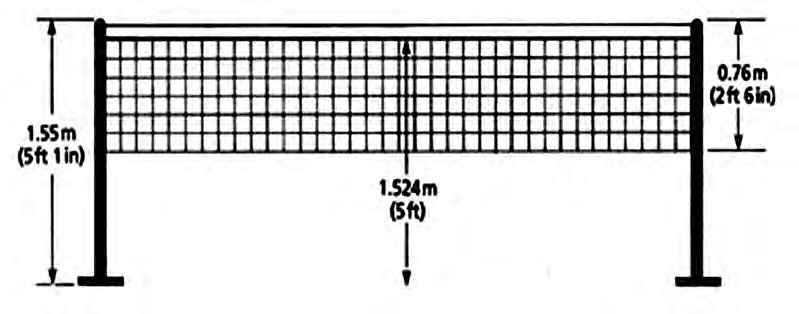
Short and low service: the server stands near the short service line of their own court and sends the shuttlecock low, almost brushing the net, so that it lands near the opponent's short service line.
This service is used mostly in doubles. Because the shuttlecock travels low, just over the top of the net, the opponent gets no chance to hit it down hard from above.
Long and high service: the player sends the shuttlecock as high as possible so that it reaches the opponent's long service line for singles.
This service is generally used in singles. A shuttlecock sent that high falls almost straight down at the back, so the opponent has to go all the way to the rear of the court to return it.
Drive or shooting service: the shuttlecock is hit low, just above the net, and hard, so that it flies straight to the right place in the opponent's court.
It is used in both singles and doubles. The shuttlecock travels fast and flat, leaving the opponent little time to get ready, and it lands in the back area of the court.
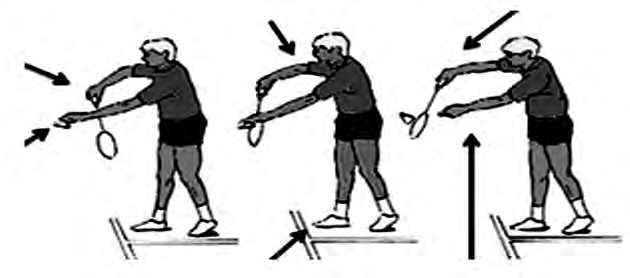
Flick service: holding the racket with a backhand grip in front of the stomach, the player flicks away the shuttlecock held in the other hand.
The flick service is also used in both singles and doubles. The player tries to flick the shuttlecock so it arrives near the short service line or on the service line. By sending it sometimes to the front area of the opponent's court and sometimes to the back, the server tricks the opponent. An opponent who steps forward expecting a short serve finds the shuttlecock already flying over their head to the back.
Strokes: Attacking and Defending
Stroke: any act of hitting the shuttlecock with the racket, in whatever way, is a stroke.
A stroke has two jobs. The first is to keep the shuttlecock from falling in your own court for as long as possible. The second is to make it fall in the opponent's court. After the service, every hit in a rally is a stroke.
Strokes come in several kinds. They are divided into two main groups, depending on whether the player is in a strong position or a weak one:
- (a) Offensive stroke
- (b) Defensive stroke
Offensive stroke: a stroke used to land the shuttlecock in the opponent's court in a way they cannot return, so as to win the point and the game.
An attacking stroke is not played at just any moment. It is the right choice when your own position is good, for example when the shuttlecock has come high above the net and close to you. Smashing, the low attacking clear and the clear belong to this group.
Defensive stroke: a stroke used when your position is weak, to escape the opponent's attack by making them take a long time to hit the shuttlecock, while you get back into a good position.
To do this, the shuttlecock is hit far and high so that it reaches the last line of the opponent's court. While it hangs in the air, you have time to get back to the middle of your own court. The high defensive clear belongs to this group.
The word 'clear' turns up in both groups. The low attacking clear is an attacking stroke and the high defensive clear is a defensive one. When a question asks only about 'the clear', it is counted as a defensive skill.
Where the Shuttlecock Is Met: Four Kinds of Stroke
Defensive strokes also come in different kinds, named after where the shuttlecock reaches the body. Above the head it is overhead. Below the shoulder it is underhand. On the side of the hand holding the racket it is forehand, and on the other side it is backhand.
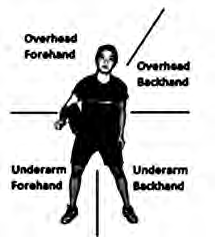
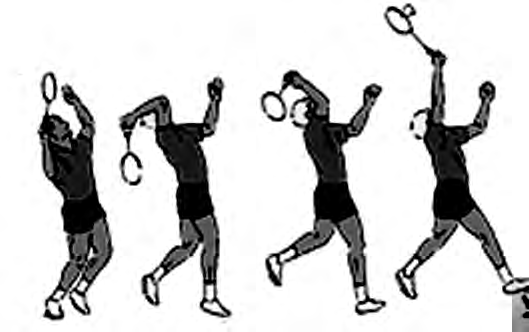
Overhead stroke: when the shuttlecock comes above the head during play, the racket is raised and the shuttlecock is sent back towards the opponent's court.
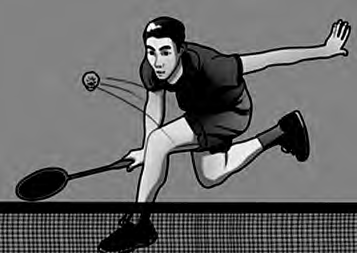
Underhand stroke: hitting with the racket a shuttlecock that arrives below your shoulder, to send it back towards the opponent's court.
Forehand stroke: hitting with the racket to return a shuttlecock that comes to the right side of a right-handed player, or to the left side of a left-handed player.
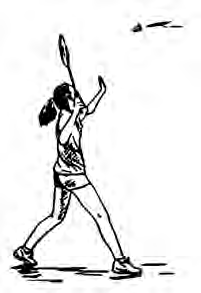
Backhand stroke: hitting with the racket to return a shuttlecock that comes to the left side of a right-handed player, or to the right side of a left-handed player.
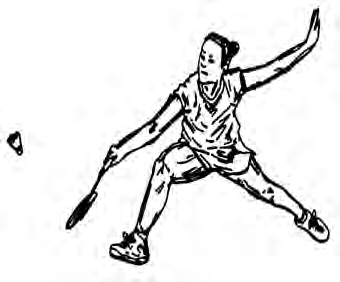
Forehand does not always mean right and backhand does not always mean left. The hand holding the racket decides it. For a right-handed player a shot on the right is a forehand, but for a left-handed player the forehand is the shot on the left.
The Clear
The clear, the dropshot and the smash all belong to the attacking and defensive strokes. A player picks whichever one the moment in the game calls for. Here is a short look at each of the three.
Clear: hitting the shuttlecock with the racket so that it travels high and deep, reaching the area of the opponent's long service line.
In badminton the clear is regarded as a defensive skill. It can generally be played in two ways:
- 1. Overhead clear
- 2. Underhand clear
Overhead clear: hitting a shuttlecock that comes above the head, or to the right or left of the head, so that it goes high to the back area of the opponent's court.
The overhead clear itself has two forms:
- Forehand overhead clear: a shuttlecock coming to the right of the head is hit so that it goes high all the way to the back of the opponent's court.
- Backhand overhead clear: a shuttlecock coming to the left of the head is hit so that it goes high all the way to the back.
Underhand clear: hitting a shuttlecock that has come in low so that it rises high and falls in the back area of the opponent's court.
The underhand clear also has two forms:
- Forehand underhand clear: a low shuttlecock coming on the right side is hit so that it goes high into the back area of the opponent's court.
- Backhand underhand clear: a low shuttlecock coming on the left side is hit so that it goes high into the back area of the opponent's court.
Every clear takes its name from two questions: how high the shuttlecock came (overhead or underhand) and which side it came to (forehand or backhand). That gives four ways of playing a clear.
The Dropshot
Dropshot: hitting the shuttlecock gently with the racket so that it falls close to the net in the opponent's court.
The dropshot is used to trick the opponent, so it is played when the opponent is at the back of the court. By the time a player standing at the back has run to the net, the shuttlecock is already on the floor. The dropshot can also be played in different ways:
- Overhead dropshot: a shuttlecock coming above the head, or to its right or left, is hit so that it falls close to the net in the opponent's court.
- Underhand dropshot: a shuttlecock that has come in low is hit so that it falls close to the net in the opponent's court.
The clear and the dropshot do opposite jobs. A clear sends the shuttlecock to the very back of the opponent's court, while a dropshot lets it fall right by the net. Mixing the two keeps the opponent running forwards and backwards.
The Smash
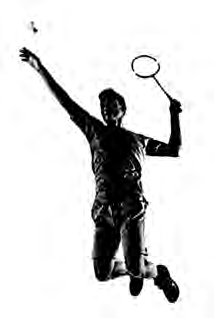
Smash: an attacking skill in which a shuttlecock that is higher than the net is hit hard.
For a smash the shuttlecock has to be higher than the net. Hit hard from below net height, it would simply crash into the net. In a smash the shuttlecock is hit with force, and the player aims either straight at the opponent or at an empty space on the court. A smash into an empty space is one the opponent cannot reach in time.
Stance: The Ready Position
Stance: keeping the body ready, and in balance, to hit the shuttlecock during play.
In a good badminton stance:
- The left foot is placed in front and the right foot behind.
- The body bends forward a little.
- The eyes stay on the opponent who is about to hit the shuttlecock.
- The player stays set as if ready to smash.
A player standing upright and stiff only starts to move after the shuttlecock has already come. A player crouched a little and balanced can set off in any direction at once.
Footwork: Getting to the Shuttlecock
Footwork: moving the feet forwards, backwards, right and left, according to the direction and situation of the shuttlecock coming into your court, and setting them so that hitting it with the racket becomes easy.
With good footwork a player arrives beside the shuttlecock before it drops and hits it from the right spot. A dropshot means moving forward towards the net, a clear means moving back, and a shot to either side means moving quickly that way. Stance keeps the player ready; footwork carries them to the shuttlecock.
The Skills at a Glance
The four kinds of service compare like this:
| Service | Path of the shuttlecock | Where it lands | Mainly used in |
| Short and low | Low, almost brushing the net | Near the opponent's short service line | Mostly doubles |
| Long and high | As high as possible | On the long service line for singles | Generally singles |
| Drive or shooting | Just above the net, hard and straight | Back area of the court | Singles and doubles |
| Flick | Flicked from in front of the stomach with a backhand grip | Front or back, to trick the opponent | Singles and doubles |
The three main skills used during a rally can be told apart like this:
| Skill | What kind of skill | How it is hit | Where the shuttlecock goes |
| Clear | Defensive | High and far | The opponent's long service line area |
| Dropshot | Used to trick the opponent | Gently | Close to the net in the opponent's court |
| Smash | Attacking | Hard, from above net height | At the opponent or into an empty space |
The full lesson is waiting for you
The notes are free to read in full. A free account opens the rest of the practice, and tracks your progress and confidence score for every subject. Presentations and videos need approval from Learn Yeti.