The Question of How Evolution Happens
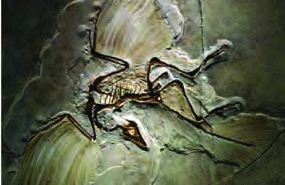
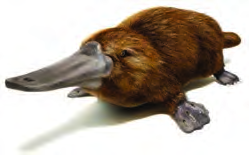
Millions of kinds of living things surround us, and they did not all appear at once. Over millions of years, complex organisms developed step by step from simpler ones, and the proof turns up in many places. Among the fossils preserved in rock, the remains of Archaeopteryx show the features of a bird and of a reptile in one body, while the platypus is a strange animal that lays eggs yet feeds its young on milk. Such connecting links show that the groups of living things are related to one another.
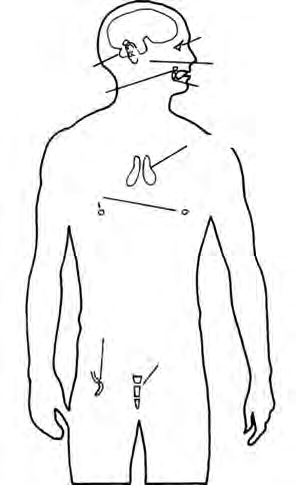
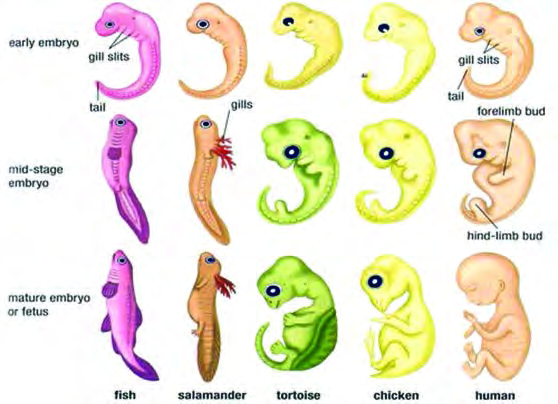
The proof also sits inside animal bodies. Our own body carries small vestigial organs that do no work now but were working organs in our ancestors. In the same way, when the early stages of backboned animals are studied, the embryos of the fish, the salamander, the tortoise, the chicken and the human look almost the same at the start. All of this evidence shows that evolution has happened, but none of it says how. To answer that question of how, scientists put forward theories of evolution.
Many scientists contributed to building the theory of evolution. Jean Baptiste Lamarck of France, Alfred Russel Wallace and Charles Darwin of England, and Hugo De Vries of Holland each put forward their own theories about how evolution works. Here we study the theories of Lamarck and Darwin, the examples they used, and the questions that were raised against them.
Lamarck's Theory
Lamarck was a French philosopher, and he was the first person to give a theory of how evolution happens. His theory was published in 1809 in a book called Philosophie Zoologique. Lamarck's theory can be understood in three points:
- Direct environmental effect: when the environment changes, the body of the organism changes directly in response.
- Use and disuse of organs: an organ that is used more develops further, while an organ left unused grows weaker and finally disappears.
- Inheritance of acquired characters: the features an organism gains during its own lifetime pass on to its offspring.
In a changing environment, an organism keeps meeting new needs, and because of those needs its body changes. Such change can go from the transformation of existing organs to the development of entirely new organs and the loss of old ones. Lamarck said that the characters an organism gains through use, disuse and the effect of the environment keep passing to its offspring, and as the same kind of change repeats in every generation, a new species finally arises.
An acquired character is a feature that an organism gains during its own lifetime through the use or disuse of an organ or through the direct effect of the environment.
The Giraffe's Neck in Lamarck's Explanation
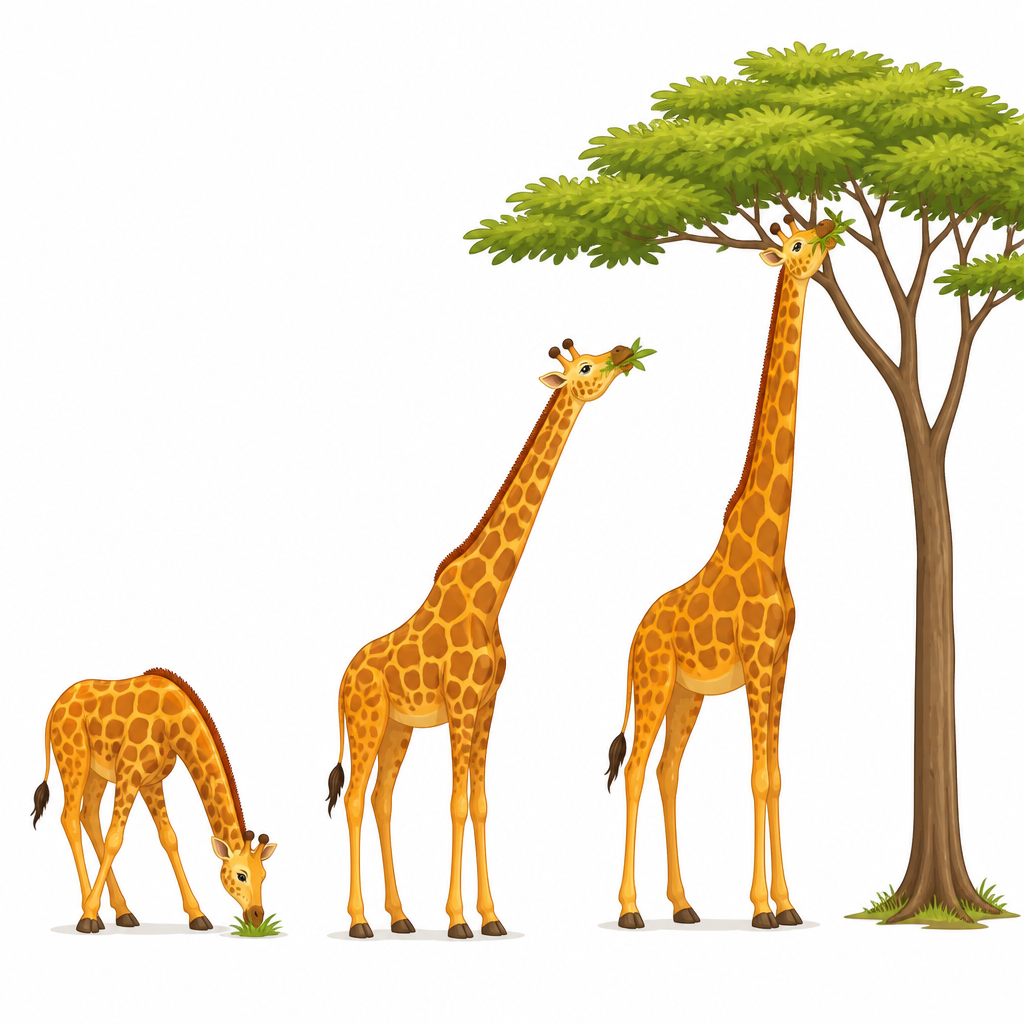
Lamarck used his own theory to explain how the short necked giraffe came to have a long neck. His explanation runs like this:
- In the beginning all giraffes had short necks and grazed on the grass of the plains.
- A change in the environment made the grass scarce, so the giraffes began stretching upward to eat the leaves of trees.
- Because the neck was used again and again, it grew a little longer with time.
- The lengthened neck kept passing to the offspring in every generation.
- The same process ran on for many generations, and the long necked giraffes of today developed.
Why Lamarck's Theory Was Rejected
Lamarck's explanation sounds simple, but when the theory was tested by experiment it was not found correct. It could not give a satisfying answer to some questions about evolution, so the theory was left unanswered and came to be rejected. The questions were these:
- Can an organism develop its organs simply according to its own wish and need?
- Are all acquired characters really passed on to the offspring?
A strong body built by years of exercise is not born into that person's children. Characters earned during one lifetime do not pass to the offspring, and this is exactly where Lamarck's theory slipped.
Darwin's Theory
Charles Darwin was an English scientist. In 1859 he published his book on the origin of new species. Darwin's theory is also called the theory of natural selection. In his book he put forward five concepts about the development of living things, and they can be understood one by one below.
Enormous Fertility
Every organism has an enormous capacity to produce offspring. If every offspring born were to survive, the number of that organism would double by the next generation. In this way organisms multiply in a geometric ratio, yet in nature their numbers do not explode like that and stay roughly the same. Take the elephant, which gives birth to only about 6 calves in its whole life. If every calf born survived, one pair of elephants would produce 1900000 descendants in 750 years. Nothing like that is seen in nature, because most of the offspring born never get to survive.
Struggle for Existence
If every offspring born were to survive, the number of organisms in nature would grow so large that food and living space would run short. So every organism has to struggle, or compete, with its changing environment to eat, to find a place to live and to reproduce. This competition happens within an organism's own group and also between groups of different species. Only the organisms that succeed in this struggle are able to survive, while those that fail in it disappear.
The struggle for existence is the competition that organisms carry on, within their own group and with groups of other species, for food, shelter and reproduction.
Variation and Heredity
Even when organisms in nature belong to the same species, they differ from one another in some character or other. Differences are found even between siblings, and between parents and their offspring. Such variation arises because of changes in the environment or for genetic reasons. A new character that an organism gains through variation keeps passing on to the next generation. But not every organism receives a variation that suits its environment. The organisms whose variation favours their environment are able to survive, while those with an unfavourable variation cannot.
Variation is the difference in characters found between organisms of the same species.
Natural Selection
When organisms develop characters that suit their environment they survive, but when unfavourable characters develop they slowly disappear. How long an organism lives and how it lives is decided by nature itself. Through the struggle for existence, favourable characters keep developing, those characters pass to the offspring, and in every generation still more favourable characters build up. After many years the offspring appear with entirely new characters, and the presence of those characters makes the organism able to live in its environment.
Natural selection is the natural process by which organisms with characters that suit the environment survive while those with unfavourable characters gradually disappear.
Nature does not pick the strongest. It picks the one that fits its environment best.
Origin of New Species
The organisms that become adapted through the struggle for existence are the ones that survive, and their adaptive characters keep passing to their offspring. As these characters pass on in a changing environment, after many generations offspring arise whose characters differ from those of their ancestors. These offspring develop into new organisms. In this way, two or more kinds of new living things can arise from a single ancestor.
Criticism of Darwinism
Although Darwin's theory explains evolution well, some weaknesses have been pointed out in it:
- Darwin did not clearly describe how new organisms actually arise from variation.
- He did not clearly explain why only some organisms receive favourable variations while others receive unfavourable ones.
- Natural selection is not the only cause of the development of new species, because mutation also brings differences into organisms.
- If natural selection chose only useful characters, useless characters should never have been selected, yet such characters are still found.
Lamarck and Darwin Compared
Both scientists explained the same fact, the giraffe's long neck, but along two different roads. In Lamarck's view the neck grew long through use, and that lengthened neck passed to the offspring. In Darwin's view giraffes already varied in the length of their necks, and in an environment where the grass had run out, only the long necked ones survived. The table below shows how the two theories differ.
| Basis | Lamarck's theory | Darwin's theory |
| Cause of change | Use and disuse of organs and the direct effect of the environment | Variation and natural selection |
| The giraffe's neck | Stretched long through constant use | Only those born with the variation of a longer neck survived |
| What passes to the offspring | Characters acquired during the lifetime | Favourable variations present from birth |
| Standing of the theory | Rejected because experiments did not confirm it | Widely accepted, though criticised on some points |
The full lesson is waiting for you
The notes are free to read in full. A free account opens the rest of the practice, and tracks your progress and confidence score for every subject. Presentations and videos need approval from Learn Yeti.