What Physical Training Is
Every time you run, swing your arms or bend down, the joints and muscles of your body are at work. When movements like these are planned, done in a fixed order and repeated regularly, they keep the whole body fit. That planned way of moving every part of the body is called physical training.
Physical Training (P.T.): activity in which all the parts of the body are moved in order to keep the body fit and healthy. P.T. is the short form of Physical Training.
In physical training, the joints and muscles of different parts of the body are stretched or moved. The arms, shoulders, neck, chest, waist and legs each get their turn. Done well, this keeps the body active, well shaped, healthy and fit, and regular practice makes the muscles strong, flexible and healthy.
In the past, physical training was used far more in the police and the army than in schools. Soldiers practised it to prepare for the hard life of war, so many people thought of it as something only soldiers did. Today it is part of everyday life, and schools run it as a regular activity.
Every exercise finishes on a fixed count. To develop the different parts of the body, the actions of each exercise end on a count of 8, 16 or 32. All the tables in this topic finish on count 16.
Why Drill and Physical Training Matter
Drill and P.T. are both done in a group, following commands and a steady beat. That is why they shape a person's habits and behaviour as well as the body. Their main benefits are these:
- They make the muscles strong, firm and sturdy.
- They build stamina, so you can keep working for a long time without stopping.
- They increase energy, quickness and strength.
- They enlarge the blood vessels and the heart muscle.
- They bring a good appetite and sound sleep.
- They raise the body's power to resist disease.
- They develop honesty, discipline, leadership, team spirit and cooperation.
- Because drill is all about obeying commands, it builds the habit of respecting elders and seniors.
- They build the habit of practising as a group and moving in perfect uniformity.
The first six benefits are about the body. The last three are about character and habits. Drill and P.T. build both.
Moving to Counts and the Drum
In drill and in P.T., every movement is broken into small pieces and each piece is given a count. From the start position, one piece is done on count one, the next on count two, and so on. Because everyone makes the same move on the same count, the whole group moves as if it were one person.
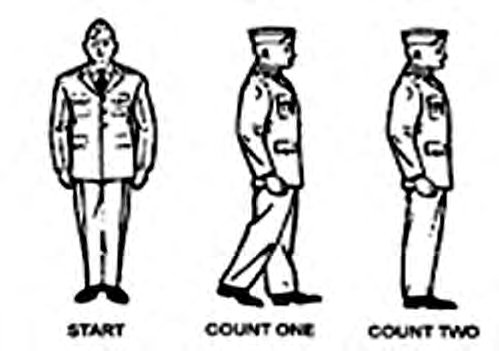
The Curriculum Development Centre has prepared a series of P.T. tables for schools. Tables 1 to 6 are learnt in class 9, so here we continue with tables 7 to 12. Every table has three parts:
- The start position: how you stand before the exercise begins.
- The body's movements during the exercise: what you do on each count of the drum.
- The end position: how you stand once the exercise is over.
P.T. table: a chart that sets out one exercise in order: the start position, the movements made count by count to the beat of a drum, and the end position.
P.T. runs on a continuous count, kept by a drum or a madal, the two-headed hand drum used across Nepal. Whoever plays it keeps to these rules:
- Play one beat on every count from 1 to 16.
- On the 15th count, play two beats instead of one. This tells everyone the exercise is about to finish.
- At all other times, match the speed of the beat to the movement of the body.
- At the very end, play one extra beat to bring everyone to attention.
The double beat on count 15 warns you that the end is near. It is not the signal to stop. Finish the movement on count 16, and only then stop.
PT Table 7: Chest and Waist Exercise
This exercise stretches the chest and the waist. The feet stay where they are, and only the arms and upper body turn.
Start position: stand with the feet apart and both hands hanging at the sides.
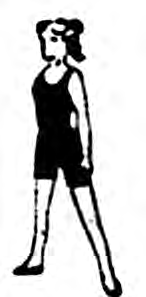
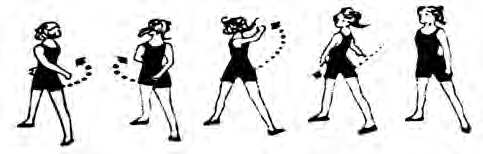
The movements, count by count:
- Counts 1, 2, 3 and 4: keep the feet still and twist both arms to the left, to the right, to the left again and to the right again.
- Count 5: stretch both arms out to the left side.
- Count 6: bring the arms across to the right.
- Count 7: stretch them out to the left side again.
- Count 8: bring the hands down to the sides.
- Counts 9 to 16: do the same set on the right side, and on count 16 bring the left foot in beside the right foot and stop.
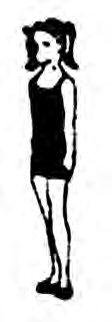
End position: the drum plays one extra beat and everyone comes to attention.
PT Table 8: Shoulder and Neck Exercise
This exercise works the shoulders and the neck. Because you rise onto your toes each time the arms go up, it also trains your balance.
Start position: stand at attention with both hands at the sides.
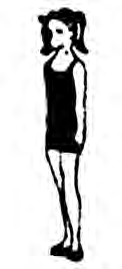
The drum follows the same rules as in Table 7: one beat per count from 1 to 16, with a double beat on count 15. The movements, count by count:
- Count 1: put both hands on the shoulders and step the left foot out to the left.
- Count 2: push both arms straight up and rise onto the toes.
- Count 3: bring the hands back down onto the shoulders and lower the heels.
- Count 4: drop both hands to the sides and stand at attention.
- Count 5: step the right foot out to the right, then repeat what you did on counts 2, 3 and 4.
- Up to count 16: keep going like this, left side then right side, until count 16.
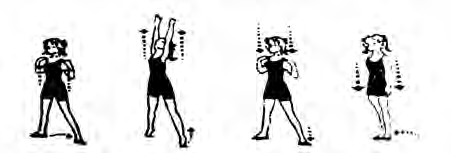
End position: stand at attention.
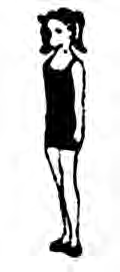
PT Table 9: Chest Exercise
This exercise combines bending forward with sweeping the arms up in a wide circle, which opens out the chest. Its drum rhythm is different from the other tables, because it mixes fast beats with slow ones.
Start position: stand at attention with both hands at the sides.
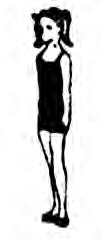
The drum is played to this rhythm:
| Count | Beat |
| 1, 2 and 3 | Fast |
| 4 | Slow |
| 5, 6 and 7 | Fast |
| 8 | Slow |
The movements, count by count:
- Count 1: bend forward and take both hands down outside the left and right feet.
- Count 2: sweep both arms round in a circle, starting from the left of the feet and bringing them up.
- Counts 3 and 4: do the same movement again.
- Counts 5 and 6: turn the body round in the same way.
- Counts 7 and 8: do it twice more in the same way, then come to attention.
- Repeat the whole pattern up to count 15, and on count 16 stand at attention.
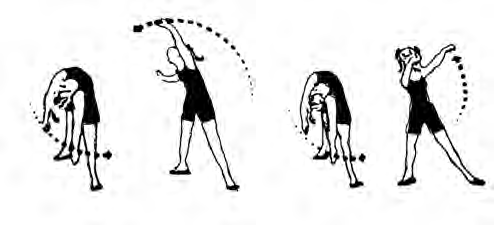
End position: stand at attention with both hands at the sides.
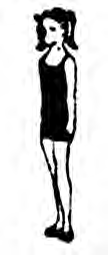
PT Table 10: Body-Turning Exercise
This exercise bends the waist both forwards and backwards, with the arms and head following the body each time. Here the drum keeps to the speed of the group.
Start position: stand with the feet about 20 cm apart and both arms held out at a slant towards the right.
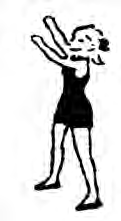
The movements, count by count:
- Count 1: open the left foot, take both hands towards it and bend down to the left.
- Count 2: come up a little and bend down again.
- Counts 3 and 4: rise slowly, take both arms back, face upwards and bend backwards twice.
- Counts 5 and 6: bend towards the right foot twice in the same way.
- Counts 7 and 8: with the arms and head tipped back, sway backwards twice.
- Carry on like this up to 15, and on count 16 stand with both hands at the sides.
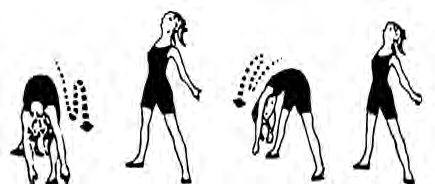
End position: from the stance with the feet about 20 cm apart, bring both hands to the sides and stand at attention.
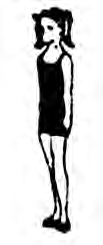
PT Table 11: Jumping on Both Feet
This is a jumping exercise. It needs a quick beat, so the drum is played faster than in the other tables, but without any break, all the way to count 16.
Start position: stand at attention with both hands at the sides.
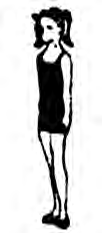
The movements, count by count:
- Counts 1, 2, 3 and 4: keeping the hands at the sides, make four light jumps on both feet.
- Counts 5 and 6: jump the arms and legs wide open, then jump them back together.
- Count 7: jump the arms and legs open.
- Count 8: jump them together again.
- Keep going the same way, and on count 16 stand at attention.
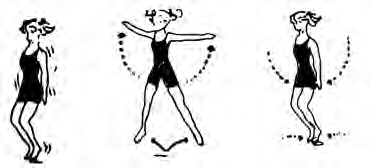
Jump lightly and land softly on the front of your feet. Leave enough room on both sides so your spread arms do not hit the person next to you.
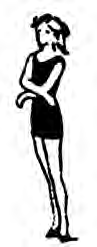
End position: fold both arms across the stomach and stand with the feet together. The next table starts from exactly this position.
PT Table 12: Cool-Down Exercise
Cool-down: light exercise done after harder exercise to bring the body gently back to its normal state.
The series of tables ends with this exercise. Here too the drum plays faster than in the other tables, without a break, up to count 16.
Start position: arms folded across the stomach, feet together. No drum beat is needed for this position, because the class is already standing this way at the end of Table 11.
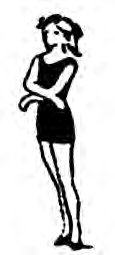
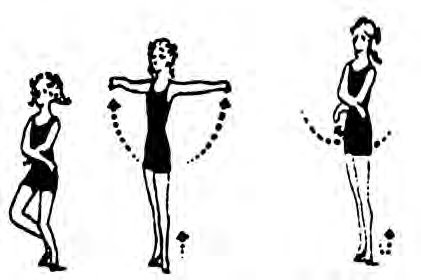
The movements, count by count:
- Count 1: bend the knees a little, sweep the folded arms down and out to the left and right, and rise to stand straight on the toes.
- Count 2: bring the spread arms forward, fold them across the body again and settle back onto the heels.
- Repeat these two movements without stopping until count 16.
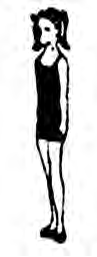
End position: stand at attention with both hands at the sides. The drum plays one extra beat for this.
Tables 7 to 12 at a Glance
| Table | Exercise | Start position | End position |
| 7 | Chest and waist | Feet apart, hands at the sides | Attention, one extra drum beat |
| 8 | Shoulders and neck | Attention, hands at the sides | Attention |
| 9 | Chest | Attention, hands at the sides | Attention, hands at the sides |
| 10 | Body turning | Feet about 20 cm apart, arms slanted to the right | Attention, hands at the sides |
| 11 | Jumping on both feet | Attention, hands at the sides | Arms folded at the stomach, feet together |
| 12 | Cool-down | Arms folded at the stomach, feet together, no drum beat | Attention, one extra drum beat |
Every table runs in the same order: start position, counted movements, end position, finishing on count 16. The end position of Table 11 is the start position of Table 12.
The full lesson is waiting for you
The notes are free to read in full. A free account opens the rest of the practice, and tracks your progress and confidence score for every subject. Presentations and videos need approval from Learn Yeti.