Food and Medicine Since Ancient Times
Because of its special qualities, mushroom has been used as a food and as a medicine since ancient times. A fresh mushroom holds a great deal of water, so it begins to rot within a few days of being picked. A farm produces a large amount of mushroom at once, and nobody can eat it all in one day. For this reason, different techniques are used to keep mushroom safe and usable for a long time. From these techniques come dried mushroom called sukuti, pickle, ketchup, soup and other products. Mushroom preserved this way can be eaten out of season, and selling it brings the farmer an income too.
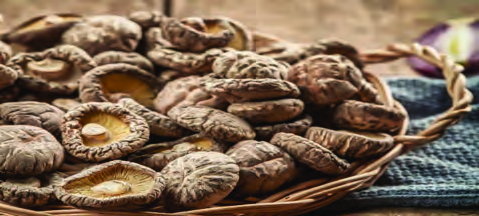
Sukuti is mushroom that has been cleaned, cut into pieces and dried thoroughly so that it can be stored and eaten long after harvest. It is the dried form of mushroom.
Making Mushroom Sukuti
The simple method of making sukuti can be followed in any home. The mushroom is cleaned, cut small, blanched in hot water and then dried. Blanching in boiling water destroys the germs on the mushroom, so its colour and quality do not spoil during drying. The method goes like this:
- (a) Wash the mushrooms until they are completely clean.
- (b) Cut them into small pieces.
- (c) Blanch the pieces in boiling water.
- (d) Dry the mushroom in open sunlight, over a hearth, or in a modern oven.
- (e) Once fully dry, pack it so that no air can enter.
- (f) Store the packed mushroom in a suitable place.
Methods of Drying Mushrooms
In general, two methods are used to dry mushrooms. The first is drying with the help of chemicals. The mushroom is soaked for 16 hours in a solution of 1% potassium bisulphide, 0.2% citric acid, 6% sugar and 3% salt. It is then kept at a temperature of 60 to 62 degrees Celsius and dried for 8 hours, which produces good quality sukuti. Sukuti made this way is ground into powder and kept sealed in an airtight container.
The second is sun drying. Fresh mushroom is dried in sunshine where the temperature is above 25 degrees Celsius. When a drying machine is used instead, the temperature must be kept between 40 and 45 degrees Celsius. Mushroom dried this way can be stored inside a sealed polythene bag for up to 120 days.
The purpose of drying is to remove water from the mushroom. Without water, germs cannot grow, so dried mushroom keeps for months without spoiling.
Pickle, Ketchup and Other Products
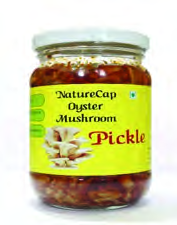
Mushroom can also be stored for a long time in the form of ketchup, chutney and pickle. These products can be stored for at least 6 months at a temperature of 20 to 22 degrees Celsius. Beyond that, mushroom can be cooked into many dishes such as soup, pakauda, omelette sandwich, curry, ketchup and pickle. In this way one mushroom crop gives many tasty and nutritious foods.
| Product | Storage condition | How long it keeps |
| Dried mushroom | Inside a sealed polythene bag | Up to 120 days |
| Ketchup, chutney and pickle | At 20 to 22 degrees Celsius | At least 6 months |
| Sukuti from the chemical method | Powdered, in an airtight container | For a long time |
Edible and Poisonous Mushrooms
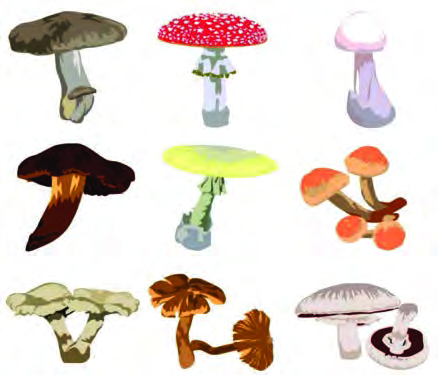
Every year the news carries stories of people dying after eating poisonous mushrooms. It is difficult to separate the mushrooms found in a forest into those that can be eaten and those that are poisonous. That is why an unfamiliar wild mushroom must never be eaten. Only mushrooms that you know well, or that have been certified as safe to eat, should be eaten. No special technology has yet been developed for identifying a poisonous mushroom. People therefore rely on the experience of their elders to separate the edible from the poisonous.
Never eat or taste a wild mushroom you do not recognise. Eat only mushrooms you know well or that have been certified as edible.
An edible mushroom is one that is known or certified to be safe for eating and does no harm to the body.
A poisonous mushroom is one that contains poison, harms the body when eaten, and can even take a life.
Signs of a Possibly Poisonous Mushroom
Although separating poisonous mushrooms is not an easy task, a mushroom with any of the following features can be suspected of being poisonous:
- (a) A mushroom of light brown colour
- (b) A mushroom with white gills
- (c) A mushroom with a ring on its stalk
- (d) A mushroom of red colour
- (e) A mushroom with a red stalk or a red pileus, the cap
- (f) A mushroom whose smooth pileus shows no insect marks at all
- (g) A mushroom whose pileus turns yellow when pressed gently, and so on
No mushroom should ever be eaten on the guess that it is not poisonous. Whether a mushroom is poisonous or not can be confirmed only by testing it in a laboratory.
The signs above are only grounds for suspicion. A mushroom without any of these signs can still be poisonous, so the final word always belongs to the laboratory test.
The full lesson is waiting for you
The notes are free to read in full. A free account opens the rest of the practice, and tracks your progress and confidence score for every subject. Presentations and videos need approval from Learn Yeti.