What is an insecticide?
A crop standing in the field is never fully safe. Different harmful insects eat the plants or spread disease among them, and the harvest falls. Larvae that chew vegetable leaves, weevils that breed in stored grain and insects that attack fruit are all enemies of this kind. To kill or control them, farmers use different insect killing substances.
Insecticides are the compounds used to kill and control the insects that harm our crops.
An insecticide is applied either as a dust sprinkled over the plant or as a liquid sprayed on it. Malathion, for example, is sprayed to destroy the insects that attack vegetable crops and fruit.
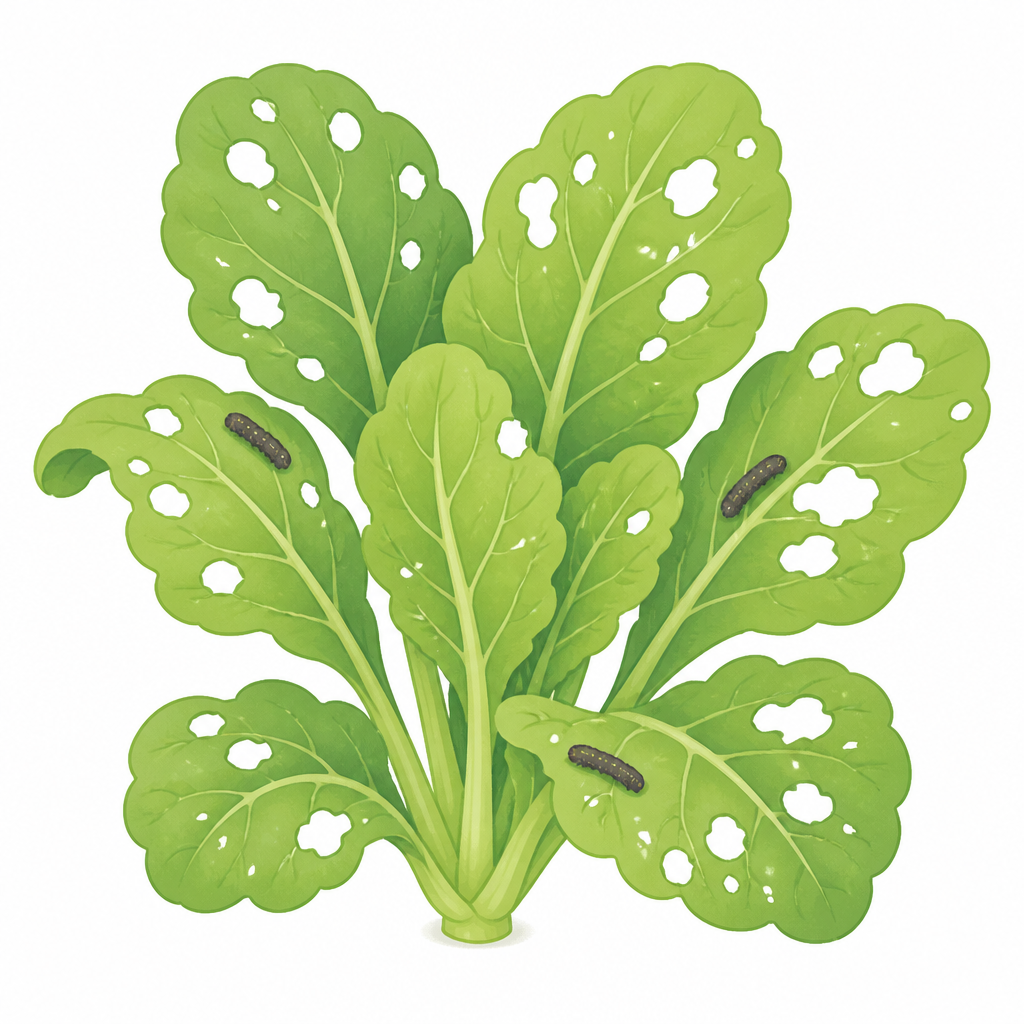
Types of insecticides
Insecticides are classified into two kinds, bio insecticides and chemical insecticides. A bio insecticide can be made at home from local plants, while a chemical insecticide is manufactured in industry from chemicals.
Bio-insecticides
A bio-insecticide is a pesticide made by collecting parts of local plants that insects dislike.
Jholmol, a liquid brewed from strong smelling plants, is one example of a bio-insecticide. The ash that village farmers dust over their vegetable beds is another. Placing asuro, the Malabar nut plant, in the soil before planting potatoes, keeping neem leaves in grain stores, and killing bedbugs with a liquid of titepati, which is mugwort, and neem are all everyday uses of bio-insecticides.
Careless use of chemical insecticides pollutes both the physical and the living environment. Bio-insecticides can be used in their place. A bio-insecticide helps drive insects away from plants and protects the plants from disease. It does not harm the soil or other living things, and it does not harm human health either.
A bio-insecticide drives insects away without harming the soil, other living things or human health. So wherever possible, choose a bio-insecticide instead of a chemical one.
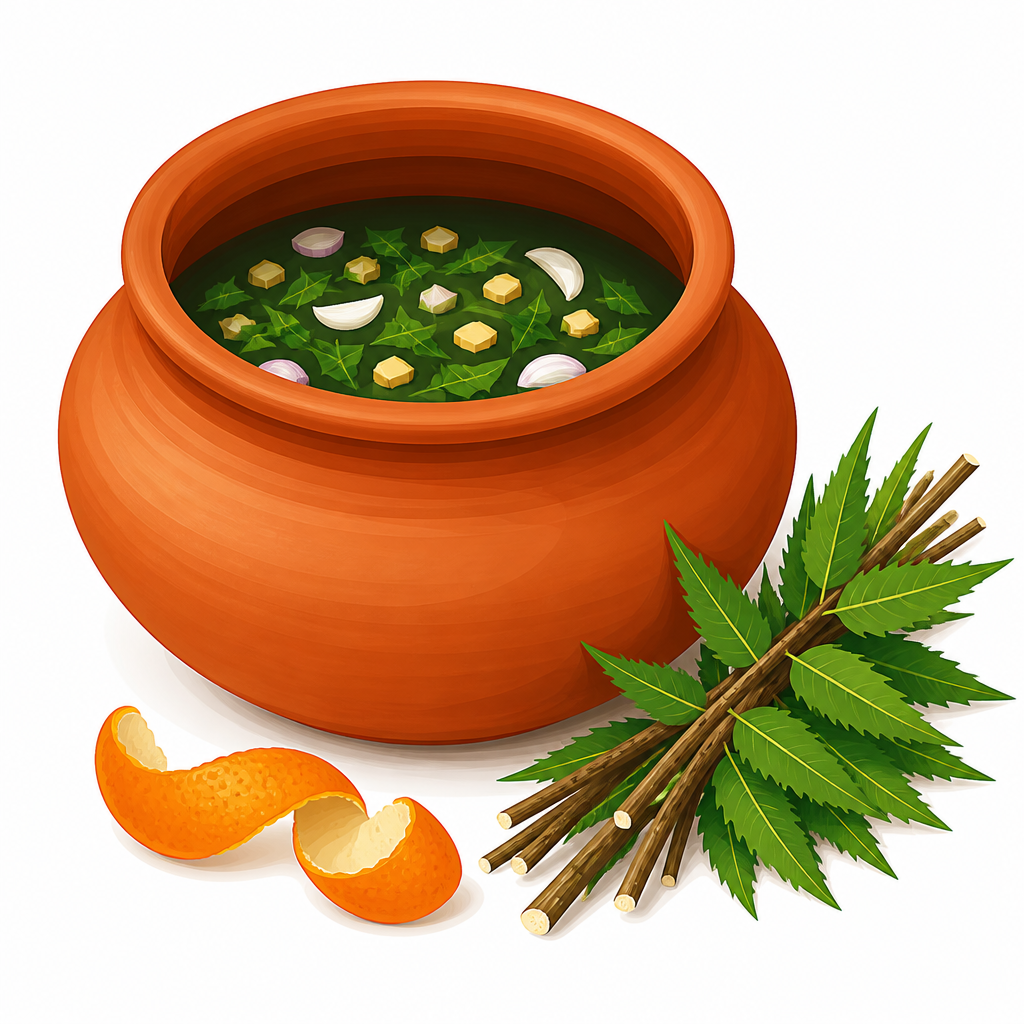
Chemical insecticides
Chemical insecticides are insect killing compounds prepared industrially from different chemicals.
DDT, whose full name is dichloro diphenyl trichloroethane, BHC, which is benzene hexa chloride, methoxy chloride, aldrin and dialdrin are all chemical insecticides. Malathion, sprayed on vegetables and fruit, belongs to this same group.
| Basis | Bio-insecticide | Chemical insecticide |
| Source | Made at home from local plants | Made in industry from chemicals |
| Examples | Jholmol, ash, neem liquid | DDT, BHC, malathion |
| Environment | Causes no pollution | Pollutes air, water and land |
| Soil and life | Does no harm | Kills even the useful insects |
| Human health | No effect | Residues harm it directly |
Advantages of insecticides
An insecticide destroys the insects that attack a crop, so the harvest grows larger. Yet even while protecting the crop, these substances create many harmful effects in the environment. That is why a farmer uses a chemical insecticide out of compulsion, not out of choice. Such chemicals are a kind of poison.
A chemical insecticide is a kind of poison. It must always be stored safely.
Disadvantages of chemical insecticides
When the residues of an insecticide enter the human body, health suffers directly. The use of DDT powder, for example, brings on diseases of breathing. Coming into contact with a chemical insecticide also affects the nervous system and the glandular system.
- Chemical insecticides pollute the air, the water and the land.
- Their use upsets the balance of the ecosystem.
- Not only the harmful insects but the useful insects are killed too.
- Where DDT powder mixes in, the air and water are poisoned. Aquatic organisms cannot survive in the polluted water, and the ones that do survive slowly lose their power to reproduce.
- The growth and breeding capacity of birds and fish decline.
Precautions while using chemical insecticides
Accidents happen the moment someone forgets that this is poison. So anyone who handles an insecticide must follow the precautions below.
- Before using an insecticide, study its method of use properly.
- The person spraying must wear suitable protective clothing.
- Above all, never let the insecticide touch the eyes or the mouth.
- While spraying a crop, spray in the direction the wind is blowing, never against it.
- Whatever is left over after spraying must be stored or disposed of safely.
- Never wash the spraying equipment near a source of water.
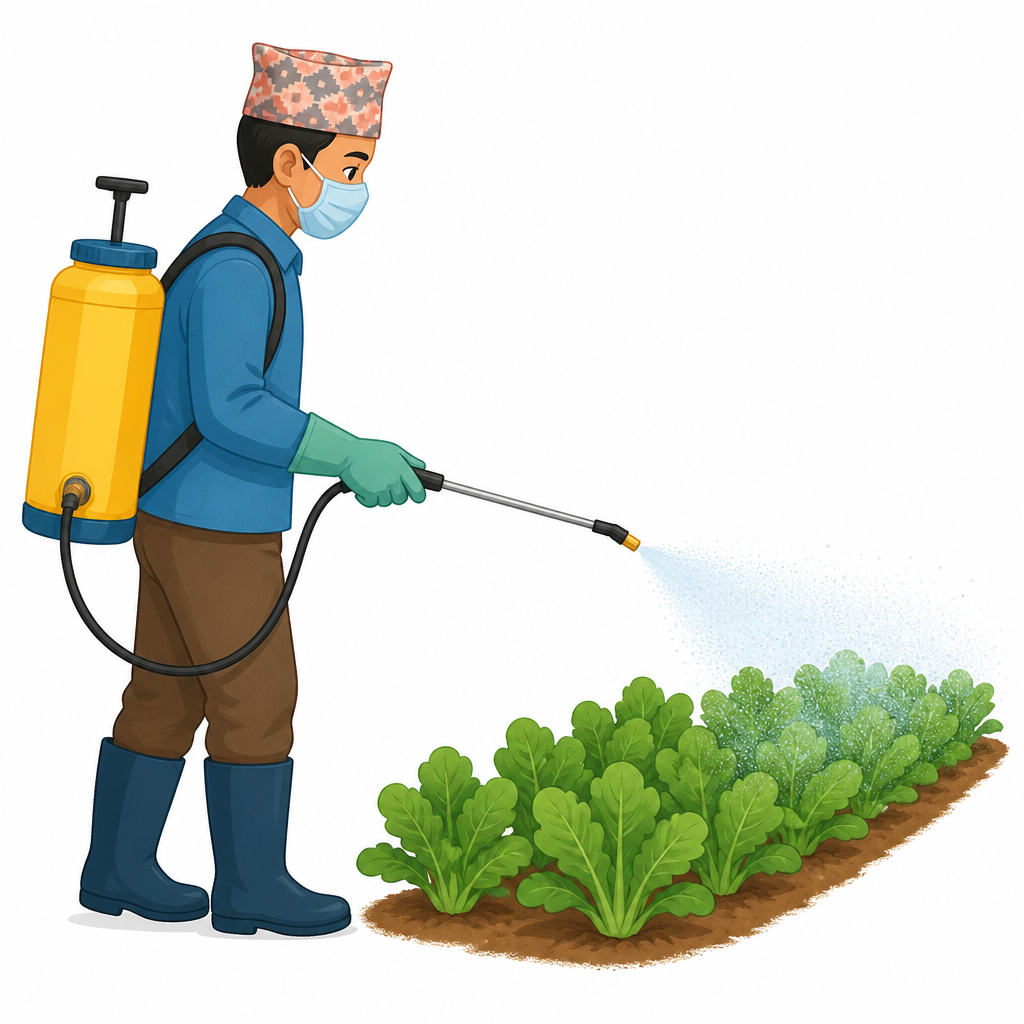
Washing the sprayer near a spring, a well or a stream carries the poison to every person and animal that drinks that water. Always clean the equipment far away from any water source.
Conservation of soil quality
To keep getting a harvest from farming, the quality of the soil must be maintained continuously. The very chemicals used in excess to raise the harvest can end up spoiling that quality.
The following measures conserve the quality of soil:
- Test the soil: testing the soil from time to time tells which nutrient it needs, and also which kind of crop suits its structure.
- Use suitable farming techniques: rotate the crops, mix the crops, apply agricultural lime, use plenty of organic manure, use less chemical fertiliser and irrigate by a suitable method.
- Use the land properly: a field left fallow slowly loses its fertility, so the land should not be left uncultivated.
Burning leaf litter on the field kills the useful microorganisms living in the soil. On sloping land farmed without terraces, water washes the manure out of the soil and carries it away. So to keep the soil good, never leave the field fallow, never burn leaf litter on it, and cut terraces into a slope before farming it.
Signs a plant shows when the soil is short
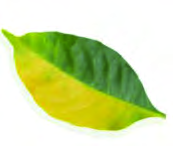
A soil test is not the only way of knowing. The plant itself signals which nutrient its soil is short of. In nitrogen poor soil the leaves of the plant turn yellow, and its flowers, fruits and seeds stay small.
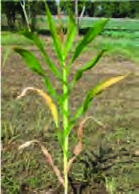
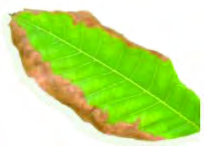
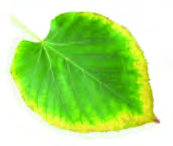
A potassium shortage shows first at the edge of the leaf. A leaf whose centre stays green while only the rim turns yellow is signalling that the soil lacks potassium. As the shortage deepens, the rim browns and dries. But when the yellow is not confined to the rim and has spread over most of the blade, the signal points to nitrogen instead.
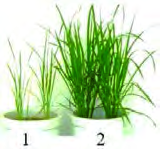
The effect of soil quality can also be seen by sowing the same kind of seed in two different soils. In fertile soil the plants grow tall and thick, while in nutrient poor soil the same seed gives short, thin plants.
The full lesson is waiting for you
The notes are free to read in full. A free account opens the rest of the practice, and tracks your progress and confidence score for every subject. Presentations and videos need approval from Learn Yeti.