Nutrients That Plants Need
A plant sprouts from a seed, grows into a mature plant, flowers, bears fruit and prepares new seeds again. In this way its life cycle keeps running. To complete this cycle and grow well, a plant needs 17 elements in all: carbon (C), hydrogen (H), oxygen (O), nitrogen (N), phosphorus (P), potassium (K), sulphur (S), calcium (Ca), magnesium (Mg), boron (B), chlorine (Cl), copper (Cu), iron (Fe), manganese (Mn), molybdenum (Mo), nickel (Ni) and zinc (Zn). Most of these elements a plant takes from the soil.
The nutrients a plant needs are divided into two groups:
- Primary nutrients: nitrogen (N), phosphorus (P) and potassium (K), which a plant needs in large amounts. Managing these elements in the soil is essential for good plant growth.
- Secondary nutrients: elements needed in smaller amounts than the primary ones, such as calcium, magnesium, sulphur, boron, iron and zinc. When soil lacks them, plant growth and yield fall.
In nature these nutrients form in the soil when organic matter decays. But when a field is farmed year after year, the soil's nutrients keep draining away. So substances that carry those elements, that is fertilizers, have to be added to the soil to make up the loss.
What a Fertilizer Is
A fertilizer is a compound that supplies plants the nutrients they need.
A plant takes its nourishment from the soil. When the soil runs short of those elements, fertilizer is added to make up the shortage. Using fertilizer raises the fertility of the soil. Fertilizer makes plants grow and develop, and it also gives them protection from disease.
Kinds of Fertilizer
Fertilizers are of two kinds, organic and inorganic. Organic fertilizer forms when the bodies and waste of living things decay, while inorganic fertilizer is manufactured in factories from minerals by chemical reactions.
Organic Fertilizer
Fertilizer made by decaying the dung and urine of living things and the parts of dead bodies is called organic fertilizer.
Compost, green manure, ash, oil cake dust and bone dust all come under organic fertilizer. Every one of these can be prepared from our own homes, sheds and fields.
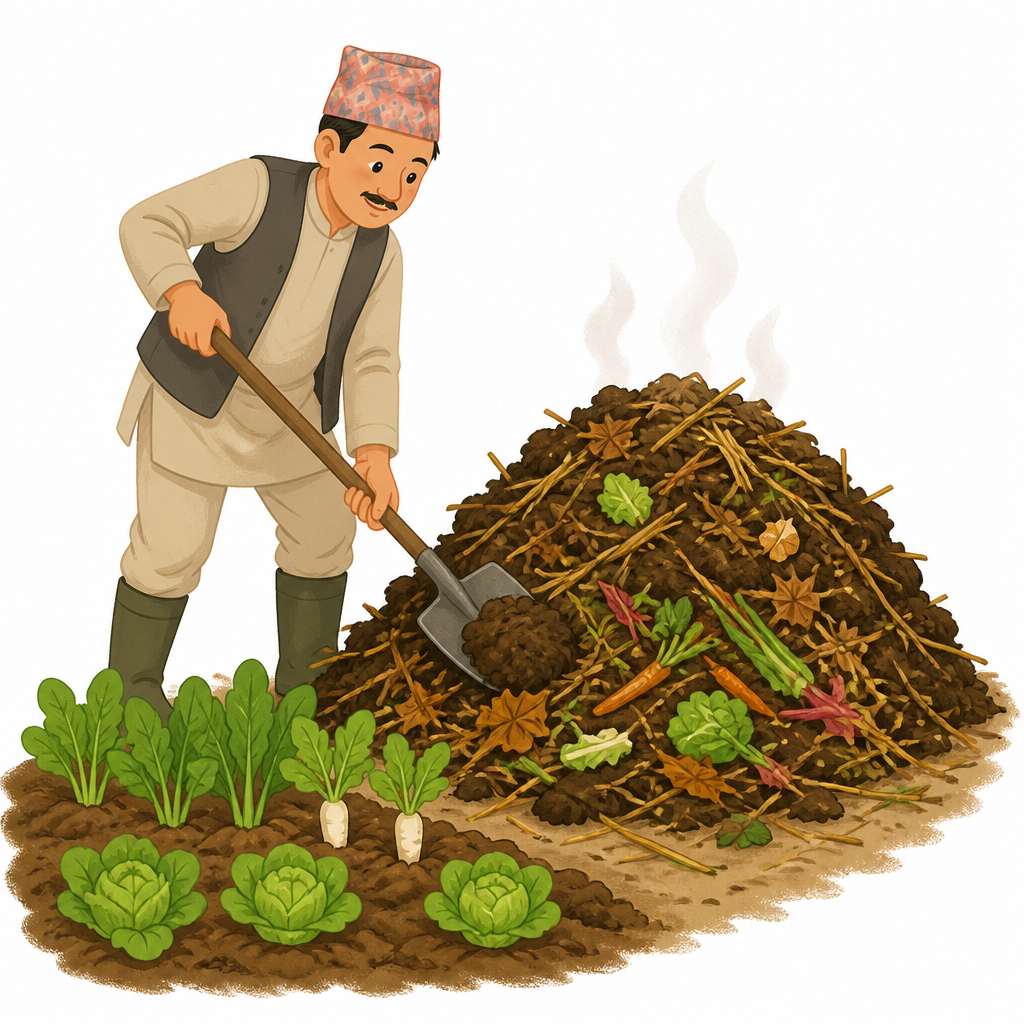
Compost: fertilizer formed when animal dung and urine, fallen leaves of trees and plants, carcasses of dead animals, straw, grass and bedding litter rot together is called compost.
Farmyard manure made from cattle dung is also a kind of organic fertilizer. In villages the shed litter and dung are piled in one place and left to rot, and after some months the heap turns into manure ready for the field.
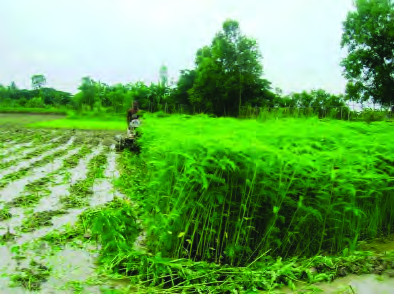
Green manure: fertilizer made by rotting green plants directly in the field is called green manure.
Before the main crop is planted, fast rotting plants are grown in the field. When such plants are buried in the soil and left to rot, they become manure. When legume plants are rotted in the ground, the soil gains the nitrate that plants need. Parts of some plants are also rotted in the field to make manure. Dhaincha, titepati, asuro, khirro and hemp are plants of Nepal grown in fields for green manure; all of them grow fast and rot quickly.
Advantages of Organic Fertilizer
- Organic fertilizer increases the fertility of the soil.
- Its use raises the soil's capacity to hold water.
- Even after long use it leaves no harmful effect on the soil.
- It controls environmental pollution.
- It makes vegetables and fruits tasty, nutritious and healthful.
- Eating vegetables and fruits grown on it has no harmful effect on human health.
Inorganic Fertilizer
Inorganic substances that, when mixed into the soil, supply plants the nitrogen (N), phosphorus (P), potassium (K) and other elements they need are called inorganic fertilizers. Inorganic fertilizer is also called chemical fertilizer.
When the soil does not hold enough of the nutrients plants need, its fertility declines. To restore it, chemicals rich in nutrients are added to the soil. These fertilizers are manufactured by chemical reactions of minerals. For example, urea \( \mathrm{[CO(NH_2)_2]} \) can be prepared by making ammonia \( \mathrm{(NH_3)} \) react with carbon dioxide \( \mathrm{(CO_2)} \).
Chemical fertilizers dissolve easily in water, so their effect on plants can be observed quickly. Each carries a fixed, concentrated amount of a particular nutrient. Based on which primary nutrient they supply, chemical fertilizers are classified into three kinds: nitrogenous, phosphatic and potassium fertilizers.
Nitrogenous Fertilizer
Inorganic compounds, that is salts, used as a source of the nitrogen plants need are nitrogenous fertilizers. Ammonium sulphate \( \mathrm{[(NH_4)_2SO_4]} \), ammonium nitrate \( \mathrm{[NH_4NO_3]} \) and urea \( \mathrm{[CO(NH_2)_2]} \) are examples of nitrogenous chemical fertilizers.
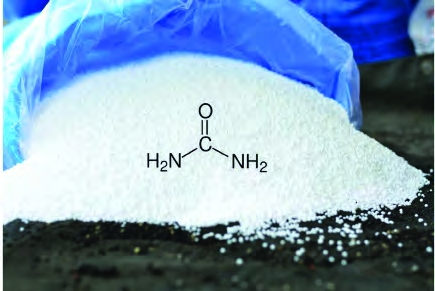
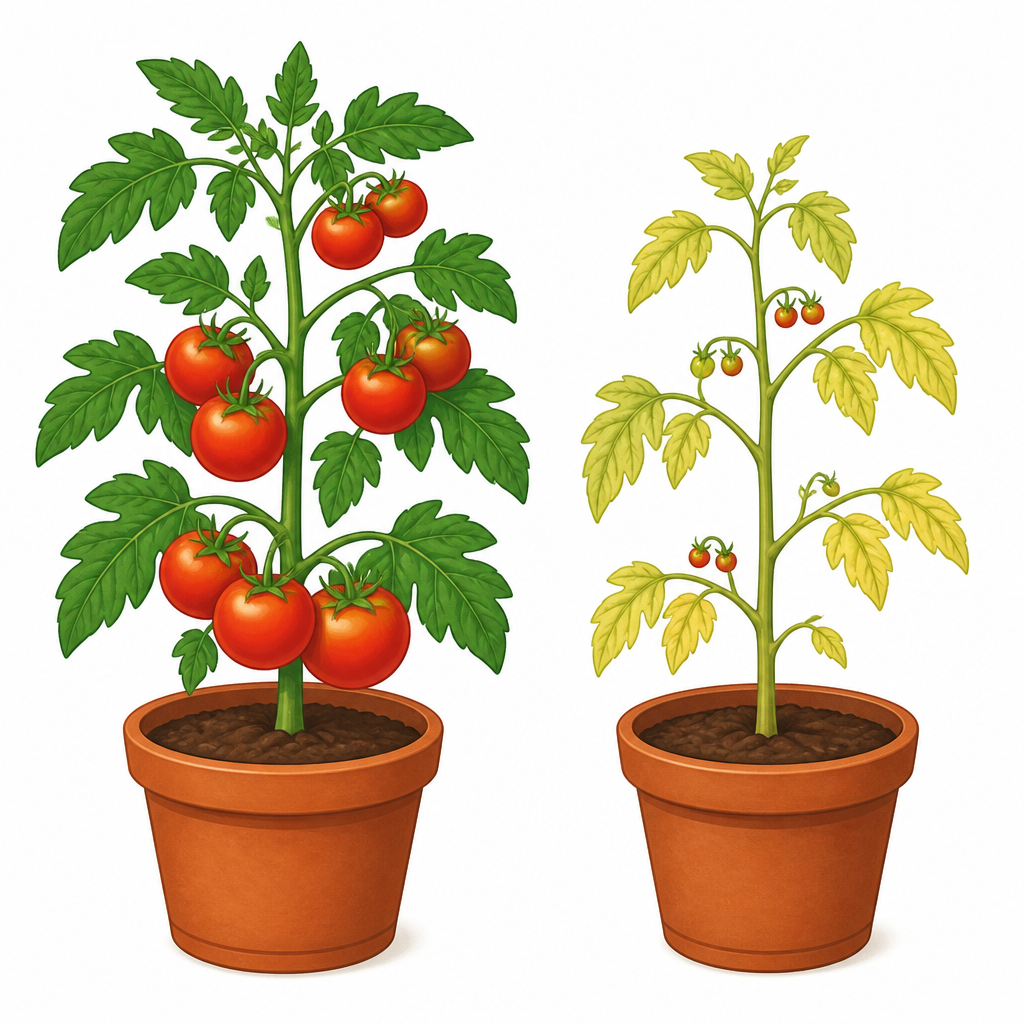
Importance of nitrogenous fertilizer: nitrogen helps a plant grow fast and raises its yield. It promotes the synthesis of chlorophyll and the formation of protein and protoplasm. That is why a plant well supplied with nitrogen looks deep green and leafy.
Effects of nitrogen deficiency in plants: a shortage of nitrogen reduces both the growth of the plant and its yield. The leaves turn yellow, and the flowers, fruits and seeds stay small.
Phosphatic Fertilizer
Inorganic compounds, that is salts, used as a source of the phosphorus plants need are phosphatic fertilizers. Ammonium phosphate \( \mathrm{[(NH_4)_3PO_4]} \), calcium super phosphate \( \mathrm{[Ca(H_2PO_4)_2CaSO_4]} \), triple super phosphate \( \mathrm{[3Ca(H_2PO_4)_2]} \) and ammonium meta phosphate \( \mathrm{[NH_4(H_2PO_4)]} \) are examples of phosphatic chemical fertilizers.
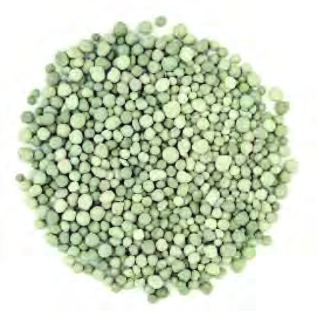
Importance of phosphatic fertilizer: phosphorus helps the roots of a plant form and develop. It brings crops and seeds to maturity quickly and makes the grains plump. It also helps protect the plant from disease.
Effects of phosphorus deficiency in plants: when phosphorus runs short, the roots cannot develop properly. Cell division slows down, so the plants look thin and weak. Crops and seeds ripen late, and the grains come out shrivelled. As the shortage continues, the plant's power to resist disease also keeps falling.
Potassium Fertilizer
Inorganic compounds, that is salts, used as a source of the potassium plants need are potassium fertilizers. Potassium chloride \( \mathrm{[KCl]} \), potassium sulphate \( \mathrm{[K_2SO_4]} \), potassium nitrate \( \mathrm{[KNO_3]} \) and potassium carbonate \( \mathrm{[K_2CO_3]} \) are examples of potassium fertilizers.
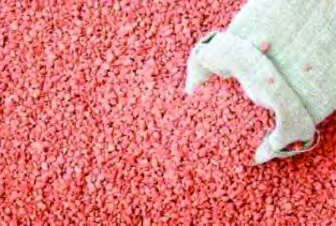
Importance of potassium fertilizer: potassium is found in ash as well. Potassium makes the stem and roots of a plant strong and raises its capacity to fight disease. It helps the growth and development of flowers. Potassium also helps the plant build protein, starch and other substances.
Effects of potassium deficiency in plants: a shortage of potassium reduces the formation of protein, starch and other substances, and cell division falls as well, so the plant's growth becomes weaker and weaker. Its leaves stay small and drop early. Because of potassium shortage, young plants are very likely to dry up or die.
Nitrogen, Phosphorus and Potassium at a Glance
| Element | Example fertilizers | Importance in the plant | Effects of its deficiency |
| Nitrogen (N) | Ammonium sulphate, ammonium nitrate, urea | Fast growth and higher yield; builds chlorophyll, protein and protoplasm | Yellow leaves; small flowers, fruits and seeds; lower yield |
| Phosphorus (P) | Ammonium phosphate, calcium super phosphate, triple super phosphate | Root formation and development; quick ripening, plump grains; protection from disease | Weak roots; thin, feeble plants; late ripening, shrivelled grains |
| Potassium (K) | Potassium chloride, potassium sulphate, potassium nitrate | Strong stem and roots; disease fighting capacity; flower growth; protein and starch formation | Small leaves that drop early; weak growth; young plants may dry up or die |
Students often swap the deficiency signs. Remember: yellow leaves point to nitrogen deficiency, thin weak plants with shrivelled grains point to phosphorus deficiency, and small leaves that drop early point to potassium deficiency.
Advantages of Chemical Fertilizer
- A chemical fertilizer carries the particular nutrient a crop needs, so it raises the fertility of the soil.
- Chemical fertilizers dissolve easily in water, so plants readily absorb the nutrients they need from the soil.
- Chemical fertilizers are easy to store, easy to carry from one place to another and easy to apply.
Disadvantages of Chemical Fertilizer
Useful as chemical fertilizer is, its excessive use brings many disadvantages. Some of them are these:
- Chemical fertilizers do not rot, so they pollute the environment.
- They increase the acidity or the alkalinity of the soil.
- Once chemical fertilizer is started on a soil, it has to be applied regularly. Otherwise the soil turns harsh and dry, and the yield falls sharply.
- Vegetables and fruits grown with chemical fertilizer lose some of their nutritiousness and taste.
Never taste chemical fertilizer, and keep it away from your eyes and from any cuts on your skin. Wash your hands well with soap and water after handling it.
The full lesson is waiting for you
The notes are free to read in full. A free account opens the rest of the practice, and tracks your progress and confidence score for every subject. Presentations and videos need approval from Learn Yeti.