Metals the Body Cannot Do Without
When we hear the word metal, we usually think of an iron rod, a copper wire or an aluminium pot. Yet some metals are also found inside our bodies, and the body needs a steady supply of them. The heart beating, blood carrying oxygen, nerves sending messages and muscles tightening and relaxing are all life processes that depend on metals such as sodium, potassium, magnesium, calcium, iron and zinc.
These metals do not reach the body as lumps of pure metal. They come in compounds inside the food we eat. So if our meals do not contain enough of a particular metal, some work of the body starts to go wrong. For example, too little iron in the blood causes anaemia, and too little sodium and potassium in the blood makes the heartbeat irregular. Knowing which food gives which metal is therefore useful for everyday health. Below, each of four metals is studied in the same way: its sources, its benefits, and the effects of its deficiency.
The metals the body needs all come from food. For each metal, learn three things: its sources, its benefits and the effects of too little of it.
Zinc (Zn)
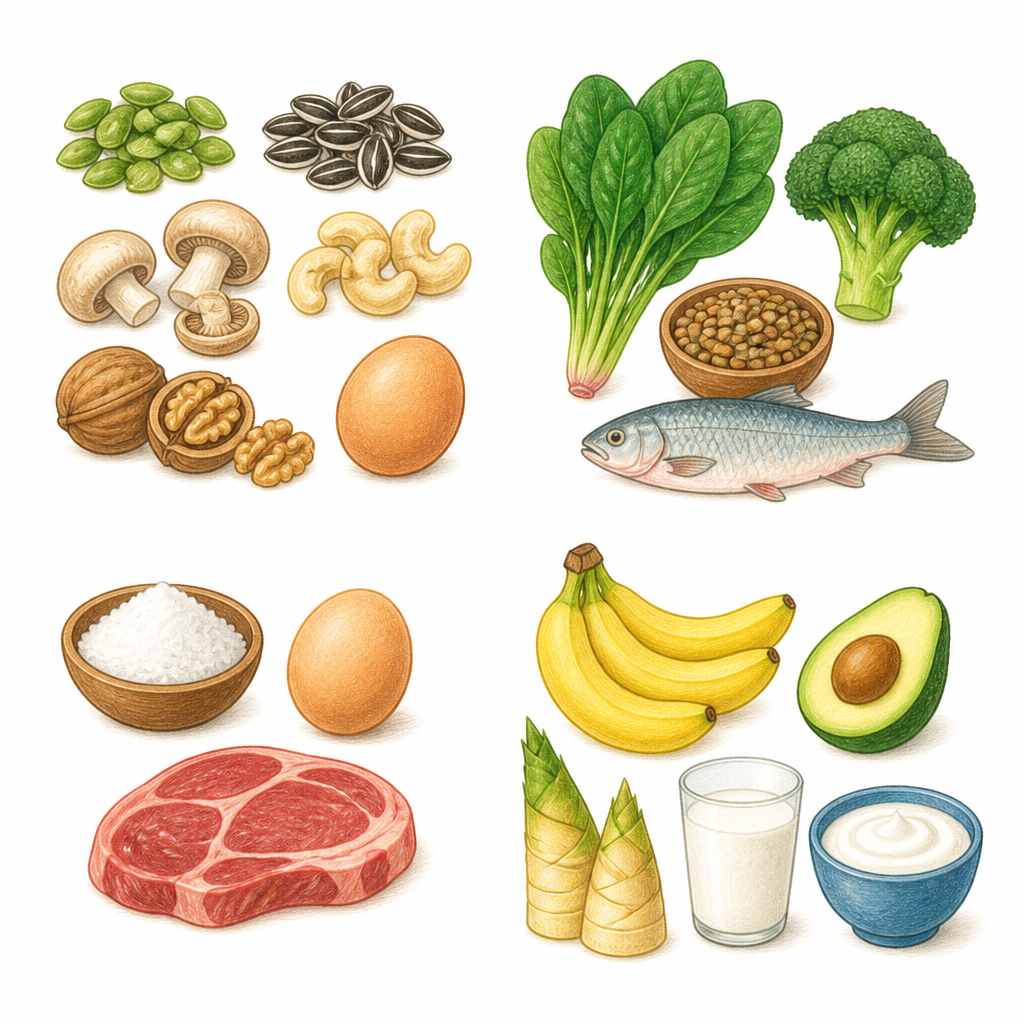
Zinc is needed in only small amounts, but it does a great deal of work. The foods richest in zinc are plant seeds and foods that come from animals.
- Sources: pumpkin seeds, flax seeds, sunflower seeds, beans and lentils, mushrooms, peanuts, cashew nuts and walnuts.
- Sources: milk products, fish, meat and eggs.
Zinc helps the body in these ways:
- It strengthens the body's power to resist disease.
- It increases the body's ability to fight bacteria and viruses that enter it.
- It helps the cells make proteins, DNA and other genetic material.
- During pregnancy it supports the growth and development of the baby in the womb.
When the body is short of zinc, these signs appear:
- Hair falls out.
- The senses of smell and taste become weaker.
- The person feels dull and lazy.
- Diarrhoea and weight loss occur.
- Wounds and injuries take a long time to heal.
Iron (Fe)
Iron is the blood's closest partner. Blood picks up oxygen in the lungs and carries it all over the body, and this cannot happen without iron. Green leafy vegetables and pulses are good sources of it.
- Sources: spinach, beans and lentils, broccoli and plant seeds.
- Sources: fish and meat also provide iron.
What iron does in the body:
- The iron in blood carries oxygen from place to place in the body.
- It helps the body build DNA.
- It helps in breathing.
- It keeps the body's resistance to disease strong and helps the body produce energy.
If iron is short, the blood cannot carry enough oxygen. The person tires quickly and finds breathing difficult. This condition is called anaemia.
Anaemia: a condition, caused here by a lack of iron, in which the blood cannot carry enough oxygen. The person feels tired and has difficulty breathing.
Sodium (Na)
The table salt we eat every day is the main source of sodium for the body. Meat and eggs also provide some. Every cell in our body has water and salts both inside it and around it, and sodium is what keeps these amounts in the right balance.
- Benefit: it keeps the amount of water and salts inside and outside the cells balanced.
- Benefit: it keeps nerves and muscles working properly.
Effects of sodium deficiency:
- A disease called hyponatraemia develops.
- Muscles cramp and tighten suddenly, which is called a muscle spasm.
- Vomiting, dizziness and fainting can follow, and it can even cause death.
Hyponatraemia: the disease caused by too little sodium in the body.
Muscle spasm: a sudden tightening of a muscle that the person does not control.
Table salt is not pure sodium. It is a compound called sodium chloride. Pure sodium metal reacts violently with water and can never be eaten. The body takes sodium only in the form of compounds.
Potassium (K)
Potassium works closely alongside sodium. Both play a part in controlling body fluids and the work of nerves. Potassium is plentiful in fruits and vegetables.
- Sources: fruits, soybeans, vegetables and milk products.
- Sources: bananas, avocados, bamboo shoots, milk and yoghurt.
- Benefit: it keeps the amount of body fluid steady and keeps the muscles and nervous system working properly.
- Benefit: it stops bones from becoming weak and helps prevent kidney stones.
Effects of potassium deficiency:
- A disease called hypokalaemia develops.
- Blood pressure rises and constipation occurs.
- The body feels weak and the muscles lose strength.
Hypokalaemia: the disease caused by too little potassium in the body.
Both disease names begin with 'hypo', meaning too little. Hyponatraemia goes with sodium and hypokalaemia goes with potassium. The symbol for potassium is K, not P.
The Four Metals Side by Side
The table below gathers the main facts about all four metals in one place, which makes it easy to revise from.
| Metal | Main sources | Main benefit | Effect of deficiency |
| Zinc (Zn) | seeds, pulses, mushrooms, milk, eggs | fights disease, builds proteins and DNA | hair loss, slow healing of wounds |
| Iron (Fe) | spinach, broccoli, pulses, fish, meat | carries oxygen in blood | anaemia, tiredness |
| Sodium (Na) | table salt, meat, eggs | balances water and salts | hyponatraemia, muscle spasm |
| Potassium (K) | bananas, avocados, milk, yoghurt, vegetables | nerve and muscle work, strong bones | hypokalaemia, high blood pressure |
No single food supplies every metal. A balanced diet that mixes pulses, grains, green vegetables, fruit, milk and seeds is what gives the body all the metals it needs.
Harmful Effects of Lead and Mercury
Not every metal is good for the body. Lead and mercury are both metals, but the body has no use for either of them. If they get inside, they act as poisons. Because both are used in many objects in our homes and surroundings, it matters that we recognise the danger they carry.
Being a metal does not make something a nutrient. Fe, Zn, Na and K are needed by the body, but Pb and Hg are harmful.
Lead
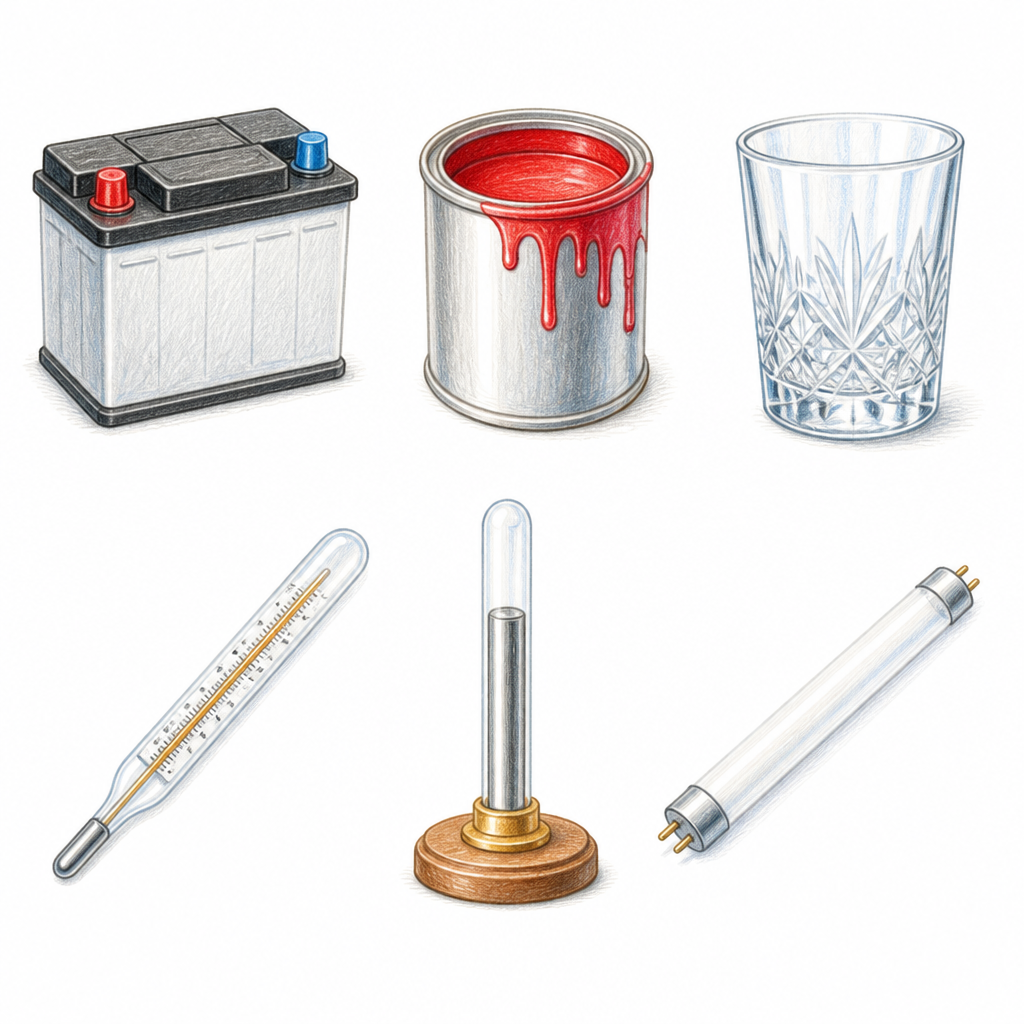
Lead is used in car batteries, paint, petroleum products, lead crystal glass and the protective sheets that shield people from radioactive radiation. From these, lead can reach the body through dust, smoke, water or food. Once inside, it damages almost every organ.
Lead harms children more than adults, because their bodies and brains are still growing. In children, lead causes:
- headaches and stomach aches
- changes in behaviour
- anaemia
- poor development of the brain
Lead that enters the body collects mostly in the bones. Blood cells are made inside the bones, so lead stored there stops blood cells from forming. It also prevents the bones from absorbing calcium, and without calcium the bones become very weak.
Mercury
Mercury is a metal that stays liquid at room temperature. It is used in thermometers, barometers and tube lights. Mercury and its compounds cause many harmful effects in the body.
Hydrargyria, also called mercurialism: the poisonous effect of mercury on the body.
- A single drop of mercury in the blood can block blood vessels and may even cause death.
- Mercury compounds damage the brain, which badly weakens a person's sight, hearing and speech.
- Mercury compounds damage the kidneys and lungs.
- Mercury compounds pass easily through the placenta and harm the growth of the baby in the womb.
- Mercury compounds also harm the development of a young child's brain.
Children must never put a mercury thermometer in their mouth. If the glass is bitten or cracked, poisonous mercury can get into the body.
The full lesson is waiting for you
The notes are free to read in full. A free account opens the rest of the practice, and tracks your progress and confidence score for every subject. Presentations and videos need approval from Learn Yeti.