How Chemical Reactions Are Sorted
In a chemical reaction, the starting substances change into new substances. The starting substances are the reactants and the new ones are the products. Thousands of chemical reactions go on around us, and nobody can study each one separately, so they are sorted into groups. The sorting looks at two things: what kind of substances react, and what kind of substances are formed. On the basis of the types of reactants and products, chemical reactions are of four main types: combination reaction, decomposition reaction, displacement reaction and acid base reaction.
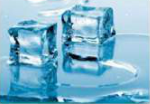
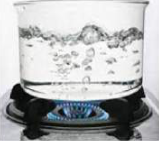
This sorting works only for chemical changes. When ice melts or water boils, no new substance is formed. Melted ice is still water, and steam is water in the form of a gas. These are physical changes, so they belong to none of the four types.
To name the type of a reaction, compare the number and kind of reactants on the left of the arrow with the number and kind of products on the right.
Combination Reaction
To combine means to join together. In this reaction, two or more substances join to make a single new substance. However many reactants there are, only one product comes out. Its general pattern is:
\[ \mathrm{A + B \rightarrow C} \]
Combination reaction: The chemical reaction in which two or more reactants combine to form only one product is called combination reaction.
The reactants may be two elements, an element and a compound, or two compounds. The rule is on the product side: there must be exactly one product. Because substances are added together, this type is also called an addition reaction. Some examples:
- \( \mathrm{2Na + Cl_2 \rightarrow 2NaCl} \): sodium and chlorine form sodium chloride, which is common salt.
- \( \mathrm{C + O_2 \rightarrow CO_2} \): carbon burns in oxygen to form carbon dioxide.
- \( \mathrm{N_2 + 3H_2 \rightarrow 2NH_3} \): nitrogen and hydrogen form ammonia.
- \( \mathrm{2Mg + O_2 \rightarrow 2MgO} \): a magnesium ribbon burns with a bright white flame and leaves a white ash of magnesium oxide.
- \( \mathrm{4Fe + 3O_2 \rightarrow 2Fe_2O_3} \): iron and oxygen form ferric oxide.
- \( \mathrm{CaO + H_2O \rightarrow Ca(OH)_2} \): quicklime and water form slaked lime. Here two compounds join to give one product.
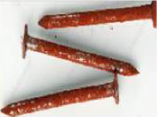
Rusting is also a combination reaction. With the help of moisture, iron slowly combines with oxygen from the air. The reddish brown coat on an old nail is mainly ferric oxide.
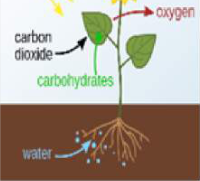
Two reactants joining is not enough. In photosynthesis, carbon dioxide and water join, but they give two products, glucose and oxygen: \( \mathrm{6CO_2 + 6H_2O \rightarrow C_6H_{12}O_6 + 6O_2} \). There is more than one product, so it is not a combination reaction.
Decomposition Reaction
Decomposition is the opposite of combination. One substance breaks apart into two or more simpler substances. Its general pattern is:
\[ \mathrm{AB \rightarrow A + B} \]
Decomposition reaction: The chemical reaction in which a reactant breaks down into two or more products is called decomposition reaction.
A compound does not break apart without a cause. It decomposes because of heat, pressure or other causes such as electricity. Heat is the commonest cause. Some examples:
- \( \mathrm{CaCO_3 \xrightarrow{\Delta} CaO + CO_2} \): calcium carbonate, or limestone, on heating gives calcium oxide and carbon dioxide.
- \( \mathrm{2NaOH \rightarrow Na_2O + H_2O} \): sodium hydroxide on strong heating breaks into sodium oxide and water.
- \( \mathrm{H_2CO_3 \rightarrow CO_2 + H_2O} \): carbonic acid in soda water breaks into carbon dioxide and water, which is why soda fizzes when the bottle is opened.
- \( \mathrm{2KClO_3 \xrightarrow{\Delta} 2KCl + 3O_2} \): potassium chlorate on heating gives potassium chloride and oxygen gas.
- \( \mathrm{2H_2O \rightarrow 2H_2 + O_2} \): when electricity is passed through water, it breaks into hydrogen and oxygen.
The sign \( \Delta \) above the arrow means the reactant is heated. An equation can also show the state of each substance in brackets: (s) for solid, (l) for liquid, (g) for gas and (aq) for dissolved in water. For example:
\[ \mathrm{CaCO_3(s) \rightarrow CaO(s) + CO_2(g)} \]
A model of atoms shows what happens when zinc carbonate is heated. Zinc carbonate has one zinc atom, one carbon atom and three oxygen atoms joined together. On heating, this group breaks apart. One oxygen atom stays with the zinc to form zinc oxide, and the carbon leaves with the other two oxygen atoms as carbon dioxide gas. The upward arrow beside carbon dioxide shows that it escapes as a gas.
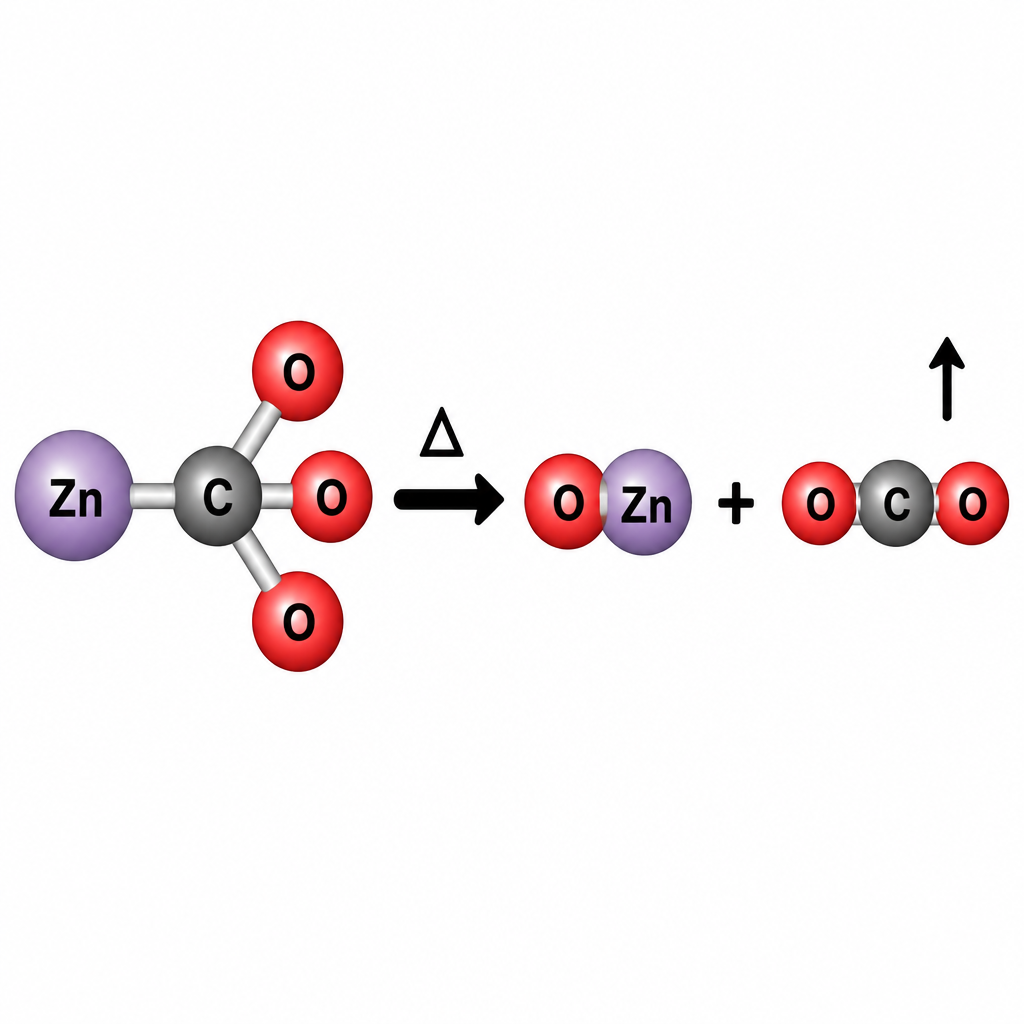
\[ \mathrm{ZnCO_3 \xrightarrow{\Delta} ZnO + CO_2 \uparrow} \]
Count the atoms on both sides. Before the reaction there are one zinc, one carbon and three oxygen atoms. After it there are still one zinc, one carbon and three oxygen atoms. No atom is lost. The atoms have only been regrouped.
Combination and decomposition are opposites. In combination, many substances become one. In decomposition, one substance becomes many.
Displacement Reaction
To displace means to push something out of its place and take that place yourself. In a displacement reaction, an atom or radical of one reactant pushes out an atom or radical of another reactant and takes its place.
Displacement reaction: The chemical reaction in which an atom or radical of one reactant is displaced by the atom or radical of another reactant is called displacement reaction.
A radical is a group of atoms that stays together and acts as a single unit in a reaction. Sulphate \( \mathrm{(SO_4)} \), nitrate \( \mathrm{(NO_3)} \), carbonate \( \mathrm{(CO_3)} \) and hydroxide \( \mathrm{(OH)} \) are radicals. When copper is pushed out of copper sulphate, the sulphate radical moves as one whole group. There are two types of displacement reaction: single displacement reaction and double displacement reaction.
Single Displacement Reaction
In a single displacement reaction, a free element meets a compound. The element pushes out one part of the compound and takes its place, and the part pushed out is set free as an element. Its general pattern is:
\[ \mathrm{AB + C \rightarrow A + BC} \]
Here AB is a compound and C is an element. After the reaction, A is a free element and C is joined to B in the new compound BC. So both sides have one compound and one element.
Single displacement reaction: In a single displacement reaction, one element or radical displaces an element or radical of another compound.
- \( \mathrm{Zn + H_2SO_4 \rightarrow ZnSO_4 + H_2} \): zinc pushes hydrogen out of sulphuric acid.
- \( \mathrm{Zn + 2HCl \rightarrow ZnCl_2 + H_2} \): zinc pushes hydrogen out of hydrochloric acid.
- \( \mathrm{Cu + 2AgNO_3 \rightarrow 2Ag + Cu(NO_3)_2} \): copper pushes silver out of silver nitrate.
- \( \mathrm{Ca + 2H_2O \rightarrow Ca(OH)_2 + H_2} \): calcium pushes hydrogen out of water.
- \( \mathrm{Cl_2 + 2NaBr \rightarrow 2NaCl + Br_2} \): chlorine pushes bromine out of sodium bromide.
- \( \mathrm{Br_2 + 2KI \rightarrow 2KBr + I_2} \): bromine pushes iodine out of potassium iodide.
An element can push out another only if it is more reactive. Zinc is more reactive than hydrogen, copper more than silver, chlorine more than bromine, and bromine more than iodine. A less reactive element does nothing: copper placed in zinc sulphate solution stays unchanged.
The same thing happens when an iron nail is dipped in blue copper sulphate solution. Iron is more reactive than copper, so it pushes copper out of the solution. A reddish brown coat of copper forms on the nail, and the blue colour of the solution slowly fades to pale green as iron sulphate forms.
\[ \mathrm{Fe + CuSO_4 \rightarrow FeSO_4 + Cu} \]
Double Displacement Reaction
In a double displacement reaction, two compounds react and exchange partners. Each compound gives one of its parts to the other, so two new compounds are formed. Its general pattern is:
\[ \mathrm{AB + CD \rightarrow AD + CB} \]
Double displacement reaction: The chemical reaction in which two new compounds are formed by the mutual exchange of atoms or radicals between two reactants is called double displacement reaction.
Many of these reactions happen when solutions of two salts are mixed. Often one of the new compounds does not dissolve in water, so it appears as a solid and settles at the bottom. Such an insoluble solid formed in a solution is called a precipitate.
- \( \mathrm{NaCl + AgNO_3 \rightarrow AgCl + NaNO_3} \): a white precipitate of silver chloride forms.
- \( \mathrm{BaCl_2 + Na_2SO_4 \rightarrow BaSO_4 + 2NaCl} \): a white precipitate of barium sulphate forms.
- \( \mathrm{Pb(NO_3)_2 + 2KI \rightarrow 2KNO_3 + PbI_2} \): a bright yellow precipitate of lead iodide forms.
In the first example, sodium leaves chlorine and joins the nitrate radical, while silver leaves the nitrate and joins chlorine. Each compound has given away one part and taken one part.
Before naming the type, look at the left side. One element and one compound means single displacement. Two compounds swapping partners means double displacement.
Acid Base Reaction or Neutralisation
An acid and a base have opposite properties. An acid turns blue litmus red, and a base turns red litmus blue. When the two are mixed in the right amounts, each cancels the properties of the other, and salt and water are formed.
Acid base reaction: The reaction in which acid and base react to form salt and water is called acid base reaction.
Acid + Base → Salt + Water
In this reaction both the acid and the base lose their properties and neutral compounds are formed. So it is also known as a neutralisation reaction. It is also a type of double displacement reaction: the hydrogen of the acid joins the hydroxide of the base to form water, and the metal of the base joins the rest of the acid to form a salt.
Neutralisation reaction: A reaction in which an acid and a base cancel each other's properties and form neutral compounds, salt and water.
- \( \mathrm{HCl + NaOH \rightarrow NaCl + H_2O} \): hydrochloric acid and sodium hydroxide give sodium chloride and water.
- \( \mathrm{H_2SO_4 + 2NaOH \rightarrow Na_2SO_4 + 2H_2O} \): sulphuric acid and sodium hydroxide give sodium sulphate and water.
- \( \mathrm{KOH + HNO_3 \rightarrow KNO_3 + H_2O} \): potassium hydroxide and nitric acid give potassium nitrate and water.
- \( \mathrm{CaO + 2HCl \rightarrow CaCl_2 + H_2O} \): calcium oxide, a base, and hydrochloric acid give calcium chloride and water.
Salt here does not mean only table salt. Any compound made from the metal of a base and the radical of an acid is a salt. Sodium sulphate, potassium nitrate and calcium chloride are all salts.
This reaction can be seen with kitchen substances too. Vinegar contains acetic acid, and lime water is a solution of calcium hydroxide, which is a base. When they are mixed, they neutralise each other:
\[ \begin{aligned} &\mathrm{2CH_3COOH + Ca(OH)_2} \\ &\rightarrow \mathrm{(CH_3COO)_2Ca + 2H_2O} \end{aligned} \]
Neutralisation happens inside our body as well. The stomach makes hydrochloric acid to help digest food. When there is too much acid, a mild base called an antacid neutralises the extra acid.
Telling the Four Types Apart
To name the type of any reaction, look at its reactants and products and ask these questions in order:
- Is there only one product? Then it is a combination reaction.
- Is there only one reactant, breaking apart? Then it is a decomposition reaction.
- Does a free element react with a compound and set another element free? Then it is a single displacement reaction.
- Do two compounds swap partners to form two new compounds? Then it is a double displacement reaction.
- Are those two compounds an acid and a base, giving salt and water? Then it is an acid base reaction, also called neutralisation.
| Type | Pattern | Clue |
| Combination | \( \mathrm{A + B \rightarrow C} \) | Only one product |
| Decomposition | \( \mathrm{AB \rightarrow A + B} \) | Only one reactant |
| Single displacement | \( \mathrm{AB + C \rightarrow A + BC} \) | Element and compound |
| Double displacement | \( \mathrm{AB + CD \rightarrow AD + CB} \) | Two compounds swap |
| Acid base | Acid + Base → Salt + Water | Salt and water form |
The full lesson is waiting for you
The notes are free to read in full. A free account opens the rest of the practice, and tracks your progress and confidence score for every subject. Presentations and videos need approval from Learn Yeti.