Changes Around Us: Physical and Chemical
Everything around us keeps changing. Ice in a glass turns into water. Milk left in a warm place becomes sour and thick. An iron gate left out in the rain grows a brown, flaky coat. A matchstick flares up and leaves a black stick behind. Scientists sort all such changes into two groups: physical changes and chemical changes. Being able to say which group a change belongs to is the first step towards understanding chemical reactions.
Physical change: a change in which only the physical properties of a substance, such as its shape, size, colour or state, change. No new substance is formed, and the change can usually be reversed easily.
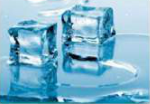
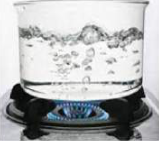
When ice melts, solid water becomes liquid water. It is still water, with the same formula, \( \mathrm{H_2O} \). Put it back in the freezer and you get ice again. Boiling works the same way. The water turns into steam, and when the steam touches a cold lid it turns back into drops of water.
Chemical change: a change in which one or more new substances are formed, with a composition and properties different from those of the original substances. A chemical change is usually permanent and cannot be reversed by simple means.
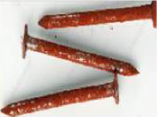
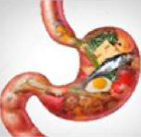
When iron rusts, it combines with oxygen and moisture from the air to form rust. Rust is a brown substance that is neither iron nor oxygen. Rust crumbles into powder; iron does not. You cannot scrape the rust off and turn it back into shiny iron. Digestion of food, photosynthesis in green plants, burning of wood and the working of a dry cell are also chemical changes, because each of them produces new substances.
How Physical and Chemical Changes Differ
The easiest way to tell the two apart is to ask one question: has a new substance been formed? If the answer is yes, the change is chemical. If the substance is still the same substance in a new shape or state, the change is physical. The table compares the two kinds of change point by point.
| Basis | Physical change | Chemical change |
| New substance | No new substance is formed | One or more new substances are formed |
| Composition | Stays the same | Changes |
| Reversibility | Usually reversible | Usually irreversible |
| Energy | Little energy is taken in or given out | Heat or light is often taken in or given out |
| Molecules | Molecules stay the same; only their spacing or arrangement changes | Bonds between atoms break and new bonds form |
| Examples | Melting of ice, boiling of water, dissolving sugar | Rusting of iron, burning of wood, cooking rice |
A physical change alters how a substance looks or what state it is in. A chemical change alters what the substance is.
Sorting Everyday Changes
Here is the "new substance" question applied to changes you see every day.
- Rusting of iron: chemical. Iron, oxygen and water together form brown rust.
- Forming of curd from milk: chemical. Bacteria turn the sugar in milk into lactic acid, which makes curd sour. Curd can never be turned back into milk.
- Cooking rice: chemical. Heat changes the starch inside the grain, so cooked rice is soft and tastes different. It never becomes raw rice again.
- Burning of wood to form ash: chemical. Wood reacts with oxygen and forms ash, carbon dioxide, water vapour and smoke, giving out heat and light.
- Combustion of a matchstick: chemical. The chemicals on the match head catch fire and change into new substances.
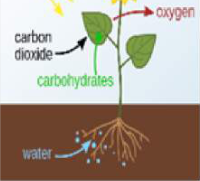
- Photosynthesis: chemical. Carbon dioxide and water change into carbohydrates (glucose) and oxygen in the presence of sunlight and chlorophyll.
- Digestion of food: chemical. Large food molecules are broken down into small, new ones the body can absorb.
- A dry cell giving electricity: chemical. Chemicals inside the cell react and produce an electric current.
- Melting of ice and boiling of water: physical. Only the state of the water changes.
Every chemical change in this list is an example of a chemical reaction. What exactly happens during one can be watched in the laboratory.
Watching a Chemical Reaction Happen
A chemical reaction can be observed with two common laboratory chemicals: dilute hydrochloric acid, \( \mathrm{HCl} \), and sodium hydroxide, \( \mathrm{NaOH} \). About 10 drops of the acid are put into a test tube with a dropper, and sodium hydroxide solution is then added to it drop by drop. Both liquids are colourless, so at first nothing seems to happen. But if you hold the bottom of the test tube, you feel it becoming warm. That warmth is heat given out by a chemical reaction.
Hydrochloric acid and sodium hydroxide are both corrosive and can burn skin and eyes. Always use a dropper. Never touch or taste either chemical, wear safety goggles, and work only under your teacher's guidance.
So what happened inside the test tube? The acid and the sodium hydroxide reacted with each other and formed two new substances: sodium chloride, which is common salt, and water. If the solution is heated until all the water evaporates, white crystals of salt are left behind. Neither of the starting liquids had those properties. A new substance has formed, so this is a chemical change.
What a Chemical Reaction Is
Chemical reaction: a process in which one or more substances react to form one or more new substances with different properties. During a reaction, bonds between atoms break and new bonds form.
In a reaction, atoms are neither created nor destroyed. They are only rearranged. The hydrogen, chlorine, sodium and oxygen atoms that were in the acid and the sodium hydroxide are all still in the test tube afterwards. They are simply joined in a different way now, as sodium chloride and water.
Reactants: the substances that take part in a chemical reaction.
Products: the new substances formed as a result of a chemical reaction.
In the test tube reaction, hydrochloric acid and sodium hydroxide are the reactants, and sodium chloride and water are the products. In photosynthesis, carbon dioxide and water are the reactants, and glucose and oxygen are the products. In rusting, iron, oxygen and water are the reactants, and rust is the product.
Signs That a Chemical Reaction Has Taken Place
Nobody can watch atoms rearrange, but a reaction usually leaves clues that can be seen, felt or smelt. Look out for any of these:
- A change in temperature: the container becomes warm or cold, as in the reaction of hydrochloric acid with sodium hydroxide.
- A change in colour: a shiny grey iron nail turns reddish brown as it rusts.
- A gas given off: bubbles appear, as when a piece of zinc is dropped into dilute acid.
- A precipitate: an insoluble solid suddenly appears in a clear solution.
- Light or sound: a burning matchstick or magnesium ribbon gives out bright light.
- A change in smell or taste: milk turning into curd tastes sour.
Bubbles and heat can appear in physical changes too. Boiling water bubbles, and a pan on a stove gets hot. A sign only points towards a chemical reaction. The proof is that a new substance has been formed.
Writing a Reaction as a Chemical Equation
Describing a reaction in a full sentence takes time, so chemists use a short form. The first short form uses the names of the substances and is called a word equation. For the test tube reaction it reads:
hydrochloric acid + sodium hydroxide → sodium chloride + water
A word equation is clear, but it is long, and it does not show which atoms are involved. So each name is replaced by its chemical formula:
\[ \mathrm{HCl} + \mathrm{NaOH} \rightarrow \mathrm{NaCl} + \mathrm{H_2O} \]
Chemical equation: the short, symbolic way of representing a chemical reaction using the symbols and formulae of the reactants and products.
Every chemical equation is written by the same rules:
- Reactants are written on the left side and products on the right side.
- An arrow (→) points from the reactants to the products. It is read as "gives" or "forms".
- A plus sign (+) separates two reactants or two products. On the left it means "reacts with"; on the right it means "and".
- A condition the reaction needs, such as heat, light or a catalyst, is written above or below the arrow.
- The physical state may be shown in brackets after each formula: (s) for solid, (l) for liquid, (g) for gas and (aq) for aqueous, which means dissolved in water.
With the states shown, the test tube reaction is written like this:
\[ \begin{aligned} &\mathrm{HCl(aq)} + \mathrm{NaOH(aq)} \\ &\rightarrow \mathrm{NaCl(aq)} + \mathrm{H_2O(l)} \end{aligned} \]
When a reaction needs heating, the sign \( \Delta \) is written over the arrow. Heating calcium carbonate, for example, gives calcium oxide and carbon dioxide:
\[ \mathrm{CaCO_3} \xrightarrow{\Delta} \mathrm{CaO} + \mathrm{CO_2} \]
Reading an Equation: Reactants, Products and Atoms
To read an equation fully, you need to know what its numbers mean. There are two kinds of number in an equation, and they do different jobs.
Subscript: the small number written at the lower right of a symbol. It tells how many atoms of that element are in one molecule. In \( \mathrm{H_2O} \), the subscript 2 means two hydrogen atoms. Oxygen has no subscript, which means one oxygen atom.
Coefficient: the large number written in front of a formula. It tells how many molecules of that substance take part. In \( 3\mathrm{O_2} \), the coefficient 3 means three oxygen molecules.
To count the atoms of one element in a formula that has a coefficient, multiply the coefficient by the subscript. In \( 2\mathrm{H_2O} \) there are \( 2 \times 2 = 4 \) hydrogen atoms and \( 2 \times 1 = 2 \) oxygen atoms. When part of a formula is inside brackets, the subscript outside the bracket multiplies everything inside it. So \( \mathrm{Ca(OH)_2} \) has 1 calcium atom, 2 oxygen atoms and 2 hydrogen atoms.
Changing a subscript changes the substance itself. \( \mathrm{H_2O} \) is water, but \( \mathrm{H_2O_2} \) is hydrogen peroxide, a completely different chemical. A coefficient only changes how many molecules there are.
Now count the atoms in the equation for the test tube reaction, \( \mathrm{HCl} + \mathrm{NaOH} \rightarrow \mathrm{NaCl} + \mathrm{H_2O} \):
| Element | Reactant side | Product side |
| Hydrogen (H) | 1 in \( \mathrm{HCl} \) + 1 in \( \mathrm{NaOH} \) = 2 | 2 in \( \mathrm{H_2O} \) |
| Chlorine (Cl) | 1 in \( \mathrm{HCl} \) | 1 in \( \mathrm{NaCl} \) |
| Sodium (Na) | 1 in \( \mathrm{NaOH} \) | 1 in \( \mathrm{NaCl} \) |
| Oxygen (O) | 1 in \( \mathrm{NaOH} \) | 1 in \( \mathrm{H_2O} \) |
Each element has the same number of atoms on both sides. This must always be so, because in a reaction atoms are only rearranged, never made or lost. This is the law of conservation of mass: the total mass of the products equals the total mass of the reactants.
Balanced chemical equation: a chemical equation in which the number of atoms of each element is the same on the reactant side and the product side.
Worked Example: Reading and Counting an Equation
Zinc reacts with dilute hydrochloric acid to give zinc chloride and hydrogen gas. Read its equation and check the atoms.
Step 1: Writing the chemical equation:
\[ \mathrm{Zn} + 2\mathrm{HCl} \rightarrow \mathrm{ZnCl_2} + \mathrm{H_2} \]
Step 2: Naming the two sides. The reactants, on the left, are zinc and hydrochloric acid. The products, on the right, are zinc chloride and hydrogen.
Step 3: Counting hydrogen on the reactant side. The coefficient 2 multiplies the one hydrogen atom in each \( \mathrm{HCl} \):
\[ \mathrm{H} = 2 \times 1 = 2 \]
Step 4: Counting chlorine on the reactant side. The same coefficient multiplies the one chlorine atom in each \( \mathrm{HCl} \):
\[ \mathrm{Cl} = 2 \times 1 = 2 \]
Step 5: Counting chlorine on the product side. The subscript 2 in \( \mathrm{ZnCl_2} \) gives:
\[ \mathrm{Cl} = 2 \]
Step 6: Comparing every element on the two sides. Zinc appears once on each side, and \( \mathrm{H_2} \) carries 2 hydrogen atoms:
| Element | Reactant side | Product side |
| Zinc (Zn) | 1 | 1 |
| Hydrogen (H) | 2 | 2 |
| Chlorine (Cl) | 2 | 2 |
Every element has the same count on both sides, so \( \mathrm{Zn} + 2\mathrm{HCl} \rightarrow \mathrm{ZnCl_2} + \mathrm{H_2} \) is a balanced equation.
The same check works for a reaction with only one reactant. In \( \mathrm{CaCO_3} \xrightarrow{\Delta} \mathrm{CaO} + \mathrm{CO_2} \), calcium carbonate is the only reactant, and calcium oxide and carbon dioxide are the products. The oxygen needs care, because it is split between two products:
| Element | Reactant side | Product side |
| Calcium (Ca) | 1 | 1 in \( \mathrm{CaO} \) |
| Carbon (C) | 1 | 1 in \( \mathrm{CO_2} \) |
| Oxygen (O) | 3 | 1 in \( \mathrm{CaO} \) + 2 in \( \mathrm{CO_2} \) = 3 |
The full lesson is waiting for you
The notes are free to read in full. A free account opens the rest of the practice, and tracks your progress and confidence score for every subject. Presentations and videos need approval from Learn Yeti.