The Environment and Its Components
Everything that surrounds a living thing is its environment: the air it breathes, the water it drinks, the ground it stands on, and every other living thing around it. Scientists divide this whole system into parts, called spheres, and each sphere is one component of the environment.
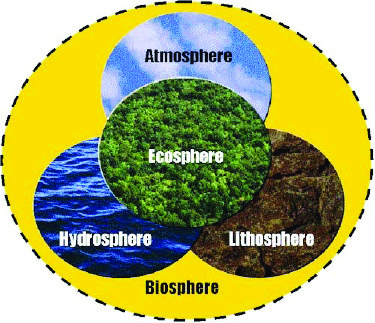
- The atmosphere is the layer of air and gases wrapped around the Earth. Weather happens here, and every animal that breathes depends on it.
- The hydrosphere is all the water on Earth: oceans, rivers, lakes, glaciers and even the water vapour in the air.
- The lithosphere is the solid, rocky outer part of the Earth: soil, stones and mountains.
- The biosphere is the zone where living things exist. It stretches through parts of the other three spheres, because life is found in air, water and soil.
- The ecosphere is where all these spheres meet and interact. A forest is a good example: its trees grow in soil, drink water, breathe air and shelter animals, all at once.
No sphere works alone. A single fish needs water to swim in, oxygen from the air dissolved in that water, and a rocky or muddy bed to hide in. When you talk about the environment, you are always talking about these parts working together.
How Animals Spend the Winter
When winter comes, the weather turns cold, days grow shorter, leaves change colour and fall, and snow covers the ground. People manage easily: we live in warm houses, wear heavy coats outside, and buy food from a grocery store. Animals have none of these things, yet most of them survive the winter. They do it in four main ways: some migrate, some stay and adapt, some find shelter, and some sleep through the cold. Each way is a different answer to the same two problems, cold and hunger.
Migration: Travelling to Survive
To migrate means to travel to another place where the weather is warmer or where food can be found. Migration happens at the same time every year, so it is part of a yearly cycle.
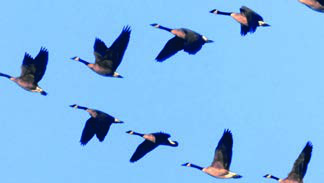
Many birds migrate in the autumn. Because the trip can be dangerous, some travel in large flocks. Geese, for example, fly in noisy V-shaped groups, while other kinds of birds fly alone. How do birds know when it is time to leave? Scientists are still studying this, but the migration cycle seems to be controlled by two signals: the changing amount of daylight and the weather. Some birds fly astonishing distances. The Arctic tern nests close to the North Pole in the summer, flies south all the way to Antarctica in the autumn, and returns north again each spring. Most migrating birds travel much shorter distances than that.
How do birds find the same place each year? They seem to navigate the way sailors once did, using the Sun, the Moon and the stars for direction. They also appear to carry a kind of compass in the brain that senses the Earth's magnetic field. Birds are not the only travellers. A few mammals migrate, such as some bats, caribou, elk and whales that travel in search of food each winter. Many fish swim south or move into deeper, warmer water. Some insects migrate too: Monarch butterflies spend the summer in Canada and the northern United States and fly as far south as Mexico for the winter. Most migrating insects go much shorter distances. Many, like termites and Japanese beetles, simply move downward into the soil, and earthworms burrow down as well, some as far as six feet below the surface.
Staying Active and Adapting
To adapt means to change behaviour or the body in order to deal more successfully with a new situation. Animals that stay active in winter must adapt to the changing weather.
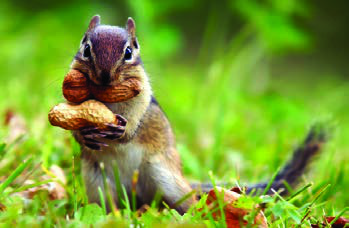
Some animals remain where they are and stay active all winter. To keep warm, many grow new, thicker fur in the autumn. On weasels and snowshoe rabbits the new fur is white, which hides them against the snow. Food is the harder problem, because little grows in winter. Animals solve it in different ways. Squirrels, mice and beavers gather extra food in the autumn and store it to eat later. Rabbits and deer spend the winter searching for moss, twigs, bark and leaves. Some animals simply change their menu with the season: the red fox eats fruit and insects in spring, summer and autumn, but in winter, when it cannot find these, it hunts small rodents instead.
Shelter, Huddling and Winter Activity
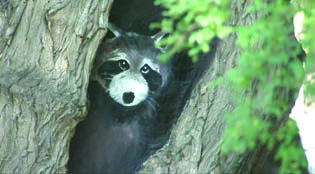
Animals may find winter shelter in holes in trees or logs, under rocks or leaves, or underground. Some mice even build tunnels through the snow, because snow itself blocks the wind and holds in warmth. To stay warm, animals like squirrels and mice may huddle close together, sharing the heat of their bodies. Not every small creature hides, though. Certain spiders and insects stay active through winter if they live in frost-free areas and can still find food. A few insects, such as the winter stonefly, the crane fly and snow fleas, are normally active in winter, and some fish keep swimming in cold water all season.
Hibernation: The Deep Winter Sleep
To hibernate means to spend part or all of the winter in a special, very deep sleep. The animal's body temperature drops, its heartbeat and breathing slow down, and it uses very little energy.
Hibernation is not ordinary sleep. The whole body slows down so that the animal burns almost no energy while the cold months pass. The preparation happens in autumn: the animal eats extra food and stores it as body fat, then lives off that fat for energy while it hibernates. Some hibernators also hide food such as nuts or acorns to eat later in the winter, waking now and then to feed. Bears, skunks, chipmunks and some bats hibernate.
Cold-Blooded Animals in Winter
Dormant describes an animal that is alive but inactive, as if paused, through a difficult season. Being dormant is similar to hibernation.
Cold-blooded animals such as fish, frogs, snakes and turtles cannot make their own body heat, so they have no way to keep warm during the winter. Snakes and many other reptiles find shelter in holes or burrows and spend the winter dormant. Water makes a surprisingly good shelter for many animals. When the weather gets cold, frogs, turtles and many fish move to the bottom of lakes and ponds and hide under rocks, logs or fallen leaves. Some even bury themselves in the mud and become dormant there. This works because of a useful fact: cold water holds more oxygen than warm water, and frogs and turtles can breathe by absorbing that oxygen straight through their skin.
Saying Weather Words Correctly
The words below all describe weather, and several of them are commonly mispronounced. Read each one aloud, using the middle column as a guide to the sound. The stressed part is written in capital letters.
| Word | Say it like | Meaning |
| avalanche | AV-uh-lahnch | a huge mass of snow sliding down a mountain |
| blizzard | BLIZ-erd | a severe snowstorm with strong winds |
| breeze | BREEZ | a light, gentle wind |
| drought | DROWT, rhymes with out | a long period with little or no rain |
| Fahrenheit | FA-ren-hite | a scale for measuring temperature |
| flurries | FLUH-reez | light, brief showers of snow |
| forecast | FOR-kahst | a statement of what the weather will be |
| frostbite | FROST-bite | injury to the body caused by extreme cold |
| humidity | hyoo-MID-i-tee | the amount of water vapour in the air |
| precipitation | pri-sip-i-TAY-shun | water falling as rain, snow or hail |
The word drought ends with the sound of out, not the sound of thought. The gh is silent. Say DROWT, never drot or drowth.
Making, Accepting and Rejecting Offers
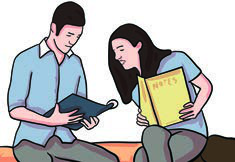
An offer is a polite way of proposing to give something or to do something for someone. English has several fixed patterns for making an offer, and fixed polite ways of saying yes or no to one. Read these short conversations aloud with a partner and notice the pattern each one uses.

| Purpose | Useful expressions |
| Making an offer | Can I help you? / Would you like ...? / Shall I ...? / I'll do it, if you like. / Can I offer you ...? |
| Accepting an offer | Yes please, that would be nice. / That would be very nice of you. / Thanks a lot. That would be great. |
| Rejecting an offer politely | No, thanks. / No thanks, I'm just having a look. / It's OK, I can do it. |
A refusal without thanks sounds rude in English. Never answer an offer with a bare No. Say No, thanks, and if you can, add a reason: No thanks, I'm just having a look.
Practise with situations of your own. If your friend has forgotten money for snacks, offer to lend some: Shall I lend you some money? If your friend's pencil breaks while drawing, offer yours: Would you like to use my pencil? If your friend feels unwell in class, offer to take them to the school nurse. Take turns offering a chocolate, a seat on a bus, to carry a bag, to drive someone home, some money, or a discount, and practise both accepting and politely refusing each one.
Conditional Sentences with If and Unless
Study these sentences. Each one has two parts: an if clause naming a condition, and a main clause naming its result.
- If you heat snow, it melts.
- If it rains, you will get wet.
- If you don't hurry, you will miss the bus.
- What will you do if you miss the plane?
- I may finish that letter if I have time.
- If you want to borrow a book from the library, show your library card.
- Water changes into vapour if it is heated.
The zero conditional states a general truth or scientific fact. Both clauses use the present simple: If you heat snow, it melts. The result happens every time the condition happens.
The first conditional talks about a real possibility in the future. The if clause uses the present simple, and the main clause uses will, or another modal such as may or can, with the base verb: If it rains, you will get wet.
| Clause | Verb form | Example |
| If clause (the condition) | present simple | If you call me, ... |
| Main clause (the result) | will / may / can + base verb, or an imperative | ... I will come. |
The two clauses can come in either order. If the baby is a boy, I'll call him Nitesh means the same as I'll call him Nitesh if the baby is a boy. When the if clause comes first, a comma separates the clauses; when it comes second, no comma is needed. The main clause can also be an instruction: If you want to borrow a book, show your library card.
Unless means if not. Unless you use your English, it will not improve means the same as If you do not use your English, it will not improve. The clause after unless takes the present simple, exactly like an if clause.
Never put will inside the if clause or the unless clause. Write If you call me, I will come. The sentence If you will call me is wrong, and so is Unless she will call. The future word belongs only in the main clause.
Building a Strong Paragraph
The topic sentence states the main idea of a paragraph. It usually comes first, and every other sentence in the paragraph supports it.
A well-built paragraph has three parts. The topic sentence announces the main idea. The supporting details prove it with facts, reasons and examples. The concluding sentence closes the paragraph, often by suggesting what should be done. Consider a paragraph arguing that a city's biggest problem is its poor public transportation system. Its topic sentence states exactly that, right at the beginning. Its supporting details are specific: thousands of residents depend on buses and taxis, the daily schedules are unreliable, a bus due at 6:30 a.m. may arrive at 7:00 a.m. or later, and drivers sometimes pass by waiting passengers to make up lost time, so people reach work late or miss important appointments. Its conclusion draws the practical lesson: to arrive on time, people must allow for waiting time at the bus stops. Notice how nothing in the paragraph wanders away from the one idea named at the top.
To write your own paragraph, in about 100 words, on a topic like deforestation or endangered animals: state your main idea in one clear topic sentence, give three or four specific supporting details with examples or numbers, and finish with a concluding sentence that says what should change.
The Resistant Moths: When Poisons Stop Working
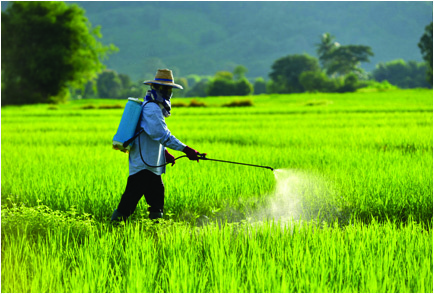
Mahendra Yadav is a potato farmer whose fields have been swamped by a strange new plague of moths that nothing will shift. He is bitter about it. First, he says, they were told to buy poisons to kill the pests. Then they were told they needed more poisons to fix the problems caused by the first pesticides. Now they are told they should not have used so much at all. He fears the insects will eat the farmers alive.
The trouble began in the early 1990s, when officials told farmers about amazing pesticides that would kill the insects in their fields and soon make them rich. Farmers were only too willing to buy, shopkeepers made the chemicals available, and energetic salesmen sold enormous quantities. The farmers bought one pesticide, then another, until there was an avalanche of them. But the chemicals were applied more or less indiscriminately, often in the wrong way and at the wrong time. Mahendra insists it was not the farmers' fault: they were simply excited by the thought of being free from the whims of nature.
After a few years came a nasty surprise. Despite the mixture of powerful chemicals on the potatoes, a few moths survived. They reproduced at a terrifying rate, devouring every potato they could find. The chemicals had disturbed the natural balance by killing not only the pests but also their natural predators, so the new moth had the crop all to itself. The farmers' first reaction was to increase the dose, then to try new chemicals one after another. But it needed only one or two resistant moths to survive for them to produce a new and tougher strain, immune to the most powerful pesticide. New pesticides arrived with new promises and worked for a time, but none was a permanent solution. Farmers are now in despair: they have watched their harvests disappear, and they feel they have lost the creative potential of the land itself. Mahendra is more hopeful. He has returned to more natural methods, letting some of his land lie fallow and changing his irrigation system, in the hope that the moths will go away.
Resistant means not harmed or affected by something. A resistant pest survives a poison that used to kill its kind, and it passes that survival on to its offspring, producing a tougher strain.
The story shows a chain: careless spraying kills pests and their predators, a few resistant pests survive, they breed without enemies, and each stronger chemical breeds a still tougher pest. Natural methods, such as leaving land fallow and managing water, try to restore the balance that the chemicals destroyed.
Listening for Facts about Rainforests
The listening task is about the great rainforests of the world. Before listening, answer from your own knowledge: the three biggest rainforests on Earth are the Amazon rainforest in South America, the Congo rainforest in Africa, and the rainforest of New Guinea and Southeast Asia. The biggest of all is the Amazon.
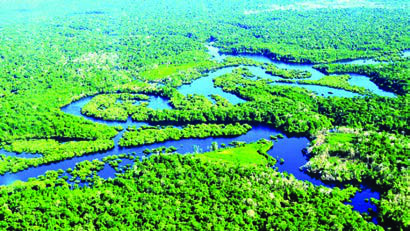
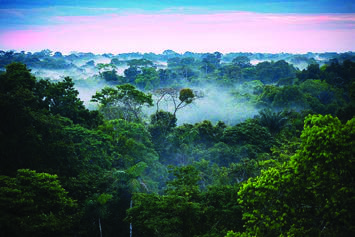
While you listen, your job is to catch specific facts and circle the correct answer for each question. The audio will tell you: the area of the Amazon Forest in millions of square kilometres, the direction in which the Amazon River flows through the forest, the share of the world's oxygen the forest produces, the number of species of mammals found there, and roughly how many native tribes live in the forest region. Read the questions and all their options before the audio starts, so you know which numbers and words to listen for. Numbers pass quickly in speech, so write each one down the moment you hear it, and use the second listening to check your answers rather than to find them all again.
Writing a Letter to the Editor
A letter to the editor is a formal letter written to a newspaper about a public problem or issue. It is published so that readers and authorities notice the problem.
A formal letter has five parts, and each sits in a fixed place on the page.
| Part | What it is | Example |
| Sender's address | where the writer lives, at the top, with the receiver's address below it | Vyas-6, Tanahun, then The Editor, The Rising Nepal, Dharmapath, Kathmandu |
| Date | the day the letter is written, under the sender's address | 21 May 2021 |
| Salutation or greetings | the polite opening | Dear Sir/Madam |
| Body | the paragraphs carrying the message | the problem, the evidence, and why it matters |
| Subscription and signature | the polite closing with the writer's name | Yours faithfully, Sumina Aryal |
The body itself follows the paragraph rules you have already learnt. A good letter about road accidents, for example, opens by naming the problem: accidents have become common on the highway and most are caused by reckless driving. It then gives evidence, perhaps one dreadful accident the writer witnessed. It closes by widening the point: reckless driving endangers children, pedestrians, animals and property, so it is a public safety issue that must be properly addressed. When you write your own letter to the editor, say, on the importance of natural resources in Nepal and ways of preserving them, follow the same plan: address and date, a greeting, one paragraph naming the issue, one or two paragraphs of specific support, a paragraph of suggestions, and then Yours faithfully with your name.
The Water Cycle Project
The water cycle is the continuous movement of water within the Earth and the atmosphere. It is a natural system made of several processes working in a loop.
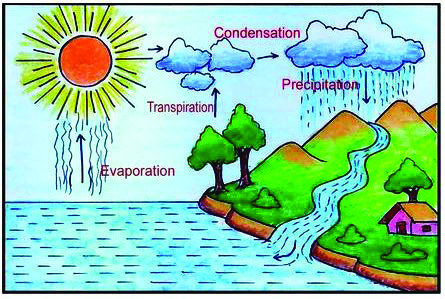
- Evaporation: the sun heats liquid water in seas, lakes and rivers, and it rises into the air as invisible water vapour.
- Transpiration: plants release water vapour into the air through their leaves, adding to the moisture rising from the ground.
- Condensation: high in the cool air, the vapour turns back into tiny droplets, which gather into clouds.
- Precipitation: when the droplets grow heavy, water falls back to the Earth as rain or snow, flows into rivers and seas, and the cycle begins again.
For your project, draw your own picture of the water cycle. Show the sun, a sea or lake, trees, clouds and rain, label the four processes in the right places, and use arrows so a viewer can follow the loop. Make it as attractive as you can and present it to your class, explaining each labelled process in your own words.
The full lesson is waiting for you
The notes are free to read in full. A free account opens the rest of the practice, and tracks your progress and confidence score for every subject. Presentations and videos need approval from Learn Yeti.