Places That Make People Travel
People travel for very different reasons. Some want to see wild animals in their own home, so they ride into a national park. Some want to stand under the tallest buildings human beings have ever made. Some travel to holy places connected to their faith, and some go to see famous monuments they have only met in photographs. Look at these four places and think about what kind of traveller each one attracts.
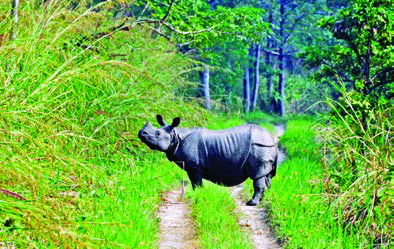

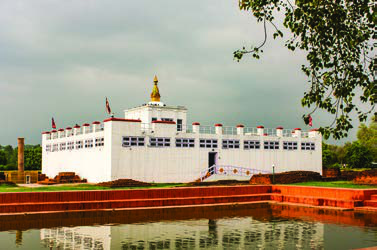

Talking about places like these is good speaking practice. Which of the four would you visit first? Has anyone in your family been to one of them? What would you tell a foreign friend about Chitwan or Lumbini? Nepal itself is full of destinations that people cross the world to reach, and this whole unit is about describing journeys, planning them, and talking about them in English.
Reading a Travel Brochure: The Poon Hill Yoga Trek
A travel brochure is a text written by a travel company to describe a trip and persuade people to join it. It praises the journey with attractive words, lists its highlights, and gives a day-by-day plan called an itinerary.
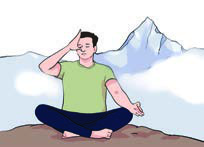
The Poon Hill Yoga Trek is an eight-day programme in the Annapurna region of Nepal. It combines two things: a trek through hill villages and forests, and daily Hatha Yoga with meditation. The brochure promises views of snow-capped Himalayas and glaciers, icy waterfalls, and the hidden treasures of Nepali culture. Its main claim is a big one: the trek supports and encourages a deep personal transformation. In other words, it says the traveller will come back a changed person, stronger in body, calmer in mind.
The programme is open to all experience levels, so a complete beginner can join. The highlights section piles up persuading words: visitors will be astonished by adorable landscapes and the enchanting environment, they will gaze at stunning views of the Himalayas and savour delicious Nepali meals. They will meet different Nepali cultures, diverse flora and fauna, perennial rivers crossed by suspension bridges, and spectacular sunrise and sunset views over the high mountains. Notice how nearly every noun carries a glowing adjective. That is how a brochure sells a journey.
A brochure does two jobs at once: it informs you with facts such as places, days and activities, and it persuades you with admiring words such as magnificent, enchanting and spectacular. A good reader separates the facts from the praise.
Eight Days on the Trail
An itinerary is the day-by-day plan of a journey. It tells you where you go each day, how you travel, and where you sleep each night.
| Day | Route | What happens |
| Day 1 | Arrival in Kathmandu | Welcome at the airport, transfer to the centre, discussion of the programme, overnight at the centre |
| Day 2 | Kathmandu to Pokhara | A 4 to 5 hour bus ride along the Trishuli River, with views of forests and terraced fields, overnight in Pokhara |
| Day 3 | Pokhara to Tikhedhunga | Early tea, one hour of yoga, breakfast, drive to Nayapul, trek through several towns, overnight in Tikhedhunga |
| Day 4 | Tikhedhunga to Banthanti | Tea, yoga and breakfast, a suspension bridge, the Magar village of Ulleri, lunch at Nangethanti, evening yoga, sleep in Banthanti |
| Day 5 | Banthanti to Ghorepani | Morning tea and yoga class, hike exploring local culture and mountains, evening yoga and entertainment, overnight in Ghorepani |
| Day 6 | Ghorepani to Poon Hill to Tadapani | One hour sunrise hike to Poon Hill for panoramic views, breakfast in Ghorepani, trek through pine and rhododendron forests to Deurali and on to Tadapani, evening yoga, overnight in a tourist lodge |
| Day 7 | Tadapani to Ghandruk to Pokhara | Morning yoga and breakfast, four hour walk to Ghandruk, a Gurung village famous for its Gorkha soldiers and close views of Annapurna South and Machhapuchhre, drive back to Pokhara, overnight in Pokhara |
| Day 8 | Departure | Leave for the next destination in the morning after breakfast |
Read the itinerary closely and a pattern appears. On each trekking day the yoga hour comes early in the morning: the group wakes up, has tea, practises yoga for about an hour, and only then takes breakfast and starts walking. On some days there is a second yoga session in the evening as well. Counting the days, the visitors actually do yoga on five of the eight days, from day three to day seven. The first two days are for arriving and travelling, and the last day is for departure. Exam questions love this kind of detail, so always be ready to say where the trekkers sleep on a given night: Tikhedhunga on the third, Banthanti on the fourth, Ghorepani on the fifth, Tadapani on the sixth, and Pokhara on the seventh.
Saying Long Words Clearly
Travel writing is full of long words, and every long English word has one syllable that is said more strongly than the rest. That strong syllable is called the stressed syllable. Say each word below aloud, pressing hardest on the part written in capital letters.
- WONderful, LIKElihood, and aSTONishing keep the stress near the front.
- destiNAtion and inspiRAtional stress the syllable just before tion, because words ending in tion almost always do.
- opporTUnity, responsiBIlity, insigNIficant and biodiVERsity stress the third syllable from the end, the usual pattern for words ending in ity and icant.
- unimAginable, magNIficently and autobiOgraphy carry their stress in the middle: say them slowly first, then at normal speed.
The ending of a word often tells you where its stress falls. Words ending in tion stress the syllable before the ending: destiNAtion. Words ending in ity stress the third syllable from the end: responsiBIlity.
Talking About Your Plans

Listen to how differently the three friends speak. Friend A is only considering the idea, so she says I'm thinking of going. Friend C has made up his mind, so he says I intend to go. Friend B already has a fixed family arrangement, so he uses We're going on a family trip. English gives you a whole ladder of phrases for plans, from a vague idea to a settled arrangement.
- I'm thinking of going rafting: the idea is still soft, nothing is decided.
- I intend to visit Rara Lake: the decision is made in my mind.
- I'm planning to trek in Mustang: the decision is made and I am working out the details.
- I'll help you carry the tent: I am deciding right now, as I speak.
- I'm playing football tomorrow evening: the arrangement is fixed with other people.
Practise these structures on real situations. If you want to go swimming this Saturday, say I'm planning to go swimming on Saturday. If your parents have already booked a trip, say We're going to Darjeeling next week. If a friend invites you to a birthday party tonight and you accept on the spot, say I'll come, thank you. When two choices lie open, name the one you expect to take: after the SEE examination, I think I'll study history rather than mathematics; after earning a lot of money, I'm going to go on a world tour rather than open a supermarket. Saying the choice aloud, with a reason, is exactly the speaking skill this unit builds.
Four Ways to Talk About the Future
English has no single future tense. Instead it has four common ways of pointing at the future, and each one carries its own meaning. Choosing between them is the grammar heart of this unit.
Will is used for a decision made at the moment of speaking, for offers and promises, and for predictions based on what we think or believe. Oops, I have forgotten to call my mother. I'll do it right now. The bus will arrive here soon.
Be going to is used for a plan or intention decided before the moment of speaking, and for a prediction based on present evidence that we can see. They have bought a lot of chocolates. They are going to have a party. The sky is overcast. It is going to rain.
The present continuous is used for a fixed arrangement in the future, usually made with other people and often with a time or place attached. I'm meeting Jane at 8 o'clock on Saturday. I'm visiting my grandparents next week.
The present simple is used for the future when the event runs on a timetable or schedule that does not depend on the speaker. As per the schedule, the train leaves at 3 o'clock.
| Form | When it is used | Example |
| will | Decision made now, offer, promise, belief about the future | It's really hot here. I'll open a window. |
| be going to | Plan decided earlier, or a prediction from present evidence | I've decided that I'm going to talk to the class teacher. |
| present continuous | Fixed arrangement with people, time or place already set | I'm having dinner with Dolma tomorrow. |
| present simple | Timetable or schedule | The train leaves at 3 o'clock. |
Choosing the Right Future Form
The choice always comes down to one question: when was the decision made, and what is it based on? Compare these pairs. It's really hot here, so I'll open a window: the idea comes to me as I speak, so will is right. But I don't have a bank account, and I have already decided to fix that, so I'm going to open an account in Nepal Bank Ltd. When a waiter asks whether I would like tea or coffee, I choose on the spot: I'll have a coffee, please. When my dinner with Dolma was arranged days ago, the arrangement speaks: I would love to go out with you tomorrow, but I'm having dinner with Dolma. A dental appointment is an arrangement too: I can't come to class next Monday, I'm having a tooth taken out. And when an activity will be in progress at a future time, English can even use the future continuous: next week, we will be boating on Lake Rara.
Predictions divide the same way. If the prediction comes from evidence in front of your eyes, use be going to: that aeroplane is looking shaky, it is going to crash; there is a hole in the boat and it is filling up with water, it is going to sink; Ann's tank is almost empty and the nearest petrol station is far away, she is going to run out of petrol. If the prediction comes only from belief or opinion, will is natural: my daughter says she will be a doctor when she is older; I think I'll stay at home tomorrow evening. An offer is always will: don't worry, I'll open the windows for you.
Do not use will for something that is already fixed with another person. I will have a tooth taken out next Monday sounds like a decision you are making this second. The appointment already exists, so say I'm having a tooth taken out next Monday. Ask yourself first: is this decided now, decided earlier, or already arranged?
Writing Your Own Trek Plan
Now turn the grammar into writing. Imagine you are going on a three-day trek during your vacation and write a short paragraph for each day. Use the Poon Hill itinerary as your model: say where you will go, how you will travel, what you will do on the way, and where you will spend the night. Because these are plans made in advance, be going to and the present continuous will carry most of your sentences, with will for the things you merely expect.
- Day one: name the starting point and the first destination. On the first day, we are going to take an early bus from Kathmandu to Sundarijal and walk through Shivapuri National Park to Chisapani, where we are staying overnight in a small lodge.
- Day two: describe the main walking day. On the second day, we are going to trek from Chisapani to Nagarkot. The trail will pass through pine forests and terraced fields, and I think the sunset view will be wonderful.
- Day three: bring the trek home. On the last day, we are getting up early to watch the sunrise over the Himalayas, and after breakfast we are going to catch the bus back home.
Stopping by Woods on a Snowy Evening
From planned journeys the unit turns to a famous poem about a pause in the middle of one. Stopping by Woods on a Snowy Evening was written by the American poet Robert Frost. A traveller, riding home with his little horse on the darkest evening of the year, stops between the woods and a frozen lake simply to watch snow fill the trees.
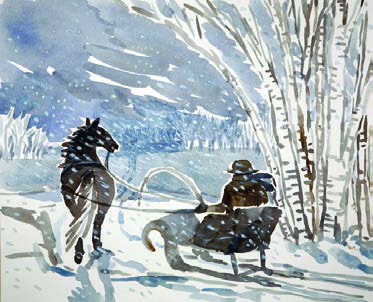
Whose woods these are I think I knowHis house is in the village though;He will not see me stopping hereTo watch his woods fill up with snow.My little horse must think it queerTo stop without a farmhouse nearBetween the woods and frozen lakeThe darkest evening of the year.He gives his harness bells a shakeTo ask if there is some mistake.The only other sound's the sweepOf easy wind and downy flake.The woods are lovely, dark and deep,But I have promises to keep,And miles to go before I sleep,And miles to go before I sleep.
The poem carries the name of the poet at its end: Robert Frost. Read it aloud at least twice. Its lines are short and its rhymes are gentle, so the sound itself feels like the quiet of falling snow.
What the Poem Is Really Saying
On the surface the story is simple. The speaker knows whose woods these are, and knows the owner lives in the village and will not see him stopping. His horse finds the halt strange, because there is no farmhouse near, and shakes his harness bells as if asking whether some mistake has been made. The only other sounds are the easy wind and the soft, downy snowflakes. The speaker admits the woods are lovely, dark and deep, but he has promises to keep and miles to go before he sleeps.
Underneath, the poet compares human life with a journey. The speaker is a traveller who has to reach his destination before taking a rest. The beautiful woods stand for momentary pleasure, the kind that tempts us to stop and forget everything else. The promises stand for the responsibilities every person carries, and the sleep at the end of the road is the final rest, death. The horse, his companion, is the voice of duty pulling him back to the road. The last line is repeated on purpose: saying And miles to go before I sleep twice makes the reader feel just how long the road of duty still is.
Beauty invites us to pause; responsibility calls us onward. The speaker enjoys the woods for a moment, then chooses his promises. That choice is the heart of the poem.
Listening for Details in a Phone Call

The listening task begins before any audio plays. First study the picture and guess: the lady wears a suit and sits at a front desk with a telephone, so she is most likely a hotel receptionist; she is probably talking to a customer; and the talk is probably about booking a room. Guessing like this is not cheating. It prepares your mind, so that when the recording starts you already know what kind of conversation you are entering.
Then read the gapped sentences before you listen, and predict what type of answer each gap wants. You are listening for five details: the name of the hotel, which will be a proper name; the customer's opinion of the room that costs two hundred dollars, which will be a describing word; what has happened to all the non-smoking rooms on the 22nd of March; the price of the non-smoking room, which will be a number of dollars; and the date in March for which the customer finally books the room. Prices and dates are the details that slip past careless listeners, so write figures as you hear them, and use the second listening to check rather than to catch up.
- Before listening: read every gap and decide whether it wants a name, a number, a date or a describing word.
- While listening: keep your pen on the next empty gap and write short, one or two words only.
- Numbers and dates: say them silently back to yourself as you write them, because they are the easiest details to mishear.
- Second listening: check what you wrote instead of writing everything again.
After the task, make the topic your own. Where do you usually spend nights when you are away on a visit or a holiday? If you had to stay in a hotel, how would you make a reservation? Practise the phone call in pairs: one of you is the receptionist, the other asks about room types, prices and dates, and finally books a room.
Writing a Letter About Your Travel Plans
The second writing task is an informal letter to a friend describing your travel plans for an upcoming holiday. An informal letter starts with your address and the date, greets your friend by name, chats naturally in two or three paragraphs, and closes warmly. The body of your letter should answer five questions, and if you answer all five you will never run out of things to say.
- Where do you plan to go?
- Who will you go with?
- Where will you stay?
- How long will you stay?
- What are you going to see?
This letter is where your future forms go to work. Plans you have already made take be going to: we are going to visit Ghandruk. Fixed bookings take the present continuous: we are leaving on Friday morning. Hopes and guesses take will: I think the sunrise from Poon Hill will be unforgettable. A letter that mixes these correctly sounds like a real traveller talking, not a grammar exercise.
Project: Find Out Your Friends' Plans
The project turns the whole unit into a small survey. Prepare a set of questions about plans and intentions for the future: What are you going to do after the SEE examination? Where are you thinking of travelling? What do you intend to become? Meet at least four of your classmates, ask your questions, and note their answers down carefully. Then share their plans and intentions with the whole class, reporting in full sentences: Sunita is planning to study science, and she is thinking of becoming a nurse. The project practises every skill at once: forming questions, listening to answers, taking notes, and speaking to an audience.
Using a Colon
A colon (:) is a punctuation mark that points forward. It tells the reader that what comes next will illustrate, list or complete what has just been said.
- Use a colon between a grammatically complete introductory clause, one that could stand as a sentence, and a final phrase or clause that illustrates the preceding thought. Professor Pokhrel wrote two books on education: one on educational leadership and the other on educational planning.
- Use a colon in ratios and proportions. The proportion of saltwater was 1:8.
- Use a colon in references between the place of publication and the publisher. London: Oxford University Press.
The words before the colon must be able to stand alone as a complete sentence. Writing I like: momo and chowmein is wrong, because I like cannot stand alone. Write I like two snacks best: momo and chowmein.
The full lesson is waiting for you
The notes are free to read in full. A free account opens the rest of the practice, and tracks your progress and confidence score for every subject. Presentations and videos need approval from Learn Yeti.