Comparing Things Around Us
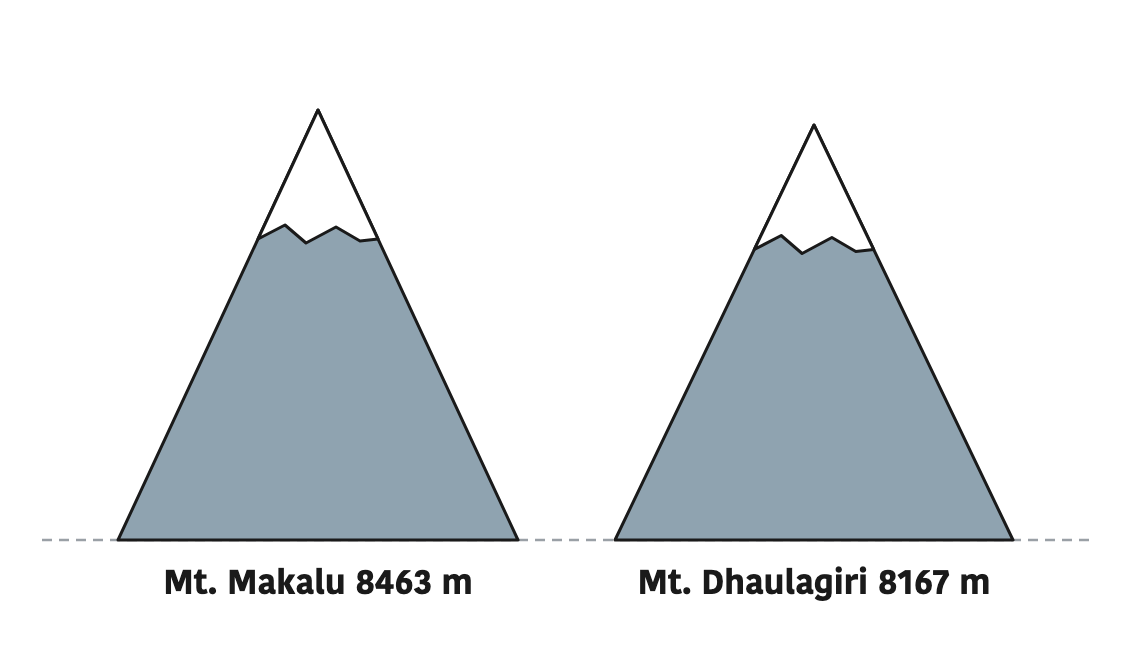
We compare things all day without noticing. Mt. Makalu is 8463 m high and Mt. Dhaulagiri is 8167 m high, so if someone asks which is higher, you answer with a comparing word: Mt. Makalu is higher than Mt. Dhaulagiri, or Mt. Dhaulagiri is shorter than Mt. Makalu. Both sentences say the same fact, one from each side. This whole unit is about the words that do that job, words like higher, shorter, stronger and the most powerful. They are called comparatives and superlatives.

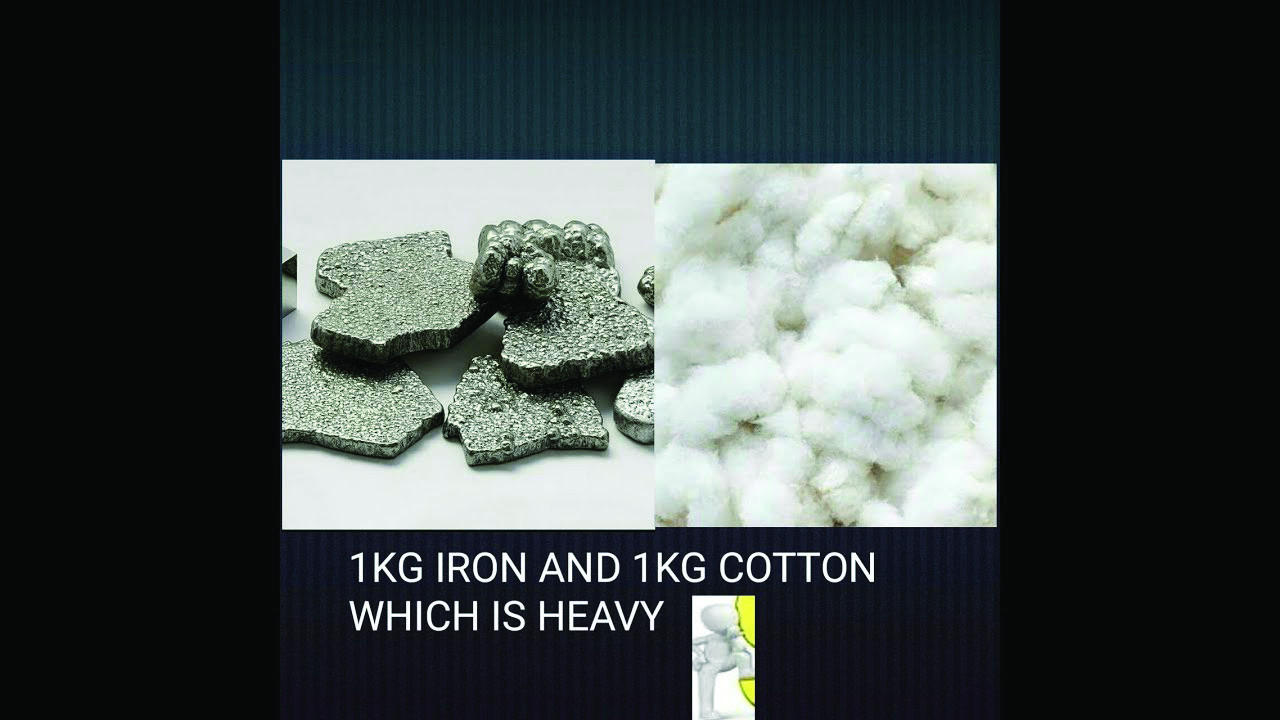
Some comparisons are tricks. A pile of cotton looks much bigger than a lump of iron, but one kilogram of cotton is exactly as heavy as one kilogram of iron. Songs use comparing words too. A famous song says that what does not kill you makes you stronger. Stronger comes from strong, taller comes from tall, and lighter comes from light. Adding er to a short adjective is the first and simplest way English builds a comparison.
Reading a Chart: Smartphone Ownership
A chart shows numbers as a picture, and comparing is exactly what a chart is for. A line chart shows how one thing changes over time. A bar chart lets you compare several groups side by side. The two charts below both show smartphone ownership, which means the fact of owning a smartphone, but they show it in different ways.
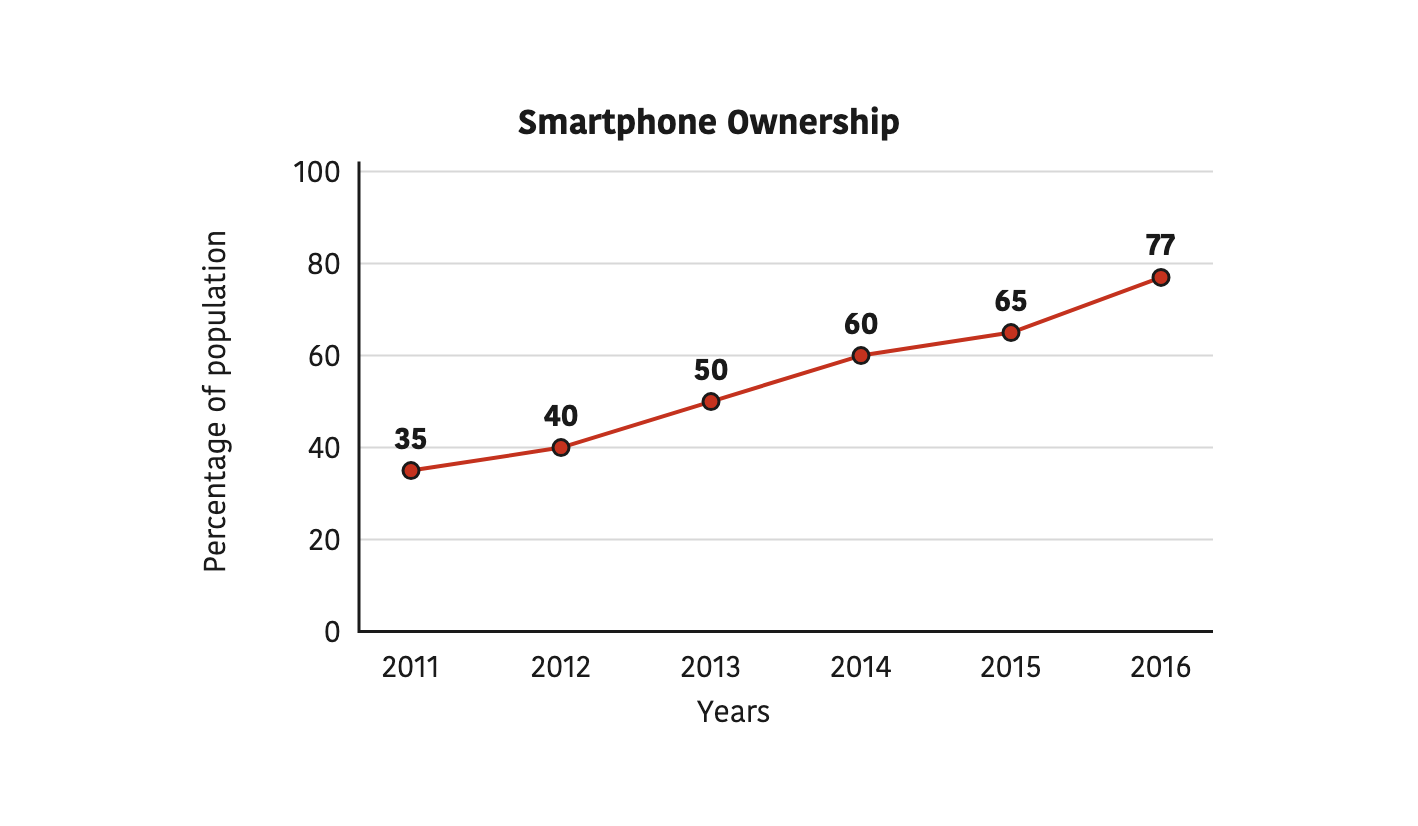
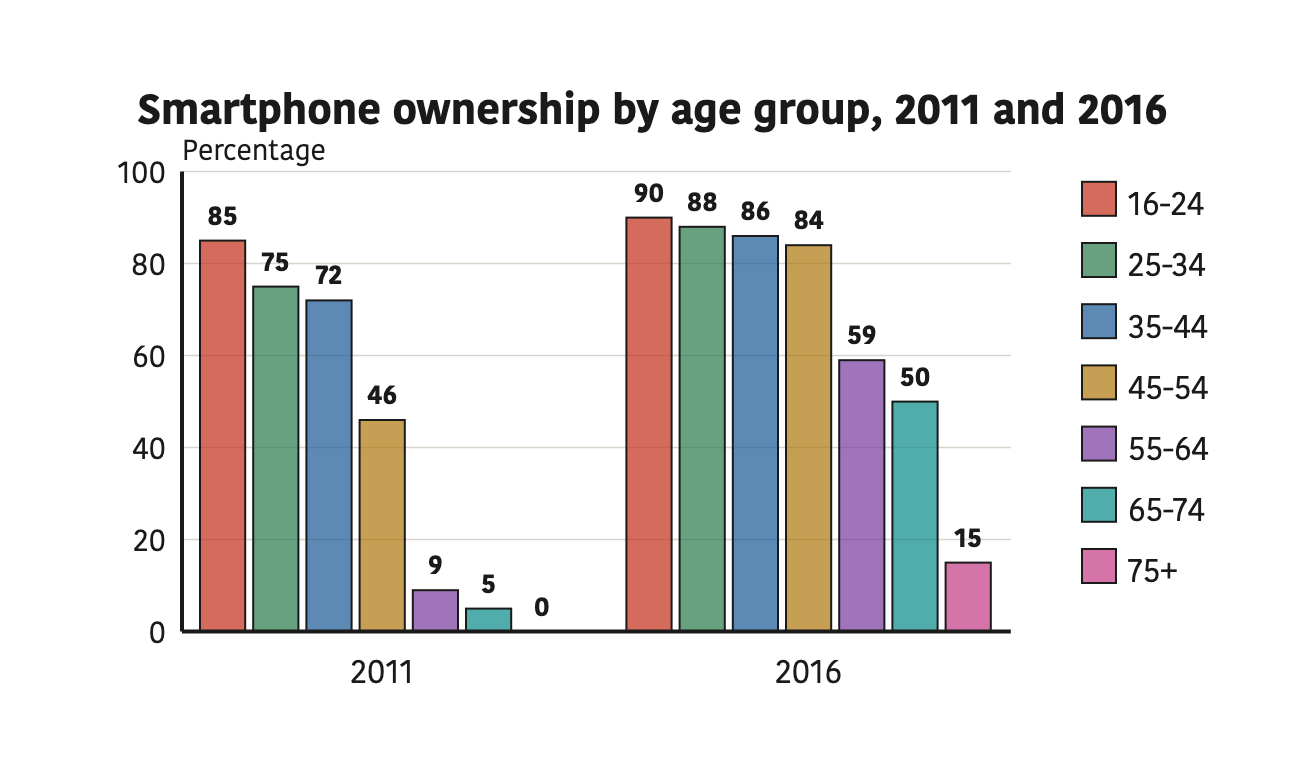
The first chart illustrates the percentage of the population who owned a smartphone from 2011 to 2016. Ownership rose steadily, starting at around 35% in 2011 and reaching about 77% by 2016. The second chart breaks the same idea down by age for 2011 and 2016. In general, the younger people were, the more likely they were to own a smartphone. People aged 16 to 24 represented the greatest percentage of smartphone ownership in both years, 85% in 2011 and 90% in 2016. However, the most significant increase came from people aged 45 to 54, whose ownership jumped from 46% to 84%. The 75 and over group is the most surprising. Almost nobody in that group owned a smartphone in 2011, yet 15% of them owned one by 2016. It seems they developed more interest in modern technology.
When you describe a chart, do three things: say what the chart shows, describe the overall pattern, and then point out the most interesting numbers. Comparing words like higher, the greatest and the most significant are the tools for the job.
Saying Words That End in er
Comparative words like higher, younger, heavier, bigger, wiser, taller, smarter and clearer all end in the same small sound. The er at the end is never stressed and is said with a short, relaxed vowel, the same weak sound you hear at the end of teacher and water. Say the first part of the word clearly and let the er fall away softly: HIGH-er, YOUNG-er, BIG-ger. Practise the eight words aloud until the ending feels automatic, because you will be saying comparatives in every speaking task of this unit.
Comparative and Superlative Adjectives
Read these sentences and notice the comparing words. My sister thinks she is more intelligent than me, but I do not agree. What is the wettest month of the year in Nepal? Do you think films are better than books? Who is the most powerful person in your village? I think Ritesh is funnier than Nitesh. Is Nitu older than Nima? John is the nicest person that I know. Some of these compare two things, and some pick one thing out of a whole group. That difference is the heart of the grammar.
A comparative adjective compares two people or things. It is made with er or with more, and it is usually followed by than. Example: Kathmandu is bigger than Pokhara.
A superlative adjective compares one person or thing with all the others in a group, three or more. It is made with est or with most, and it takes the before it. Example: Mount Everest is the highest mountain in the world.
How you build the form depends on the adjective.
| Kind of adjective | Comparative | Superlative | Example |
| Short, one syllable | add er | add est | tall, taller, the tallest |
| Short, ending in one vowel and one consonant | double the last letter, add er | double the last letter, add est | wet, wetter, the wettest |
| Ending in y | change y to i, add er | change y to i, add est | funny, funnier, the funniest |
| Long, two or more syllables | more + adjective | most + adjective | powerful, more powerful, the most powerful |
| Irregular | learn by heart | learn by heart | good, better, the best; bad, worse, the worst; far, farther, the farthest |
Here is the full set of forms for the adjectives used in the sentences above.
| Positive | Comparative | Superlative |
| intelligent | more intelligent | most intelligent |
| bad | worse | worst |
| wet | wetter | wettest |
| good | better | best |
| powerful | more powerful | most powerful |
| funny | funnier | funniest |
| old | older | oldest |
| nice | nicer | nicest |
Never use more with an er form or most with an est form. More better, more taller and most tallest are all wrong. Choose one way: better, taller, the tallest.
Listening for Comparisons
The listening task in this unit plays an audio in two parts. Before it starts, you look at a picture of a family and guess: who are these people, and who is taller, the man or the woman? Then the first part of the audio describes a mother and a father, and your job is to tick who is older, who is more active, who is more talkative and who is taller. The second part compares two cities, Los Angeles and San Francisco, and you complete sentences with not more than two words each. The skill being tested is simple to name: catch the comparative word the moment you hear it, and catch which person or place it belongs to. Read the table and the sentences before the audio plays, so your ears already know what they are hunting for.

Comparing Animals and Using as ... as
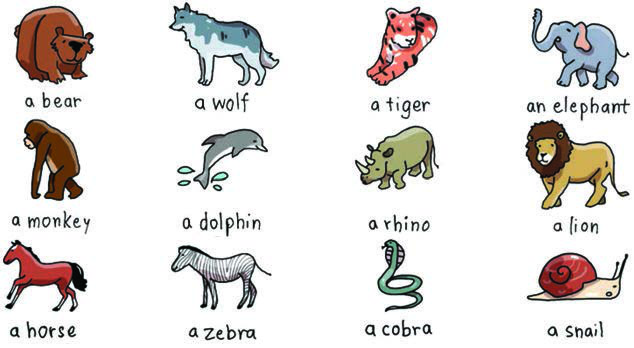
Comparing becomes natural when you talk about animals, because everyone has opinions about them. Using adjectives like tall, intelligent, heavy, fast, strong, dangerous and slow, you can build sentences such as: A lion is more dangerous than a snail. An elephant is the largest animal. A horse is faster than a bear. A dolphin is more intelligent than a cobra. Say the sentences aloud with a partner, taking turns.
Sometimes two things are not different at all, and English has a structure for that too.
The structure as + adjective + as says that two things are equal. Example: English is as interesting as Nepali. The negative, not as + adjective + as, says the first thing is less: A snail is not as fast as a horse.
- An apple is as sweet as an orange.
- A bullet train is as fast as an airplane.
- Algebra is as difficult as geometry.
- Grammar is as easy as spelling.
- The morning is as warm as the afternoon.
Writing About a Table
A table holds numbers the way a chart does, only without the picture, so interpreting it means turning its rows into sentences. This table shows the age wise population percentage of Nepal over three years.
| Age group | 2017 | 2018 | 2019 |
| 0 to 14 | 31.34% | 30.41% | 29.57% |
| 15 to 64 | 63% | 63.86% | 64.65% |
| 65 and over | 5.66% | 5.73% | 5.78% |
To interpret it, work row by row and compare. The share of children aged 0 to 14 fell steadily, from 31.34% in 2017 to 29.57% in 2019. The working age group, 15 to 64, was the largest group in all three years and grew from 63% to 64.65%. The oldest group, 65 and over, was the smallest but rose slowly each year. One good closing sentence names the overall pattern: the population of Nepal is slowly getting older, because the youngest group is shrinking while the other two are growing.
A Bird Came Down the Walk
Poetry compares too, in its own quiet way. In this poem by Emily Dickinson, the poet watches a bird that does not know it is being watched. The bird is stronger than the worm it catches, yet nervous of the world around it, and its frightened eyes are compared to beads.
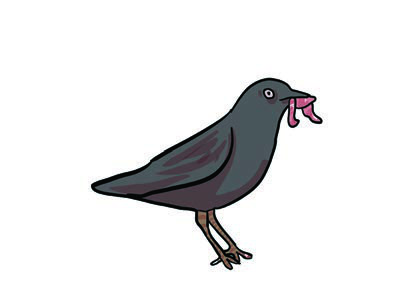
A Bird, came down the WalkHe did not know I sawHe bit an Angle Worm in halvesAnd ate the fellow, raw.And then, he drank a DewFrom a convenient GrassAnd then hopped sidewise to the WallTo let a Beetle pass.He glanced with rapid eyes,That hurried all abroadThey looked like frightened Beads, I thought,He stirred his Velvet Head.
Listen for the rhymes as you read aloud. Saw rhymes with raw, grass rhymes with pass, and abroad makes a half rhyme with thought, which is a rhyme that almost matches, a favourite trick of this poet. The bird bites an angle worm in halves and eats the fellow raw, drinks a dew from a convenient grass, hops aside to let a beetle pass, and glances about with rapid, frightened eyes before stirring his velvet head.
Superlatives and Comparing Adverbs
Superlatives shine when a sentence gives you a clue. Read the whole sentence carefully before choosing the adjective, because the second half usually tells you which one fits. If someone almost froze to death, yesterday was the coldest day of the year. If a student gets the top grades in every course, she is the smartest student in the class. If half the audience fell asleep, he is the most boring speaker you have ever heard. The Nile is the longest river in the world, and Mount Everest is the highest mountain in the world.
Adverbs compare actions the same way adjectives compare things. Most adverbs that end in ly take more and most: I drive more carefully than my husband, and Anita sings most beautifully of all the people in the choir. A few short adverbs behave like short adjectives: Anu works harder than I do, but our secretary works hardest of us all. Pema arrived earlier than Barun did, and Kamal arrived earliest of them all.
A comparative adverb compares how two actions are done, usually with more or er: more clearly, harder, earlier. A superlative adverb compares one action against all the rest, with most or est: most clearly, hardest, earliest.
With three things, use the comparative between any two of them and the superlative only for the winner of the whole group. A papaya is bigger than an orange, a papaya is not as big as a watermelon, and the watermelon is the biggest fruit of the three.
Writing About You and Your Friend
Comparison also describes people. Answer a few questions about yourself, such as how old you are, whether you are shy, and whether you like television, pets, mobile phones, telling stories or exercise. Then ask a friend the same questions and note both answers. Now you have two columns of facts, and a paragraph almost writes itself: start with the similarities, using both and as ... as, then give the differences, using comparatives with than. For example: My friend Sita and I are both twelve years old, and I am as fond of pets as she is. However, she is shyer than me, and I like telling jokes more than she does. She loves exercise, but I would rather watch television.
Project Work and One Last Comparison
The project brings the whole unit together. Collect the number of students in the different grades of your school. In a group of five, draw a bar chart of those numbers on chart paper, one bar per grade, make it as attractive as possible, and stick it on the classroom wall. When you present it, use the language of this unit: which grade has the most students, which has the fewest, and which two grades are almost as large as each other.


Finish with these two machines. An old telephone and a smartphone do the same basic job, yet almost everything about them is different. A smartphone is smaller and lighter than an old telephone. It is more useful, because it takes photos and plays music. An old telephone is simpler and cheaper, and many people say it was stronger too. The smartphone is the more modern of the two, and it is certainly the easier one to carry in a pocket. Five sentences like these, and you have used everything this unit teaches.
The full lesson is waiting for you
The notes are free to read in full. A free account opens the rest of the practice, and tracks your progress and confidence score for every subject. Presentations and videos need approval from Learn Yeti.