Food, Taste and Preference
Almost everyone can name a favourite food, but fewer people can say clearly why they like it. Is it the taste, the smell, the memories it brings back, or simply that it keeps you full until evening? Talking about food well means giving reasons, not just names. Think of four dishes found on Nepali tables: dal-bhat with curry and pickle, dhido served with soup and meat, sel roti, and momo. Rank them from 1 to 4 according to your own preference, and then explain why your first choice beats the other three.
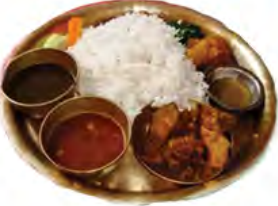
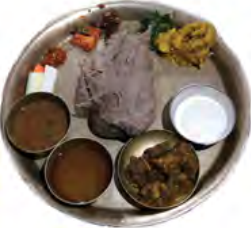
Cuisine: a style of cooking that belongs to a particular country, region or community, including its typical dishes, ingredients and methods. Nepali cuisine, Japanese cuisine and French cuisine are all different styles of cooking.
When you explain a preference, these patterns help you sound precise rather than vague:
- I prefer momo to sel roti because I enjoy spicy food more than sweet food.
- I like dal-bhat more than dhido since it is what I grew up eating every day.
- Sel roti is my favourite because it reminds me of Tihar at my grandmother's house.
- I would rank dhido last, not because it tastes bad, but because I find it too heavy.
Before reading on, answer two questions for yourself. What are the common food items in Nepal, and which one is your favourite? Have you ever eaten a dish that is quite uncommon in Nepal, and if so, how did it taste? Your answers are the starting point for the reading that follows, which is all about eating the unfamiliar.
Reading a Travel Article: Strange Food from Around the World
"Strange Food from Around the World" is a piece of travel journalism by Ben Groundwater. Travel writing of this kind is personal and chatty. The writer speaks in the first person, gives strong opinions, jokes at his own expense, and tries to persuade you to do what he has done. As you read, separate the facts about each dish (what it is made of, where it comes from) from the writer's opinions about it (whether it is tasty, challenging or worth trying).
The article opens with an argument. There is a special pleasure in challenging yourself and winning, in taking a risk and seeing it succeed, and food is one of the places where you can feel it. When you travel, the writer says, you should take chances on things you would not normally think of eating. That is the whole point of travel: experiencing the way other people do things and trusting that they know what they are doing. A dish that seems strange to you is delicious to many others.

The writer is honest that the risk does not always pay off. Fermented horse milk in Mongolia, he admits, sounds bad and really is bad. However, he promises that the dishes he describes next will not disappoint anyone brave enough to try them.
"Strange" is not a property of a food. It describes the distance between the food and the person eating it. Shiokara is ordinary in Japan, just as gundruk is ordinary in Nepal.
Seven Dishes Worth the Risk
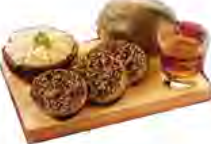
Haggis, Scotland. Haggis is made from the parts of a sheep that nobody else wants: the heart, the liver and the lungs. These are ground up and mixed with mutton fat, oatmeal and spices, packed into a sheep's stomach and boiled for a few hours. The writer admits Scotland is not famous for its cooking, yet he would happily eat "haggis, neeps and tats", which is haggis with turnips and potatoes, any day of the week.
Shiokara, Japan. Most Japanese food, the writer says, is simple: it sounds delicious and it is delicious. Shiokara is the exception. It is raw squid mixed with salty, fermented squid belly, and it is a Japanese staple. The writer used to hate it but is slowly coming around. Once you get used to it and eat it with good conversation, it takes on a whole new beauty.
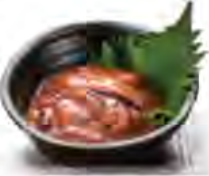
Staple: a basic food that people in a place eat regularly, often every day. Shiokara is a staple in Japan, deep-fried crickets are a staple in northern Thailand, and rice is a staple in most of Nepal.
Jellyfish, China. Jellyfish can seem a challenging meal to anyone who thinks of jellyfish only as scary sea creatures, and some people also dislike its rubbery texture. The Chinese, however, know what they are doing. They mix it into salads, pair it with chicken and stir it through sesame oil. It is tasty, and it is low in fat.
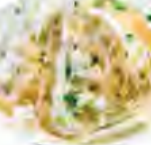
Green ants, Australia. For Australian bush food, the writer rejects witchetty grubs as too soft and too full of guts. His choice is green ants: small insects pulled from trees, lightly crushed between the hands and eaten. They taste lemony and peppery, and local producers now even put them on goat's cheese with lemon myrtle.
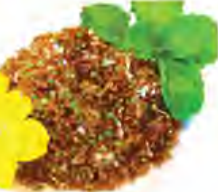
Crickets, Thailand. People sometimes say that insects are the protein source of the future, and the writer has no problem with that. In northern Thailand, deep-fried crickets are a staple: nutty, crunchy and perfect with salt. He still struggles with larger insects, though. Anything that needs more than one bite is "a bridge too far" for him.
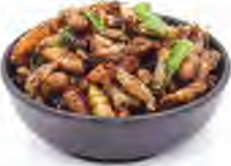
Snails, France. Snails are not really unusual. You will find them on the menu of most French restaurants, even in Australia. Some people are still nervous about eating garden snails, but fried with plenty of garlic and butter they are delicious. Snails are eaten in many countries, particularly Vietnam, where fried snails are a very tasty staple dish.
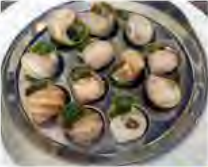
Bun rieu, Vietnam. Bun rieu is a traditional Vietnamese soup made from crab and mixed with noodles. It is topped with roasted tomatoes, crab meat, stewed pork, lime juice, chilli, fresh herbs, banana flower and bean sprouts. So far, so delicious. Then a large piece of congealed pig's blood goes in, which is a serious challenge for an unsuspecting diner. The writer's advice is to give it a try, because you won't regret it.

Notice the pattern the writer repeats for almost every dish. He first admits what makes it frightening, then gives the reason to eat it anyway. This "yes, but" movement is what makes the article persuasive, and it is a pattern you can borrow in your own opinion writing.
| Dish | Country | What it is | What puts people off | Writer's verdict |
| Haggis | Scotland | Sheep's heart, liver and lungs with fat, oatmeal and spices, boiled in a sheep's stomach | The unwanted parts of a sheep | Really good |
| Shiokara | Japan | Raw squid in salty, fermented squid belly | Raw and fermented | He is slowly coming around |
| Jellyfish | China | Jellyfish in salads, with chicken or in sesame oil | Scary animal, rubbery texture | Tasty and low-fat |
| Green ants | Australia | Small insects crushed and eaten raw | Eating insects | Lemony, peppery, seriously good |
| Crickets | Thailand | Deep-fried crickets | Eating insects | Nutty, crunchy, delicious |
| Snails | France | Snails fried with garlic and butter | Garden snails | Yummy |
| Bun rieu | Vietnam | Crab soup with noodles and many toppings | Congealed pig's blood | Give it a try |
Idioms: When Words Mean More Than They Say
Idiom: a group of words whose meaning as a whole is different from the meanings of the individual words. "A bridge too far" has nothing to do with bridges; it means something that is too extreme.
When the writer says that larger insects are a bridge too far, he means that eating them goes beyond the limit of what he is willing to do. Idioms like this make writing lively, but you can only use them if you know the whole meaning. Here are five common idioms, each with its meaning and a sentence that shows it at work.
- get out of hand: to become difficult to control. "The birthday party got out of hand when forty uninvited guests arrived."
- miss the boat: to be too late to get what you want. "Tickets sold out in an hour, so anyone who waited missed the boat."
- break the ice: to say or do something to make people feel comfortable. "Our new teacher broke the ice by telling us about her first day at school."
- cry over spilt milk: to worry over past events which cannot be changed. "The exam is over, so there is no point crying over spilt milk."
- look before you leap: to think about the possible bad results of an action before doing it. "Read the whole contract first. Look before you leap."
Never explain an idiom word by word. "Break the ice" does not involve ice, and "miss the boat" does not involve a boat. In an exam, give the whole meaning of the phrase.
Word Stress: The Strong Syllable
Word stress: the extra force given to one syllable of a word, which makes that syllable louder, longer and slightly higher in pitch than the others.
Every English word of two or more syllables has one syllable that carries the main stress. Put the stress in the wrong place and a listener may not recognise the word at all, even if every sound is correct. Say each of these twelve words aloud. In every one of them the stress falls on the first syllable, shown here in capital letters.
- AM-a-teur
- BAD-min-ton
- EN-er-gy
- GAR-den-er
- IN-dus-try
- LI-brar-y
- MYS-ter-y
- PER-fect-ly
- GOV-ern-ment
- QUI-et-ly
- CHAR-ac-ter
- TER-ri-ble
Once the first syllable takes the stress, the others become weak and short. In "terrible" and "character" the last two syllables are almost swallowed. Endings such as -ly, -ment, -er and -y are never stressed in these words.
Many learners say ca-RAC-ter, in-DUS-try and go-VERN-ment. All three are stressed on the first syllable: CHAR-ac-ter, IN-dus-try, GOV-ern-ment.
Speaking: Asking for and Giving Reasons
A great deal of everyday conversation is about reasons. A teacher asks why you are late; a friend asks why you want to move to Kathmandu after the SEE. A good answer does not stop at "yes" or "no". It states the reason clearly, and sometimes adds a second, stronger reason if the first one is challenged.

These are useful ways to ask for a reason, from most direct to most polite:
- Why are you late?
- What's the reason for your decision?
- How come you sold your bike?
- Could you tell me why you want to join the army?
And these are useful ways to give one:
- Because I missed the bus.
- Well, the reason is that I want to study there.
- The point is that my mother has been transferred.
- It's because I needed money for my college fees.
- I wanted to save more time. That's why I moved closer to school.
Here is a short conversation built on one of these patterns. Notice how the second speaker gives a new reason when the first one is questioned.
"The reason is that..." and "The point is that..." are especially useful when someone disagrees with you, because they signal that your next sentence is the one that really matters.
Grammar: Connectives of Reason and Purpose
Connective: a word or phrase that joins two ideas and shows how they are related, for example by reason, purpose, result or contrast.
Connectives of reason: because, since, as and because of. They answer the question "Why did it happen?" Because, since and as are followed by a clause with its own subject and verb; because of is followed by a noun or noun phrase.
Connectives of purpose: to, in order to and so that. They answer the question "What for?" To and in order to are followed by the base form of a verb; so that is followed by a clause, usually with can, could, will or would.
| Connective | Shows | Followed by | Example |
| because | reason | a clause | I wore a raincoat because the monsoon had started. |
| since | reason (often already known) | a clause | Since you are free today, can you help me? |
| as | reason | a clause | As it was getting dark, the children went home. |
| because of | reason | a noun phrase | The match was cancelled because of the heavy rain. |
| to / in order to | purpose | the base form of a verb | She got up early in order to catch the first bus. |
| so that | purpose | a clause with can, could, will or would | We spoke softly so that the baby could sleep. |
| so | result | a clause | It was raining, so we stayed inside. |
The difference between reason and result is easiest to see by turning a sentence round. "We stayed inside because it was raining" puts the cause after the connective. "It was raining, so we stayed inside" puts the effect after it. Both are correct, but the connective changes. A sentence such as "The workers were bored so there was nothing to do" is wrong, because the lack of anything to do is the cause of the boredom, not its result: "The workers were bored because there was nothing to do."
Because of is never followed by a clause. "The flight was delayed because of it was stormy" is wrong. Write either "because of the storm" or "because it was stormy".
So and so that are different connectives. So shows a result: "I missed the bus, so I was late." So that shows a purpose: "I left early so that I would not miss the bus."
Writing a Recipe: Putting Steps in Order
Recipe: a set of written instructions for preparing a dish, made up of a list of ingredients and a method given as steps in the order they must be done.
Carrot pudding, known as gajar haluwa, is made with milk, carrots, sugar, cardamom powder and ghee. When the steps of its method are mixed up, you can put them back in order by looking for clues inside each step. A step that says "when the carrot turns golden brown" must come after the carrots have gone into the pan. A step that says "after the milk dries up" must come after the step in which the milk is cooked away. Using those clues, the method runs like this:
- Step 1: Switch on the stove and melt ghee in a pan.
- Step 2: Add grated carrots and fry for about seven minutes.
- Step 3: When the carrot turns slightly golden brown, add milk.
- Step 4: Cook this mixture till all the milk dries up.
- Step 5: Add sugar and cardamom powder after the milk dries up.
- Step 6: Cook for four more minutes.
- Step 7: Turn off the stove. The gajar haluwa is ready to serve.
A well written recipe has a recognisable shape. It begins with a title, then lists the ingredients with their quantities, and then gives the method as numbered steps. Each step starts with an imperative verb, which is the base form of the verb used as a command: melt, add, fry, stir, cook, serve. Words such as first, then, after that, when and finally show the order, and times and signs ("for seven minutes", "until golden brown") tell the cook when to move on.
Write every step as a command to the reader, not as a report. "Add the milk" is a recipe step; "The milk was added" is a description of what someone did.
Reading an Interview: Santosh Shah
"You Inspire Others by Learning, not by Teaching" is a newspaper interview, adapted from Nepali Times. An interview has a clear shape: a short introduction in italics that says who is being interviewed and why, then the interviewer's questions in bold, each followed by the answer in the speaker's own words. Its title is usually a striking sentence taken from one of the answers.

Santosh Shah is a Nepali chef who was shortlisted for the semi-finals of MasterChef: The Professionals 2020 on BBC One. He was interviewed in London, where he worked at Cinnamon Kitchen. His journey there was long and hard, and it happened in this order:
- He grew up in Siraha in a humble family. His father died when he was five.
- At around nine or ten he started working in petty trade.
- After failing the SLC, he went to India, as others from his village did.
- He washed the skewers of a chef in a tandoor section and told him he wanted to be a chef too.
- While serving tea to the Executive Chef, he asked for a chance, and got it. He began helping the tandoor chef who had recommended him.
- He moved to another hotel, took a hotel management course and learnt English and computers on the side.
- Within seven years of hard work, he became an executive chef.
On Nepali cuisine, Shah makes one argument again and again. Along the borders, Nepali food is influenced by Tibetan and Indian cooking, but that is not the entirety of it. Dishes such as yomari, choila, kachila, tama and gundruk exist nowhere outside Nepal, and the food varies by caste and geography, with different techniques and ingredients. He wants the world to know Nepali food beyond momo and dal-bhat, and to value it for its diversity and richness. Food trends, he says, are dynamic: Indian food has been popular for a long time, Sri Lankan food has grown more popular recently, and he wants a wave for Nepali food too.
He experiments carefully. Sukuti, dried meat, is a familiar and nostalgic food for Nepalis, but its hardness may not be palatable to outsiders. So he dehydrates it for different periods of time to soften it, while making sure the original taste is not lost. In the same spirit he cooked an octopus dish in Nepali style on the show, after making octopus with Indian flavours a few hundred times in an Indian kitchen. The judges called it the most beautiful plate of food they had ever been served in MasterChef.
His advice to young Nepalis going abroad is never to stop learning. You are never too old to learn new things and improve your craft, asking "what is next?" matters, and you should be a positive force to others. His next step is a high-end fine dining Nepali restaurant in London with the tentative name Ayla, and his ultimate goal is a Michelin Star for it, which he calls the Oscar of chefs, to raise the profile of Nepali cuisine around the world.
"You inspire others by learning, not by teaching." People are moved by watching someone keep improving, far more than by being told what to do.
Write False only when the passage says the opposite of the statement. Write Not Given when the passage says nothing either way. The interview says Shah reached the semi-finals but says nothing about what the judges thought of his quarter-final, so a statement about that is Not Given, not True.
Listening: Following the Journey of Food
Food science: the study of food using other sciences, such as biology, chemistry and physics, to understand how food is grown, processed, preserved and made safe and nutritious to eat.
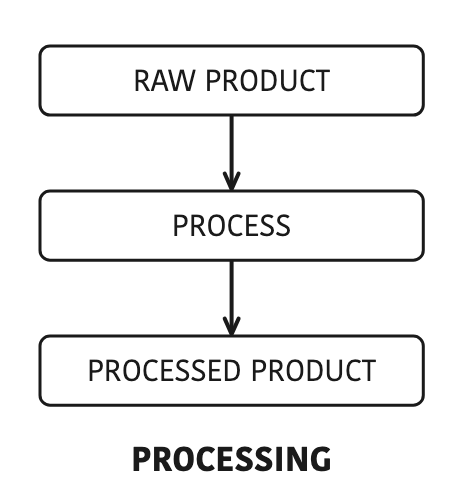
Food processing is the idea at the centre of this listening task. A raw product, such as wheat or milk, goes through a process, such as grinding, heating or packing, and comes out as a processed product, such as flour or cheese. Before you listen, think about two questions: what do you already know about food science, and why do you think it is important? Think of the path food takes before it reaches your plate.
The recording is a talk about food science, and the tasks ask you to do three things. First, you complete a list of the activities food science is involved in, which runs from growing the food, through transporting it, taking it to a factory, processing it and turning raw material into food products, all the way to supplying it to grocery store shelves. Some steps in that list are blank, and you fill them from what you hear. Second, you decide whether five statements about the talk are true or false: how long the speaker talks, whether food science is tied to other sciences, whether it exists around us every day, whether food scientists help make the food supply sustainable, and what their first priority is. Third, you recall and list the sciences the speaker names.
- Read the list before the audio starts, so you know which gaps you are waiting for.
- Follow the order: the blanks come in the same order as the speaker talks through them, so each answer comes between the two printed steps around it.
- Listen for verbs. Every step in the list begins with an action word such as grow, transport, take, process or supply.
- For the true or false statements, listen for numbers and for words like first, every day and all, which are often what makes a statement false.
- For the list of sciences, jot down each subject name the moment you hear it, and check spelling afterwards.
Do not fill a gap with what you think should happen to food. Write what the speaker actually says, even if you would have guessed a different step.
Grammar: The Present Continuous and Its Time Expressions
Present continuous: the tense formed with am, is or are and the -ing form of a verb, as in "She is cooking" or "They are not playing".
Time expression: a word or phrase that says when something happens, such as now, at the moment, currently, this week, tonight or next Friday.
The present continuous has three main uses, and the time expression in the sentence is often the clearest sign of which one is meant.
| Use | Meaning | Typical time expressions | Example |
| NOW | The action is happening at the moment of speaking. | now, right now, at the moment | Mr. Rai is taking a class at the moment. |
| AROUND | The action is in progress around the present time, but perhaps not this very second. | currently, these days, this week, this month, still | I'm looking for a new job currently. |
| FUTURE | The action is a fixed plan or arrangement. | tonight, later today, tomorrow, on Wednesday, next week | We're meeting Nabina later today. |
Some time expressions do not suit the present continuous at all. "Usually", "every day" and "sometimes" describe habits, which take the present simple: "The students usually prepare for tests at weekends", but "The students are preparing for a test at the moment." Past time expressions such as "last week" or "yesterday" need a past tense. And a verb describing a state of mind, such as believe, know or like, is normally used in the present simple even about now: "Some people believe that smiling is an individual act."
Always with the present continuous describes something that happens again and again, often in a way that seems surprising or annoying: "Watch people bowling and it looks as if they are always smiling."
Still goes in a positive sentence, before the -ing verb: "She is still mowing the lawn." Yet belongs in questions and negatives, usually at the end: "She hasn't finished yet."
Writing an Opinion: To What Extent Do You Agree?
Many Nepalis today prefer fast food such as noodles, pizza and burgers to typical Nepali meals, and some people claim this is harming their health. A question that asks "to what extent do you agree or disagree" is inviting you to take a clear position, which may be full agreement, partial agreement or disagreement, and to defend it with reasons.
Opinion writing: writing that states the writer's view on a question and supports it with reasons and examples, while recognising that other people may disagree.
A couple of well built paragraphs usually follow this order:
- State your position in the opening sentence, and say how strongly you hold it.
- Give your first reason and support it with an example or a fact.
- Give a second reason, again with support.
- Admit the strongest point on the other side and explain why it does not change your view.
- Close by restating your position in fresh words.
These phrases help you do each job:
- Taking a position: I strongly agree that... / I agree to a large extent... / I only partly agree...
- Adding a reason: Firstly... / Moreover... / Another reason is that...
- Giving an example: For example... / A clear case is...
- Admitting the other side: It is true that... However... / On the other hand...
- Concluding: Therefore... / For these reasons...
An opinion without reasons is only a statement. Every claim you make needs a because, a for example, or both. The connectives of reason and purpose you studied earlier in this unit are exactly the tools for this.
The full lesson is waiting for you
The notes are free to read in full. A free account opens the rest of the practice, and tracks your progress and confidence score for every subject. Presentations and videos need approval from Learn Yeti.