When Sad Things Happen
Life brings moments of loss to everyone. A neighbour dies and the family performs the last rites by the river. A friend sits alone by a window, too sad to talk. Relatives gather at a funeral ceremony to pray for the person who has gone. An elderly woman drinks her tea quietly, remembering someone she has lost. In each of these situations, the people around us need something from us: the right words, said with real feeling. This unit is about those words. It teaches you how English speakers talk about life and death, how they comfort each other, and how they write messages of condolence when someone dies.
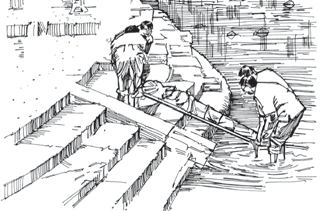



Before you read, think about two statements and decide whether you agree with them. First: death is not the opposite of life, but a part of it. Second: from the day you were born, you are slowly dying. Both statements sound strange at first, yet both are exactly what the essay below argues. Keep your own opinion ready, because the essay will challenge it.
Death is a Fiction: What the Speaker Says

The essay is an excerpt from a talk by Sadhguru, taken from Life and Death in One Breath. He begins with a bold question: have you ever seen somebody who actually died and came back? No. Some people have had a near death experience, but near is not good enough, just as near water is not as good as water. Since nobody has experienced death, seen it, or received first-hand information about it from anyone, where did the idea of death come from? His answer gives the essay its title: death is a fiction created by ignorant people, people who live in total unawareness. There is only life, life and life alone, moving from one dimension to another.
He then turns the idea around. What you call life right now can equally be called death. You can say 'I am living right now' or 'I am dying right now', because from the day you are born you are slowly dying, and one day the process will be complete. You may think you are going to many places, but as far as your body is concerned, it is going straight to the grave, nowhere else. Even asking whether death is okay or not okay is silly, because whichever answer you choose, you will still die. Every moment you are playing between life and death. In Yoga, inhalation is life and exhalation is death: you breathe in and life happens; if you breathe out and do not breathe in again, death has happened. Something that fragile is the basis of our existence, so death walks with us at every step.
Is that frightening? The speaker says no. There is nothing wrong with death; it has to happen, and only because there is death is there life. The moment you are born, a death sentence is upon you. When, where and how are the only open questions. Nobody knows whether you will get educated, get married, know joy or know misery, but one thing is guaranteed: one day you will die. The fear of death exists simply because we have no idea what death is. Human beings have formed ideas about everything and have corrupted everything, love, relationships, God, Divinity, twisting them whichever way they want. Death is the one space of life that has remained uncorrupted by the human mind, because nobody knows it. Yet many people talk about it authoritatively; they are dead sure they are going to heaven. The speaker points out the contradiction: if they are so sure of a wonderful place, why are they doing everything possible not to go there? People talk about death only to solace themselves, to handle life psychologically. If societies never spoke about death, we would simply know that our present existence is not permanent, and we would have no other ideas about it. Even now, we do not really have any idea about death; we only imagine that we have.
The Main Ideas of the Essay
- Nobody has ever experienced death and returned, so our idea of death is imagined, not known. That is why the speaker calls it a fiction.
- Living and dying are the same process seen from two sides. Birth starts a journey that ends at the grave, so life and death are not opposites.
- Life hangs on the breath. Inhalation is life, exhalation is death, and one missed inhalation dislodges you from the body. Our existence rests on something very fragile.
- Death is guaranteed. Education, marriage, joy and misery are all uncertain, but death is the one certainty every person carries from birth.
- Fear of death comes from ignorance. We fear it only because we do not know what it is, and at the moment of death all our formed ideas fail.
- People talk about death without knowing it, only to comfort themselves. Death remains the one part of life uncorrupted by the human mind.
There is nothing wrong with death; it has to happen. Only because there is death, there is life.
Silent Letters in English Words
English spelling and English sound often disagree, and this unit trains you on the words where a letter is written but never spoken. If you pronounce the b in debt or the k in knee, a listener immediately hears the mistake, so these words must be learnt by ear as well as by eye.
A silent letter is a letter that appears in the spelling of a word but is not pronounced when the word is spoken. For example, the n in autumn and the s in island are silent.
| Silent letter | Words | How to say them |
| n | autumn, condemn, solemn | The final n is dropped: AW-tum, kun-DEM, SOL-um |
| b | limb, thumb, debt, doubt, subtle | lim, thum, det, dowt, SUT-l |
| c | ascend, descent, scissors, muscle | uh-SEND, dih-SENT, SIZ-erz |
| k | knee, knife, know | nee, nife, no |
| h | honest, honour, whistle, whisper (in wh words the h often merges) | ON-ist, ON-er, WIS-l |
| p | pneumonia, receipt, psychiatrist, psychology, pseudonym | new-MOH-nia, ri-SEET, sy-KY-uh-trist |
| l | salmon, calm, palm | SAM-un, kahm |
| t | castle, hustle, whistle, listen | KAH-sl, HUS-l, WIS-l |
| g and other letters | design, foreign, evening (the middle e is weak), architect (ch says k), stomach (ch says k), where, interesting | di-ZINE, FOR-in, AR-ki-tekt, STUM-uk |
Receipt keeps its p on paper but never in the mouth: say ri-SEET. In psychology, psychiatrist and pseudonym the opening p is completely silent, so all three begin with the sound s.
Expressing Sympathy in Conversation
Sympathy is the feeling of being sorry for someone else's trouble, and English has a set of fixed expressions for showing it. The expression must match the size of the trouble. A lost pen deserves a light 'What a pity!', while a death in the family calls for the most serious language English has: 'Please accept my deepest sympathy.' Read how speakers respond in these short conversations.
Notice the pattern in the replies. The listener often echoes the speaker's verb as a short question first, 'Is he?', 'Have you?', which shows attention, and then adds the expression of sympathy. Here are the common expressions, roughly from everyday troubles to serious ones.
- What a pity! / My goodness! / That's too bad. (small, everyday troubles)
- I'm sorry. What bad luck! / That's so sad. / Oh, that's terrible.
- I'm sorry to hear that. / You must be very upset about it.
- I hope things get better soon. / I hope you feel better soon. (illness and difficulties)
- I know how it feels. / I know how you must be feeling.
- Please accept my deepest sympathy. (death and the most serious losses)
Never say 'Get well soon' or 'I hope you feel better soon' to someone whose relative has died. Those expressions are for a person who is ill. For a death, say 'I'm sorry to hear that' or 'Please accept my deepest sympathy.'
Practise by pairing a situation with a fitting response: a friend failed the exam, so you say that's too bad; a sister had an accident, so you are so sad to hear that; the team lost the football match, so what a pity; someone lost a job, so you are sorry to hear that; a friend's mother fell ill, so you hope she feels better soon; a bicycle was lost, so that must be an inconvenience.
The Simple Present Tense
The simple present tense describes habits and routines, general truths and facts, and permanent situations. With he, she and it the verb takes -s or -es: Cows feed on grass, but she wears a red dress.
Look at what the tense does in real sentences. It states a fact of nature: the winter follows the autumn season, and plants need water and sunlight for photosynthesis. It states a scientific truth: the human body consists of some 60 trillion individual cells. It reports a habit: he earns a handsome salary every month, mum washes the car once a week, and Ann watches television a lot. It also describes a permanent situation: Arati and her husband live in Singapore, and he has a big apartment in Venice.
| Form | With I, you, we, they | With he, she, it |
| Statement | I write to my parents every month. | My grandfather adores his pet dog. |
| Negative | I don't check my emails when I get to school. | He doesn't want to go to the movies. |
| Question | Do you like chocolate milk? | Does John come from Mexico? |
To turn a statement negative, put do not or does not before the base verb: I use my car very often becomes I do not use my car very often. To make a question, move do or does to the front: the swimming pool opens every day at 9:30 am becomes Does the swimming pool open every day at 9:30 am? Notice that once does carries the -s, the main verb returns to its base form: John comes from Mexico, but Does John come from Mexico?
Never put -s on both the helping verb and the main verb. 'Does she wears a red dress?' is wrong. The -s lives in does, so the main verb goes back to its base form: 'Does she wear a red dress?'
Writing a Message of Condolence
A message of condolence is a short formal message, often published in a newspaper, in which a family, a school or an organisation expresses sorrow at someone's death and sympathy for the family left behind. Study this real example. The Nepal Mountain Academy of Bijulibazar, Kathmandu published a notice headed HEARTFELT CONDOLENCE for Mr. Namgyal Sherpa, a ten time Everest summiteer, who died on 16th May 2013 while descending from the summit back to Base Camp. His photograph appeared between his dates of birth and death, 05-10-1977 and 16-05-2013.

The notice reads: 'We are deeply saddened by the news of the untimely demise of our veteran Mountaineering Member Mr. Namgyal Sherpa, a ten time Everest summiteer, while descending back from summit to Base Camp on 16th May, 2013. He was quite popular for his congeniality, diligence and great virtue. At this time of grief, we want to express our sincere condolences to his bereaved family and pray for the strength to bear this irrecoverable loss. We will always cherish his wonderful memories. May the departed soul rest in peace in heavenly abode.' Every condolence message is built from the same parts, in the same order.
- A heading such as HEARTFELT CONDOLENCE, with the person's photograph and dates of birth and death.
- An opening of sorrow: we are deeply saddened by the untimely demise of...
- Who the person was and what they achieved, with a word for their character: popular for his congeniality, diligence and great virtue.
- Sympathy for the family: we express our sincere condolences to the bereaved family and pray for the strength to bear this irrecoverable loss.
- A closing prayer and the sender's name: may the departed soul rest in peace, followed by the organisation and its address.
The key expressions to underline and learn are: deeply saddened, untimely demise, sincere condolences, bereaved family, pray for the strength, irrecoverable loss, cherish the wonderful memories, and may the departed soul rest in peace. Now apply the pattern. A famous senior actress, Subhadra Adhikari (1946 to 2019), passed away at her residence in Kathmandu due to respiratory problems. She contributed a lot to the Nepali film industry, with Basanti, Basudev, Muna Madan and Chino among her superhits. Your task is to write the condolence message a school would publish in a local newspaper for her, using those clues.

Crossing the Bar: A Poem of a Calm Farewell
Alfred Lord Tennyson wrote Crossing the Bar near the end of his life, and he asked for it to be printed last in every collection of his poems. In the poem, dying is pictured as a ship quietly leaving harbour at sunset. The bar is a sandbar, a ridge of sand lying across the mouth of a harbour; when waves break over it, the water makes a low complaining sound that sailors call moaning. Crossing the bar means sailing out over that ridge from the safe harbour into the open sea, and in the poem it stands for passing from life into death. Look at the picture and ask yourself the questions the poem raises: what does it show, and where is the Pilot leading the voyagers?

Sunset and evening star,And one clear call for me!And may there be no moaning of the bar,When I put out to sea,But such a tide as moving seems asleep,Too full for sound and foam,When that which drew from out the boundless deepTurns again home.Twilight and evening bell,And after that the dark!And may there be no sadness of farewell,When I embark;For tho' from out our bourne of Time and PlaceThe flood may bear me far,I hope to see my Pilot face to faceWhen I have crost the bar.
What the Poem Means
In the first stanza, the speaker notices the sunset and the evening star in the sky and hears one clear call for him. Evening is the end of the day, so it stands for the evening of his life; the call is death summoning him. He hopes there will be no moaning of the bar when he puts out to sea: no crying, no complaint, when he leaves life. In the second stanza he asks for a tide so full and slow that it seems asleep, too full for sound and foam. A full tide slides silently over the sandbar, so his soul, which was drawn out of the boundless deep at birth, can turn again home to it without any struggle. Death, for him, is a return, not a departure.
The third stanza repeats the first at a later hour. Twilight and the evening bell come, and after that the dark: the last light of life, the bell that ends the day, and then death itself. Again he asks that there be no sadness of farewell when he embarks, that is, when he boards the ship for his final voyage. The last stanza explains why he can be so calm. Though the flood of death may carry him far beyond our bourne of Time and Place, beyond the boundary of the world we can know, he hopes to see his Pilot face to face when he has crost the bar. A pilot is the experienced guide who steers a ship through difficult waters. The Pilot, written with a capital letter, is God, who has been guiding the speaker's life unseen and whom he expects to meet directly after death. The speaker does not fear death at all: for him the sea beyond the bar is unknown, but the Pilot is trusted.
| Symbol in the poem | What it stands for |
| Sunset, evening star, twilight, evening bell | The end of life, old age approaching death |
| The bar (sandbar) | The boundary between life and death |
| Putting out to sea, embarking | Dying, beginning the final journey |
| The boundless deep | The unknown, unpredictable world after death |
| The full, sleeping tide | A calm, peaceful death without struggle |
| The Pilot | God, the unseen guide the speaker hopes to meet face to face |
The whole poem is one picture held from start to finish: dying is a ship crossing the sandbar out of the harbour of life into the open sea, guided by God the Pilot. Because the speaker trusts the Pilot, he asks for no moaning and no sad goodbyes.
Listening for Details about a Funeral
The listening task plays a telephone conversation in which a man named Tim tells his friend Heather that his father has died. Before you listen, you prepare by guessing the meaning of three words from sentences: my mother took a half-day leave to attend the funeral of her close friend; only the immediate family is invited to attend the viewing; at the funeral, the minister offered the eulogy on behalf of the family.
A funeral is the ceremony held after a person dies, at which the body is buried or cremated and the person's life is honoured.
A viewing is a gathering held before the funeral at which family and close friends see the body of the person who died and say a private goodbye.
A eulogy is a speech given at a funeral praising the person who died and remembering their life.
While listening, you work in two rounds. In the first round you choose the correct answers about the facts of the call: how Tim's father probably died, whether from a lingering illness, a sudden illness or a road accident; how Tim's mother will manage economically, whether from her husband's insurance and stock, from investing in life insurance or from a government pension; how his mother is feeling; whether the private memorial service is on Thursday evening, Tuesday morning or Tuesday evening; and what Tim asks Heather to do at the funeral, give a speech, bring flowers or sing a song. In the second round you listen again and answer short questions in not more than four words: why Tim phones Heather, when the viewing will take place, who will be giving the eulogy, and what Tim's father had wanted Heather to do just before he died. The skill being trained is catching specific details, names, days and reasons, from natural spoken English on a sensitive subject.
Adverbs of Frequency
An adverb of frequency tells how often something happens. From most often to least often, the common ones are: always, usually, often, sometimes, occasionally, rarely, seldom, never.
The skill is to match the adverb to the facts. Maria eats cereal for breakfast seven days a week, so Maria always eats cereal for breakfast. Subina always misses the morning assembly, so she never arrives at school on time. In the desert it rains only two days between May and September, so it rarely rains there in the summer. I see one or two movies every week, so I often go to the movies. I let my roommate borrow my car just once, so I rarely let my roommate borrow my car. We occasionally have quizzes in history class, so the teacher sometimes gives quizzes. Four out of five museum visitors stay for three hours or longer, so museum visitors usually stay for at least three hours. I do not accept Rohit's invitation to the winter camp, so I seldom go to the winter camp.
Position matters. An adverb of frequency normally sits before the main verb but after the verb be: she rarely arrives on time, but she is rarely on time. In a negative sentence it follows don't or doesn't: I don't often go out. Never, rarely and seldom are already negative in meaning, so they never take not with them.
Do not write a double negative with never, rarely or seldom. 'She doesn't never come' is wrong; write 'She never comes.' These adverbs carry the negative meaning by themselves.
Making the Verb Agree with its Subject
A verb must agree with its subject in number, and the difficulty is that the true subject is often not the noun standing next to the verb. Each rule below comes with the sentence that tests it.
- Two subjects joined by and take a plural verb: Your friendship over the years and your support have meant a great deal to us.
- A phrase between the subject and the verb does not change the agreement: Hamilton Family Center, a shelter for teenage runaways in San Francisco, offers a wide variety of services. The subject is Center, not runaways.
- One of the... takes a singular verb, because one is the subject: One of the major sources of income of Trinidad is tourism.
- The head noun decides, not the noun inside an of phrase: The chances of your being promoted are excellent. The subject is chances.
- After there, the verb agrees with the noun that follows it: There was a Pokemon card stuck to the refrigerator.
- With neither... nor, the verb agrees with the nearer subject: Neither the professor nor his assistants were able to attend the conference.
- A plural measure of time as subject can take a plural verb when the hours are counted as separate occasions: Many hours at the driving range have led us to design golf balls with GPS locators in them.
- When the sentence is turned around, find the subject after the verb: Discovered in the soil of our city garden was a button dating from the turn of the century. The subject is a button, so the verb is singular.
Replying to an Email with Sympathy
Sympathy is also written in everyday emails between friends. Asmita Praja emails her friend Salina with the subject line 'Informing you about my accident'. She explains that she cannot attend class for two weeks because she has had an accident and hurt her back, that she has already informed the principal and the class teacher, and that she is afraid she will miss the unit tests. She has medicine for the pain but cannot get up or walk around much; the doctor has told her to stay in bed, though she may manage some bed reading and writing after a week. She asks Salina for help: could she record the lectures and the class notes so that Asmita can listen to them at home? She has permission from the principal, and she closes by saying she will miss her friends and teachers but hopes life will soon be normal again.

A good reply does four things, in this order. It thanks the friend for writing and expresses sympathy: I was so sorry to hear about your accident. It responds to every request in the original email: of course I will record the lectures and share my class notes. It reassures: do not worry about the unit tests; the teachers know your situation. It closes with a warm wish: I hope you feel better soon and we all miss you. The tone stays informal and caring, because this is a letter between friends, not a formal notice.
Types of Sentence
English sentences do four different jobs, and each job has its own form and its own end punctuation. Knowing the four types helps you both in grammar exercises and in writing, because a condolence message is built of declaratives, a conversation of sympathy mixes questions and exclamations, and instructions are imperatives.
A declarative sentence simply makes a statement or expresses an opinion; in other words, it makes a declaration. It ends with a full stop. Examples: My mother's name is Laxmi. I'm not watching a football match now.
An interrogative sentence asks a question. It often begins with a 'wh' word or an auxiliary verb and ends with a question mark. Examples: Why are you late today? Have you booked the hall for tomorrow's programme?
An imperative sentence gives a command or makes a request. It usually ends with a full stop. Examples: Complete the homework by tomorrow. Be polite to the customers. Don't make a noise.
An exclamatory sentence expresses great emotion such as excitement, surprise, happiness or anger, and uses an exclamation mark. Examples: Oh! I forgot about the meeting. Wow! I can't believe it.
Comparing Condolence Messages
As project work, collect some real messages of condolence from newspapers or from people around you, bring them to class, and find the similarities and differences between them. As you compare, look for the parts you learnt in this unit: the heading, the photograph and dates, the words of sorrow, the description of the person, the sympathy for the bereaved family, and the closing prayer. You will find the same key expressions repeated across messages, deeply saddened, untimely demise, irrecoverable loss, rest in peace, and you will also find differences: some messages are religious and some are not, some list achievements and some speak only of character, some come from families and some from organisations. Noticing what stays the same and what changes teaches you the form well enough to write one yourself for any occasion.
The full lesson is waiting for you
The notes are free to read in full. A free account opens the rest of the practice, and tracks your progress and confidence score for every subject. Presentations and videos need approval from Learn Yeti.