How People Make Requests in Different Places
Every day, people ask other people for things. A tourist stops a stranger and asks, "Excuse me, could you take a photo of me, please?" A customer in a crowded shoe market says, "Could you show me that pair, please?" A traveller at an airport asks an officer, "Would you mind telling me where the check-in counter is?" In all three situations the speaker needs help from someone, and in all three the speaker chooses polite words. Nobody at a market shouts "Give me shoes!" A request works because it is polite, and English has a whole family of polite forms for exactly this job.

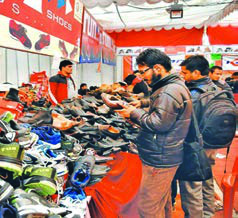
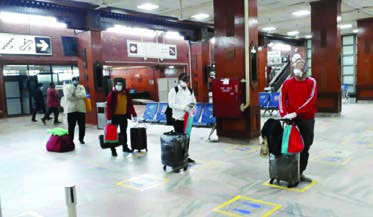
This unit teaches the language of family, markets and public places through two stories, and it teaches the grammar that makes requests and offers sound polite. Watch for the words can, could, would and the phrase "Do you mind...?" They appear again and again, because they are the tools this unit hands you.
Thomas and Jerry: The Story
Jerry was an old man who lived in a village. His son Thomas had moved to the city years before, and Jerry had not seen him for a long time. One day Jerry set out for the city to meet him. He went to the address he remembered, the place he used to get letters from, and knocked on the door with a smile of excitement. A stranger opened it. Thomas had moved to a different location, and Jerry was left standing on the street, disappointed, wondering how he would ever find his son.
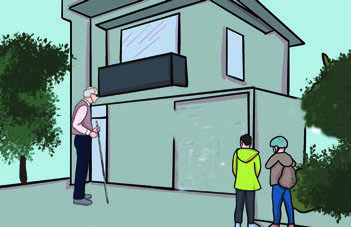
The neighbours recognised him. "Are you looking for Thomas?" they asked, and Jerry nodded. They gave him the address of Thomas's office. At the reception counter Jerry made a polite request: "Could you please tell me Thomas's location in this office?" When the receptionist learnt that this old man was Thomas's father, she rang Thomas, who was stunned and asked for his father to be sent to his cabin at once.
Father and son met with tears and joy. Jerry said, "Son! Mom dearly wants to see you. Will you go home with me?" Thomas refused gently. He was busy working for his success, his hands were full of stressful work, and taking leave was hard. Jerry only smiled and said he would return to the village that evening. When Thomas asked him to stay a few days, Jerry refused too. He did not want to be a burden on his busy son. "I hope if I ever had a chance to meet you again, I would be happy," he said, and departed.
Weeks later, guilt caught up with Thomas. Why had his father come alone after so many years? Why had he treated him in such a weird, distant manner? He took leave and travelled to his village, and there came the shock: his parents were not in the house where he was born. Neighbours sent him to a new address, and when Thomas scurried there he found a place that looked like a graveyard, poor and bare. His father waved to him from a distance, and Thomas ran and hugged him.
Then the truth came out. Jerry had taken a loan to pay for Thomas's college, and another when Thomas wanted a new car. Farming losses meant he could not repay it, and rather than trouble his busy son he had stayed silent and let their home go to repay the loan. "You could've told me. I'm not an outsider," Thomas whispered. Jerry answered, "You were very busy and stressed with your work, which made me remain quiet. All we wanted was your happiness." Thomas cried and begged forgiveness. Jerry radiated and said he was content with what he had. All he wanted now was that Thomas spare some time for his parents, because at their old age it was hard to travel to see him often.
The Message of the Story
The story sets two things against each other: work and family. Thomas chose work so completely that his parents could not even tell him they had lost their home. Jerry chose his son's happiness so completely that he carried the whole burden alone. Neither choice was fully right. The story's lesson is balance: success at work means little if the people who sacrificed for it are forgotten, and love that stays silent about real trouble can hurt both sides. Parents' happiness is tied up with their children's success and happiness, but children owe their parents time, honesty and care in return.
Success that costs you your family is not success. Spare time for the people who spent everything on you.
Word Stress: Where the Beat Falls
Word stress is the extra force given to one syllable of a word when it is spoken. The stressed syllable sounds longer, louder and clearer than the others. In HOL-i-day the first syllable is stressed; in ho-TEL the second is.
English words are not spoken with every syllable equal. Put the stress on the wrong syllable and a listener may not recognise the word at all. There is no single rule that covers every word, so stress must be learnt with the word itself, but some patterns help: two-syllable nouns often stress the first syllable (DIS-tance, MAR-riage), many verbs stress the second (de-NY, be-LIEVE), and words ending in -tion stress the syllable just before it (in-TEN-tion, ex-am-i-NA-tion).
| Stress on first syllable | Stress on second syllable | Stress before -tion / later |
| HOL-i-day, AT-ti-tude, MEM-ber-ship | con-TIN-ue, mis-TAKE, sur-PRISE | in-TEN-tion, ex-am-i-NA-tion |
| FAM-i-ly, DIS-tance, MAR-riage | a-POL-o-gy, ho-TEL, de-NY | con-DI-tion-al |
| MON-u-ment, SEC-ond-ar-y | un-LIKE-ly, un-NAT-ur-al, be-LIEVE, pro-GRES-sive |
Say each word aloud, clap on the stressed syllable, and check yourself in a dictionary, where the stressed syllable is marked with a small raised line before it.
Speaking Politely: Four Short Conversations
Requests live inside conversations, so practise them as conversations. In a gift shop, a customer says, "Would you help me find a birthday gift for my father?" and the shopkeeper offers, "Might I suggest this tie?" In a general store, the customer asks, "Excuse me. Could you show me a shoe brush and a nailcutter, please?" and then adds, "Well, I wonder if you could give me gift paper." The shopkeeper replies, "No problem. Let me wrap them." Notice how each request is wrapped in softeners: Excuse me, please, I wonder if.

Requests happen at home too, and even with family we ask before changing something that affects others. A child feeling hot says, "Mum. It's a bit stuffy here. Do you mind if I turn the fan on?" and the mother answers, "No, no I don't mind at all. I feel like some fresh air too." At the dinner table, we say, "Excuse me. Do you think you could possibly pass the pepper?" and answer thanks with "Yes of course. Here you are."
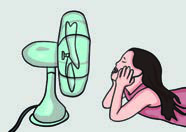
To practise, build your own versions of these conversations from small prompts: returning a shampoo for a bigger one, buying sugar, a toothbrush and detergent powder, choosing a shawl for a sister's birthday, buying a wedding ring for a cousin's wedding, asking someone to close the window because you are cold, or refusing ice-cream because of a cough. The words change; the polite frames stay the same.
Can, Could and Would: Requests and Offers
A request asks someone to do something for you, or asks permission to do something yourself: "Could you help me with this desk for a moment?" "Can I play now?"
An offer proposes to do something for someone else, or invites them: "Can I help you?" "Would you like some help?" "Would you like to come for lunch this weekend?"
The same three modal verbs carry both jobs. Can is direct and friendly, and fits family, friends and everyday shop talk. Could is softer and more polite, and fits strangers and formal situations. Would builds the politest frames of all: "Would you like...?" for offers and invitations, "Would you mind...?" for careful requests. Each form has a natural reply as well, and learning the pair together is what makes the exchange sound real.
- Offer with can: "Can I get you something to drink?" Reply: "Yes, please. A glass of lemonade for me."
- Request with could: "Could you tell me where the nearest community school is, please?" Reply: "I'm sorry, I'm not from around here."
- Offer with would: "Would you like me to answer the phone?" Reply: "Yes, please, that would be lovely."
- Permission with can: "I've finished my homework. Can I play now?" Reply: "OK. You may."
- Polite borrowing with could: "Could you lend me Rs. 200, please?" Reply: "I suppose so, but I need it back before next month."
Requests can also be built with longer polite frames: "Would it be possible to invite my cousin?", "Would you be able to get me a ticket for the concert?", "Could you recommend a good dentist?", "Can I book a table for six?", "I'd like to rent an apartment." The longer the frame, the more polite the request sounds.
Do You Mind...? Asking Permission
"Do you mind if I...?" and "Would you mind if I...?" ask whether your action will bother someone. "Do you mind if I turn the fan on?" uses the present form after if. "Would you mind if I used your pen, madam?" is more polite still, and after would you mind if the verb takes its past form: used, not use. There is also "Would you mind passing me that register, please?", where the verb after mind takes -ing and the sentence asks the other person to act.
Mind means to be bothered. So the answer that gives permission is No: "No, not at all, go ahead." Answering "Yes" to "Do you mind if I sit here?" means "Yes, I do mind, do not sit here." Many students reply "Yes" when they mean to agree, and say the opposite of what they intend.
Writing a Formal Request Letter
A request letter is politeness put on paper. Suppose your class wants the head teacher to organise an inter-house volleyball tournament and to manage the sporting goods it needs. The letter must be formal, short and specific, and its requests must use the same polite frames as speech: we would be grateful if, could you please, would it be possible to.
- Write your class and school at the top right, with the date below it.
- Write the receiver's title and address at the left: The Head Teacher, then the school's name and place.
- Give a one-line subject, such as: Request for an inter-house volleyball tournament.
- Open with a respectful greeting: Dear Sir or Dear Madam.
- In the first paragraph, say who you are and what you are requesting on behalf of your class.
- In the second paragraph, make the specific requests: fixing a date, marking the court, and managing volleyballs, a net, a whistle, a scoreboard and first aid.
- Close politely: We would be grateful for your kind consideration. Then sign with your name, class and roll number.
Every demand in such a letter is dressed as a request. "Buy us volleyballs" becomes "Could you please manage volleyballs and a net for the matches?" That single change of frame is the difference between a letter that offends and a letter that persuades.
Dance: A Story of Four Refusals and One Yes
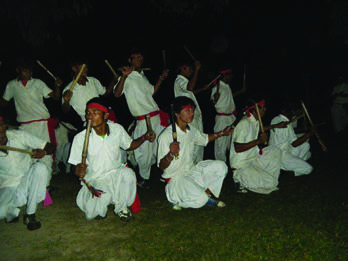
Dance belongs to every community in Nepal. In the Tharu community of the Tarai, dancers in white perform the stick dance, striking sticks in rhythm. In the hills, the Maruni dance is performed to the beat of the madal drum. Dance also has newer homes: the discos of city streets, where the second story of this unit takes place.

The story is told by a man remembering his first visit to a disco in Thamel, the Star Disco, when he was young and painfully shy. Too nervous to ask anyone for a dance, he sat down to watch how the other lads did it. A lovely girl in a blue dress sat nearby, and one by one, four confident men tried their luck with her.

The first man asked grandly, "Excuse me. May I have the pleasure of the next dance?" and then, even more politely, "I wonder if you would be kind enough to dance with me... if you don't mind?" She refused: "No, thank you very much." A second chap arrived with a big smile: "Would you be so kind as to have the next dance with me?" and, nervously, "Would you mind having the next dance with me?" "No thanks." A third fellow, very good-looking, stumbled through every polite form at once: "Can I... I mean... could I... no, might I have the next dance with you?" "Sorry," she said, "my feet are aching." A fourth character tried the simple "Would you like to dance?" and got a flat "No."
By now the narrator was terrified. She had said no to all of them, and he was wearing an old jacket and trousers and knew nobody would call him good-looking. He decided to go home. But as he walked past her, she smiled. "Er... dance?" he managed, two words with barely any grammar in them. "Thank you very much," she replied. And that was that: their twentieth wedding anniversary is next week. The joke of the story is that the clumsiest request of the evening was the one that worked, because the girl had already chosen the person, not the sentence.
The Ladder of Politeness
Put the disco requests side by side and you get a ladder of politeness that is worth memorising, because every rung is a real form English speakers use.
- Casual: "Dance?" or "Would you like to dance?" Fine among friends and equals.
- Polite: "Could I have the next dance with you?" The everyday polite standard.
- Very polite: "Would you mind having the next dance with me?" Careful and respectful.
- Extremely polite: "May I have the pleasure of the next dance?" and "I wonder if you would be kind enough to dance with me?" Formal, old-fashioned, used for special occasions.
Politeness is a choice of level, not a single rule. Match the level to the person, the place and the size of the favour. A big favour from a stranger takes a high rung; a small favour from a friend takes a low one.
Listening in a Souvenir Shop
The listening task takes you into a souvenir shop, where a salesperson and a customer talk exactly the way this unit has been teaching: offers from one side, requests and refusals from the other. Souvenirs are small things travellers buy to remember a place, such as statues, khukuri knives, singing bowls, pashmina shawls, handmade paper and prayer flags, and their prices range from a few hundred rupees to many thousands.
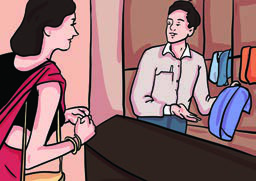
In the audio, a man is choosing a gift, and the salesperson suggests one item after another. Your job is to catch five kinds of information as you listen: who the gift is for, which item the salesperson offers first, why the man turns that item down, why he refuses the watch, and why he cannot simply walk to another gift shop. Listening a second time, you judge statements as true or false: the price of the pearl necklace, what kind of shirt was offered, whether the man's wife likes chocolates, and where the boxes of chocolates were imported from.
- Read all the questions before the audio starts, so your ears know what to hunt for.
- Listen for reasons, not just names: the words because, but and I'm afraid usually carry the answer to a why question.
- Catch numbers precisely. A true or false statement about a price turns on the exact figure you hear.
- Do not stop when you miss something. Keep up with the audio and fill the gap on the second listening.
Afterwards, build your own version: a conversation with a salesperson in which you ask for a beautiful birthday gift for your friend. Use the shop language you have practised: "Could you show me...?", "I wonder if you could...", "How much does it cost?", "Let me wrap it."
Writing About Dance Traditions and Your Project
Nepali culture is full of occasions when people dance. The Gurung community has Rodhighars, gathering houses where young people sing and dance together. The Rai community celebrates Chandi Naach, danced during the Udhauli and Ubhauli festivals. To write a couple of paragraphs about a dancing culture in your own community, give the first paragraph the facts: the dance's name, the community it belongs to, when it is performed, the instruments and dress that go with it. Give the second paragraph the life: what a performance looks and sounds like, who joins in, and what the dance means to the people who keep it alive.
The project asks for a spoken memory: a time you took part in a cultural show like a Dohori Sanjh, or a public show like a comedy show. Narrate it to your class in order. Name the event and where it happened, tell how you came to join it, say who went with you, describe the special moment you most want to recall, and finish with how it felt. A narration is a story about yourself, so the past tense and the word I do most of the work.
Types of Gender
English nouns can be sorted by gender, which tells whether a noun names a male, a female, neither, or either. This becomes important when choosing pronouns: he for masculine nouns, she for feminine, it for neuter.
Masculine gender: a noun that shows the male subtype is known as masculine gender. Examples: king, man, boy, father, cock, bull, fox.
Feminine gender: a noun that shows the female subtype is known as feminine gender. Examples: queen, woman, girl, mother, hen, cow, vixen.
Neuter gender: some nouns are neither male nor female; they fall under the neuter gender. Examples: table, hair, city.
Common gender: English contains a lot of nouns which do not specify the gender of the noun. These nouns can stand for both male and female. Examples: teacher, student, cousin, parent.
Some pairs are worth learning together: king and queen, cock and hen, bull and cow, fox and vixen. A word like teacher belongs to neither side, and that is exactly what common gender means: the word itself keeps the question open.
The full lesson is waiting for you
The notes are free to read in full. A free account opens the rest of the practice, and tracks your progress and confidence score for every subject. Presentations and videos need approval from Learn Yeti.