What Does Health Mean?
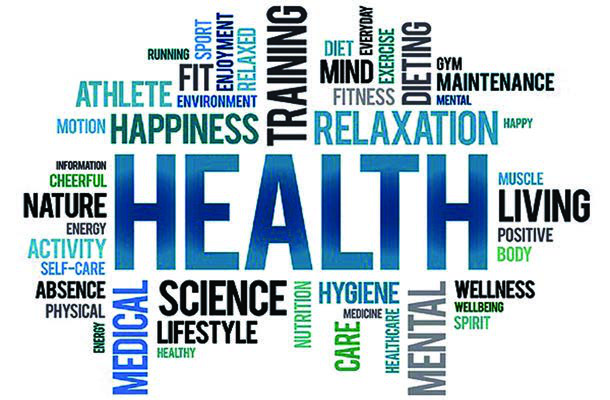
Health is much more than not being sick. It is the state of your whole body and mind together, and it is built out of many small daily things: the food you eat, the exercise you take, the rest you allow yourself, the cleanliness you keep, and the way you think and feel. That is why one word pulls so many other words along with it: training, diet, relaxation, hygiene, fitness, self-care, wellness, happiness. A person who eats well but never rests, or who exercises but lives with constant worry, is not fully healthy. Physical health and mental health hold each other up.
Hygiene is the part of health that you control most directly. It means the habits of cleanliness that keep germs away from your body: washing hands, brushing teeth, wearing clean clothes, trimming nails. This whole unit circles around one idea: your habits, not your money, decide your health. You will meet that idea in an interview about seeing doctors online, in a story about a king who could not walk, and in the language you need to give a friend good advice.
Telehealth: Seeing a Doctor from Anywhere
When you are ill, you usually travel to a clinic and sit in front of a doctor. But there is another way. In an interview with News-Medical, Chun-Kai Chang, the Business Development Manager of Telehealth at Advantech, explains how medical care is now reaching patients through a screen.
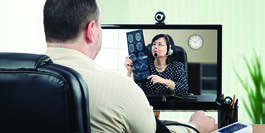
Telehealth is a method of providing medical care remotely, usually through video chat. It connects patients and clinicians from any location where there is an internet connection.
Telehealth is not only for small problems. It covers a wide range of care: primary care consultations, psychotherapy, physical therapy, and even emergency services. It lets primary care clinicians and specialists reach patients wherever the internet reaches. Its benefits are that services can be faster, safer, more effective and less expensive in the long run. During the COVID-19 pandemic this mattered enormously, because people could get medical care without going to hospitals, which protected both patients and hospital staff from being exposed to the infection.

Remote patient monitoring means continuously collecting a patient's health data, such as vital signs and blood sugars, through wearable devices, and transmitting it in real time so that medical providers can monitor and review it.
With remote patient monitoring, doctors can see a whole picture of a patient's condition and give a more precise diagnosis. Telehealth also changes how doctors work with each other. Clinician-to-clinician services let medical professionals collaborate virtually with specialists in other places and treat patients jointly, from remote surgical mentoring to Tele-ICU and Tele-ER, where on-site staff and a remote specialist team assess a patient's condition together. This relieves the pressure of staffing gaps in critical departments such as the emergency room and the ICU.
Why Telehealth Is Growing So Fast
Two major drivers explain this fast-growing service. The first and most recent driver is the global COVID-19 pandemic. Strong social distancing and minimal physical contact pushed people towards remote consultations, because they help protect against infection. At the same time, hospital bed shortages forced medical facilities to incorporate more telehealth technology so that patients at home could still receive continuous care.
The second driver is the shortage of medical professionals. Demand for care rises every year because the population is aging and more patients live with chronic and non-communicable diseases. People in rural areas suffer most: their medical demands are underserved because resources are insufficient and cities are a long drive away. Telehealth is one promising way to tackle the doctor shortage and extend specialists' reach to these patients.
What comes next? Telehealth will not replace face-to-face care. Instead, it will be incorporated into the infrastructure of healthcare facilities. Patients will choose providers partly by how accessible their telehealth services are. More people will use preventative care and follow-up care because it is convenient, which can mean fewer readmissions and fewer patient complications. Telehealth will also be used for early screening and triage of patients in the field, before they ever arrive at a hospital.
The road is not smooth. Clinicians face three big challenges:
- Lack of infrastructure: many hospitals do not have enough hardware or the right technology for each medical specialty.
- Unreliable networks: weak broadband, 4G or Wi-Fi limits connectivity inside facilities and blocks remote care to rural areas and mobile clinics.
- A learning curve: users must learn new tools, online scheduling for virtual visits, triage procedures and billing policies.
To overcome these challenges, telehealth should be encouraged as a regular service and included in health insurance. That would give healthcare providers a stronger motive to invest in infrastructure, integrate their information systems and deploy telehealth technology.
Saying Words with Consonant Clusters
A consonant cluster is a group of two or more consonant sounds spoken together with no vowel sound between them, as in the str of strength or the lk of milk.
English packs consonants together in ways that need practice. Say each word slowly at first, keeping the consonants joined, then speed up: infrastructure, staff, chronic, strength, milk, school, shield, curious, stethoscope, blend, strand, sixth, scream. Notice that spelling and sound do not always match: chronic begins with a k sound, and shield begins with a single sh sound even though it is written with two letters.
| Cluster sound | Where it appears | Practice words |
| str | at the start or middle | strength, strand, infrastructure |
| st | at the start | staff, stethoscope |
| skr | at the start | scream |
| sk | at the start | school |
| kr | at the start | chronic |
| bl | at the start | blend |
| lk | at the end | milk |
| ksth | at the end | sixth |
Do not slip an extra vowel in front of s. School is not iskool, and strength is not istrength. Start straight from the s sound and glide into the next consonant.
Giving Advice and Making Suggestions
Imagine your friend Shanti is upset because a girl called Sneha keeps asking her for money, and she asks you what she should do. English gives you a whole toolbox for answering. Her friend Selina uses several of the tools in one short conversation: If I were you, I'd ask her not to beg. Perhaps you should try talking to Sneha about it. How about talking to her parents? Each sentence offers help without giving an order.
- If I were you, I'd see a doctor. (You put yourself in the other person's place.)
- Why don't you take a rest for a while? (A gentle question, not a command.)
- How about putting a sweater on? (A friendly suggestion, followed by an -ing form.)
- Perhaps you should try talking to her. (Softened with perhaps.)
- You should ask for help. / You ought to ask for help. (Plain advice.)
- You'd better go to see a doctor. (Strong advice: something bad may happen if you do not.)
Practise in pairs. One person states a problem and the other advises: I am tired because I could not sleep. You should have a hot drink. I am cold and there is no heating. Why don't you put a sweater on? It is my friend's birthday and I have no money. How about picking a bunch of flowers? I have hurt my leg. You'd better go to see a doctor. The more problems you invent, the more natural the expressions become.
Should, Ought to and Had Better
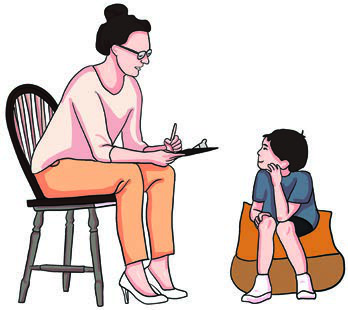
Should and ought to are modal expressions used to give advice or say what is the right thing to do. Should is followed by the base verb (you should study), while ought is always followed by to (you ought to study).
Had better gives strong advice with a warning behind it: if the advice is not followed, something bad will happen. It is followed by the base verb without to, and its negative is had better not.
Compare the strength. You should drink more water is friendly guidance. You had better take an umbrella carries a threat from the sky: if you do not, you will get wet. In questions, should moves in front of the subject: What should I do? Where should I go if I want to go shopping? In the negative, should becomes shouldn't, and had better becomes had better not: Dinesh shouldn't eat too much chocolate. You had better not pack too much or you will have to take it out at the airport.
Never put to after had better and never split its negative wrongly. Say I had better take an umbrella, not I had better to take one. Say you had better not pack too much, not you had not better pack too much. And ought never drops its to: she ought to go to the doctor.
Describing a Person and His Habits
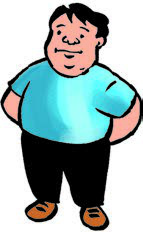
A good description of a person answers questions in an order the reader can follow. Take Aayush, a fourteen-year-old boy from Biratnagar who sits on the sofa for hours every day, watching TV and eating a lot of snacks. To write a couple of paragraphs about him, plan around four questions:
- What is the problem with him? Name his habits and what they are doing to his body.
- What should he stop doing to be healthy? Use shouldn't and had better not.
- What should he start doing? Use should and ought to.
- What advice would you give him for a healthy life? Close with If I were you or You'd better.
Notice how the writing task and the grammar of this unit are the same skill: the first paragraph describes, the second advises, and the advice language carries it.
Health is Wealth: The King Who Walked
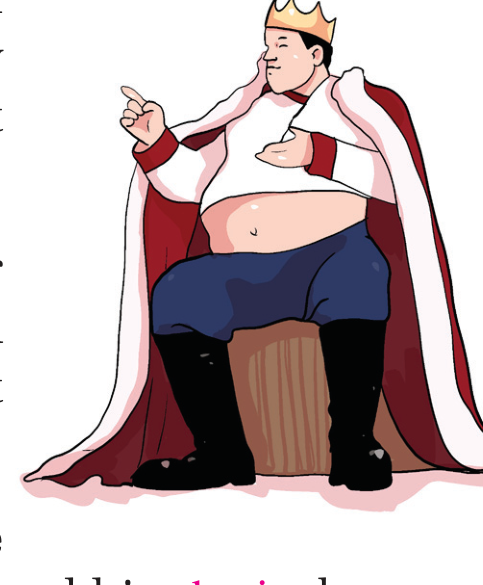
Once upon a time there lived a benevolent and kind-hearted king. Yet his people were not happy with him, because he was very lazy and would do nothing except eat and sleep. He spent days, weeks and months in bed, and slowly became a couch potato. One day he realised he could not move his body at all, not even his foot. His obesity became a matter of fun, and people mockingly called him the bulky king.
The king invited expert doctors from all over the country and offered them generous rewards to make him fit. None of them could help. He spent an enormous amount of money, but everything went in vain. Then, one fine morning, a holy man visited the country. Hearing about the king's ill health, he told the minister that he could easily cure him. The minister, delighted by these promising words, requested the king to meet the holy man.

The holy man resided at a distant place, and he refused to come to the palace. The king would be treated only if he came on foot to the holy man's residence. After strenuous effort, helped by his followers, the king reached the place. The holy man complimented him as a good ruler, promised he would soon regain his health, and asked him to come back the next day for treatment. But the next day the holy man was not available, and his devotee asked the king to return again the following day. This repeated for two weeks, and the king never actually met the holy man or received any treatment.
Gradually the king noticed something. He felt lighter. He had lost a considerable amount of weight and felt more active than before. Then he understood why the holy man had made him come on foot: the walking itself was the cure. Very soon the king regained his health, and his people were happy again. The story earns its title. Health is a kind of wealth that money cannot buy: all the king's rewards bought nothing, and two weeks of walking bought everything.
Listening for Facts about Personal Hygiene
The listening task in this unit is about personal hygiene, the daily habits of cleanliness that protect your body. Before the audio plays, three pictures set the scene. Look at them and ask yourself: what is happening in each one, and do I do these things regularly, and why?
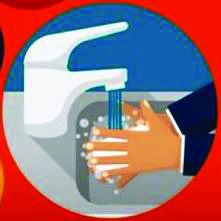
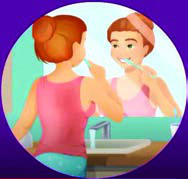
While the audio plays, you complete sentences by choosing the correct option. The sentences tell you exactly what to listen for: what personal hygiene means, what dirty clothes lead to, how often a toothbrush had better be changed, what long and dirty nails can cause, and details about a man called Sam, including where he works, what he has not done for many days, and what his friend Kris suggests about his sweating problem. Use the smart listener's routine. First read every sentence and its options before the audio starts. Then predict: some answers, like the meaning of hygiene, you can guess from your own knowledge. Finally listen for the key words around each blank, choose while you listen, and check your choices when the audio ends. Facts about a particular person, like Sam's department, can never be guessed: only the audio can tell you those, so keep your pen ready at that part.
Unreal Conditions with If
One sentence from the story hides this unit's second grammar point: The king would be treated only if he came on foot to the holy man's residence. The verb came looks like the past, but it is not about the past at all. It talks about an imagined condition. English uses special tense patterns for conditions that are not real, and this section teaches the two main ones.
The second conditional talks about an unreal or imagined situation in the present or future. Its pattern is If + past simple in the condition, and would + base verb in the result: If Sarita had an android mobile phone, she would join the virtual classroom.
The third conditional talks about an unreal past, something that did not happen. Its pattern is If + had + past participle in the condition, and would have + past participle in the result: If we had listened to the radio, we would have heard the news.
| Type | If clause | Result clause | Example |
| Second conditional | past simple | would + base verb | If I were a bird, I would fly round the world. |
| Third conditional | had + past participle | would have + past participle | If she had studied hard, she would have secured the best result. |
Three smaller patterns complete the picture. First, would is not the only result verb: might and could also work, as in If he had driven more carefully, he might not have had that accident, and If everyone turned off unwanted lights, we could save a lot of electricity. Second, the third conditional can drop if and turn had around: Had she studied hard, she would have secured the best result means exactly the same as If she had studied. Third, the clauses can swap places with no change of meaning: It would not surprise me if he knew the answer.
In unreal conditions, be becomes were for every subject. Say If I were you and If she were here, not If I was you. And do not mix the patterns: had studied pairs with would have secured, never with plain would secure.
Writing a Recipe

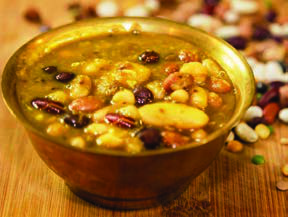
A recipe is a piece of instruction writing, and it has a fixed shape. It opens with the ingredients, then gives the steps in the exact order a cook must follow. Each step is an imperative sentence, one that starts with the base verb and has no subject: Melt the ghee. Add the onion. Sequence words such as first, then, next, after that and finally hold the steps together. For kwati, the ingredients are sprouted mixed beans, ghee, onion, cumin seeds, carom seeds, coriander powder, ginger garlic paste, tomatoes, bay leaves, chilli powder, turmeric powder and salt. Here is the method in its correct order:
- First, melt ghee in a pressure cooker.
- Put cumin seeds and carom seeds in and fry them.
- Add onion, then bay leaves and ginger garlic paste.
- Add tomatoes, turmeric powder and coriander powder.
- Fry until the tomato is tender.
- Now, add the sprouted mixed beans and then red chilli powder.
- Fry for 5 to 6 minutes.
- Add hot water, then salt and garam masala.
- Cook for about 4 to 5 whistles.
- Finally, kwati is ready to be served.
When you write your own recipe, check three things: the ingredients come before the method, every step is an imperative, and no step depends on something a later step has not done yet. A recipe that fries the beans before the ghee is melted cannot be cooked.
A Presentation Competition
The unit closes with a speaking project: organise a presentation competition in your class on the theme Health is Wealth, with your classmates and teacher as judges. Plan your presentation in three parts. Open by saying what health means to you, using the ideas from the start of this unit. In the middle, give your strongest material: the story of the bulky king, the promise of telehealth, or your own hygiene habits. Close with advice to your audience, and let the unit's grammar work for you: You should walk every day. If I were you, I would eat less junk food. We had better take care of our health before we lose it. Practise your consonant clusters aloud beforehand, because strength and stethoscope are exactly the kind of words a health presentation needs.
The full lesson is waiting for you
The notes are free to read in full. A free account opens the rest of the practice, and tracks your progress and confidence score for every subject. Presentations and videos need approval from Learn Yeti.