Comparing Ways of Travelling
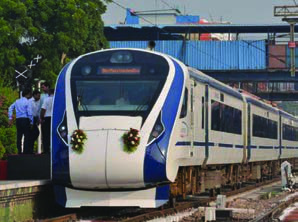
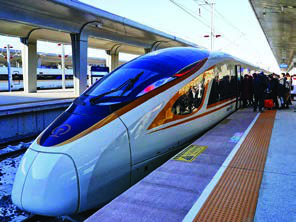
Transportation moves people and goods from one place to another, and communication moves messages and ideas. Both have changed enormously in a little over a century, and the fastest way to notice the change is to put two vehicles side by side and compare them. Look at these two trains. Both run on rails and both carry hundreds of passengers, yet they are not equal. The bullet train is faster, quieter and more modern than the ordinary express, though it is far more expensive to build. Talking like this, saying which one is faster or more comfortable, is called making a comparison, and it is the language skill that runs through this whole unit.
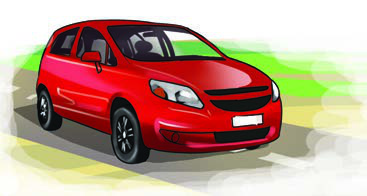
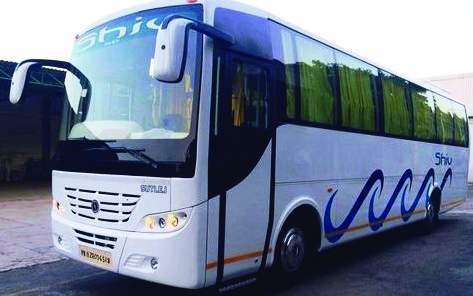
Now compare a private car with a long distance bus. The car is smaller and quicker, and it takes you exactly where you want to go. The bus is slower, but it carries many more people, a seat on it is much cheaper, and one bus on the road pollutes less per passenger than forty cars. Neither is simply better. Each is better for something, and a good comparison says what that something is.
To compare two things in English you need comparative forms such as faster, cheaper and more comfortable. Watch for them in everything you read in this unit.
The Wright Brothers
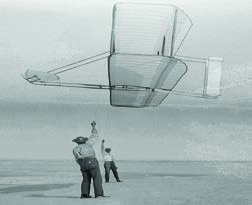
Wilbur Wright lived from 1867 to 1912 and his younger brother Orville from 1871 to 1948. They grew up in Dayton, Ohio, in the USA. Their father Milton was a bishop in the Church of the United Brethren in Christ, and their mother Susan made toys for her children and encouraged their curiosity. One day Milton brought home a small toy helicopter made of wood, with two twisted rubber bands that turned a little propeller. The boys played with it until it broke, and then they built new copies themselves. They also made toys and handmade kites and sold them to their friends. From the time they were small boys, the two did everything together.
In 1889 the brothers went into the printing business together, and three years later they opened their first bicycle shop. At first they sold and repaired bicycles. They would replace spokes, fix broken chains and sell accessories, and in 1896 they began to build their own brand of bicycles. This shop turned out to be the doorway to flight. The technology they learned from bicycles, the chains, sprockets, spoke wires, ball bearings and wheel hubs, went straight into their airplanes, and their ideas about balancing and controlling an aircraft were rooted in their experience as cyclists. A cyclist stays up by constantly correcting balance, and the brothers believed a flying machine would have to do the same.
Orville and Wilbur were convinced that an aircraft must be controlled in three axes of motion. For climbing and coming down they fitted an elevator, a horizontal control surface placed in front of the wings, worked by a lever in the pilot's left hand. For rolling, they invented a system they called wing warping.
Wing warping is the system that controlled the aircraft in a roll. The pilot lay in a cradle on the lower wing and shifted his hips from side to side, twisting the wings left or right or restoring them to level flight.
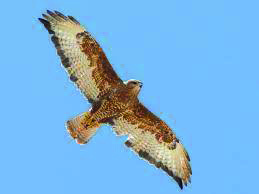
The idea of wing warping came from watching birds. The brothers observed buzzards keeping their balance in the air by twisting their wings, sometimes curving one wing more than the other. Then, in 1902, they added a vertical rudder to the rear of their machine to control the left and right motion of the nose. Elevator, wing warping and rudder together gave a pilot command of all three axes, and that idea of complete control is what set the Wrights apart from everyone else who was trying to fly.
Their aeronautical research began in 1899, with a small kite of five foot wingspan built to test their notions of aircraft control. In 1900 they built their first machine designed to carry a pilot and chose Kitty Hawk, in North Carolina, as their testing ground, because its strong steady winds, open areas and tall sandy dunes made it perfect for experiments. The 1900 aircraft produced less lift than expected, so they flew it as a kite and gathered information for better designs. They returned in 1901 with a new glider which also did not perform as they hoped. They had learned a great deal from their first two machines, but they had also met new puzzles and dangers.
To simulate flight conditions on the ground, the Wrights built a wind tunnel. It was a box with a fan at one end that blew a steady stream of air over model wings mounted on a special balance inside the tunnel. From this simple device they learned which wing shape worked best, how large a wing would have to be to lift them, how well their propellers would perform, and how much power their engine would need. They designed their next glider from this information. The 1901 tests had also shown that wing warping alone created unequal drag on the two wings, so in 1902 they linked the new rudder directly to the warping system. With that control problem solved, they were ready to build a powered aircraft.
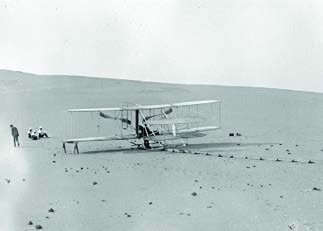
At Kill Devil Hills, North Carolina, at 10:35 in the morning, the Wright 1903 Flyer took off under its own power with Orville as the pilot. It flew for 12 seconds and covered a distance of 37 metres. The brothers took turns and made three more flights that morning. Wilbur flew the fourth and longest, travelling 260 metres in 59 seconds. The Wright 1903 Flyer became the first powered, heavier than air machine to achieve controlled, sustained flight with a pilot aboard. Today that machine hangs suspended overhead at the National Air and Space Museum in Washington, D.C.
After their success in North Carolina, the brothers continued their experiments closer to home, at Huffman Prairie, a pasture eight miles east of Dayton. Progress was slow without the strong steady winds of Kitty Hawk, but on September 20, 1904, they achieved the first circular flight of an airplane. It lasted only 1 minute 36 seconds and covered 1,244 metres. Stability problems still plagued the machine, and the changes made during 1904 helped but did not fully solve them. The improved Flyer, however, became the world's first practical airplane. In more than 40 flights at Huffman Prairie it was repeatedly banked, turned, circled and flown in figure eights, and on two occasions a flight lasted more than half an hour.
Wilbur and Orville Wright were brilliant self trained engineers. Two bicycle mechanics, working patiently through kites, gliders and a home made wind tunnel, solved problems that had barred the way to mechanical flight for centuries.
Talking About Comparisons
Comparing is something you do in conversation every day, so practise it aloud. The basic pattern is a question with a comparative and an answer with than.
Notice the shift in the dialogue. When two things are compared, the comparative is used, as in more dangerous than. When three or more are compared, the superlative is used with the, as in the most aggressive. Try the same patterns with other pairs and groups: an elephant and a giraffe for tall, a rhino and an elephant for heavy, a snail and a tortoise for slow, a cobra, a python and an anaconda for poisonous.
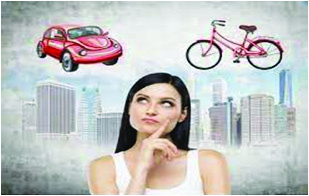
Now compare a car and a bike in full sentences. A car is faster than a bike, whereas a bike is easier to ride and park. A car is more comfortable and safer in bad weather, but it is more expensive to buy and to run. A bike is cheaper, it is eco friendly because it burns no fuel, and riding it every day is good for your health. A balanced comparison mentions the strengths of both sides before choosing.
Adjective or Adverb?
An adjective is a word that describes a noun or pronoun. It tells what kind, which one or how many: a small toy, steady winds, serious injuries.
An adverb is a word that describes a verb, an adjective or another adverb. It usually tells how, when, where or to what degree: he flew carefully, they initially sold bicycles, it is quite fast.
Many adverbs are made by adding ly to an adjective, and choosing between the two forms is a matter of asking what the word is describing. Compare these two sentences. Shishir was seriously injured in a car accident. Here seriously describes the verb, telling how badly he was injured, so the adverb is right. The other passengers sustained serious injuries. Here serious describes the noun injuries, so the adjective is right. The same test works everywhere: you behaved very selfishly, there was a sudden change in the weather, Lalita was colourfully dressed, Rajkumar hurt himself quite badly, and he gave me an angry look when I interrupted him.
After linking verbs such as look, seem, feel and be, use an adjective, not an adverb, because the word describes the subject rather than an action. It doesn't look safe. That snake seems very dangerous. Writing safely or dangerously in these sentences is wrong.
Hard and hardly are two different words, not an adjective and its adverb. Netra was trying hard means she was making a great effort. Netra was hardly trying means she was almost not trying at all. Hardly is never the adverb of hard.
Reading a Bar Chart
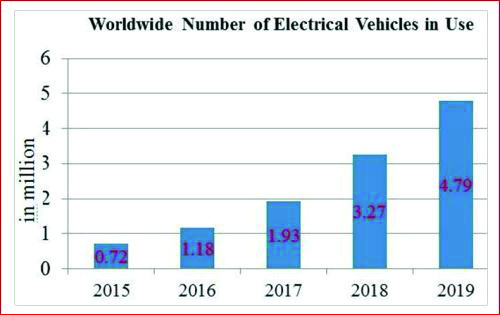
An interpretation of a chart is a short piece of writing that turns the picture into sentences. Work in a fixed order. First, read the title and the axes so you know what is being counted and in what unit. Second, find the highest and the lowest values. Third, compare the values across the years using comparatives such as higher, lower and more than. Fourth, finish with one sentence stating the overall trend.
Here is a model interpretation. The bar chart shows the worldwide number of electric vehicles in use from 2015 to 2019, measured in millions. In 2015 only 0.72 million electric vehicles were in use, the lowest figure on the chart. The number grew every year, reaching 1.18 million in 2016, 1.93 million in 2017 and 3.27 million in 2018. By 2019 it had climbed to 4.79 million, the highest figure shown and more than six times the number in 2015. The growth also became faster over time, since the largest single jump, about 1.5 million vehicles, came between 2018 and 2019. Overall, the chart shows that the world adopted electric vehicles at an increasing speed during these five years.
Rickshaw Ride
Rickshaw Ride is a poem by John Hill set in Hong Kong, where tourists once rode rickshaws pulled by hand. The speaker is a visitor who takes a ride and cannot stop looking at the old man who pulls him. Read it slowly, because its power is in its pictures.
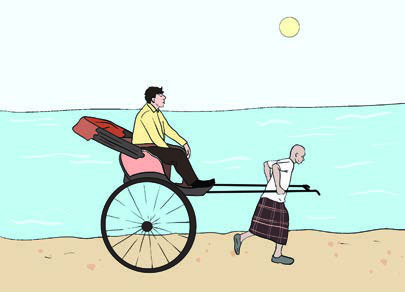
That man by the harbourSpitting into the waterIs as old as China.He is made of leatherAnd his folded faceIs like a sandbarAt low tide.Will you take a rideOn his rickshaw?He will not thank youFor your dollar,He knows that to youA dollar does not matter.Off you go with a clatterUp to VictoriaOn up the long hillPass the cathedralTo the peak Tram.Pull! Pull!He leans to itHis muscles at neck and calf and shoulderAnd his dark veins that snakeTake your eyeNot what passes by.Let him not breakSomething for my sake,For my dollar.You went to Hong KongThey will say.Did you take a rickshaw?Was it fun?Did he run, your rickshaw manYes, he ran.No, it was not much fun.
The poem opens with the rickshaw puller waiting for customers by the harbour. Calling him as old as China is an exaggeration that makes him seem ancient, almost part of the country itself. Saying he is made of leather does not mean he wears leather. It means his skin has been toughened, darkened and hardened by years of sun and heavy work, the way leather is. His folded face is compared to a sandbar at low tide, a long ridge of sand marked with lines, which is exactly how deep wrinkles look. Every image in these stanzas tells you the same thing: this is a very old, very worn man still doing a young man's job.
The ride itself climbs up to Victoria, on up the long hill, past the cathedral to the peak Tram, with the rickshaw clattering along. The puller will not thank the rider for his dollar, because he knows that a dollar means nothing to a rich tourist, though it is what he breaks his body for. As the old man pulls, the rider's eyes are caught not by the sights passing by but by the straining muscles at the puller's neck, calf and shoulder, and by the dark veins that snake across his skin. The rider silently begs, let him not break something for my sake, for my dollar. That is guilt speaking. When friends later ask whether the rickshaw ride was fun, the honest answer closes the poem: yes, he ran, and no, it was not much fun. The ride was not fun because watching an old man suffer for your comfort cannot be fun.
Rickshaw Ride sets a rich, comfortable rider against a poor, exhausted old puller. Its theme is the discomfort of enjoying a pleasure that is paid for by someone else's pain.
Rising and Falling Intonation
Intonation is the rise and fall of the voice while speaking. In rising intonation the voice goes up at the end of the sentence. In falling intonation the voice goes down at the end.
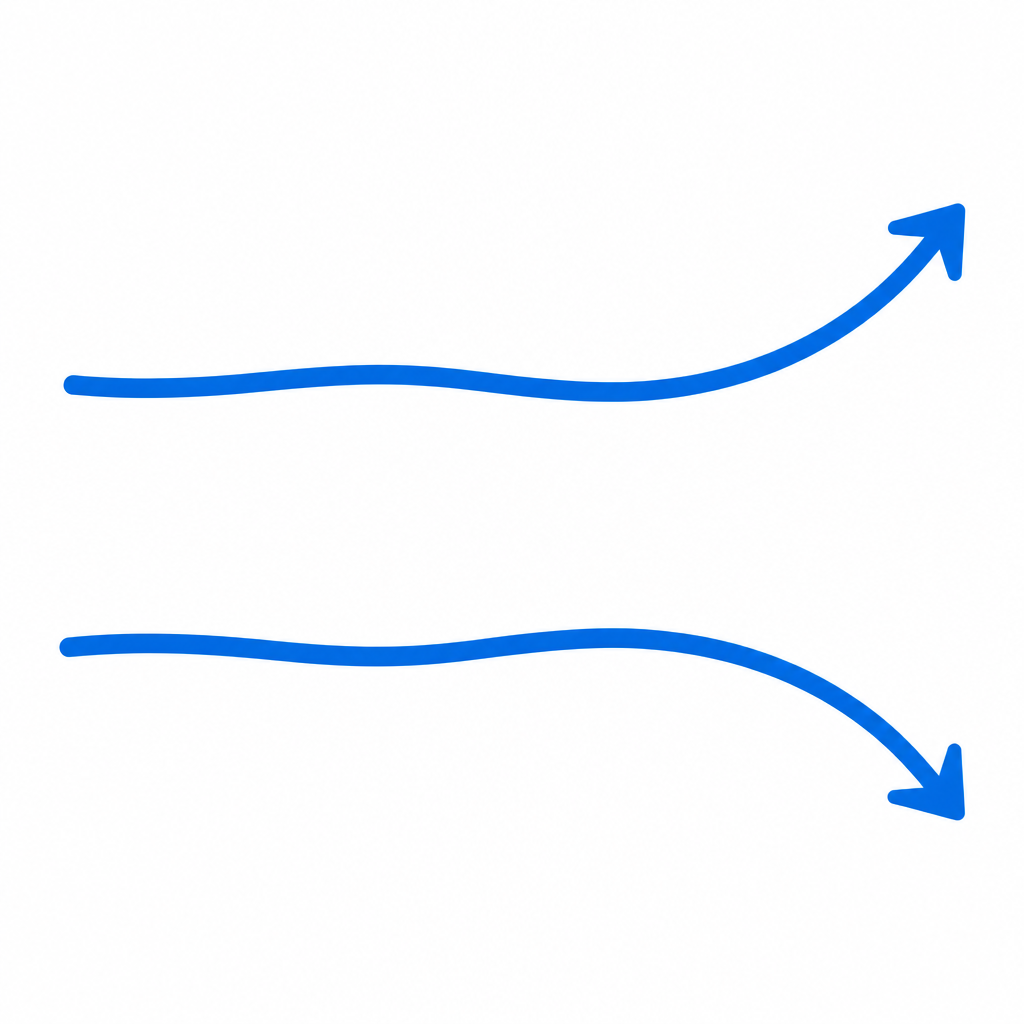
The choice between the two follows the kind of sentence. Yes or no questions end with a rise, because the speaker is genuinely waiting for an answer. Wh questions, which begin with words like what, how, where and when, end with a fall. Ordinary statements and exclamations also fall. In a list, the voice rises briefly on each item and falls on the last one. A question tag rises when the speaker is really asking, and falls when the speaker is only inviting agreement. Here are the sentences of this unit classified.
| Sentence | Intonation | Why |
| Will you go for a ride on his rickshaw? | Rising | A yes or no question |
| My parents bought rice, cereals and vegetables. | Falling | A statement; the voice rises on each item of the list and falls at the end |
| You don't often go there, do you? | Rising | A question tag that genuinely asks |
| Santoshi is a smart girl. | Falling | A plain statement |
| Wow! It's finally snowing. | Falling | An exclamation |
| None of the strategies are working, are they? | Rising | A question tag seeking a real answer |
| What's your favourite subject? | Falling | A wh question |
| Can they finish the project in time? | Rising | A yes or no question |
| How can I help you? | Falling | A wh question |
| Nice to meet you. | Falling | A friendly statement |
Listening for Details in a Conversation
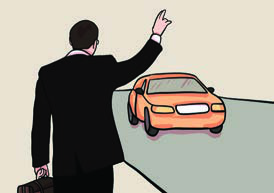
The listening task of this unit is a conversation between a passenger and a taxi driver in a city. Before it, warm up by answering two questions about yourself: how do you usually travel, and what is the main means of transportation where you live? During the audio you answer multiple choice questions and fill gaps, and every one of them asks for a specific detail from the conversation.
- Which museum the passenger wants to go to, so listen closely for the museum's full name.
- How long the journey usually takes, so listen for minutes and for words like less than, more than and about.
- The taxi fare, and whether the amount mentioned includes or excludes the tax or the tip.
- The time the museum closes, so catch the exact clock time.
- The best way to reach the restaurant La Fajita from the museum, whether by subway, bus or taxi.
- Why a taxi is inconvenient for reaching the museum, which is a reason, not a number.
Read all the questions before the audio starts, so your ears know what to hunt for. Numbers, place names and words like including and excluding are where listening questions hide their traps.
Comparing with Adjectives and Adverbs
Adjectives and adverbs have three degrees of comparison. The positive degree describes without comparing (tall, famous). The comparative degree compares two things (taller, more famous). The superlative degree picks one out of three or more (the tallest, the most famous).
Short adjectives form the comparative with er and the superlative with est: big, bigger, biggest. Longer adjectives, and almost all adverbs ending in ly, use more and most instead: carefully, more carefully, most carefully. A few common words are irregular and must be memorised: good, better, best and bad, worse, worst. To say two things are equal, use as with the plain form on both sides: my sister is almost as tall as my mother. The superlative always takes the: the biggest, the most famous.
- The Marsyangdi is one of the biggest rivers in Nepal.
- Thani Mai is the most famous temple in the whole district.
- A spider is not usually as deadly as a snake.
- The children are watching the movie more interestingly than the adults.
- Mr Shrestha is the most humorous teacher in the whole school.
- Children are considered to be more innocent than adults.
- A computer is more expensive than a pocket calculator.
- My maths exam was much better than the history exam.
- Bungee jumping really scares me. I find it more dangerous than paragliding.
- Sima is walking more carefully than Sarad.
Never double a comparison. More better, more faster and most biggest are all wrong, because better already means more good and faster already means more fast. Choose either the er form or more, never both.
Writing About a Journey
An account of a journey is a piece of personal writing that tells the story of a trip you actually made. Cover five things in a sensible order: where you went, who you went with, how you travelled there, what you did, and what you have learnt. Open by naming the place and the occasion, describe the travel and the activities in the middle in past tense, and close with the lesson or memory the journey left you. Because a journey is about places and vehicles, it is a natural home for comparisons: the bus was slower than we expected, the hills were more beautiful than any photograph.
Here is a short model. Last Dashain holiday I travelled to Pokhara with my parents and my younger sister. We went by tourist bus, and the eight hour ride along the Prithvi Highway felt shorter because of the river running beside the road. In Pokhara we rowed a boat on Phewa Lake, visited Davis Falls and watched the sunrise from Sarangkot. The sunrise was more beautiful than anything I had ever seen. From this journey I learnt that travelling teaches faster than books do. I saw with my own eyes how geography, weather and people change from place to place.
Project: The Story of the Telephone
This unit is about communication as well as transportation, and the project brings the second half in. Find information about the invention of the telephone and write a short piece about the history of its development, with relevant illustrations. Begin with Alexander Graham Bell, who patented the first practical telephone in 1876. Then trace how the device changed: early telephones connected by human operators at switchboards, rotary dial phones, push button phones, cordless phones, mobile phones and finally today's smartphones, which carry not just voices but pictures, messages and the internet. For each stage, note roughly when it appeared and what new thing it let people do. Collect your facts from a library or reliable websites, draw or paste a picture for each stage, and present your piece to the class.
The full lesson is waiting for you
The notes are free to read in full. A free account opens the rest of the practice, and tracks your progress and confidence score for every subject. Presentations and videos need approval from Learn Yeti.