Talking About Sports: can, can't and be able to
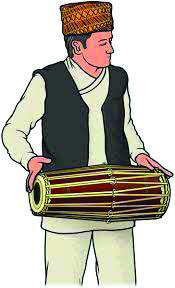
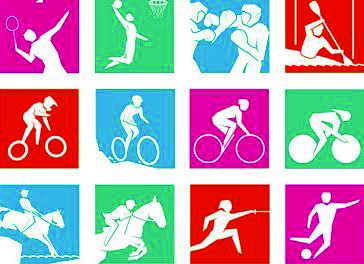
Games and sports bring people together, and they also give us a perfect reason to practise the language of ability. When you say what a player does on the field, you almost always use words like can, can't and be able to. A sprinter can run 100 metres in under ten seconds. A kabaddi raider can hold his breath while chanting. Most of us can't cycle up a mountain road, but with training we may be able to one day. Look at the six sports below and name each one. Then think of one sentence about what the players can do and one about what they cannot do.
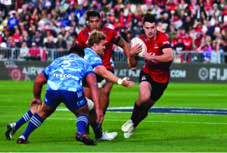
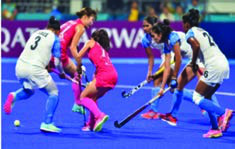
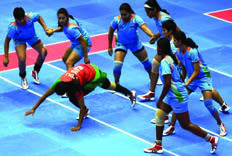
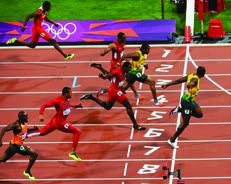
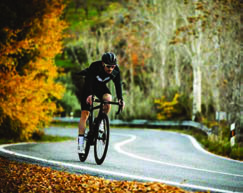
Try a short exchange with a partner about any of these sports. A: Can you play kabaddi? B: Yes, I can, but I can't hold my breath for a whole raid. A: Were you able to win the school race last year? B: No, I wasn't able to finish it, but this year I will be able to. This little pattern, ask with can, answer with can or can't, stretch into the past and future with be able to, is the speaking skill this whole unit keeps returning to.
Wimbledon, the Oldest Tennis Tournament
Wimbledon is the world's oldest tennis tournament and is also thought to be the most prestigious. It has been held at the All England Club in Wimbledon, London, since 1877. It is one of the four Grand Slam tennis tournaments. The other three are the Australian Open, the French Open and the US Open. What makes Wimbledon different from the other three is its surface: it is the only major still played on traditional grass, the game's original surface. That grass surface is what gave the game its original name, lawn tennis.
Inside the Championships: Events, Tickets and Schedule
Wimbledon consists of five main events and five junior events. There are also five invitation events in which some former professionals are invited back to compete. The five main events are gentlemen's singles, ladies' singles, gentlemen's doubles, ladies' doubles and mixed doubles. The five junior events are boys' singles, girls' singles, boys' doubles, girls' doubles and disabled doubles. The five invitational events are the gentlemen's doubles, senior gentlemen's doubles, senior ladies' doubles, gentlemen's wheelchair doubles and ladies' wheelchair doubles. Notice that wheelchair doubles sits among the invitational events, not the junior ones. That detail is a favourite exam trap.
Getting a seat at Wimbledon is itself a contest. The majority of Centre Court tickets are made available through a public ballot, in which applicants are chosen at random by a computer. Fans without tickets can queue up overnight to get seats on match day, because a certain number of seats are allocated for the queuing system. Tickets are not mainly sold through online booking.
Currently, Wimbledon begins in June and ends in July. In 2017, however, the championships began and ended in July, to extend the gap between the tournament and the French Open. The five main events span both weeks, but the junior and invitational events are mainly held during the second week. Traditionally there is no play on the Middle Sunday, though rain has sometimes forced play on this day.
The Courts, the Trophies and the Champions
The principal court, Centre Court, was opened in 1922. In 2009 it was fitted with a retractable roof, which helped to substantially reduce the loss of playing time caused by bad weather. The main show courts, Centre Court and No. 1 Court, are normally used for only two weeks a year, during the championships, but play can extend into a third week in exceptional circumstances. The remaining 17 courts are regularly used for other events hosted by the club, so players cannot simply practise on the show courts whenever they like.
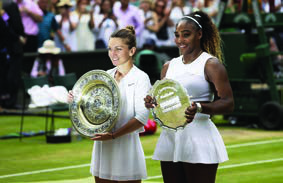
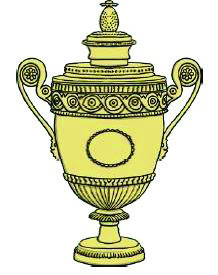
The gentlemen's Singles Champion receives a silver gilt cup, a silver cup coated with a thin layer of gold. The trophy has been awarded since 1887 and bears the inscription: 'All England Lawn Tennis Club Single Handed Championship of the World.' The Women's Singles Champion receives a sterling silver salver, a large plate decorated with figures from mythology. In 2019, the prize money for the winners of the singles finals was £2.35 million.
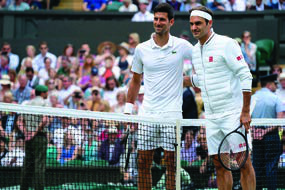
The championship has produced legendary names. Martina Navratilova won a record nine Wimbledon Singles titles. Roger Federer has won Wimbledon eight times. Novak Djokovic won the Gentlemen's Singles in 2019, defeating Roger Federer in what was called the most demanding final ever played. He was able to defend his trophy as a defending champion, and it was his sixteenth Grand Slam Men's Singles title and his fifth Wimbledon title. In the Ladies' Singles event, Simona Halep won her first Wimbledon title with a stunning performance against Serena Williams in 2019. It was her second Grand Slam Women's Singles title.
When Spelling and Sound Disagree
English spelling is a poor guide to English sound. Words that look alike are often said completely differently, and words that look different can rhyme perfectly. The poet Gerard Nolst Trenite gathered hundreds of these traps into a poem called 'The Chaos'. Read this part of it aloud, slowly, and notice how your mouth has to change even when the letters barely do. Corpse and corps look like twins, yet corps ends in a silent sound. Tear in your eye and tear in your dress are spelt the same and said differently.
Dearest creature in creation,Study English pronunciation.I will teach you in my verseSounds like corpse, corps, horse, and worse.I will keep you, Suzy, busy,Make your head with heat grow dizzy.Tear in eye, your dress will tear.So shall I! Oh hear my prayer.Just compare heart, beard, and heard,Dies and diet, lord and word,Sword and sward, retain and Britain.(Mind the latter, how it's written.)Now I surely will not plague youWith such words as plague and ague.But be careful how you speak:Say break and steak, but bleak and streak;Cloven, oven, how and low,Script, receipt, show, poem, and toe.Hear me say, devoid of trickery,Daughter, laughter, and Terpsichore,Typhoid, measles, topsails, aisles,Exiles, similes, and reviles;Scholar, vicar, and cigar,Solar, mica, war and far;One, anemone, Balmoral,Kitchen, lichen, laundry, laurel;Gertrude, German, wind and mind,Scene, Melpomene, mankind.
Never guess the sound of a new English word from its spelling alone. Break rhymes with steak, but bleak rhymes with streak. Daughter and laughter look like a rhyming pair and are not. When you meet a new word, check its pronunciation in a dictionary or listen to it spoken, then learn the word by its sound.
Saying What You Can and Cannot Do
Ability expressions: use can and cannot (can't) for present ability, could, was able to and was unable to for past ability, and will be able to for future ability. Be able to is the form that lets ability travel into any tense, because can itself has no future form.
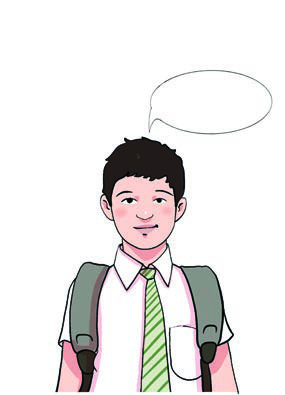
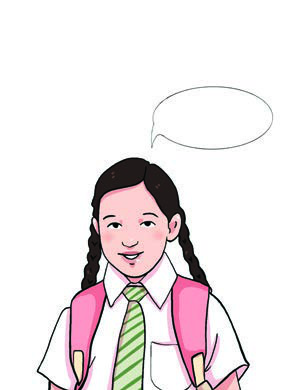
Study how three teenagers talk about their abilities across three times. The first speaks about now: 'I can stand on my hands but I cannot stand on my head.' The second speaks about the past: 'I was unable to visit him last week.' The third looks to the future: 'I will be able to buy a house when I get a good job.' Same idea, ability, three different time frames.
| Time | Positive | Negative |
| Present | can, am/is/are able to | can't, cannot, am/is/are not able to |
| Past | could, was/were able to | couldn't, was/were unable to |
| Future | will be able to | will not be able to, won't be able to |
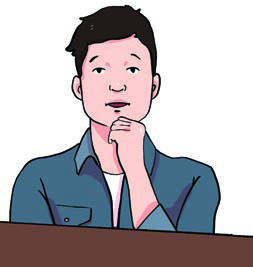
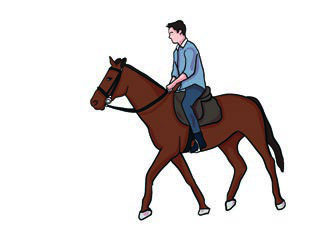
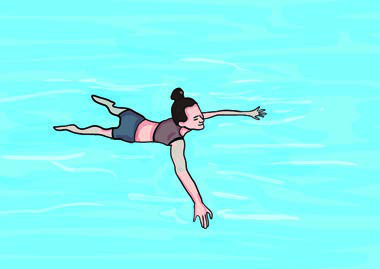
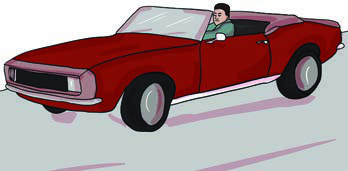
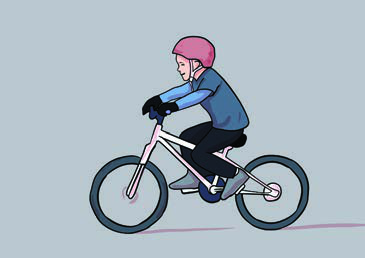
Now put the pattern to work. Ask a partner whether they can do the actions shown below, and answer truthfully. A: Can you ride a horse? B: No, I can't ride a horse, but I can ride a bicycle. Then report your partner to the class: Janak can write with both hands. He can't draw pictures with his legs. Other things worth asking about: writing with both hands, drawing pictures with your legs, driving a car, sewing a button on a shirt, working with a computer, peeling a pineapple, doing bungee jumping, making curry, and climbing a mountain.
Tag Questions
A tag question is a short question added to the end of a statement to check information or invite agreement. It is joined to the statement by a comma and ends with a question mark: Birds are free, aren't they?
Read how Mira talks to herself and watch the tags at work: 'Birds are free, aren't they? Although humans are the best creation of God, they can't fly in the sky, can they? Birds play an important role in the ecosystem, don't they? Humans have polluted the environment, haven't they? We must keep our environment clean, mustn't we?' Every statement gets a small mirror question, and the mirror always flips: a positive statement takes a negative tag, and a negative statement takes a positive tag.
- A positive statement takes a negative tag: Smoking is hazardous to health, isn't it?
- A negative statement takes a positive tag: We do not go to school on Saturdays, do we?
- The tag repeats the auxiliary or modal of the statement: Everybody has finished their work, haven't they?
- If the statement has no auxiliary, the tag uses do, does or did: Preeti speaks excellent French, doesn't she?
- The tag uses a pronoun that matches the subject; everybody, everyone and no one all take they.
- Write a comma before the tag and a question mark after it.
| Statement type | Tag | Example |
| Imperative (request or order) | will you? | Please keep quiet, will you? |
| Let him / Let her ... | will you? | Let him open the door, will you? |
| Let's ... | shall we? | Let's do our homework, shall we? |
| I'm ... | aren't I? | I'm tired and hungry, aren't I? |
| Negative words: no one, never, needn't, hardly | positive tag | No one could solve the problem, could they? |
| 'd better (= had better) | hadn't ...? | You'd better help them, hadn't you? |
| 'd prefer / 'd like (= would) | wouldn't ...? | We'd prefer coffee, wouldn't we? |
| 'd + base verb (= would) | wouldn't ...? | They'd build a house, wouldn't they? |
| 's gone (= has gone) | hasn't ...? | Roshan's gone to school, hasn't he? |
After I'm, the tag is aren't I, never amn't I. And a sentence that looks positive but contains a negative word such as no one, never, hardly or needn't counts as negative, so it takes a positive tag: You needn't stay out long, need you?
Writing a News Story
A news story turns a bare list of facts into a report a reader can trust. It has a fixed shape. The headline announces the main fact in a few strong words. The lead, the opening sentence, answers who did what, where and when. The body then unpacks the details in order of importance: who organised the event, who helped, what exactly happened and what was done with the result. A short quotation from a person involved brings the report to life near the end. Study this model built from real facts about a mountain clean-up.
NEPALI ARMY COLLECTS 800 KG OF GARBAGE FROM MT. AMA DABLAM. Solukhumbu. The Nepali Army has collected 800 kg of garbage from Mt. Ama Dablam under the Mt. Ama Dablam Clean-up Campaign 2075, organised by the Sagarmatha Pollution Control Committee (SPCC). The Shumser Gulma, a company of the Nepal Army, participated in the campaign, which received financial assistance from the Khumbu Village Body. The collected garbage was handed over to the local community amid a programme. Speaking at the event, SPCC Chair Mr. Sherpa expressed his gratitude to the Nepali Army for its support in keeping the mountain clean.
Order matters in news writing: headline, place, lead with the main fact, supporting details, then a quote. The most important information always comes first, because a reader may stop at any sentence.
Sports: Why People Play and Why People Watch
There are many different kinds of sports, taken up by a wide variety of people, and people play them for two broad reasons. Some do sport for their career, as professionals, while others do it purely for enjoyment and recreation. Sports also differ in what they demand. Some, like cricket, require a lot of equipment, while others need very little. Cost differs too: some people use public playing fields and play for free, while sports such as squash, tennis, badminton and table tennis are usually paid for on an hourly basis in the comfort of a local leisure centre.
Most sports share one thing: they are played with a round object, usually known as a ball. Some sports use more than one ball, and snooker is one of the unique sports that uses a number of balls at once. The game itself is often controlled by an impartial individual, someone who does not favour either side, known as an umpire in cricket and a referee in sports like football and rugby. Most sports last no more than a few hours, but some athletic tournaments can run for up to a week, and a game of cricket can take five days before a winner is announced.
Some people prefer to watch sports rather than play them. They can go to a stadium, a local leisure centre or a park, or watch on television. It is often cheaper to watch from the comfort of home than to visit a stadium or a special event. Popularity also changes from country to country: football and cricket are really popular in the United Kingdom but not in the USA, where people often play basketball and baseball instead. Even so, most countries put aside time to compete in world sporting events such as the football World Cup or the Olympics, which occur every four years.
Nowadays, people with any kind of disability also participate in sports, and most sports equipment is adapted to suit the needs of the disabled person. This means sport can be enjoyed no matter the physical nature of the person. The Para-olympics takes place a week after the main event and is equally popular. Doctors and schools encourage participation in sporting activity because it keeps the body active and healthy. It is for this reason, together with the competitive nature of individuals, that sport remains a very popular activity worldwide.
Making Sentences Negative
Turning a sentence negative is more than dropping in the word not. The route depends on what the sentence is built from. If it already has an auxiliary or a modal verb, such as is, are, have, had, will or could, put not straight after that verb: Mary will come becomes Mary will not come. If it has no auxiliary, borrow one: do, does or did, followed by not and the base form of the verb. Alex ate rice yesterday becomes Alex didn't eat rice yesterday. Notice that ate returns to eat, because did now carries the past tense.
- With an auxiliary or modal: add not after it. The students have aced the exam. The students have not aced the exam.
- Without an auxiliary: use do, does or did + not + base verb. His teacher knows what to do. His teacher does not know what to do.
- An imperative takes Don't: Play with the baby please. Don't play with the baby please.
- A polite request keeps its shape and takes not inside: Could you play the guitar please? Could you not play the guitar please?
- someone becomes no one: She bought someone a present. She bought no one a present.
- always becomes never: Always knock on the door before entering. Never knock on the door before entering.
- used to becomes didn't use to: Stuti used to live in London. Stuti didn't use to live in London.
- some becomes none: Some of the rice has gone bad. None of the rice has gone bad.
- either ... or becomes neither ... nor: Either Sobhana or Karma will attend. Neither Sobhana nor Karma will attend.
Write didn't use to, not didn't used to. Once didn't carries the past tense, the verb after it must return to its base form. The same rule explains why Alex didn't eat is right and Alex didn't ate is wrong.
Listening to News Headlines

This unit's listening task uses a recording of news headlines. Before you press play, know what the task asks of you. First, you match places and clubs, London, Estonia, the USA, Manchester United and Berlin Zoo, with the news related to each: a panda giving birth to twins, people injured by hurricanes, a young player bought for a record price, storms causing damage, the Olympics being organised, and a new president being elected. There are more headlines than places, so at least one headline is a spare. Second, you listen again and answer questions in no more than four words, about which city was competing with London to host the 2012 Olympics, when Vladimir Shevchenko will be enthroned as president, which parts of America are suffering from Maxwell and Nelly, how long Brillinho will play for his new club, and when the Chinese panda was kept captive in Berlin Zoo.
Headlines are short and fast, so listen strategically. On the first play, catch only the anchors: place names, club names and people's names, and jot the pairing. On the second play, hunt the details the questions ask for: a city, a date, a region, a length of time. Keep answers inside the four-word limit; a date or a name is usually enough. Finally, the task carries over into your own life: listen to the 8 o'clock news on Radio Nepal and write three news headlines of your own, short, in the present tense, with the main fact first.
Paraphrasing
Paraphrasing is a restatement of a text or passage giving the meaning in another form. In paraphrasing, you rewrite a passage without changing the meaning of the original text.
Follow these steps whenever you paraphrase.
- Read the passage several times to fully understand the meaning.
- Note down key concepts.
- Write your version of the text without looking at the original.
- Compare your paraphrased text with the original passage and make minor adjustments to phrases that remain too similar.
See the method at work on the paragraph about disability in sports. The original says that people with any kind of disability participate in sports, that most equipment is adapted to their needs, that the Para-olympics is equally popular, and that doctors and schools encourage participation. A good paraphrase keeps every one of those ideas but changes the wording: 'Today, people with any kind of disability can take part in sports. Sports equipment is also modified to fit the needs of disabled people. Sports activities are encouraged by doctors and schools. So it is very popular in the world.' The facts survive; only the sentences are new. Your own words, the same meaning, and nothing important dropped: that is the whole test of a paraphrase.
Project: A Sports Week Schedule
Imagine your school is going to organise a sports week next month. Work in a group and prepare a Sports Week Schedule to display in class. A good schedule is a table: one row per day, with columns for the date, the event, the time, the venue and the classes taking part. Spread the events sensibly, put field games like football and kabaddi on separate days from track events, keep one day for finals and prize-giving, and name who is responsible for each event. When you present it, use the unit's own language: on Monday, classes eight and nine can compete in the relay; students who can't play football will be able to join the quiz.
| Word | Meaning |
| tournament | a competition in which players or teams compete in a series of matches |
| prestigious | respected and admired as very important |
| Grand Slam | one of the four most important tennis tournaments of the year |
| ballot | a way of choosing people at random, here for tickets |
| substantially | considerably |
| exceptional | very unusual; out of the ordinary |
| gilt | a thin layer of gold |
| inscription | words written in front of a book or cut in stone or metal |
| salver | a large plate, usually made of metal |
| mythology | study of myths |
| stunning | extremely attractive or impressive |
| defending champion | the winner of the last competition, now playing to keep the title |
| career | a job or profession done for a long time |
| recreation | activity done for enjoyment in free time |
| unique | being the only one of its kind |
| impartial | not supporting one side more than another |
| adapted | changed to suit a new purpose or need |
| hazardous | dangerous, especially to health |
| paraphrase | to restate a text in another form without changing its meaning |
The full lesson is waiting for you
The notes are free to read in full. A free account opens the rest of the practice, and tracks your progress and confidence score for every subject. Presentations and videos need approval from Learn Yeti.