The Organisations Behind the Logos
Every large organisation shows itself to the world through a logo. A logo is a small picture, but it carries the whole identity of the organisation: what it stands for and why it exists. Look at these three logos. The first belongs to the Nepal Tourism Board, which was established to promote Nepal as a travel destination and to develop tourism in the country. The second is the logo of SAARC, the South Asian Association for Regional Cooperation, set up in 1985 so that the countries of South Asia could work together on economic and social development. The third is the logo of the World Health Organization, the United Nations agency established to protect and improve people's health across the world.



An organisation profile is a short, factual description of an organisation. It tells the reader what the organisation is, when and why it was established, where it works, and what it actually does.
The Reading: Asian Development Bank Institute
A think tank is a group of experts brought together to study particular problems and to suggest ideas, plans and policies for solving them.
The Asian Development Bank Institute, ADBI for short, is the think tank of the Asian Development Bank (ADB). It was established in 1997 to help build capacity, skills and knowledge related to poverty reduction and other areas that support long term growth and competitiveness in developing Asia and the Pacific. It is located in the central government district of Tokyo, Japan.

ADBI is supported by an independent Advisory Council whose members serve for two years. The chief executive officer of ADBI is called the Dean. The Dean manages the Institute under the direction of the ADB President. Notice how a profile always names who is in charge and who the organisation answers to. That is the authority part of an organisation profile.
The objectives of ADBI are to identify effective development strategies and to improve the capacity for sound development of the agencies and organisations engaged in development work in ADB's developing member countries, called DMCs. ADBI concentrates on areas where it has a strategic advantage, such as analysing emerging policy issues and helping senior policy makers of the member countries talk to one another. It also works to enhance its visibility, impact and accessibility through high quality knowledge products and services, because it strives to be a trusted source of insight, knowledge and information for policy makers, academics and anyone interested in Asia's development. It provides this intellectual input in two main ways: by conducting research on medium to long term development issues, and through capacity building and training, shortened to CBT. Through this work it has built an extensive network of experts, researchers, think tanks, government agencies, civil society bodies, private sector organisations and other likeminded organisations.
What ADBI Does: Research, Training and Outreach
ADBI's programmes and activities are held in-house as well as in ADB member countries, in collaboration with international, regional and national institutes and agencies. Its first main activity is research. ADBI conducts high level research on issues with strategic implications for development thinking and policy making in Asia and the Pacific. Research activities include hosting presentations by distinguished experts, organising regional and international seminars and conferences, and publishing books and papers. Research topics are selected from ADB's priority sectors and themes, an annual needs survey, and inputs from regional policy makers and partners. Recent priority areas include housing policy for inclusive growth, relations between central and local governments, urbanization in Asia, financial inclusion, education, and external shocks to economies.

Its second main activity is capacity building and training. ADBI trains mid level and senior level officials from ADB developing member countries. The activities are designed to raise awareness of the region's important development issues, to introduce suitable policy proposals, and to build consensus among policy makers and stakeholders on key priority areas. The training is delivered in three forms: policy dialogues, course based training, and e-learning. Together these give officials an effective forum for discussing development practices and sharing country experiences.

Its third main activity is outreach and knowledge dissemination. ADBI broadly disseminates its research results and its training, seminar and conference outputs through multiple channels, including media, publications, its webpage and social media. It also keeps close relations with numerous national and regional think tanks and other organisations in Asia and the Pacific. A profile like this one always answers the same questions in the same order: what the organisation is, who runs it, what its objectives are, and what it does. Keep that order in mind, because you will build a profile of your own in the project work.
Pronunciation: One Word, Two Accents
English is spoken with many accents, and dictionaries record two standard ones: British and American. The same word is often pronounced differently in the two. The clearest difference is the vowel in words like topic and conference, which British speakers say with a short rounded o and American speakers say with a wider ah sound. Another difference is the r after a vowel: American English pronounces the r in words like officer and expert, while standard British English does not. A good dictionary prints both pronunciations, the British one usually first. Practise saying each word both ways and notice what changes.
| Word | British | American |
| knowledge | /ˈnɒlɪdʒ/ | /ˈnɑːlɪdʒ/ |
| poverty | /ˈpɒvəti/ | /ˈpɑːvərti/ |
| government | /ˈɡʌvənmənt/ | /ˈɡʌvərnmənt/ |
| officer | /ˈɒfɪsə/ | /ˈɔːfɪsər/ |
| responsibility | /rɪˌspɒnsəˈbɪləti/ | /rɪˌspɑːnsəˈbɪləti/ |
| advantage | /ədˈvɑːntɪdʒ/ | /ədˈvæntɪdʒ/ |
| expert | /ˈekspɜːt/ | /ˈekspɜːrt/ |
| conference | /ˈkɒnfərəns/ | /ˈkɑːnfərəns/ |
| topic | /ˈtɒpɪk/ | /ˈtɑːpɪk/ |
| economic | /ˌiːkəˈnɒmɪk/ | /ˌekəˈnɑːmɪk/ |
When you meet a new word, check its pronunciation in a dictionary, not just its meaning. Both standard pronunciations are correct; choose one and be consistent.
Speaking: Asking What Things Are Used For
A very common job for English is explaining what a thing is for. The question uses the pattern What is X used for? and the answer uses X is used for followed by an ing form, or X is used to followed by a base verb. Read these two short conversations aloud with a partner.
To say the use of a thing: X is used for + verb-ing (A camera is used for taking photos.) or X is used to + verb (A camera is used to take photos.) Both are correct; after for the verb always takes ing.
Now make similar conversations of your own from these clues: a calculator for making calculations, a radio for listening to news and songs, a camera for taking photos, a mobile phone for making calls, a printer for printing documents, and a refrigerator for keeping food fresh. Then look at the objects below, name each one, and explain what it is used for in a full sentence.





Grammar: Expressing Purpose
Purpose answers the question why. English expresses purpose with to + verb, in order to + verb, so that + clause, and, for the purpose of an object, is for + verb-ing or is meant for + verb-ing.
Use to or in order to when a person does something with an aim: Mina went to university to be a lecturer. Mahanta took Maths in order to be an engineer. She's got a driving license to drive a car. Use is for or is meant for when you describe what an object exists for: A rice cooker is for cooking rice. A washing machine is meant for washing clothes. Use so that when the purpose needs its own subject and verb: He went to the bank so that he could cash the cheque.
| Structure | Followed by | Example |
| to | base verb | He went to hospital to see a doctor. |
| in order to | base verb | He went to the tap in order to bring a pail of water. |
| so that | a full clause | He went to the bank so that he could cash the cheque. |
| is for / is meant for | verb-ing | A refrigerator is for keeping food fresh. |
| for | verb-ing or a noun | I bought an envelope for sending a letter. |
After to and in order to, use the base verb, never an ing form. After for, use an ing form or a noun, never a base verb. Write "a spade is used for digging", not "a spade is used for dig".
Grammar: Reason and Contrast
Because introduces a reason as a full clause: I stayed home because I was ill. Because of introduces a reason as a noun or noun phrase: I stayed home because of my illness.
Although, though and even though introduce a contrast as a full clause: Although it rained heavily, we played the match. In spite of and despite introduce the same contrast as a noun or an ing form: In spite of the heavy rain, we played the match.
The two families do opposite jobs. Reason words say the result is expected: I could not get to sleep because of the noise. Contrast words say the result is surprising: I managed to get to sleep although there was a lot of noise. The same fact, the noise, appears in both sentences; the connective tells the reader whether the outcome followed the fact or fought against it. Study these joined pairs. I couldn't sleep despite being tired. Even though they have little money, they are living happily. I enjoyed the film though the story was not very good. In spite of living in the same colony, we hardly meet each other. I was not wet because I had an umbrella. I ate all the food although it was not very tasty. Suprima accepted the job in spite of the salary, which was quite low.
| Connective | Job | Followed by |
| because | reason | a full clause |
| because of | reason | a noun or noun phrase |
| although / though / even though | contrast | a full clause |
| in spite of / despite | contrast | a noun or verb-ing |
| so that | purpose | a full clause |
Despite is never followed by of. Write "despite the rain", not "despite of the rain". In spite of always keeps its of.
Reading: A Letter of Congratulations
We congratulate people when something good happens to them: passing an examination, winning a prize, getting a new job or a promotion. A letter of congratulations puts that good feeling into writing. Read this situation. Anil Gurung of Changunarayan, Bhaktapur writes to Mrs Rai on 30 May 2021, because she has just been appointed Chief Editor of The Nepal Times. He calls it an impressive accomplishment of which her family, friends and relatives are justifiably proud. He reminds her of her responsibility, which is to provide unbiased news stories and articles, and points out her opportunity: since the position is new at the paper, she can set the standard for future chief editors to follow. He wishes her the best of luck in all her future endeavours, and closes by asking her not to hesitate to call upon him if he can be of any assistance.
- Open by congratulating the person and naming the achievement exactly.
- Praise the achievement and say why the people around them are proud.
- Mention the responsibility or the opportunity the achievement brings.
- Wish the person success in their future endeavours.
- Offer your help, and close with kind regards and your name.
A letter of congratulations is warm but not casual. It names the achievement precisely, keeps the focus on the other person, and ends with an offer of support.
Listening: A Girl and Her Demands
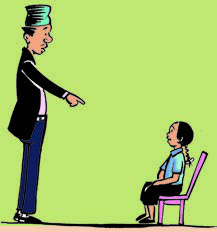
Good listeners predict before they listen. The picture shows a man in a Nepali cap speaking firmly to a young girl seated on a chair. Most likely they are a father and his daughter, and from his pointing finger they seem to be discussing something she wants. Guessing like this prepares your ear for the words that are coming.
The listening task has three rounds, and each round asks you to catch something different. In the first round you tick the things the girl is demanding from her father and cross the things that are not on her demand list. The items to watch for are an eraser, a car, a palm pilot, a laptop, a calculator, an ice cream and a ruler. In the second round you choose the correct alternatives about what she needs the supplies for, what her father has already bought her, what kind of equipment calculators and computers are, what her father did not have at her age, what he suggests she do, what he suspects she wants the computer for, and how much she says the calculator costs. In the third round you answer questions in not more than four words, so listen for short exact phrases: reasons, prices, promises and names. Finally, think for yourself: what gadgets would you like to use to support your studies, and how would you use them? Draw a mindmap and tell your friends.
Read every question before the audio starts, listen the first time for the general idea, and use the second listening to catch exact words and numbers. Never leave an answer blank; a sensible guess can be corrected on the next hearing.
Writing: Making an Advertisement
An advertisement is writing that persuades. It has very few words, so every part must do a job. A complete advertisement has five parts: a headline that catches the eye, a picture or illustration that shows the product in action, features that say what makes the product special, an offer that gives the reader a reason to buy now, and a warranty or condition that builds trust. Study this model. The headline reads TIGER SHOES. The features say: the best sports shoes, so remarkably original that no other shoes have managed to match Tiger, made for champions. A persuasive line follows: to win the game, everyone should wear Tiger. The offer is 50% off at New Year, and the condition line says: only use with special Tiger socks.

When you design your own advertisement for a calculator, a mobile phone or a watch, plan the five parts first. Write a short bold headline, choose one strong image, list two or three features in confident language, add one time limited offer, and end with a warranty. Notice that advertisements use short sentences, strong adjectives and direct commands, because a reader gives an advertisement only a few seconds.
Writing: A Message of Congratulations
A message of congratulations is shorter and more public than a letter. It is written to be displayed or published, often in a newspaper, so it speaks about the person as well as to them. Study this model. It opens with the single word Congratulations! Then it gives special thanks and tribute to Mr Mahabir Pun, President of ENRD, for being awarded The Ramon Magsaysay Award, 2007. It then says exactly why the award was given: for his outstanding contribution to Community Leadership and for bringing unprecedented changes in rural livelihoods through the use of Internet Technology. It closes with the name of the sender, E-Network Research and Development, Nepal.

- A one word opening: Congratulations!
- The person's full name and position.
- The exact award, prize or achievement, with its year.
- One sentence saying why the achievement was earned.
- The name of the person or organisation sending the message.
You can use this shape for any occasion: a neighbour who has received a full scholarship, or an uncle or aunt elected Mayor or Chairperson of a Municipality. For a message that will be published in a newspaper, keep the language formal, name the position exactly, and sign with your family's or organisation's name.
Project Work: Profile an Organisation
Choose any one international organisation working in Nepal, such as the World Health Organization, UNICEF, or the Asian Development Bank, and prepare a short profile of it with relevant pictures and illustrations. Follow the shape of a profile you have now studied: begin with what the organisation is and when and why it was established, name who leads it and where its headquarters are, state its objectives, and describe its main activities, especially its work in Nepal. Collect your information from the organisation's own website or publications, and present your profile to the class.
The full lesson is waiting for you
The notes are free to read in full. A free account opens the rest of the practice, and tracks your progress and confidence score for every subject. Presentations and videos need approval from Learn Yeti.