People and Places Around Us
When we talk about a place, we usually answer two questions: where is it, and how do you get there? A good answer names the district or the region, and then describes the journey: by bus along the highway, by plane to a small airstrip, on foot up a trekking trail, or by cable car to a hilltop. Practise sentences like these: 'It lies in the far west of Nepal.' 'You can fly to the nearest airport and then walk for two days.' 'The easiest way is to take a bus to the district headquarters.'

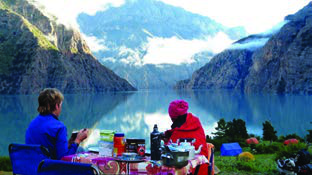

Places become famous, and so do people. Some people become famous for what they write, some for what they win, and some for what they give to others. Nepal has athletes who have carried the national flag onto international podiums and social workers who have been honoured around the world. When you introduce a famous person, say who they are, what they did, and why it matters: 'She is a social worker who is famous for caring for children.' 'He is an athlete who won gold medals for Nepal.'
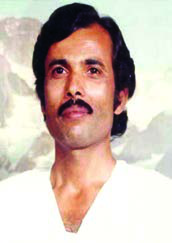

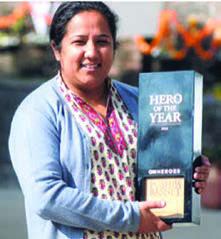
Paulo Coelho: The Boy Who Refused to Stop Dreaming
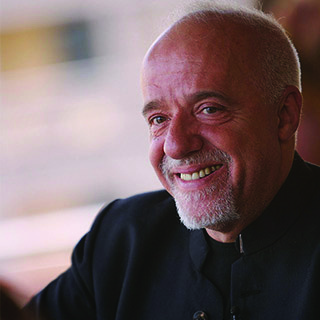
Paulo Coelho is a well known Brazilian author and lyricist. He was born on 24 August 1947 in Rio de Janeiro, Brazil. From an early age he loved writing and dreamed of becoming a writer, but his parents were against it. They wanted him to become a lawyer, and during his adolescence they sent him to a mental hospital three times, only because he would not give up his dream of writing. In his twenties he was arrested and tortured in Brazil, yet the dream survived. After his release he enrolled in law school, and for a while he abandoned writing. One year later he dropped out and lived as a hippie, travelling through South America, North Africa, Mexico and Europe, and he started using drugs in the 1960s.
At the age of 36 his life changed radically. He made a pilgrimage to Santiago de Compostela in Spain, where he experienced a spiritual awakening, and he felt inspired to write the book The Pilgrimage (1987). Only one year later he wrote The Alchemist in a two week spurt of creativity. At first the book attracted little attention. Then, in the early 1990s, a French language translation suddenly leapt onto the bestseller lists in France, new translations followed, and The Alchemist became a worldwide phenomenon. By Coelho's own count the book has sold roughly 35 million copies, and it is now the most translated book in the world by any living author.
Coelho's story carries the message of his own novels: he was discouraged, locked up, arrested and tortured, and he still became the world's most widely read author. A dream that survives failure can change a life.
The Alchemist and the Books That Followed
Allegorical novel: a story whose characters and events stand for a deeper meaning beyond the surface story. The Alchemist is allegorical because the shepherd's journey for treasure really stands for every person's search for their purpose in life.
The Alchemist tells of a shepherd boy who follows a mystical trek in which he learns to speak the 'Language of the World' and thus receives his heart's desire. Since that breakthrough Coelho has published books at a rate of about one every two years. In 2013 approximately 150 million copies of his books had been published in at least 71 languages. Several of his books are autobiographic in nature and deal with spirituality and faith, societal impacts on individuals, and love. His 26 books have sold more than 65 million copies in at least 59 languages.
| Book | Year | What it is about |
| The Pilgrimage | 1987 | His walk to Santiago de Compostela |
| The Alchemist | 1988 | A shepherd boy's mystical trek to his heart's desire |
| Veronika Decides to Die | 1998 | Mines the perceived mental instability of his youth |
| The Devil and Miss Prym | 2000 | An investigation of the essential nature of humankind |
| Eleven Minutes | 2003 | Explores the boundaries between love and sex through the story of a prostitute |
| The Witch of Portobello | 2006 | A female religious leader, told through interviews with those who knew her |
| The Winner Stands Alone | 2008 | A thriller set against the Cannes Film Festival |
| Aleph | 2010 | Ostensibly the true tale of his 2006 journey on the Trans-Siberian Railroad, embroidered with a supposed reincarnated lover |
| Manuscript Found in Accra | 2012 | A Greek wise man in Jerusalem before its invasion by Crusaders |
| Adultery | 2014 | Chronicles a successful journalist's extramarital affair |
| Hippie | 2018 | Inspired by Coelho's travels in the 1970s |
He has also published collections of excerpts from his oeuvre, that is, from his whole body of work: Frases (1996) and Life: Selected Quotations (2007), which is a similar collection translated into English. Selections from his weekly column in the newspaper O Globo were compiled into a volume titled Maktub, which means 'It is Written'.
Fans, Critics and the Man Himself
Coelho is now the world's most widely read author, with several prestigious international awards, including the Crystal Award given by the World Economic Forum and France's Legion d'honneur. His fans call his books inspiring and life changing. His critics say the books merely promote vague spirituality devoid of rigour, which means without careful, disciplined thinking. Coelho dismisses his naysayers' critiques with confidence. He rejects the self-help label, saying 'I am not a self-help writer; I am a self-problem writer', and adds, 'When I write a book I write a book for myself; the reaction is up to the reader. It's not my business whether people like or dislike it.'
Coelho has been married to his wife, the artist Christina Oiticica, since 1980. The couple spend half the year in Rio de Janeiro and the other half in a country house in the Pyrenees Mountains of France. In 1996 he founded the Paulo Coelho Institute, which provides support to children and the elderly.
Asking for and Giving Directions
When a stranger stops you in the street, the conversation follows a simple pattern: a polite opening, a question, clear directions, and thanks. Read this model conversation aloud with a partner, then make your own for other places on the map.
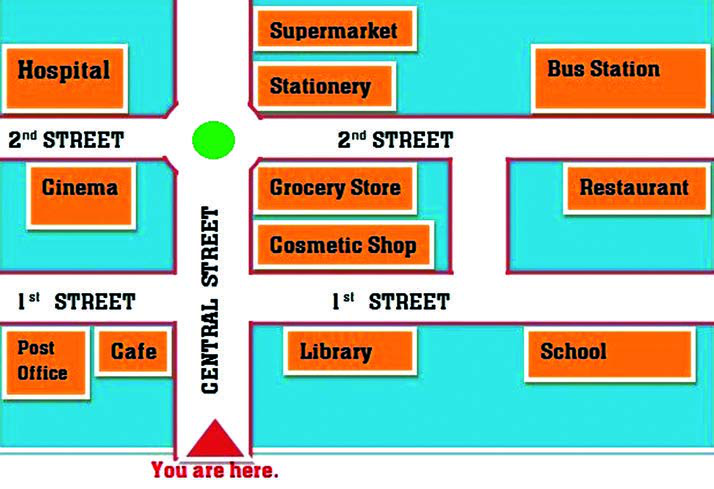
- Ask politely: 'Excuse me. How can I get to the bus station?' or 'Could you tell me the way to the library?'
- Give the route step by step: 'Go straight on.' 'Turn left at the crossroads.' 'Take the second street on your right.'
- Say where it is: 'It's on your left.' 'It's next to the cafe.' 'It's about 100 metres ahead.'
- Reassure the listener: 'You can't miss it!' means it is very easy to find.
- Close politely: 'Thanks!' and 'You're welcome.'
Practise giving directions in real situations too: a new friend who cannot find the school library, a visitor looking for a nearby bank, a friend coming to your home for the first time, a visitor who wants to meet the head teacher in her office, and your sister who wants to buy books but does not know where the stationery shop is. In each case, imagine the starting point, then guide the listener one step at a time.
Articles: a, an and the
Article: a small word placed before a noun to show whether we mean any one of a kind or one particular, known thing. English has the indefinite articles a and an, and the definite article the.
Watch how articles work in this old fable. A dove saw an ant fall into a brook. The ant struggled in vain to reach the bank, and in pity, the dove dropped a blade of straw beside it. Clinging to the straw like a shipwrecked sailor to a broken spar, the ant floated safely to the shore. Soon after, the ant saw a man getting ready to kill the dove with a stone. But just as he cast the stone, the ant stung him on the heel, so that the pain made him lose his aim, and the startled dove flew to safety in a distant wood.
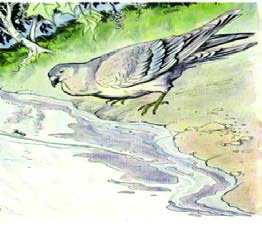
Indefinite article (a, an): used before a singular countable noun when we mention it for the first time, or when we mean any one, not a particular one. A dove means some dove we have not met before.
Definite article (the): used when both the speaker and the listener know exactly which thing is meant: something already mentioned, something unique, or something made specific by the rest of the sentence. The ant means the very ant we were just told about.
The choice between a and an depends on the first SOUND of the next word, never on its first letter. An hour and an honourable teacher take an because the h is silent. A university, a European writer and a one rupee coin take a because they begin with the sounds of y and w.
Use the whenever only one such thing can be meant: with superlatives (the best holiday, the hardest substance, the nearest grocery shop), with things that are one of a kind (the Moon, the end of this street), with named rivers (the Narayani River), with a known position or post (the S.P. of Nepal Police, the head teacher's room, the second floor), and with things already introduced (Sudip bought an expensive guitar yesterday. The guitar is beautiful.). We also say the radio and the cinema as fixed habits: 'Do you often listen to the radio?' 'Do you go to the cinema very often?'
Do not choose a or an by looking at the first letter. Half an hour is correct because hour begins with a vowel sound, and a university is correct because university begins with the consonant sound of y. Say the word aloud before you choose.
When No Article Is Needed
Some nouns take no article at all in general statements. Meals go bare: 'Where did you have lunch?' 'I never eat breakfast.' So does television when we mean watching it: 'I watch a lot of films on television.' So does space when we mean outer space: 'Would you like to travel in space?' If an exercise tells you no article is needed, mark the blank with a cross (X) instead of forcing a word in. But notice the contrast: we travel in space, yet we go to the Moon, because the Moon is one particular object.
'We had dinner at eight' takes no article, but the moment a meal is described or made specific, an article returns: 'We had a wonderful dinner', 'The dinner she cooked was delicious.'
Writing a Book Review
Book review: a short piece of writing that gives the basic facts of a book, summarises its story, judges its strengths and weaknesses, and tells the reader whether the book is worth reading.
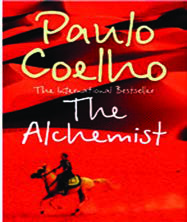
A good review has four parts, and the model review of The Alchemist shows all of them. First come the facts: Title: The Alchemist. Author: Paulo Coelho. Year: 1988. Publisher: Harper Collins (English translation). Characters: The Coptic Monk, The Shopkeeper, Melchizedek, Fatima, The Alchemist, The Englishman, Santiago. Genre: Adventure fiction.
Second comes the story in brief. The plotline is a simple quest. A Spanish shepherd boy, Santiago, keeps getting the same dream that there is treasure lying underneath the Egyptian pyramids. After meeting an old king who offers him advice and some magic stones, Santiago crosses the Mediterranean Sea and the Sahara Desert to find his treasure and accomplish his Personal Legend, a concept equivalent to our purpose in life. Amidst swindlers, tribe wars and endless sand, he finds his one true love, learns alchemy and the language of his heart, and fights to reach his treasure.
Third comes the judgement, where the reviewer weighs the book honestly. The model review praises the insightful ideas about destiny, rising above failure and the unity of the Universe, and calls the descriptions awe inspiring and the word choice immaculate, while admitting the diction of the text is comparatively simplistic. Fourth comes the recommendation: anyone who reads this will not only escape reality but also understand it, so the book deserves a place on your bookshelf. When you review a book you have recently read, follow the same four steps in the same order.
A review summarises the story but never gives away the ending. Notice that the model review says Santiago fights to reach his treasure, and stops there. Spoiling the ending steals the pleasure your reader came for.
Madam and Her Madam: A Poem About Being Overworked
Langston Hughes was a great African American poet. In this poem a housemaid named Alberta speaks in her own voice about the woman she works for. Both women can be called Madam, which is a formal and polite way of speaking to a woman, and that is the joke hiding in the title: the maid, too, deserves the respectful name.
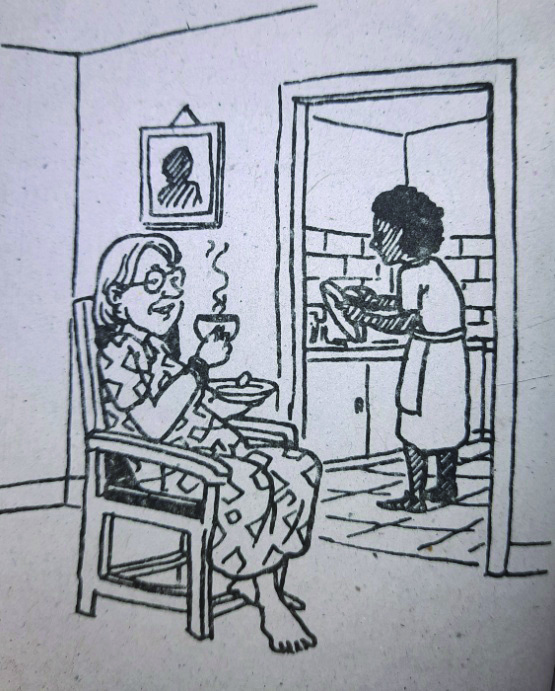
I worked for a woman,She wasn't meanBut she had a twelve-roomHouse to clean.Had to get breakfast,Dinner, and supper, tooThen take care of her childrenWhen I got through.Wash, iron, and scrub,Walk the dog aroundIt was too much,Nearly broke me down.I said, Madam,Can it beYou trying to make aPack-horse out of me?She opened her mouth.She cried, Oh, no!You know, Alberta,I love you so!I said, Madam,That may be trueBut I'll be doggedIf I love you!
The speaker begins by saying her employer 'wasn't mean', and then spends the whole poem proving the opposite. The Madam never shouts or beats her, so she does not look unkind, yet she loads Alberta with a twelve room house to clean, three meals to cook, children to mind, washing, ironing, scrubbing and even the dog to walk. It was too much, and it nearly broke her down, which means it nearly made her collapse. When Alberta asks whether the Madam is trying to make a pack-horse out of her, a horse used to carry heavy loads, the Madam answers with sweet words: 'You know, Alberta, I love you so!' Alberta refuses the false sweetness. Saying 'I love you' costs nothing; paying fairly and sharing the work would cost something real.
The poem shows discrimination that hides behind polite words. Exploiting a worker while claiming to love her is still exploitation. Think about your own society: discrimination by caste, by gender, by wealth or by the kind of work a person does can wear the same polite mask.
Homonyms: One Word, Several Meanings
Homonym: a word that has the same spelling and the same pronunciation as another word but a different meaning. The sentence around the word tells you which meaning is at work.
English is full of these double words, and a dictionary entry for one will list its separate meanings one after another. Read the sentence, decide which meaning fits, and check the pronunciation given in the dictionary as you go. Here are the fifteen homonyms to study, each with two of its common meanings.
| Word | One meaning | Another meaning |
| address | the place where someone lives | to speak formally to a person or a crowd |
| band | a group of musicians | a thin strip that holds things together |
| bat | a flying animal of the night | the wooden stick used in cricket |
| current | a flow of water or electricity | happening now |
| express | very fast, as in an express bus | to put a feeling into words |
| fair | just and equal to everyone | a market or festival with stalls and rides |
| kind | caring and gentle | a type or sort of thing |
| lie | to say something untrue | to rest flat, as on a bed |
| match | a game between two teams | a small stick that makes fire |
| pound | a unit of weight or of British money | to hit something again and again |
| ring | a circle, or jewellery for the finger | the sound a bell or phone makes |
| right | correct | the side opposite to left |
| rock | a large stone | to sway gently from side to side |
| spring | the season after winter | a coil of metal, or to jump suddenly |
| tender | soft and gentle | an offer to do work at a stated price |
Listening for Directions

The listening task plays a conversation about finding the way in a town. Before the audio starts, look at the picture and guess: where are the three people, what is the man with the map asking for, and what is the lady doing? Then read the statements you must judge. They tell you exactly what to listen for: whether the girl wants to go to the art museum, whether she prefers the bus or walking, how far the bus station is, what she must do at the Royal Hotel, and on which side the museum appears after the junction. In the second listening you answer short questions in no more than three words, so catch the key words only: the best method to get there, the reason for walking, where the Royal Hotel is located, what to do after going over the junction, and what the girl can do if she is still lost.
- Before listening, read every statement and question so your ears know what to hunt for.
- During the first listening, judge each statement True or False; do not stop to write long notes.
- During the second listening, note the exact words that answer each question, and keep every answer within three words.
- Listen hardest to direction words: left, right, straight, junction, crossing, near, far, on your left.
- After listening, give directions yourself: guide a new friend from your classroom to the head teacher's office, step by step.
Writing a Biography: Madhav Prasad Ghimire
Biography: the written story of a real person's life, told by someone else, in the past tense, moving in order from birth through education and career to later life.
- Collect the facts: birth, childhood, education, career, works, awards, personal life, death.
- Arrange the facts in the order they happened.
- Write in complete sentences and in the past tense, turning each group of facts into a paragraph.
- Check every date, place and name against your source, because a nearly right date is a wrong date.
Here is a model biography built from an outline of the life of Nepal's National Poet. Madhav Prasad Ghimire was born on 23 September 1919 in Pustun, Lamjung. After his mother's death he was brought up by his father and grandfather, and as a boy he learned the Panchanga. He went to Duradanda, Lamjung, for his early studies, later moved to Kathmandu to study Sanskrit, and also studied in Banaras, India.
His writing career began in Lamjung. He worked as a writer for Bhashanubad Parishad and later served as an editor for The Gorkhapatra. His works include the epics Gauri and Shakuntala, the lyrical anthology Kinnar-Kinnari, the essay collection Charu Charcha, and Malati Mangale, Manjari, Indrakumari, Rastra Nirmata, Aafno Bansuri Aafnai Geet, Himal Pari Himal Wari, Aswathama and Rajheswari. He received many honours, among them the Distinguished Academy Medal, the Shree Prasiddha Praval Gorkha Dakshinabahu, the Bhanubhakta Award, the Tribhuwan Pragya Puraskar, the Padmashree Sadhana Samman Puraskar and the Sajha Award. He had six daughters and two sons from two marriages. He died on 18 August 2020, at the age of 100, at Lainchaur, Kathmandu, and was cremated with state honours.
Idioms
Idiom: a commonly used expression whose meaning does not relate to the literal meaning of its words. To kill two birds with one stone harms no bird at all; it means to achieve two things with a single action.
| Idiom | Meaning |
| a hot potato | a problem so difficult or controversial that nobody wants to handle it |
| tall story | a story that is hard to believe because it is exaggerated |
| night owl | a person who stays up and works late at night |
| no pain no gain | nothing worthwhile is achieved without effort |
| miss the boat | to lose an opportunity by being too slow |
| put a bug in his ear | to give someone a hint or an idea in advance |
| see eye to eye | to agree completely with someone |
| give it a shot | to try something |
| kill two birds with one stone | to achieve two things with a single action |
Project Work: A Star of Your Own Locality
Fame does not live only in books and on television. Find information about any one popular personality in your own locality: a teacher, a social worker, an athlete, a musician, an entrepreneur. Note the important details of his or her life, birth, education, work and achievements, exactly as you did for Madhav Prasad Ghimire, and then share what you found with your friends. You will be practising every skill of this unit at once: gathering facts, ordering them, and presenting a person to an audience.
The full lesson is waiting for you
The notes are free to read in full. A free account opens the rest of the practice, and tracks your progress and confidence score for every subject. Presentations and videos need approval from Learn Yeti.