Describing a Process: Making Black Tea
This unit is about gadgets and instruments, and about the language we use around them: describing how something is done step by step, giving instructions, and reporting what other people said. Start with something familiar. When you explain a process, you break it into steps and join the steps with sequence words such as First, Second, Then, Next, After that and Finally. These words tell the listener where they are in the process, so nothing gets mixed up.
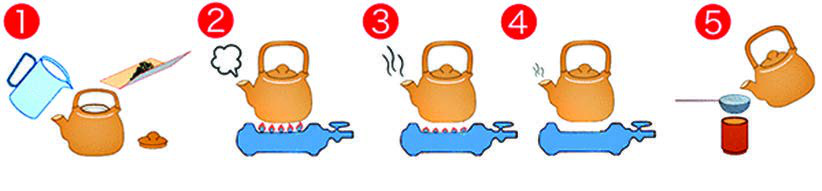
- First, pour clean water into the kettle and add the tea leaves.
- Second, place the kettle on the stove and light it.
- Then, let the water come to a full boil.
- After that, lower the heat and let the tea brew for a few minutes.
- Finally, pour the tea through a strainer into a cup and serve it hot.
A process description is just a list of actions in the right order. Sequence words such as First, Then, After that and Finally are the glue that holds the order together.
Reading: Save Your Smartphone
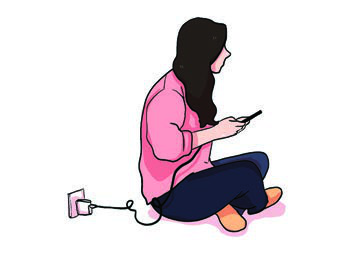
Smartphones have become part of everyday life. We use them to stay connected with family and friends, to get work done, to keep up with schedules, and even to buy groceries or clothes online. Because many of us hold a phone for most of the day, the phone needs proper care, for two reasons: to prolong its lifespan, and to safeguard the important information stored inside it. The reading gives five practical habits that keep a phone safe.
Watch your charging habits. Many people fear a fading battery and charge whenever they can, but a battery should not be pushed to 100 percent, and it should not be allowed to drop to zero either. Both extremes cause internal damage. The rule for many batteries is to keep them at 50 percent or more most of the time. When the level falls below 50 percent, top it up a little. Charging in small amounts a few times a day is fine. Always use the charger that came with your phone.
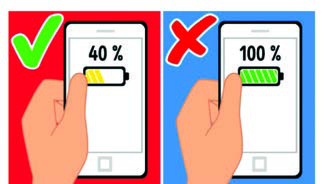
Use only the charger that came with your phone. There have been real incidents of cheap chargers catching fire.
Maintain a cool temperature. Heat is harmful to phone batteries, and a phone is safest at room temperature. Do not leave it next to devices such as laptops, because they generate heat. If all your gadgets sit in one pile, separate them.
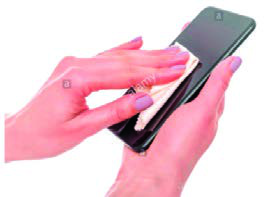
Clean the phone regularly. A phone is a breeding ground for germs and bacteria. Think of everything your hands touch before they touch the phone: money, food, door handles, the restroom. All of that gunks up the device, and studies have found that a phone screen houses more bacteria than a toilet seat. The cleaning itself is simple. Disinfect the phone with an antimicrobial spray and wipe it with a soft cloth.
Protect your phone and data. Set a screen lock so that your information stays safe, and so that the phone is rendered useless to a thief if it is lost or stolen. Going without a lock screen is like going out and leaving your front door open for burglars.

Control app permissions and notifications. A smartphone is useful largely because of the apps on it, but the more apps you download, the more notifications you receive. You can control which apps and events are allowed to send you prompts, and how those messages appear on the home or lock screen. Go to the phone's settings and set the notifications the way you want them.
Pronunciation: Words Worth Checking
English spelling often hides the real sound of a word, so a dictionary is the honest referee. Look these ten words up and listen to the model pronunciation if your dictionary has one. The hints below point at the exact place each word usually goes wrong.
| Word | Say it like | Watch out for |
| impossible | im-POSS-ib-l | the stress falls on POSS, not on im |
| battery | BAT-uh-ree | three syllables, stress on the first |
| zero | ZEER-oh | the e sounds like ee, not like e in pen |
| either | EYE-ther or EE-ther | both are correct; pick one and be consistent |
| temperature | TEM-pruh-cher | the middle shrinks; nobody says tem-pe-ra-ture |
| germ | JURM | the g is soft, like j |
| cloth | KLOTH | a short o; do not confuse it with clothe |
| burglar | BUR-glur | two syllables only; there is no burg-u-lar |
| control | kun-TROHL | the stress is on TROHL |
| appear | uh-PEER | the first a is weak, almost swallowed |
Speaking: Asking For and Giving Instructions
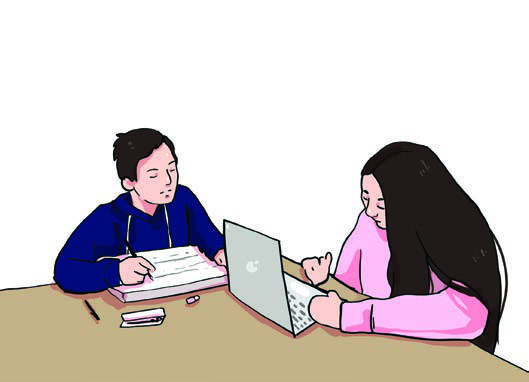
Asking for instructions politely usually starts with an opener such as Excuse me, how can I...?, Could you tell me how to...?, or Do you know how to...? Giving instructions uses the imperative, the base form of the verb with no subject: press, open, tap, hold. Join the instructions with the same sequence words you used for the tea: First press the Windows key and the Print Screen key at the same time to capture the entire screen. Then open an app such as Paint and paste the image there.
- Take a photo: Excuse me, how do I take a photo on this phone? First open the camera app, then tap the round button at the bottom.
- Recharge a phone: Could you tell me how to recharge this phone? First plug the cable into the charging port, then connect the charger to a power socket.
- Send an email: Do you know how to send an email? First open your mail app, tap Compose, type the address and the message, and finally press Send.
- Print a word document: How can I print this document? First press Ctrl and P together, choose the printer, and then click Print.
- Replace a light bulb: Could you show me how to replace a light bulb? First switch off the power, let the old bulb cool, twist it out, and then fit the new one in.
- Send a text: How do I send a text message? First open the messages app, choose the contact, type your message, and then tap the arrow.
Speaking: Explaining the Steps of Making Pizza
Now use the same skill on a longer process. The ten pictures below show how a pizza is made, from clean hands to the finished slice. Explain the steps to a friend using First, Second, Then, Next, After that and Finally.
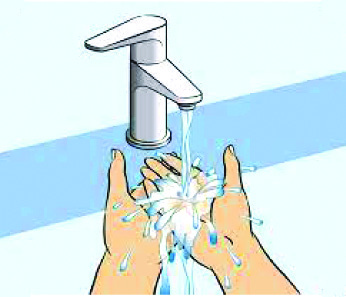
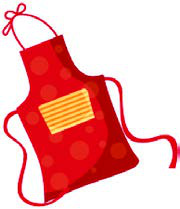

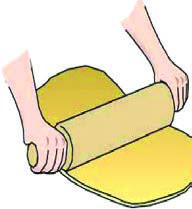

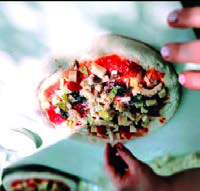
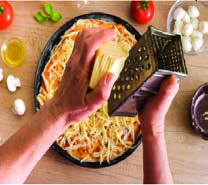
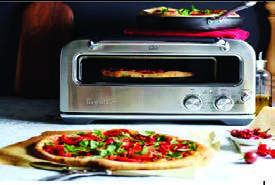

Spoken as one flowing explanation, it sounds like this: First, wash your hands well. Second, put an apron on so your clothes stay clean. Then knead the dough until it is soft, and roll it flat. Next, spread the sauce over the base and put the toppings on. After that, grate cheese over everything and bake the pizza in the oven. Finally, cut it into slices and serve it while it is hot.
Grammar: Direct and Indirect Speech
Direct speech repeats a speaker's exact words, inside quotation marks: She said, "I love horror movies."
Indirect speech, also called reported speech, reports the meaning of what was said without the exact words and without quotation marks, usually with that: She said that she loved horror movies.
When the reporting verb is in the past, such as said or told, three kinds of change happen inside the sentence. The tense moves one step back: love becomes loved, worked becomes had worked, will becomes would, am planning becomes was planning. The pronouns change to fit the reporter's point of view: I becomes she or he, my becomes her or his, we becomes they. The time words change too, because the moment of speaking has passed: today becomes that day, tomorrow becomes the next day, yesterday becomes the day before. Study how each pair below carries all three changes.
| Direct speech | Indirect speech |
| Nisha said, "I enjoy quiz shows." | Nisha said that she enjoyed quiz shows. |
| "I worked as a waiter before college," Harish said. | Harish said that he had worked as a waiter before college. |
| My friend said, "I'll phone you tomorrow." | My friend said that he would phone me the next day. |
| She said, "I'm planning to do it today." | She said that she was planning to do it that day. |
| "I met her yesterday," Raju said. | Raju said that he had met her the day before. |
| He said to me, "Get me something to drink." | He told me to get him something to drink. |
| "Don't make a noise," said the teacher. | The teacher told the students not to make a noise. |
| The doctor said to the patient, "Quit smoking." | The doctor advised the patient to quit smoking. |
Two cases keep their tense. If the reporting verb is present, as in She says, nothing shifts: She says that she can't stay there anymore. And a universal truth stays in the present even after said: The teacher told us that the Earth revolves round the Sun.
Reporting Commands and Requests
An order or a request is not reported with said that. It is reported with a verb that names what the speaker was doing, followed by the person and a to-infinitive. Choose the reporting verb from the situation.
- An order: He said to me, "Finish this job in an hour." becomes He told me to finish that job in an hour. A commander orders: The commander ordered his soldiers to march further.
- A negative order: put not before to. The teacher told the students not to make a noise.
- A request: Amrita said to me, "Please help me." becomes Amrita requested me to help her.
- Advice: The doctor said to the patient, "Take bed rest for a week." becomes The doctor advised the patient to take bed rest for a week.
- A prohibition: The policeman told me, "Don't park here." becomes The policeman forbade me to park there, or The policeman told me not to park there.
Forbade already contains the idea of not, so it is never followed by not. Write The head teacher forbade the parents to smoke on the school premises. Writing forbade them not to smoke says the opposite of what you mean.
Writing a Recipe
A recipe is a process description in written form, and it always has three parts: the name of the food item, the ingredients with their quantities, and the cooking procedure written as numbered imperative steps. Here is a short model to copy the shape of, before you write the recipe of your own favourite dish.
Vegetable Fried Rice. Ingredients: two cups of cooked rice, one chopped onion, one chopped carrot, half a cup of peas, two tablespoons of oil, one teaspoon of salt.
- Heat the oil in a pan over medium heat.
- Fry the onion until it turns golden.
- Add the carrot and peas and stir them for two minutes.
- Add the rice and the salt, and mix everything well.
- Cook for three more minutes, then serve hot.
Reading: Weather Instruments
Weather has its own language of symbols. A plain sun means sunny, a sun half hidden behind a cloud means partially cloudy, and a pair of clouds with no sun at all means cloudy. A cloud with falling drops means rainy, a cloud with snowflakes under it means snowy, and a cloud with a lightning bolt means stormy.
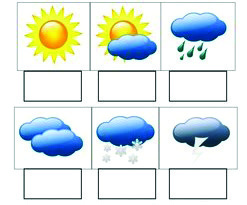
Until the 18th century, people depended completely on their senses for weather information. They read the wind's direction from the movement of leaves and guessed at coming rain from the number of clouds in the sky. Today we are blessed with modern technology, including weather instruments and weather stations that accumulate accurate weather data. Each instrument measures a different parameter.
A thermometer is a device used for measuring the temperature or the temperature gradient. It is used in industry, in meteorology, and even in medicine.
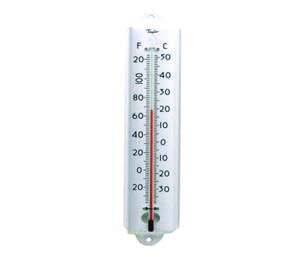
A thermometer has two important parts. The first is a sensor, which uses physical parameters such as the expansion of different states of matter to sense the change. The second is a converter, which converts that change of temperature into a numerical value. Weather stations mainly use mercury filled thermometers, which measure from minus 35 to 40 degrees Celsius with a scale division of 0.2 degrees. Below minus 35 degrees Celsius a mercury thermometer cannot give an accurate result and becomes unreliable, so alcohol filled thermometers are used instead. They can measure from as low as minus 65 or minus 75 degrees Celsius up to 20 or 25 degrees Celsius.
A barometer is an instrument that measures the atmospheric pressure, in units called bars or atmospheres.
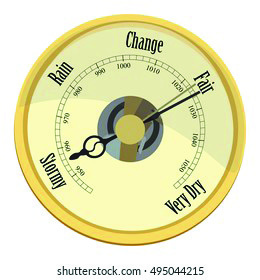
The Earth is wrapped in layers of air called the atmosphere. Air has weight, and gravity presses it against everything; a barometer measures that pressure. The reading is a forecast in itself. When a barometer shows low pressure, the weather is turning rainy, windy or cloudy, and when the pressure is high, the weather is fair. There are three types: the mercury barometer, the aneroid barometer and the digital barometer. The digital barometer is the latest of the three and gives the most accurate data.
A hygrometer measures the humidity, which is the amount of water vapour in the air.
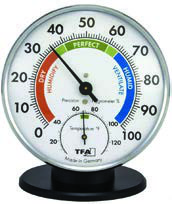
There are mainly two kinds of hygrometer: the dry and wet bulb hygrometer, and the mechanical hygrometer.
An anemometer is used to measure the speed of the wind.
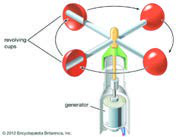
Wind speed carries plenty of information about the weather. If the speed of the wind is high, it indicates a storm. Because the anemometer lets us determine the wind speed early, it helps us protect ourselves from many natural disasters.
A wind vane, also called a weather vane or a weathercock, is an instrument used for showing the direction of the wind.

It keeps a feature of the traditional cockerel design: letters that indicate the points of the compass. The tool is placed on top of a weather station and gives accurate results about the wind's direction, which tells us a lot about the changes taking place in the weather.
A rain gauge is an instrument used by meteorologists for measuring the amount of precipitation that occurs over some time.
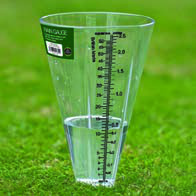
The rain gauge is used in most weather stations, and it must be placed in an open place without any obstacle, or trees and roofs would block part of the rain. The amount of precipitation is measured either manually or by an automatic weather station. The instrument has a real limitation: it is impossible for a rain gauge to collect rain during a hurricane.
Listening: A Chef on a Cooking Show
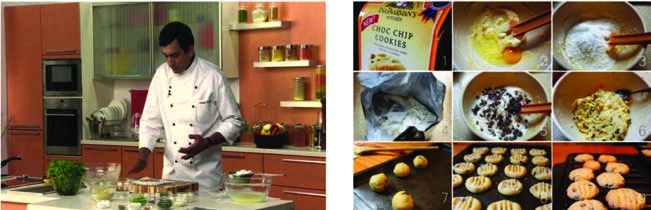
The listening task plays an interview with a chef, and your job is to pull specific facts out of what you hear. Before the audio starts, read the questions, because they tell you exactly what to listen for. Predict from the pictures first: a man in a white chef's jacket in a television kitchen, and a sequence of cookie making stages. Then listen once for the overall sense, and a second time for the details.
- Where the chef learned to cook: a cooking school, a family member's home, or a friend's kitchen.
- What is special about his cookies: a healthy recipe, cheap ingredients, or sales at local stores.
- Which ingredient he does NOT use: baking powder, flour or sugar.
- The exact baking temperature: 305, 315 or 350 degrees.
- The topic of the next cooking programme.
The second listening task gives you a word box: switch, entire, ingredients, preheat, pinch. Fit each word into its sentence by grammar and by meaning. An oven is preheated to 375 degrees before baking. The things you buy to make dinner are the ingredients. Salt is added a pinch at a time. A whole mixture put into a baking pan is the entire mixture. When a sentence has a blank, say the sentence aloud with each candidate word; only one will sound and mean right.
Writing a Newspaper Article
In the past 20 years there have been significant developments in science and technology, and they have had both a positive and a negative impact. Your task is to write a newspaper article expressing your views on that impact. A newspaper article has a fixed shape, and using the shape is half the work.
- A headline: short and eye catching, such as Technology: Servant or Master?
- A byline: the writer's name under the headline.
- The place and date of writing.
- An introduction that states the issue in two or three sentences.
- Body paragraphs: one for the positive impact, one for the negative impact.
- A conclusion giving your own balanced view.
| Positive impact | Negative impact |
| Instant communication connects families across the world | Screen addiction eats into study time and sleep |
| Modern medicine saves lives that were once lost | Social media spreads misinformation quickly |
| Online learning brings lessons to remote villages | Machines have replaced some human jobs |
| Weather instruments warn us before disasters | Electronic waste pollutes soil and water |
Project: Connecting Wireless Earbuds

Wireless earbuds are useful devices for listening to music and other audio because they need no wires. The project asks: do you know how to connect them to Bluetooth enabled devices such as smartphones, tablets and laptops? Search the internet or consult someone who knows, and then write the steps under the title How to connect earbuds to Bluetooth enabled devices. Write the steps as a numbered list of imperatives, exactly like a recipe, and present your finished steps to the class.
Transitive and Intransitive Verbs
A transitive verb is a verb that requires an object to receive the action: I admire your courage. She loves animals.
An intransitive verb is a verb that does not take an object: The baby was crying. They laughed uncontrollably.
The test is one question. Ask what? or whom? straight after the verb. If the sentence answers it, the verb is transitive: admire what? your courage. We need to maintain product quality answers maintain what?, so maintain is transitive, and so is face in I couldn't face him today. If the question has no answer inside the sentence, the verb is intransitive: The baby was crying answers no what at all, and neither does I work for a large firm in Paris or We talked for hours.
The full lesson is waiting for you
The notes are free to read in full. A free account opens the rest of the practice, and tracks your progress and confidence score for every subject. Presentations and videos need approval from Learn Yeti.