Needs and Wants
Everybody dreams. One person imagines flying over the mountains on a holiday. Another imagines standing in front of a class as a teacher. A boy pictures a shiny new phone in his hands, and a young man pictures himself working at a desk with a laptop. All of these are things people would like to have or to be. Some of them are things we truly cannot live without, and some are things we would simply enjoy. English gives these two ideas two different words: needs and wants.
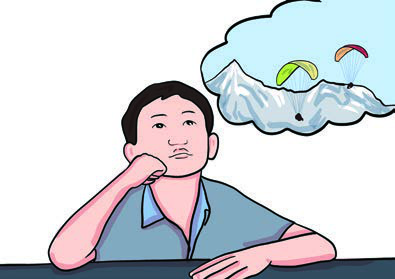
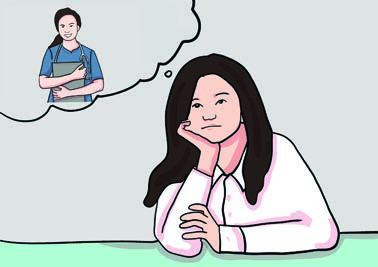
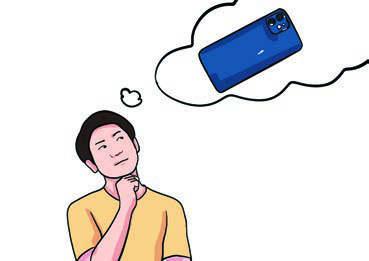
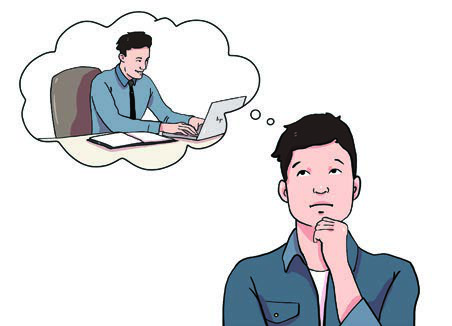
The unit opens with a short song about exactly this problem. Read it aloud, or better, sing it. Notice how it repeats its main line, because that line is the whole message.
Oh, needs and wants,Oh, needs and wants,We can't have all the things we want.We really wantA lot of stuff,But sometimes there's just not enough.Oh, needs and wants,Oh, needs and wants,We can't have all the things we want.
A need is something a person must have to stay alive and healthy. Food, water, air and shelter are needs. Without them we cannot survive.
A want is something a person would like to have, but can live without. A mobile phone, a cold drink and a computer game are wants. Life goes on without them.
Why can we not get everything we want? Because money, time and resources are limited, and our wants are not. A family earns a certain amount each month, and a country has a certain amount of land, water and fuel. So every person, and every family, has to choose. A sensible chooser puts needs first, because a phone is no use to someone who has nothing to eat. This one idea runs through the whole unit: the reading, the listening, the poem and the project all come back to it.
Reading: My Holiday Plan
The first reading is a short essay by a school girl about her coming summer holiday. For years she spent her summer holidays going on trips. This year she has decided to make the holiday productive, which means a holiday that produces something useful instead of just passing by. She has chosen two things to focus on: yoga and gardening.
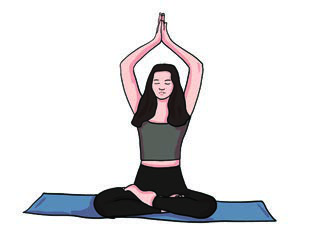
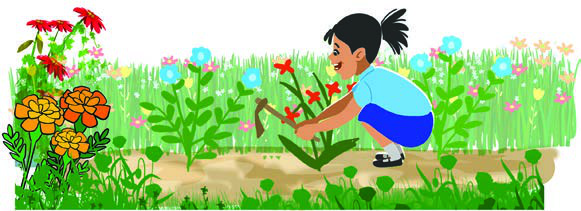
Her father always tells her that yoga is a great art, and that a person who practises yoga can increase his or her concentration power. She wants to improve her focus on her studies, so she has enrolled in free yoga sessions run by a local organisation called Yoga for Youth. The sessions cost nothing for school students, and two of her friends have joined the programme with her, so she will not be going alone.
Gardening has interested her for a long time, but she has dance classes every evening after school, so she never had time for it. During the holidays she plans to design a garden herself and give it all her time. She expects the garden to be ready within a month or two, so that when school reopens she only needs a little time each day to preserve the plants, which means to keep them safe and alive. She is looking for rare plants that are good for the environment, and once the garden work is done she plans to build a fence around it to protect it.
There is an honest confession at the end. Both of these were already her plans last summer, and she completed neither, so she is not happy with her achievements. This year she has decided to prioritise these two things no matter what, and to be a better person when she moves to the next class. That is what makes this a plan rather than a daydream: she names her tasks, gives them her time, and checks herself against them.
A holiday becomes productive when you choose one or two clear goals and give them your time, instead of letting the days pass by themselves.
Counting Syllables
A syllable is one beat of a word, a single unit of sound with one vowel sound in it. Say the word slowly and clap on each beat: pro-duc-tive has three claps, so it has three syllables.
Some words are a single unit, like plant and fence. Others break into several units, like con-cen-tra-tion. Say each word aloud with your hand under your chin: every time your chin drops, that is one syllable. Here are the unit's words with their counts.
| Word | Broken into beats | Syllables |
| plant | plant | 1 |
| fence | fence | 1 |
| summer | sum-mer | 2 |
| preserve | pre-serve | 2 |
| herbal | her-bal | 2 |
| productive | pro-duc-tive | 3 |
| achievement | a-chieve-ment | 3 |
| holiday | hol-i-day | 3 |
| gardening | gar-den-ing | 3 |
| concentration | con-cen-tra-tion | 4 |
The Simple Present Tense
Look at the verbs the writer of the essay uses when she talks about facts and habits: my father always tells me, the organisation conducts free sessions, one who practises yoga. These verbs are all in the simple present tense, the tense English uses for things that are true now, happen regularly, or are always true.
The simple present tense describes habits, facts and regular actions. With I, we, you and they the verb stays in its base form: they work hard. With he, she and it the verb takes s or es: she makes her bed.
Questions and negatives in this tense are built with do and does, and the main verb goes back to its base form. Study how one sentence changes shape across the three columns.
| Statement | Question | Negative |
| They work hard. | Do they work hard? | They do not / don't work hard. |
| She makes her bed. | Does she make her bed? | She does not / doesn't make her bed. |
| She wants to be a doctor. | Does she want to be a doctor? | She does not / doesn't want to be a doctor. |
| They need some water. | Do they need any water? | They do not / don't need any water. |
The s can live in only one place. Write she makes her bed, but does she make her bed. Once does or doesn't carries the s sound, the main verb drops it. Does she makes and she doesn't makes are both wrong.
Use this tense to talk about yourself and your family: my friend is also in grade 7, my father works in an office, our school is not very big, she likes tea but I like coffee, we don't miss classes. Notice how the verb be behaves differently: it changes to am, is or are and makes questions and negatives without do.
Writing About Your Holidays
You have summer or winter holidays every year, so you can write an essay like the one you just read. Keep it to about 100 words. Do not try to say everything; answer four questions in order and the essay builds itself.
- When does your school close for the holidays?
- How long is the next holiday?
- What things do you usually do during the holidays?
- What is your plan for the coming holiday?
The first two answers use the simple present, because they are facts about your school. The third uses the simple present too, because it describes habits. Only the last answer looks forward, so phrases like I am going to and I have planned to belong there. End with one sentence about why the plan matters to you, the way the essay writer ends by wanting to be a better person.
Listening for Needs and Wants
The listening task begins with three pictures: food, water and shelter. Ask yourself the opening question honestly: can we live without these things? We cannot. That is exactly what makes them needs, and it is the idea the audio you will hear is built around.


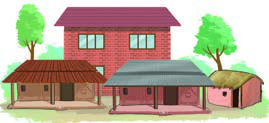
While you listen, your job is to catch ideas, not single words. Listen for which things the speaker says people must have to live, which things only make life more fun, and what the speaker says about how easy or hard it is to tell the two apart. The task then asks you to write True or False for statements such as whether shelter keeps us safe, and to complete sentences with exactly one word, so hold the key words in your head as you hear them.
The unit then gives you a list of seven things to sort into needs and wants: food, computer, water, cold drinks, air, mobile phones and shelter. Apply the test from the definitions. Could you stay alive and healthy without it? If no, it is a need. If yes, it is a want.
| NEEDS | WANTS |
| food | computer |
| water | cold drinks |
| air | mobile phones |
| shelter |
Useful is not the same as necessary. A computer helps with school work and a phone helps you talk to family, but people lived full lives before either existed. A thing is a need only when life itself depends on it.
The Circus Elephant
Needs are not only human. The second reading is a short poem by John Forster about elephants kept in a circus. Every night they tramp round the ring performing tricks, while children stare with delight. But the poet wonders what the elephants themselves are thinking. Perhaps they wish they were far away in the forest, where they could roam at will and eat their fill, far from human sight.
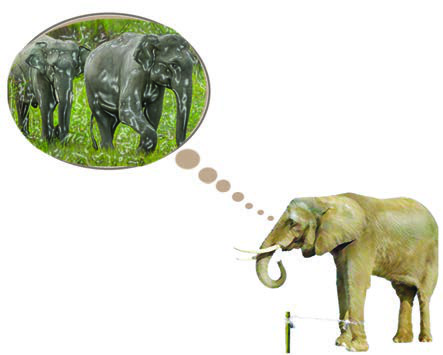
What are they thinking?The circus elephants,As they tramp round the ring each night?Do they wish that theyWere far awayIn the forest's leafy light?Where they'd roam at willAnd could eat their fillFar from human sight.As the gentle giantsPerform their tricksThe children stare with delightBut is it fair?Should they be thereIs keeping them captive right?
The poem never answers its own questions. It ends by asking three of them: is it fair, should they be there, is keeping them captive right? That is deliberate. The poet calls the elephants gentle giants, huge but harmless, and lets the reader feel the gap between what the elephant needs, freedom, forest and food in plenty, and what the circus gives it, a rope and a ring. The reader is left to judge.
Rhyming words are words that end with the same sound, like night, light, sight and right. Poets place them at the ends of lines to give a poem its music.
This poem rhymes on one long chain of sounds: night, light, sight, delight and right all share one ending. So fight would rhyme with night, pill rhymes with will and fill, and play rhymes with away. Read the poem aloud and you will hear the chain pulling the lines together.
A poem can argue without stating an opinion. By showing what the elephant dreams of and then asking, but is it fair, the poet makes the reader do the judging.
The First Conditional
What would happen if the circus elephant were set free? The grammar of this unit answers in a chain of sentences.
- If the circus elephant is freed, it will walk to the jungle.
- If the elephant walks to the jungle, it will find its friends.
- If the elephant finds its friends, it will become happy.
- If the elephant becomes happy, I will be happy too.
The first conditional talks about a real possibility in the future and its likely result. The if part uses the simple present tense, and the result part uses will or won't with the base verb: If you eat greasy food, you will become large.
Each sentence has two halves. The if half names the condition, something that may really happen, and stays in the simple present even though it points at the future. The other half names the result and carries will. The halves can swap places without changing the meaning: I will arrive in Kathmandu by 8:00 p.m. if I leave now. Negatives work in either half: you won't do well on your test if you don't study, and they won't know the truth if you don't tell them. Questions put will before its subject: if I bake a cake, will you have some?
Never put will inside the if part. Write if he calls you, will you answer the phone, not if he will call you. The if part stays in the simple present even though the whole sentence is about the future.
Speaking About Jobs and Dreams
The first conditional is exactly the grammar you need for talking about ambitions. Six young people each dream of a different future: Pemba wants to be a pilot, Nitu a teacher, Dinesh a doctor, Nabina a lawyer, Himesh an athlete and Jay a film director. Saying what each of them wants to be, and what each must do to get there, is the speaking practice of this unit.

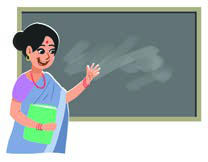
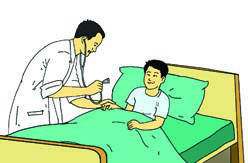
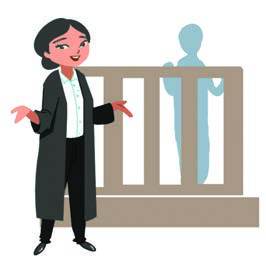
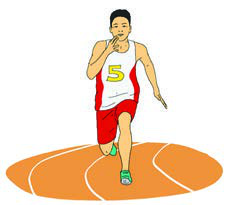
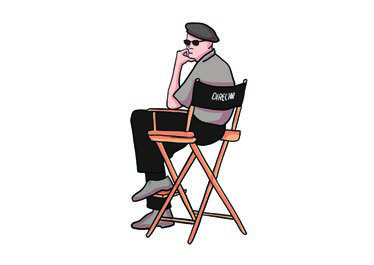
Work in pairs. One partner starts an if sentence and the other completes it with a sensible result. Like this:
Then take turns with the rest: if you want to be an engineer, if you want to be a driver, if you want to be a teacher, if you work hard, if you don't sleep well. Every answer is a chance to use will, need to or have to, and every answer must actually follow from the condition. If you don't sleep well, you will feel tired in class is a real result; a random ending is not.
Writing a Story in the Past Tense
The writing task turns to the past. A story is given with its verbs in brackets, and every verb must be changed into its past form. Told correctly, it goes like this. Once there lived a farmer in a village. He was very hardworking and he had three sons, but they were very lazy, and this worried him. He wanted his sons to take care of his fields as he did. So one day he called his sons to his side and said, Dear sons, there is a great treasure hidden in one of my fields to make sure that you three never go hungry. After a few days the farmer died. The sons decided to search for the treasure their father was talking about. They took the farmer's spades and mattocks and dug every portion of their field hunting the treasure. But they found nothing.
A friend of their father saw this and suggested that they should sow some seeds. They accepted the suggestion and did the same. It rained well that season. Days passed. The fields rewarded their labour with good crops. The sons realised what their father's hidden treasure was. From that day on, the sons started working hard.
Watch the two kinds of verbs. Regular verbs simply take d or ed: lived, wanted, called, decided, suggested, accepted, rained, passed, rewarded, realised, started. Irregular verbs change their shape entirely, and these must be memorised.
| Base form | Past form |
| be | was / were |
| have | had |
| do | did |
| say | said |
| take | took |
| dig | dug |
| find | found |
| see | saw |
The farmer's treasure was never gold. It was the habit of hard work, and the field paid it back as a harvest.
Project: A Needs and Wants Survey
Now take the needs and wants test out of the classroom. Talk to five different people from your locality and ask each one what five things they would like to have. Make a table with five columns: serial number, name, things they would like to have, need or want, and why. For every answer, decide whether it is a need or a want, and write your reason. A farmer who asks for a water pump and a student who asks for a gaming phone will teach you more about the difference than any list in a book. Share your finished table with your friends and see where you disagreed, because the arguments about the borderline cases are where the real thinking happens.
Controlling Anger
The unit closes with a story worth carrying home. Once there was a young boy who had problems controlling his anger. When he got angry he would say the first thing that came to his mind, even if it hurt people. One day his father gifted him a hammer and a bundle of nails and said, whenever you get mad, hammer a nail into the backyard fence. In the first days the boy used up half of the nails. Over the next weeks he used fewer and fewer, until his temper was under control. Then his father asked him to remove a nail for each day he did not lose his temper.
On the day the boy removed his last nail, his father showed him the fence. You have done good, boy, he said. But can you see the holes in the wall? The fence is never going to be the same. Likewise, when you say mean things in anger, you will leave a scar. The nails could be pulled out, but the holes stayed. In the same way, an apology can be given, but the hurt caused by angry words does not fully disappear. The wise habit is to control the anger before the words come out.
Angry words are like nails in a fence. You can pull the nail out, but the hole remains.
The full lesson is waiting for you
The notes are free to read in full. A free account opens the rest of the practice, and tracks your progress and confidence score for every subject. Presentations and videos need approval from Learn Yeti.