Advice for Every Day
Every day someone near you does something a little risky or a little unwise, and every day someone asks you what they ought to do. This unit teaches you the English for exactly those moments. The two small words that carry most of the work are should and shouldn't. You say "You should" when an action is a good idea, and "You shouldn't" when it is a bad one. Look at these four people and decide what advice each of them needs.
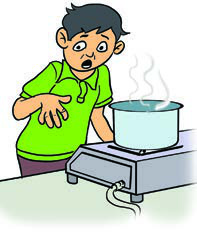
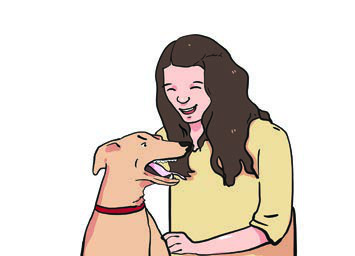
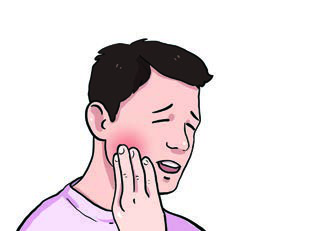
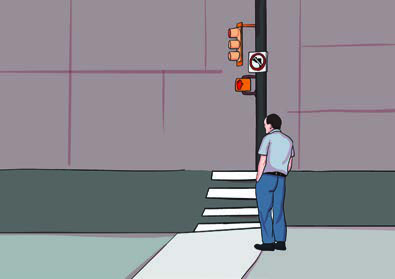
Try saying a full sentence about each person: "He shouldn't touch the hot pot." "She shouldn't let the dog lick her face." "He should see a dentist." "He should wait for the signal." Notice that after should and shouldn't the verb stays in its plain form. We say "He should go", never "He should goes" or "He should to go".
If I Were a Bird
The unit opens with a song about imagining. The singer is not a bird and never will be one, but English lets us dream aloud with the pattern "If I were..., I would...". Sing it a few times, because the shape of these lines is the same shape you will study later in the grammar of this unit.
If I were a bird,I would fly high and high.If I were a bird,I would cross the limits of the sky.If I were a bird,I would fly from tree to tree.In search of someone free.To play with me and to talk to me.If I were a bird,I would learn all the good things.

In the song, the bird would fly from tree to tree searching for someone free, and it would play with that person and talk to them. Notice the word were. The singer says "If I were a bird", not "If I was a bird". When we imagine something that is not real, English uses were with every person, even with I, he and she.
The Three Merchants
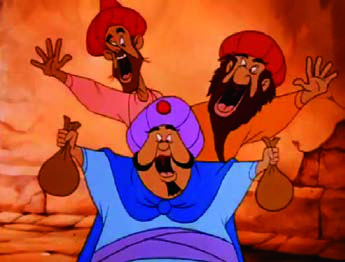
Three merchants lived in the same town and were close friends. They agreed to work together and share their profits, so they left their home town for a distant land. After a long journey they reached a town, began selling their goods, and trade went well. Soon they had a lot of money. In those days there were no banks, so they left the money with an old man they trusted. He was in charge of a bathhouse.
When they handed over the bag of money, one of them told the old man, "Please keep this money until we ask for it. It belongs equally to all three of us, so give it back only when we are all present." The old man agreed. But one of the three friends was dishonest. One day, as they passed the bathhouse, he said he was going to buy a bath ticket. At the little window he did not ask for a ticket at all. He asked for the bag of money.
The old man refused at first and repeated the agreement: the money would come back only when all three were present. The dishonest man replied, "You are quite right. Look out of the window and you will see that the others are with me." The old man looked, saw the two friends waiting outside, and was satisfied. He handed the money over. The dishonest man pocketed the bag, told his friends a story about his grandfather being ill, and left.
Days later the two friends asked the old man for their money. He said he had already given it to their friend while they were with him. They did not believe him and took him to the judge, who ordered the old man to pay the money back the next day. The poor man did not know what to do, so he went to the village where his friends lived, and one of them gave him good advice. The next day he told the judge, "I am ready to pay back the money when the three men come to me together and ask for it. Until they appear together, I shall keep the money." The judge agreed: "You are quite right. That is what you promised to do, and the law cannot make you break your promise."
The old man was saved by his own promise. He had agreed to return the money only when all three merchants were present, so as long as the dishonest one stayed away, nobody could force him to pay. One piece of clever advice turned the trap around.
Stress: The Beat Inside a Word
Stress is the extra force we put on one syllable of a word. The stressed syllable sounds louder and a little longer than the others, like the strong beat in a song.
English words are not spoken flat. In merchant the first part is strong: MER-chant. In appear the second part is strong: a-PPEAR. Saying the stress in the wrong place can make a word hard to recognise, so practise these words from the unit aloud, hitting the capital letters harder.
| Word | Say it with the strong beat |
| merchant | MER-chant |
| dishonest | dis-HON-est |
| appear | a-PPEAR |
| distant | DIS-tant |
| promise | PROM-ise |
| hand over | hand O-ver |
| bathhouse | BATH-house |
| agreement | a-GREE-ment |
| amount | a-MOUNT |
| judge | one strong beat: JUDGE |
Making Suggestions
Imagine your friend has a toothache. English gives you several polite ways to tell them what to do, and each one has its own shape. Learn the shapes, because each one controls the form of the verb that follows it.
You should / You shouldn't + plain verb gives direct advice. "You should go to a dentist." "You shouldn't have a cold drink."
How about / What about + verb-ing makes a friendly suggestion as a question. "How about taking a painkiller?" "What about buying him a watch?"
Why don't you + plain verb suggests by asking. "Why don't you go to a dentist?" With we it invites the whole group: "Why don't we make a birthday cake for him?"
If I were you, I would + plain verb gives advice by imagining yourself in the other person's place. "If I were you, I would go to a dentist."
Let's + plain verb and Shall we + plain verb suggest doing something together. "Let's go to the shopping mall." "Shall we buy him some socks?" To accept, say "That sounds good" or "That's perfect". To refuse politely, say "I don't think that's a good idea" or "I don't think so".
After How about and What about the verb always takes -ing. "How about taking a painkiller?" is right; "How about to take a painkiller?" is wrong. After should, why don't you, let's and would, the verb stays plain: "You should go", never "You should going".
Here is how these phrases sound in a real conversation between two friends planning their afternoon.
Notice how Bimal refuses without hurting anyone: "No, let's not", and then offers something better. A good suggestion conversation is a small trade. One person offers, the other accepts, refuses with a reason, or offers something new.
Listening for Suggestions
The listening task for this unit plays eight very short conversations. In each one, speaker A has a small problem, such as being bored, hungry, ill or exhausted, and speaker B answers with a suggestion. Your job is to fill in the missing words as you hear them. Before you press play, remind yourself of the suggestion openers: Why don't you, How about, Let's, You should. They are the signposts. The moment you hear one, the next words are the suggestion itself, and those are usually the words the blanks want.
Listen the first time without writing, just to catch each speaker's problem. Listen a second time and write the missing words. Then read each completed line aloud and check that it sounds like natural English. Finally, underline every suggestion you wrote and practise saying it, because saying the structures is how they become yours.
Food Habits
Your body is a complicated piece of machinery. Many organs work together to take energy from food and keep you going all day, which is a lot like putting fuel in a car. Put the wrong fuel in a car and the engine soon starts to splutter and things go wrong. Your body is just like this. It needs the right fuel, so you need to think carefully about what you eat.
Your diet is a way of saying everything you eat.
A vegetarian is someone who chooses not to eat meat. A vegetarian may have to find ways to replace meat with another source of protein.
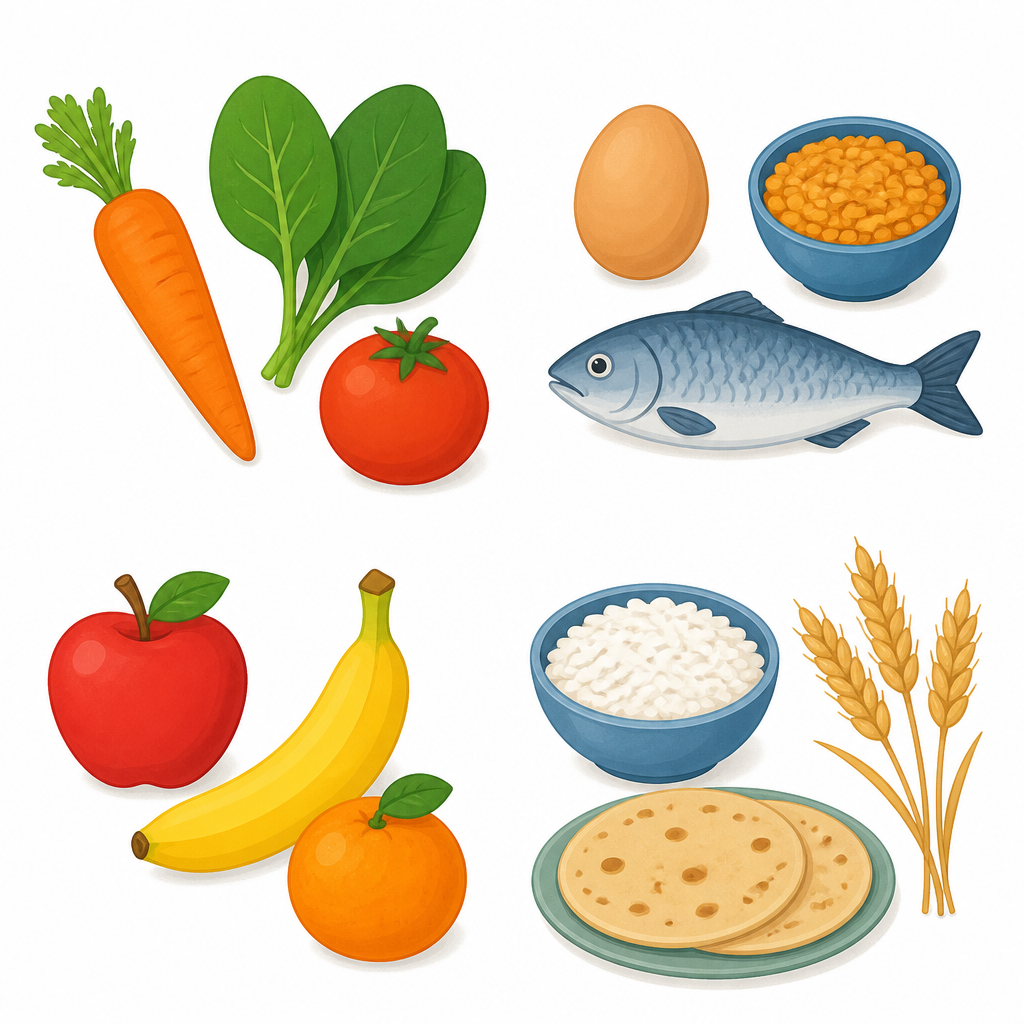
Nobody says you can never have treats like sweets and crisps. But your diet needs to be varied, interesting and enjoyable, and many people plan their meals to include a variety of vegetables, protein, fruits and grains. All of us need a balanced diet to stay healthy, just as a car needs the right fuel to keep running. All living things eat, and all living things excrete, which means they discharge waste from the body. You only get one body, so take some control over what happens to it: fuel it properly, exercise it, and try to lead a balanced and healthy life.
The Second Conditional
The bird song, the sentence "If I were you, I would go to a dentist", and a daydream like "If I won the lottery, I would buy a big house" all share one grammar. It is called the second conditional, and it is the pattern English uses for situations that are imagined, unlikely or simply not true right now.
The second conditional is built as If + past simple, then would + plain verb: "If I had his number, I would call him." It talks about an unreal or unlikely situation and its imagined result. "If I won the lottery, I would buy a big house" means I probably will not win the lottery.
Study what each sentence quietly admits about reality. "She would pass the exam if she ever studied" admits that she never studies, so passing will not happen. "If I had his number, I would call him" admits that I do not have his number, so calling is impossible. "If we had a garden, we could have a gardener" admits that we do not have a garden. The past tense in the if part does not point to past time at all. It is the signal that we are imagining.
Never put will or would inside the if part. "If I had a bike, I would go to Mustang" is right; "If I will have a bike" is wrong. And with the verb be, use were for every person in imagined sentences: "If I were you", "If she were here", never "If I was you" in this pattern.
Try building your own. Take something you do not have, put it in the if part with a past tense, and put your dream in the would part: "If I had a horse, I would ride it to school." "If we lived by the sea, we would swim every morning." Once the pattern clicks, you will hear it everywhere, from songs to wishes to advice.
Writing Your Advice
The unit asks for three pieces of writing, and all three use what you have just learnt. First, think about the old man in the story. His friend's advice was this: since he had agreed to give the money back only when all three merchants were present, he should tell them he would pay only when all three came together. The advice worked because the dishonest merchant could never appear, and the law protected a promise. If you were the old man, you would want to thank that friend. A thank-you message is short and warm: say what the person did, say what it saved you from, and end with your thanks. For example: "Dear friend, your advice saved me before the judge. I repeated my promise to return the money only when all three merchants stand before me together, and the judge agreed. Without you I would have paid for a thief's trick. Thank you with all my heart."
Second, write a paragraph about your own eating habits. Answer four questions in order and the paragraph writes itself: what types of food do you eat, are they healthy, do they make a balanced diet, and do you plan to change anything? Be honest. A paragraph that admits "I eat too many instant noodles, so I plan to add more fruit" is better writing than one that pretends everything is perfect.
Third, prepare a short poster message on why we should eat a balanced diet. A poster is not a paragraph. It wants one big line that catches the eye, such as "Right fuel, strong body!", and two or three short supporting lines, such as "Eat vegetables, protein, fruits and grains" and "You only get one body. Take care of it."
Project Work: A Wall of Good Advice
The unit ends with a group task about food habits. Work in a group of five and prepare a list of suggestions for your friends at school, using the structures you have practised: "You should drink plenty of water", "How about bringing fruit for tiffin?", "Why don't you eat green vegetables every day?". Write the list on chart paper in beautiful handwriting and stick the charts in different places at your school. Then look at every group's poster, vote for the best one, and give reasons for your choice. Giving a reason is part of the task: "We chose this chart because its suggestions are clear and easy to follow" is a complete answer; "We liked it" is not.
I Will Soar
The unit closes with a poem by Annette R. Hershey that runs on the same imagining grammar as the opening song. Read it aloud and listen for the second conditional in every stanza.
If I were a birdie,I'd head up to the sky.I'd spread my wings like sunshine.I know I could fly mighty high!If I were a birdie,I'd sing a lovely song.Everyone would stop and listen;They would begin to sing along.If I were a birdie,I'd flit about from tree to treeWith many different flocks of birdies.We would be free to be free.If I were a birdie,I'd head up to the sky.I'd spread my wings like sunshine.I know I could fly mighty high!
If the speaker were a bird, they would head up to the sky, spread their wings like sunshine and fly mighty high. They would sing a lovely song that everyone would stop to hear and then sing along with, and they would flit from tree to tree with many different flocks, free to be free. Every one of those dreams is carried by I'd, which is short for I would, the result half of the second conditional you now know.
The full lesson is waiting for you
The notes are free to read in full. A free account opens the rest of the practice, and tracks your progress and confidence score for every subject. Presentations and videos need approval from Learn Yeti.