Asking for Help and Offering It
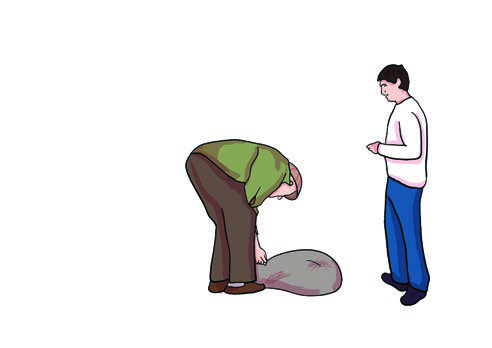
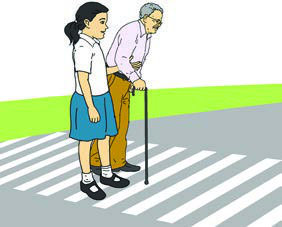
Every day we need other people. A man bends over a heavy sack he cannot lift alone. An old man with a walking stick waits at a zebra crossing. A boy falls asleep in a stuffy room. A student sits stuck on a difficult page. In every one of these moments somebody either asks for help or offers it, and the words they choose matter. This unit is about those words: how to ask politely, how to say yes warmly, and how to say no without hurting anyone.


A song carries the same idea. It asks us not to close our hearts, because kindness is hidden inside every person, and to keep our eyes open, looking everywhere for the good in the world.
PleaseDon't close your heartIt is so big insideSearch for treasureKindness is hiddenunder the veinsinside the cageDon't close your eyesLookdeep in the oceanup in the skyright and leftand let them rest
The poem tells us not to do two things: not to close our heart, and not to close our eyes. A closed heart cannot feel kindness, and closed eyes cannot see who needs it.
Kisa Gotami and the Mustard Seed
Kisa Gotami lived in a village of Nepal. Her husband died soon after their son was born, so the little boy became her whole world. She worked for him and lived for him, and her days passed happily. Then one unfortunate day the boy fell sick and died. Kisa could not believe it. She refused to accept that her dear son had left her forever. She cried and cried and was in total grief.
The villagers came and consoled her. They advised her to prepare for the funeral, but she refused. Instead she carried the dead body in her arms and went around the village from door to door, begging people to bring her son back to life. The villagers could see that nothing could be done, but Kisa believed her son would come back. She spent days with the body. She let nobody touch it, and she would not take it to the graveyard.
An old man of the village saw her pain and gave her advice. He told her to go to Gautam Buddha, who has the remedy for all the pains and sufferings in our lives. Kisa was happy to hear this. She asked, could Gautam Buddha really do that? When the old man confirmed it, she took her son in her arms at once and ran to Gautam Buddha, who was meditating under a Peepal tree.

Kisa cried, 'Gautam Buddha, my lord, will you please help me? I have heard that you have magic and power. Would you please use them to restore my son back to life?' Buddha thought for a while and agreed to help, but on one condition: Kisa must do exactly as he said. He asked her to bring him a handful of mustard seeds from a house where no family member has ever died.
Kisa became hopeful and excited. She knocked on the first door and asked, 'Could you please lend me a handful of mustard seeds to bring my son back to life?' The neighbour happily agreed. But as the neighbour turned to fetch the seeds, Kisa remembered Buddha's condition and asked, 'Has anyone died in your house?' The neighbour had lost his father only a year before. Kisa said she was sorry, but she could not take the seeds from him. At the next door, the grandmother of the family had passed away a few weeks earlier. Door after door, the answer was the same. Some families had lost a daughter, some a mother; for some it was years ago, for some only days.
What Kisa Learnt
Kisa never found a house that death had not visited, and that was exactly the lesson Buddha wanted her to discover for herself. Death takes away everybody one day. It is inevitable. It was not that only she had lost a dear one; people die in everybody's house. When you are born, you are destined to die one day. Understanding this did not bring her son back, but it lifted her out of her refusal and let her grieve, accept, and live again.
Buddha did not give Kisa a lecture. He gave her a task, and the task let her find the truth with her own eyes. A truth you discover yourself is one you never forget.
Tongue Twisters
A tongue twister is a sentence or rhyme that is difficult to say quickly because the same or similar sounds are repeated again and again. Saying tongue twisters aloud trains your tongue and lips to pronounce English sounds clearly.
Practise saying these aloud, slowly at first, then faster. Do not worry about mistakes; stumbling and trying again is the practice.
- Peter Piper picked a peck of pickled peppers. A peck of pickled peppers Peter Piper picked. If Peter Piper picked a peck of pickled peppers, where's a peck of pickled peppers Peter Piper picked?
- Betty Botter bought some butter. But she said the butter's bitter. If I put it in my batter, it will make my batter bitter. But a bit of better butter will make my batter better. So it was better Betty Botter bought a bit of better butter.
- How much wood would a woodchuck chuck if a woodchuck could chuck wood?
The first twister drills the p sound, the second contrasts the short u and short i sounds in butter, bitter, batter and better, and the third drills w and ch. Notice that the third one is itself a sentence with would and could, the very verbs this unit teaches.
Making Requests and Responding
A request is a polite way of asking someone to do something for you, or to give you something. In English, requests usually begin with will, would, can or could, and they often carry the word please.
A response is what you say when someone makes a request to you. A response can accept the request, such as 'Sure, here you are', or refuse it politely, such as 'I'm sorry, I can't'.
Look again at the story. Kisa asks Buddha, 'Will you please help me?' and 'Would you please use them to restore my son back to life?' She asks the neighbour, 'Could you please lend me a handful of mustard seeds?' The neighbour responds, 'Yes, I can surely do that.' Requests and responses are not a separate grammar topic; they are how real people speak to each other, even in an old story.
| Requests | Responses |
| Can you show me your photo album please? | Sure, here you are. |
| Will you lend me your book please? | Of course. |
| Could you show me the way to the post office please? | I'm afraid I can't. |
| Would you help me with this exercise please? | I'd love to but I'm busy today. |
| Could you please lend me some mustard seeds? | No, I'm sorry, I need it. |
When you refuse, soften the refusal. 'No' by itself sounds rude. 'I'm sorry, I need it' and 'I'm afraid I can't' both say no, but they show respect for the person asking. When you accept, sound willing: 'Sure', 'Of course', 'I'd love to'.
Never refuse a request with a bare 'No'. Add an apology or a reason: 'I'm sorry, I can't. I'm using it right now.' The reason is what keeps the friendship.
Now practise with real situations. Take turns with a partner to make the request and to respond.
- You want to find out where the nearest bus stop is. Ask a stranger politely.
- You want to fill a water bottle at a coffee shop. Ask the person at the counter.
- You have lost your pencil and need to write. Ask a classmate.
- You want your friend to go to the cinema with you tomorrow. Invite them.
- It is raining and you want to borrow your friend's umbrella. Ask them.
- You want to know the time but you have no watch. Ask someone nearby.
The Listening Task: Invitations and Replies
The listening task plays six short dialogues. In each one, speaker A invites speaker B somewhere: to a new art gallery, to sing karaoke, to a technology show, to a concert at the stadium, to a big sale, and to a horror movie. Your job is to complete each printed dialogue with the missing words, phrases or sentences that you hear.
Before you press play, read the printed lines carefully. Each blank sits either in the invitation or in the reply, so you already know what kind of words to listen for. In the invitation, listen for the inviting phrase, such as a question beginning with would you like or do you want. In the reply, listen for whether B accepts or refuses. An accepting reply sounds happy and is followed by enthusiasm, like 'It sounds like fun.' A refusing reply is followed by a reason, like 'I have to study for exams at the weekend' or 'I have to work tonight.'
- Read all six dialogues first and predict what each blank might say.
- On the first listening, do not write. Just follow the conversations with your finger.
- On the second listening, fill the blanks with the exact words you hear.
- Check that each completed reply matches its follow-up sentence. A reply followed by a reason must be a refusal, and a reply followed by excitement must be an acceptance.
- Afterwards, work in pairs and act out the dialogues aloud, practising the pronunciation of the expressions with your teacher.
In listening tests, the sentence after the blank is your best clue. It tells you whether the missing words accepted, refused, asked or answered.
Will, Would, Can and Could in Requests
Will, would, can and could are modal verbs. A modal verb comes before the main verb and changes its meaning, showing politeness, ability, willingness or possibility. A modal verb never changes its form and is always followed by the base form of the main verb.
Study these sentences. Each one is a polite way of asking for something.
- Will you help me please?
- I would like a drink please.
- Would you mind turning off the music please?
- Could you pass the juice please?
- Can you pass the salt please?
All five make requests, but they are not equally formal. Can is friendly and casual, good for family and friends. Will asks directly but politely. Could and would are softer and more polite, the right choice with strangers, elders and teachers. Would you mind is the most careful of all, and notice that it is the one exception to the base-verb rule: after would you mind, the verb takes -ing, as in 'Would you mind turning off the music?'
After will, would, can and could, use the base form of the verb, with no 'to', no -s and no -ing. 'Could you please to send me the money' and 'I would liking a drink' are both wrong. Say 'Could you please send me the money' and 'I would like a drink'. Also keep the word order fixed: 'Could you please bring my keys?', never 'Could please you bring my keys?'
More Uses of Can, Could, Will and Would
These four verbs do much more than make requests. Study these sentences and notice what each one is doing.
- Could you please do me a favour? This is a polite request.
- I've finished my work. Can I go now? This asks for permission.
- Would you like some help? This is a polite offer.
- Can I help you? This is a friendly offer.
- Will you stop talking like that please? This is a request that is almost a command.
- Would you like some cake? This offers food politely.
- Would you mind closing the window please? This is a very polite request.
- Will you give me a hand please? This asks for help directly.
Beyond requests, offers and permission, these verbs also talk about ability. Can shows present ability: Raju can speak six languages. Could shows past ability: she could swim when she was just five, and he ran as fast as he could. Will shows the future and promises: who will cook dinner today, and I will get you a shawl from Kashmir. Would reports a past promise: he said that he would help, but he didn't. The negatives matter too: can't shows something is not possible now, as in she's seven but she can't read yet, and won't refuses or denies the future, as in you won't lose any more weight because you eat a lot.
A Letter to the Editor
A letter to the editor is a formal letter written to a newspaper or magazine about a public problem, so that many readers and the responsible people come to know about it. It is one of the oldest ways for an ordinary citizen to raise a voice.
A model of this kind of letter is written by Nitin Rai of Kathmandu, dated 19th September 2021, to the Editor of The Rising Nepal. Its subject line reads 'Air pollution, a concern.' Through the newspaper, Nitin highlights the problem of air pollution in his city. He writes that air pollution is an environmental problem on the rise, that factories are the major source of air and water pollution, and that polluted air leads to suffocation, breathing problems and lung diseases when our lungs are choked. The thick smoke emitted by factory chimneys is full of poisonous gases, which mix with pure air and pollute it. He argues that factory owners should take responsibility for the environment around them, and that there should be a strict law to punish owners who do not take the moral responsibility to keep the air clean. He signs off with 'Yours faithfully' and his name.
The shape of the letter is as important as its message. Learn the parts in order.
| Part of the letter | What it holds |
| Sender's address and date | The writer's place and the date, at the top: Kathmandu, 19th Sep, 2021 |
| Receiver's address | The Editor, The Rising Nepal, Kathmandu, Nepal |
| Subject | The problem in a few words: Air pollution, a concern |
| Salutation | Dear Sir/Madam |
| Body | The problem, its causes, its effects, and what should be done |
| Closing and name | Yours faithfully, Nitin Rai |
Writing Your Own Letter
Now think about your own locality. Is there a public problem there, such as noise, traffic jams, blocked drainage, scattered rubbish or broken street lights? Write a letter about it, either to the editor of a local newspaper or to your ward chairperson. Follow the model above.
- Write your address and the date at the top left.
- Write the receiver's address: the editor with the newspaper's name, or the ward chairperson with the ward number.
- Give a short subject line naming the problem.
- Greet with Dear Sir/Madam.
- In the body, first name the problem, then explain what causes it and how it harms people, and finally say clearly what you want done.
- Close with Yours faithfully, and write your name.
At the Tailor's Shop
Polite requests fill real conversations, such as this one between a tailor and a customer ordering a woollen suit. Act it out in pairs, and notice how many sentences begin with would, will, may and can.
The dialogue takes place at a tailor's shop, between a tailor and a customer. The customer is a man, which we know because the tailor calls him sir all the way through. The suit will be ready in about three weeks. At the end, the customer sees the price of seven hundred and seventy-seven rupees on the price list and decides to go elsewhere, because he finds the charge too high. Even then, both men stay polite to the last word.
Project: Requests Around Your School
Requests are all around you in writing too. Work in a group of five. Go around different sections of your school: the library, the staff room, the head teacher's room, the canteen. Find the requests written in the notices in those areas, such as 'Please keep silence' or 'Please return books on time'. If a notice is in Nepali, translate it into English. Write all the requests you collect on chart paper. Then choose the ones that apply to your own class, write them on another piece of chart paper, and stick it on your classroom wall.
The full lesson is waiting for you
The notes are free to read in full. A free account opens the rest of the practice, and tracks your progress and confidence score for every subject. Presentations and videos need approval from Learn Yeti.