Asking politely with may and can
Every day you ask people to let you do things. You ask your mother to let you use the phone, you ask your teacher to let you leave the room, you ask a friend to let you borrow a pen. In English this is called asking for permission, and the polite words for it are can I, may I, and do you mind if I. Read this short talk between a daughter and her mother at bedtime.
Notice three things. The daughter asks with a question, not an order. The mother answers clearly, once with no and once with yes. And the daughter says thank you at the end. That is the whole shape of polite permission, and this unit practises it in speaking, in a poem, and in letters and emails.
A song you can count on
This little song hides a grammar lesson inside it. Sing it and watch which things can be counted one by one and which cannot.
I can't count foodBut I can count fishI can't count waterBut I can count glassesI can't count breadBut I can count slicesI can't count knowledgeBut I can count subjectsHow many fingers am I holding up?How much money do you have?How many people make you laugh?
You cannot say one water, two waters. But you can say one glass, two glasses. Water itself cannot be counted, so we count the glasses that hold it. Bread cannot be counted, so we count slices. The last three lines give away the second secret: things we can count take how many, and things we cannot count take how much. Keep this song in your head, because the grammar of this unit grows straight out of it.
The Small Bird's Wisdom
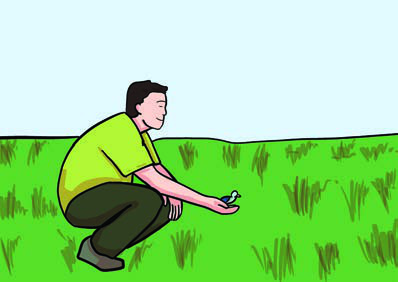
A rich man was walking through his garden one spring morning when he found a small bird caught in a net. He picked it up, and to his surprise the bird spoke. It begged to be set free, saying there was nothing it loved more than its freedom. The man asked why he should let it go. The bird answered honestly: it was too small to eat, its feathers were grey, it was not pretty, and it could not sing. In return for its freedom, it offered the man three pieces of advice.
- First, do not wish for what you cannot have.
- Second, do not try to change what has already happened.
- Third, do not believe in what is impossible.
The man called these wise words and opened his hand. The bird flew up to a branch overhead and began to laugh. When the man asked why, the bird said, You do not know that inside me I have a diamond the size of a chicken's egg. The man's eyes grew dark, his heart stopped beating for a moment, and he could hardly catch his breath. He begged the bird to come back. He promised to keep it warm and feed it through the long winter, when the snow would be deep and the bird would starve in the cold.
The bird only laughed again. You are like all men, it said. You have already forgotten my advice. You wish for what you cannot have, because I will never give up my freedom. You try to change what has already happened, but you have set me free and cannot take it back. And you believe in the impossible, because how could a small bird like me hold a diamond the size of a chicken's egg? Then, still laughing, the small bird flew away.
The story tests its own advice on the man within minutes of his hearing it. Wisdom is easy to praise and hard to practise. The bird's three rules are the moral: accept what you cannot have, accept what has already happened, and do not be fooled by the impossible.
Long and short vowel sounds
English spelling does not tell you the sound. Two words can share the same letters and still carry different vowel sounds, and the only way to learn them is to say them aloud and listen. Say each pair below slowly and feel how the vowel changes in your mouth.
| Pair | What your ear should catch |
| sing, reach | A short i sound against a long ee sound |
| you, soon | Both are long oo, but you begins with a y glide |
| starve, warm | Both are spelt with ar, yet starve says ar and warm says aw |
| just, first | A short u sound against a long ur sound |
| breath, cream | Both are spelt with ea, yet breath says short e and cream says long ee |
| laugh, haunt | Both are spelt with au, yet laugh says ah and haunt says aw |
The lesson is simple. Never trust the letters alone. When you meet a new word, listen to your teacher say it, copy the sound, and check a dictionary if you are unsure.
Countable and uncountable nouns
A countable noun names something you can count one by one. It has a singular and a plural form: one bird, two birds; one glass, three glasses; one subject, five subjects.
An uncountable noun names something that cannot be counted one by one, such as water, bread, milk, freedom, advice or knowledge. It has no plural form and is never used with a or an.
The story of the small bird is full of both kinds. The man, the bird, the net, the feathers, the tree, the diamond and the egg can all be counted. Freedom, advice, breath and snow cannot. That is why the bird gives three pieces of advice and never three advices: when we need to count an uncountable thing, we count its containers or pieces instead, a glass of water, a slice of bread, a piece of advice.
The little words in front of a noun follow from this. Use a before a countable noun that begins with a consonant sound, and an before one that begins with a vowel sound: a lemon, a new phone, an apple, an idea, an umbrella. Use some before plurals and before uncountable nouns: some books, some chicken, some more tea. So you would say, I've got a lemon, an apple and some chicken.
Some nouns change sides with their meaning. Coffee is uncountable when it means the drink in general, I love coffee, but in a cafe you may say a coffee, meaning one cup. And paper, money, news and advice stay uncountable in English even though many students want to count them. Never write a paper for a sheet, or advices.
Listening for details at work
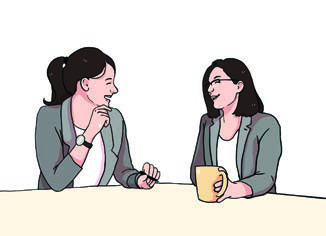
The listening task in this unit plays an audio of two women talking about the rules at a company: the lunch break, the working hours, the dress code and the vacation days. Before you press play, look at the picture and guess. Where are the women? Where might they work? What could they be talking about? Guessing first is not cheating. It wakes up the words you are about to hear.
Then you listen and complete six sentences with only one word each. Read the sentences before listening and predict what kind of word each blank wants. The lunch break lasts for a number of minutes, so listen for a number. Everyone works from some time to 4 p.m., so listen for a time. A company that does not allow casual clothes has a dress code, so listen for the word that goes with code. Your predictions are checked, and corrected, only by the audio itself.
- Read all six sentences before the audio starts.
- Decide what kind of word each blank needs: a number, a time, or a noun.
- Write only one word in each blank, exactly as you hear it.
- After listening, try to write down as many questions from the audio as you remember.
Giving and refusing permission
There are three common ways to ask for permission, and they rise in politeness. Can I is friendly and everyday. May I is more polite and respectful, the form you use with teachers and elders. Do you mind if I is the softest of all, because it asks about the other person's feelings first.
| Giving permission | Refusing permission |
| Yes, you can. | I'm afraid you can't. |
| Yes, you may. | I'm sorry. |
| Sure. / Sure, go ahead. | No, you can't. |
| No problem. | |
| Yes, certainly. | |
| No, no I don't mind. |
Do you mind if I open the window? asks whether opening it will trouble the person. So the answer that GIVES permission is No, I don't mind, and the answer that refuses is Yes, I do mind. Saying yes here does not mean yes, go ahead. Many students get this backwards.
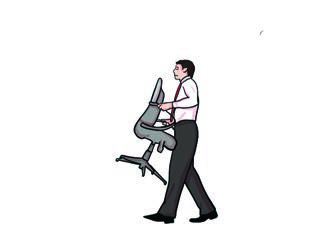
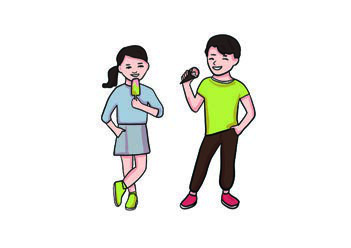
Now practise with a partner. For each situation below, one of you asks for permission and the other gives it or politely refuses it. Take turns, and use a different expression each time.


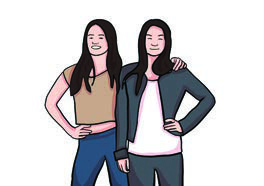

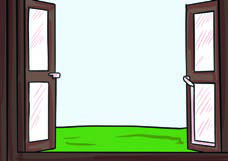
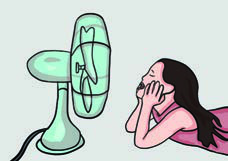
May I go now? A poem about leaving
The unit's second reading turns the language of permission into something much deeper. In this poem by Susan A. Jackson, the speaker is a person at the very end of a long life. They are tired and in pain, and they are gently asking the people who love them for permission to die in peace. Read it slowly.
Do you think the time is right?May I say goodbye to pain filled daysAnd endless lonely nights?I've lived my life and done my best,an example tried to be.So can I take that step beyondand set my spirit free?I didn't want to go at first,I fought with all my might.But something seems to draw me nowto a warm and living light.I want to go I really do.It's difficult to stay.But I will try as best I canTo live just one more day.To give you time to care for meand share your love and fears.I know you're sad and afraid,Because I see your tears.I'll not be far, I promise that,and hope you'll always knowthat my spirit will be close to youwherever you may go.Thank you for loving me.You know I love you too,that's why it's hard to say goodbyeand end this life with you.So hold me now just one more timeAnd let me hear you say,because you care so much for me,You'll let me go today.
The speaker is satisfied with the life they have lived, I've lived my life and done my best. They fought death at first with all their might, but now something draws them towards a warm and living light. Still, leaving is hard, not because of fear but because of love: it's hard to say goodbye. They comfort their family with a promise that their spirit will stay close, and they ask for one last thing, to be held one more time and told, out of love, you'll let me go today. The poem shows that asking permission is not only for windows and pens. It can be the tenderest sentence a person ever speaks.
Rhyming words are words whose endings sound the same, like might and light, or stay and day. Poets place them at the ends of lines to give a poem its music.
Some, any, how much and how many
Some is used in positive sentences with plural countable nouns and with uncountable nouns: There are some pens. There's some milk in the fridge. It is also used in polite offers and requests: Would you like some more tea?
Any replaces some in negative sentences and in most questions: I don't have any pens. There isn't any salt. Have you got any friends?
How many asks about the number of a countable noun: How many chairs do we need? How much asks about the amount of an uncountable noun: How much milk have we got?
Put the pieces together and the pattern is easy to hold. With one countable thing, use a or an: I don't have a dog. It is a dog. With plurals and uncountable things, use some when the sentence is positive and any when it is negative or a question: Tim eats some cheese every day, but we don't have any bread. And when you ask about quantity, let the noun choose the question word: how many books, because books can be counted, but how much milk, because milk cannot.
Writing an email to your teacher
An email asking for leave is a real piece of writing you will need in life. It is short, polite and complete. It says who you are, what you are asking for, for which dates, and why. It also promises to make up for the missed work, because you are asking a favour and showing responsibility earns it.
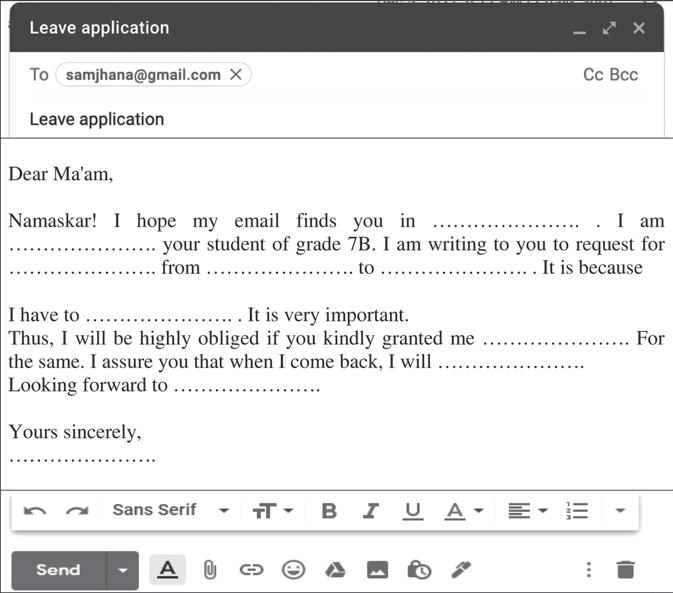
- To: the receiver's email address, typed correctly.
- Subject: a few words that say what the email is about, such as Leave application.
- Greeting: Dear Ma'am, or Dear Sir, followed by a comma.
- Body: who you are, what you request, from which date to which date, and why.
- Promise and thanks: say you will cover the missed lessons, and that you look forward to a positive reply.
- Closing and name: Yours sincerely, then your full name.
The friendly letter
A friendly, personal or informal letter is written to friends, family or relatives. It is warmer than an email to a teacher, but it still has a fixed shape with five parts, and every part sits in its own place on the page.
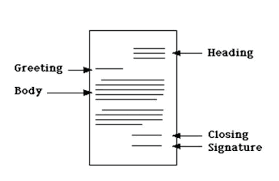
- Heading: your address and the date, at the top right of the page.
- Greeting: Dear Someone, with a comma at the end.
- Body: your message to your friend, in clear paragraphs.
- Closing: a warm phrase like Your friend, or Love, ending with a comma.
- Signature: your first and last name, under the closing.
There is even a song that teaches the shape, and singing it once fixes the five parts in order.
I am a friendly letter.My heading's at the top.Slide over to the right toWrite the date & then I stop.And then I put "DearSomeone" a comma (,) at the end.Next I go write the body,My message to my friend.I choose a closing like "YourFriend" or "Love" forever more.I end it with a comma (,) ofThat I'm very sure.I sign my first & last nameAnd now I'm at the end.And my perfect friendly letter,I'm ready now to send!
Now use the shape twice. First, write a letter to your sister who lives away from home, asking her permission to join your school's educational tour to Lumbini with your friends. Second, as project work with three classmates, write a request letter to your headteacher asking permission to use the football ground for a science exhibition your group is organising. Both letters are permission letters, so the speaking phrases of this unit go straight into your writing: I am writing to ask your permission, I would be grateful if you allowed us, I look forward to your positive reply.
Words that sound alike
Homophones are words that have the same pronunciation but different spellings and different meanings, like night and knight, or right and write.
Your ear cannot tell homophones apart, so your eye and a dictionary must. When you hear a word, the sentence around it tells you which spelling is meant: the principal of a school is a person, but a principle you live by is a rule. The full list of pairs to learn is in the vocabulary section, and it is worth checking each pair in a dictionary and writing one sentence for each word.
The full lesson is waiting for you
The notes are free to read in full. A free account opens the rest of the practice, and tracks your progress and confidence score for every subject. Presentations and videos need approval from Learn Yeti.