Telling Others What Someone Said
Every day you pass on things you have heard. A friend tells you something true, and later you tell someone else. In English there is a fixed way to do this. You name the speaker, add the word said, then the word that, and then repeat the fact. If Raju says two plus two is four, you tell your friend: Raju said that two plus two is four. If he says the Sun is a star, you report: Raju said that the Sun is a star. Notice that the fact itself does not change at all.

Reported speech is telling someone what another person said, using a reporting verb such as said or told, without repeating the speaker's exact words inside quotation marks.
Try it with two more of Raju's facts. There are countless stars in the sky becomes Raju said that there are countless stars in the sky. The Earth moves round the Sun becomes Raju said that the Earth moves round the Sun. The verbs stay in the present simple, and the reason for that is explained in the grammar section below.
A Song of Riddles
The unit opens with a song made of riddles. Each verse describes an animal without ever naming it, and your job as a listener is to catch the clues: what covers its body, what it eats, how it moves, how its babies are born. Guessing well is a listening skill, because you must hold every clue in your head until the last line.


- The first verse describes a creature with a hard shell and no legs to speak of. It feeds on plants and leaves and lays tiny eggs. Those clues point to a tortoise or a turtle.
- The second verse describes a big brown hunter with sharp teeth and claws that runs, hunts and eats deer. Those clues point to a lion.
- The third verse describes a long grey swimmer with strong fins and no wings that feeds on small fish. Those clues point to a shark.
Reading: Elephants
Elephants are the largest land mammals on Earth, and they are among the most unique looking animals too. An elephant has a long nose called a trunk, large floppy ears, and wide, thick legs. No other animal has a similar physical structure, which is why an elephant can never be mistaken for anything else.

There are two species of elephants, the Asian and the African, and they live on separate continents. African elephants live in Sub-Saharan Africa and in the rainforests of Central and West Africa. Asian elephants live in Nepal, India and Southeast Asia, in scrub forest and rainforest. So the elephant a child in Nepal might see belongs to the Asian species.
| Feature | African elephant | Asian elephant |
| Home | Sub-Saharan Africa, rainforests of Central and West Africa | Nepal, India and Southeast Asia, in scrub forest and rainforest |
| Height | grows to about 13 feet | grows up to 8.9 feet |
| Weight | about 6,350 kilograms | about 4,990 kilograms |
| Lifespan | up to 70 years | up to 60 years |
| Fingers on the trunk | two | one |
| Tusks | both males and females grow large tusks | usually only males grow large tusks; females and a few males have small tushes |
Tusks are large, deeply rooted teeth. They evolved to help the elephant dig, lift, gather food and defend itself, and they also protect the trunk. Just as human beings are left handed or right handed, every elephant is right tusked or left tusked. The dominant tusk is easy to spot because it is more worn down than the other one. The small tusks of female Asian elephants are called tushes, and tushes do not always grow outside the mouth.
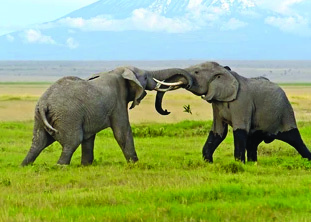
Both species eat every type of vegetation: grasses, fruits, leaves, bark and roots. An elephant spends around 18 hours a day consuming food, and it eats about 75 to 150 kilograms every day. Elephant groups follow a matriarchal structure, which means the eldest female is in charge. This matriarch teaches the young how to socialise with other elephants, and the herd watches over the well-being of every member, caring for the weak and the injured. Herds are made up mainly of female family members and young calves, and when a family grows too large the herd splits into smaller groups. Usually a single calf is born after a pregnancy of 22 months. Males and females become sexually mature at 8 to 13 years of age, and at that age the males leave the herd to live alone or in small bachelor herds.
An elephant herd is a family of mothers, aunts and calves led by the eldest female. The grown males live outside it, alone or in bachelor herds.
Speaking: Passing on Facts About Elephants
Different people state different facts about elephants, and your task is to report each one to a partner. The pattern is the one you already know: name the speaker, use said that, and keep the fact exactly as it is. The teacher said that elephants are the world's largest land animals. Practise with these.
- You can identify the two species apart by their ears. Reported: He said that you can identify the two species apart by their ears.
- Their trunks are flexible. Reported: She said that their trunks are flexible.
- Their tusks are actually teeth. Reported: He said that their tusks are actually teeth.
- They have got thick skin. Reported: She said that they have got thick skin.
- They communicate through vibrations. Reported: He said that they communicate through vibrations.
- Calves can stand on their own within 20 minutes of birth. Reported: She said that calves can stand on their own within 20 minutes of birth.
Grammar: Reporting Facts That Are Always True
When we report ordinary sentences, the tense usually moves back into the past. Facts are different. A fact that is always true, such as snow is white or water boils at 100 degrees centigrade, stays in the present simple even though the reporting verb said is past. The fact was true when it was spoken, it is true now, and it will be true tomorrow, so its verb does not move.
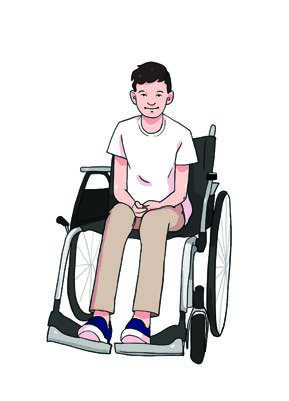
When the statement being reported is a universal truth or a general fact, the verb stays in the present simple after said that or told us that. Pattern: speaker + said that + fact in the present simple. Example: My father said that the Earth is round.
Do not shift a fact into the past when you report it. The teacher said that the Sun rose in the east is wrong, because the Sun still rises in the east. Write: The teacher said that the Sun rises in the east.
Said never takes the listener straight after it, but told always does. She said that man is mortal. She told us that man is mortal. Never write she said us or she told that.
Listening: Voice Messages
A voice message is a spoken message recorded for a person who cannot answer the phone at that moment, so that they can listen to it later. You leave one when the person you are calling does not pick up or is busy.
The listening task plays a voice message from a speaker named Ellen about her family moving into a new house and celebrating with a party, and every answer must use no more than two words. Before the audio starts, read the questions, because they tell you exactly what to catch. You are listening for a few small, sharp pieces of information, not for every word.
- When the family is moving into the new house.
- What function they are going to have when they celebrate.
- The day of the party and the time of the party.
- The name of the house.
- The thing the speaker wants Nadia to bring.
The second listening task is dictation. You listen to the recording and write everything you hear, and the teacher pauses the audio so you have time to write. Listen to the whole sentence first, write during the pause, and check your spelling and punctuation when the audio moves on. The answers come from the recording itself, so never guess them from anywhere else.
Writing Short Messages
A voice message written down looks like a very short letter. People send messages like this all the time: to wish a friend a happy birthday, to congratulate someone on passing an exam, to ask about a coat left behind at a party, or to correct a mistake about the day of football practice. A good short message has three parts and says one thing clearly.
- A greeting that names the person, such as Dear Urgen or Hi Nitu.
- The message itself, in one to three clear sentences.
- Your own name at the end, so the reader knows who sent it.
Here are three model messages. For a festival: Dear Sita, Happy Dashain! May the festival bring you joy, good health and success. Rita. For a change of time: Dear Anil, Our school starts at 9:00 a.m. tomorrow. Please come on time. Bimal. For a postponed match: Dear Suman, The cricket match for tomorrow has been postponed. It will now be played the day after tomorrow. See you on the ground. Kiran.
Reading: Use of a Personal Computer
The second reading is a talk by a girl named Isabella about using a personal computer. Computers are among the most used electronic devices in this era, and using one follows a general process. You press the POWER button to turn the computer on. This button sits in different places on different models, and it usually shows a circle with a line down the middle. When the computer starts, the screen lights up. The screen works like a television screen, and it is also called the monitor or the display.

The keyboard carries keys with special functions. The function keys sit on the top row, numbered F1 to F12, each with its own task, and the F1 key usually opens the help screen. Numerical keys can sit on the right hand side. When you type a document, the Home key takes you to the beginning of the document and the End key takes you to the end. The Delete key removes text from the document, while Backspace erases to the left of the cursor. The Ctrl key combines with letters for quick actions in Word and other programmes; for example, Ctrl + V pastes something you have copied.
Backspace erases to the left of the cursor, but Delete removes text in the document. They are not the same key, and pressing the wrong one rubs out the wrong text.
The mouse is a hand-held device that moves the cursor, the little arrow on the screen that shows where you are. It has two clicking options, right click and left click, and you choose based on your purpose. A laptop or notebook computer usually has a mouse pad instead of a mouse, though a mouse and a keyboard can be connected externally too. Finishing matters as much as starting: when you are done, turn the computer off properly.
- Move the mouse to the START button. Its place may vary with the programme you are using.
- Click START, then click the SHUT DOWN button.
- Remove the power cables, if there are any.
Grammar: The Zero Conditional
Look at these sentences. If you heat water, it changes into vapour. If you heat ice, it melts. You get burned if you touch a fire. Each one states something that happens every single time, a general truth about the world. English builds such sentences with the zero conditional.
The zero conditional describes things that are always true. Both parts use the present simple: If + present simple, + present simple. Example: If people eat too much, they put on weight. The if part can also come second: You get water if you mix hydrogen and oxygen.
When the if part comes first, a comma separates the two halves. When it comes second, no comma is needed. The result can even be a command, as in: If you want to pass the exam, study hard. These sentences and reported facts belong together in this unit for one reason: both are about truths that never change.
Do not put will into a zero conditional. If you freeze water, it will become solid sounds close, but the rule for things that are always true is present simple in both parts: If you freeze water, it becomes solid.
Writing Instructions
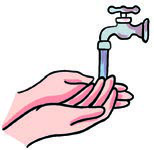
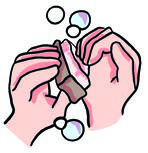
Instructions tell a reader how to do something. Good instructions are short, they come in the right order, each one gives a single action, and each one begins with a verb: wet, lather, rub, rinse, dry. Washing your hands properly is the perfect practice piece, because everyone does it and most people skip steps. Follow the seven steps below with the pictures.
- Wet the hands with warm or cold running water.
- Lather with soap between the palms, rubbing them together.
- Lather and rub the back of the hands.
- Rub between the fingers.
- Clean under the nails, ideally using a nail brush.
- Rinse the hands under running water.
- Dry thoroughly with a clean towel.
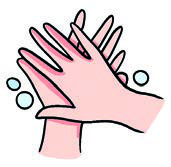

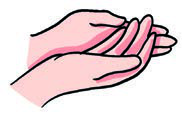
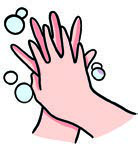
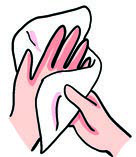
Now build a set of instructions of your own for brushing your teeth, using the same shape: one action per line, in order, each line starting with a verb.
- Soak the brush in clean water.
- Put toothpaste on the brush.
- Brush your teeth gently, up and down and along the gums.
- Spit the paste out.
- Rinse your mouth with water.
Project Work and Amazing Body Facts
For project work, find an operation manual of an electronic gadget, such as a rice cooker, a mobile phone or a fan. Draw pictures to show its instructions, present your work to the class, display it on the classroom wall, and vote to decide the best one. This is instruction writing turned into something you can hold. To finish, the unit shares surprising facts about the human body, and asks you to choose your favourite five and put them in order of your priority.
- Your mouth produces about one litre of saliva each day.
- The human heart beats more than three billion times in an average lifespan.
- Your left lung is about 10 percent smaller than your right.
- Humans are the only species known to blush.
- Your blood makes up about eight percent of your body weight.
- Scientists estimate that the nose can recognise a trillion different scents.
The full lesson is waiting for you
The notes are free to read in full. A free account opens the rest of the practice, and tracks your progress and confidence score for every subject. Presentations and videos need approval from Learn Yeti.