Questions That Ask You to Agree
When we talk, we often say something we already believe and then invite the other person to agree with us. We do it by hanging a tiny question on the end of the sentence. Look at these four, and notice the little tail after each comma.




There is a pattern hiding here. When the sentence is positive, the tail is negative: the mountain is tall, isn't it? When the sentence is negative, the tail is positive: this is not a helicopter, is it? These tails are called question tags, and this whole topic keeps returning to them, in speech, in a dialogue, in a game with classmates. Along the way you will also read a restaurant menu, follow a trip to a crowded market, and write a friendly email.
A Song That Asks: Will You Be There?
This song is built almost entirely out of questions. The singer is speaking to someone they love and trust, and every line asks the same thing in a new way: will you stay near me, in good times and in bad?
When dawn comes to promise a new day,When the darkest of shadows are swept away,Will you watch over me until I wake?Will you hold me close if I break?Will you be there to catch my fall?Will you be next to me, standing tall?Will you be there to soothe my pain?And tell me it's okay when there is only rain.When darkness comes back to creep,Will you be there to guard my sleep?Will you love me whole and true?And keep me going when I'm blue?
Dawn is the first light of morning, so it promises a new day. Darkness, rain and shadows stand for hard and sad times. To be blue means to feel sad. So the song asks: will you protect me while I sleep, comfort me when I am hurt, and cheer me up when I am low? It is a song about care and loyalty.
Reading a Menu
Not every text we read is a story. A menu is a text too, and you meet it in a restaurant, a hotel or a tea shop. It is not read from top to bottom like a passage. You scan it: your eye jumps to the section you want, then to the item, then to the price.
A menu is a list of the food and drink a restaurant serves, arranged in sections, with the price of each item.
Take The Boat Restaurant in London, England, phone 044-2345678, whose motto says it is the place where people want to come time and again. Its menu has five major sections, and each section carries small notes that change what you can order and when.
| Section | What is on it | Prices |
| Starters | Tomato soup £2.00, French onion soup £2.50, tomato salad £2.90, chicken salad £3.30. All starters come with bread and butter. | £2.00 to £3.30 |
| Main courses | German sausage and chips £6.50, grilled fish and potatoes £6.25, Italian cheese and tomato pizza £4.85, Thai chicken and rice £5.95, vegetable pasta £4.85, roast chicken and potatoes £5.95 | £4.85 to £6.50 |
| Snacks (lunchtime only) | Vegetable omelette £3.25, cheese and tomato sandwich £3.25, chicken sandwich £3.50, cheese omelette £3.50, cheese burger £3.20, burger £2.90, chocolate cake £2.25. All snacks come with salad and chips. | £2.25 to £3.50 |
| Desserts | Fruit salad and cream £2.25, ice-cream £2.00 (choose from chocolate, coffee or lemon), lemon cake £2.25, chocolate cake £2.25, cheese and biscuits £2.50 | £2.00 to £2.50 |
| Drinks | Mineral water £1.00, fresh orange juice £1.25, soft drinks £1.30, English tea £0.90, Irish cream coffee £0.90 | £0.90 to £1.30 |
The small print is where the answers hide. Lunch is served from 12:30 to 2:30 pm and dinner from 6:00 to 9:00 pm. There is a special discount on Saturdays. Snacks are lunchtime only, so a cheese burger cannot be ordered at dinner. The most expensive item on the whole card is German sausage and chips at £6.50, and the cheapest are English tea and Irish cream coffee at £0.90 each. When a question asks about a menu, scan for the section first and read every little note under it.
Writing Your Own Menu
Imagine your family is opening a new tea shop or restaurant. Before a single customer walks in, the shop needs a menu. A good menu is complete, tidy and honest. Include each of these:
- The name of the restaurant, its location and its contact details
- Sections for hot drinks, cold drinks, main courses, snacks and desserts
- A clear price beside every item
- One special thing that makes your shop different, such as a Saturday discount
- The opening and closing times
Group similar items together, keep the prices in a straight column so they are easy to compare, and add serving notes where they matter, such as which items come with salad. A full model menu for an imaginary tea house is worked out in the examples for you to follow.
Question Tags
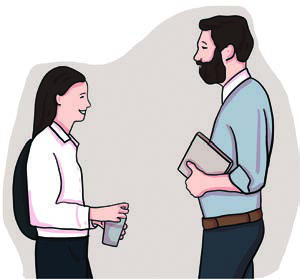
A question tag is a short question added to the end of a statement, made from a helping verb and a pronoun, used to check information or to ask the listener to agree. Example: We are going to learn English now, aren't we?
A helping verb (auxiliary verb) is a verb such as is, are, was, were, have, has, had, will, can, must or should that works together with the main verb. The question tag is always built from this verb, never from the main verb.
The tag is the opposite of the statement. A positive statement takes a negative tag. A negative statement takes a positive tag. We will finish everything in time, won't we? You can't make noise in the class, can you?
To build a tag for any statement, make these four moves in order.
- Find the helping verb in the statement. If there is none, bring in do, does or did to match the tense.
- Flip it. A positive verb becomes negative in the tag, and a negative verb becomes positive.
- Turn the subject into a pronoun. Monika becomes she, Pujan and Sabu become they.
- Add a question mark, and say the tag as a question.
| Statement | Tag | Why |
| Monika is drawing pictures, | isn't she? | is flips to isn't, and Monika becomes she |
| You don't have any problems, | do you? | don't is negative, so the tag turns positive |
| We must go now, | mustn't we? | the modal must repeats and flips |
| Your parents have retired, | haven't they? | have is the helping verb of have retired |
| Rajaram works at an office, | doesn't he? | works has no helping verb, so does steps in |
| The phone didn't ring, | did it? | didn't is negative, so did comes back positive |
When have means owning something, it is the main verb, and the tag uses do, does or did. I have a computer, don't I? They have a beautiful house in London, don't they? Only when have is helping another verb does it repeat in the tag: Your parents have retired, haven't they?
Words like never and hardly make a sentence negative even without not. So the tag turns positive. We have never seen a tiger, have we? She never works hard, does she? Writing haven't we after never is the mistake to watch for.
Speaking: Checking Facts with Question Tags
A question tag is spoken far more often than it is written. You use it when you are fairly sure of something and want the other person to confirm it. The listener answers with yes and a positive verb, or no and a negative verb, and can then add a polite correction. Study these short exchanges and act them out with a partner.
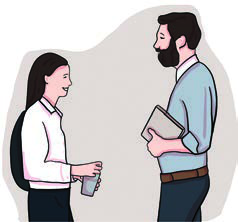

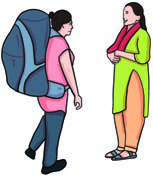
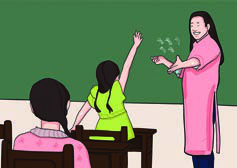
Notice the word Actually in the second exchange. It is a soft, polite way to begin a correction. Agreeing is short: Yes, I am. Correcting is longer: No, I can't. But I can speak Chinese. When you practise, take turns, and let your partner sometimes be wrong so you can practise correcting kindly.
Listening: Cooking or Eating Out?

In this listening task two speakers, Hana and Daniel, talk about how they get their meals: cooking at home and eating out. Before the audio plays, look at the picture and guess who the people are, where they are and what they might be discussing. Guessing first wakes up the words you are about to need. Then read the questions, because they tell you exactly what to catch.
- Who Hana cooks with: her roommate, her mother or her sister
- How Daniel gets food during the week: cooking himself, buying from a shop, or his mother providing it
- How often Daniel eats out, and how often Hana normally eats out
- Who seems to be busier, Hana or Daniel
Frequency words carry the answers here: never, sometimes, occasionally, during the weekend. Listen for the meaning, not for the exact words of the question, because a speaker may say I hardly ever cook where the option says never.
Reading: A Visit to a Market

This reading is a recount: one person telling what happened to them, in order, in the past tense. Last Saturday the writer and his mother went to the central market to buy groceries for the New Year. When they reached the market they could not find a place to park the car, so they asked their driver to look for a suitable space. Going to the market just before a festive season was not a pleasant experience. The whole town seemed to be there, everyone had things to buy, and so the prices of things shot up. Worst of all, they had to struggle to get the things they needed. They moved carefully through the sections buying vegetables, meat, fish, other food stuff and spices. They had wanted prawns too, but the prawns were all sold out despite their high prices.
Then the trip grew harder. The shopping bags got heavier and heavier, the crowd got thicker and thicker, and the noise and the heat were almost unbearable. When the shopping was nearly done, the writer told his mother he would wait in the car, because he could not stand being among hundreds and thousands of people roaming here and there.
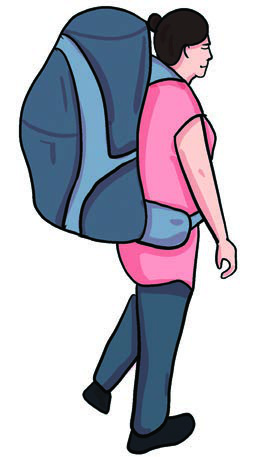
He carried the bag wearily to the car where the driver was waiting, breathed a sigh of relief, and sat listening to beautiful songs. The air outside the crowd smelled sweet and fresh, and he was glad to be out. Almost half an hour later his mother emerged in front of the car, looking exhausted. They put the groceries in the boot and returned home. That day the writer decided he would never go to the market during festive seasons.
Watch how the recount is built, because your own writing task copies this shape: events in time order, past tense throughout, and feelings woven in at every step, from not pleasant, to unbearable, to relief, to the final decision.
Writing an Email About a Market Visit
Now it is your turn to recount. Suppose you went to your nearest market last week. Write an email or a letter to a friend describing the visit. Because the reader is a friend, the tone is warm and informal: greet them by name, ask how they are, and write as you would speak.
- Who you went with
- What the market place looked like
- The things you saw and the things you liked
- The things you bought
- Your feeling about the market
Open with a greeting such as Dear Anisha, close with a friendly line such as Your friend, and keep the events in the order they happened. A full model email is worked out in the examples.
Special Question Tags
A few statements do not follow the plain flip rule, and they appear again and again in exams. A command has no helping verb and no visible subject, so its tag is will you? The word one stays as one in the tag. And remember that never keeps its positive tag here too: she never works hard, does she?
| Special case | Example |
| A command or request takes will you? | Umar, type all these letters, will you? |
| Let me also takes will you? | Let me see it, will you? |
| One repeats as one | One should obey the rules, shouldn't one? |
| never means the sentence is negative | She never works hard, does she? |
Do not build the tag from the main verb. For Rajaram works at an office, the tag is doesn't he, never isn't he or works he. If you cannot see a helping verb, the tag needs do, does or did.
Project: Menus Around You
Work in a group. Visit two nearby restaurants, hotels or tea shops and note down their items and prices. Then talk about them with your partner, using question tags to confirm what you noted: milk tea costs thirty rupees at the first shop, doesn't it? The momo there is cheaper than at the second shop, isn't it?
There is also a class game that runs on tags. Write the name of the classmate you think best matches each sentence: spends a lot of money on clothes, isn't afraid of spiders, went to bed late last night, had a haircut recently, studies English every day, doesn't have a pet, doesn't like cats, has been to the cinema this week. Then check your guesses by asking each classmate with a question tag: Sita, you went to bed late last night, didn't you? Award yourself one point for every correct guess.
The full lesson is waiting for you
The notes are free to read in full. A free account opens the rest of the practice, and tracks your progress and confidence score for every subject. Presentations and videos need approval from Learn Yeti.