A Story Told in Pictures
Stories do not always begin as words. Sometimes four pictures land on your desk in the wrong order, and your job is to turn them into one story that makes sense. Look at each picture carefully and ask three questions. Who is in it? What is happening? What must have happened just before this moment? When you can answer those, the correct order shows itself, because every event needs the one before it.
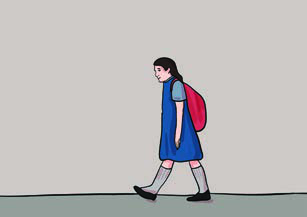
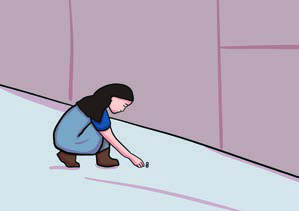
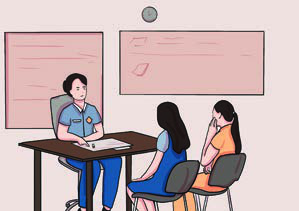
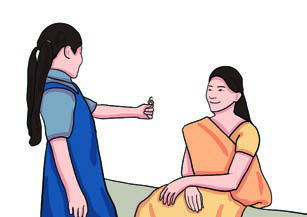
One sensible order is this. A girl was walking to school. On the way she noticed something shining on the ground and picked it up. It was a gold earring. She took it straight to her teacher and reported it. The teacher found out whose it was, and the girl returned it to the owner, who thanked her warmly. Notice the verbs: was walking, noticed, picked, took, found, returned, thanked. A story about yesterday is told in the past tense, and this whole unit is about doing that well.
The Song: My Teacher Took My iPod
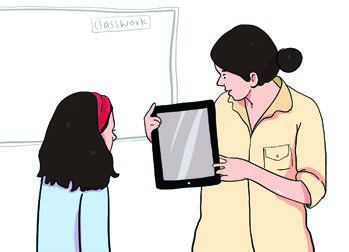
My teacher took my iPod,She said they had a rule,I couldn't bring it into class,or even to the school.She said she would return it;I'd have it back that day.But then she tried my headphones onand gave a click on Play.My teacher said she changed her mind.She thinks it's now okayto bring my iPod into class.She takes it every day.
The song is a joke told in three verses. First the teacher takes the iPod because of a school rule. Then she tries the headphones herself and presses Play. In the last verse she has changed her mind about the rule, but only because she now enjoys the music, so she takes the iPod every single day. The order of events is: the teacher took the iPod, she played the music, she allowed the student to bring it to class, and she started using it every day. Notice that the whole song is in the past tense, with one small jump to the present at the end, because taking it every day is still happening now.
Reading I: A Lesson from a Son
Velan was a carpenter who lived in a village. His mother had died long before, and his old father Kuppan lived with him. Kuppan was terribly weak, and the reason was shameful: Velan gave him too little food, and the food was not nutritious. The old man had no energy even to walk. Velan had given his father a small earthen plate, and even a little rice on it looked like too much. Velan was a drunkard with a poor social reputation, and after drinking he always treated his father badly.
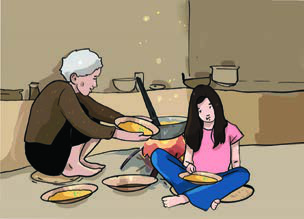
Velan had a son named Mithu, just ten years old. Mithu was intelligent and respected his grandfather deeply, and he hated the way his father behaved. One day the earthen plate slipped from old Kuppan's hands and broke, and the food spilled on the floor. Velan, working at the other end of the room, saw the broken plate and abused his father with harsh words. The old man was sorry for his mistake, but Velan's words wounded him deeply. Mithu saw everything. He pitied his grandfather, but he was afraid to speak against his father, so he said nothing.
The next day, Mithu took his father's carpentry tools and a piece of wood and began making a wooden plate. When Velan asked what it was for, Mithu answered calmly. It was for Velan himself. When Velan grew old like grandfather, he would need a plate for his food, and an earthen plate breaks easily. Then Mithu might scold him severely. A wooden plate would not break. The carpenter was shocked, and only then did he see his own cruelty. He remembered how Kuppan had reared him with care and attention, and how joyous his childhood had been. From that day Velan treated his father with great respect and gave up drinking. He learnt a lesson from his own son.
Children learn how to treat people by watching how their parents treat people. Velan's punishment was simply seeing his own behaviour reflected back at him by his son.
Pronunciation: Reading Sound Symbols
English spelling and English sound often disagree, so dictionaries print a word's sound between slanted lines using special symbols. The mark that looks like a small raised tick shows which part of the word is said with force. Once you can read these symbols, you can pronounce a word you have never heard. Here are six words from the story with their sound symbols.
| Sound symbols | Word |
| /ˈvɪlɪdʒ/ | village |
| /ˈenə(r)dʒi/ | energy |
| /triːtɪd/ | treated |
| /ˈbrəʊkən/ | broken |
| /ˈwʊdn/ | wooden |
| /rɪˈspekt/ | respect |
Say each one aloud. Notice that village ends with the sound of j although it is spelt with g, and that wooden squeezes its last two letters into almost one sound. In respect, the force falls on the second part, spekt, not the first.
Writing I: Telling a Story in the Past Tense
When we tell a story, we use the past forms of verbs, because the events have already happened. The story of Velan is full of them. Collect them and you have the toolkit of every storyteller.
| Base form | Past form |
| is | was |
| live | lived |
| give | gave |
| have | had |
| see | saw |
| fall | fell |
| break | broke |
| feel | felt |
| take | took |
| grow | grew |
| become | became |
| learn | learnt |
A story is also a chain of events in the right order. The lion and the mouse make a good practice chain. A lion was sleeping when a mouse ran up and down his body for fun. The angry lion was about to eat him when the mouse begged to be set free and promised to help the lion someday. The lion laughed at the idea but let him go. Later, hunters caught the lion and tied him to a tree. The mouse heard him whimpering, gnawed through the ropes, and both sped off into the jungle. A small friend kept a big promise.
You can build a whole story from bare clues the same way. Take these clues: a farmer with several sons, the sons always quarrel, the farmer falls ill, he calls his sons, a bundle of sticks. The finished story might read: An old farmer had several sons who always quarrelled. This made him sad. When he fell ill and knew he was dying, he called his sons and gave them a bundle of sticks to break. Each son tried and failed. Then the father untied the bundle and handed out the sticks one by one, and every stick snapped easily. The sons understood. Together they were unbreakable; divided they were weak. A good title would be Unity is Strength.
Grammar I: The Past Continuous Tense
The past continuous tense describes an action that was going on, and not yet finished, at a certain time in the past. It is formed with was or were plus the present participle: My friends were cooking food last night.
The present participle is the -ing form of a verb: cooking, reading, laughing, swimming. It never changes for person or number; only was and were change.
Use was with I, he, she, it and singular names: Indu was reading a novel when Joan came. Use were with we, you, they and plural subjects: They were drawing pictures some time ago. For a negative, put not after was or were: John was not playing cricket. For a question, move was or were before the subject: Were the children laughing?
The tense has two favourite jobs. First, it paints the background at a past time: It was raining yesterday evening. Second, it shows a longer action interrupted by a shorter one, and here it pairs with the simple past: Indu was reading a novel when Joan came. The reading was spread out; the arriving happened in a moment. The word while usually sits with the long action, and when usually sits with the short one: It rained heavily while we were playing football.
Do not let a nearby noun choose the verb for you. The subject chooses it. Write A cat was chasing a mouse, never A cat were chasing, even though two animals are in the sentence. The subject is one cat, so the verb is was.
Listening: A Day at School

This task trains your ears, not your eyes. Before the audio plays, you look at the picture of a school and guess: where are these people, what are they doing, and what games do you play at your own school? Guessing first matters, because a listener who already expects the topic catches far more of it.
Then you listen to a conversation about a little girl's day at school and tick the right answer for five items: what she made at school besides paper books, what she used along with crayons and paper, what she did in addition to playing games, who she played with, and where the conversation most probably took place. The answers are in the audio and only in the audio, so this is how to catch them. Read all five questions and their choices before the recording starts, so you know exactly which words to hunt for. During the first listening, tick lightly whenever you hear a choice mentioned. During the second listening, check your ticks instead of starting again. Never leave an item blank; an honest guess from what you heard is part of the skill.
Afterwards, the unit turns the topic on you: make a list of what you yourself did at school and after school yesterday, in two columns. Every entry will be in the past tense, which is no accident. The whole unit keeps pulling you back to talking about the past.
Reading II: A Party in a Restaurant
The writer's birthday fell on a Thursday, and he decided to celebrate it by inviting a few friends out to supper. He chose a favourite restaurant in a quiet part of town: the food was good, the waiters were friendly, and it was hardly ever crowded because few people knew about it. So he did not book a table. Thursday was never a busy evening anyway.
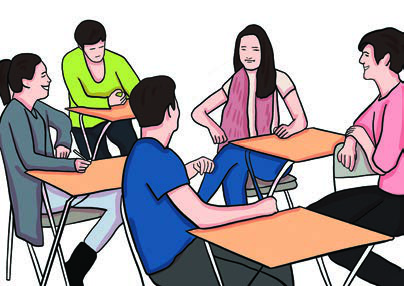
For once, everything went wrong. The restaurant was completely full. A waiter who recognised the writer explained that a party of tourists had come in about half an hour earlier, like an invasion. He pointed to a corner table whose guests were just about to leave, and told the friends to hold on. Fifteen minutes later those people paid their bill and left, and the friends sat down. But their table was almost out of sight, and every waiter was busy with the tourists, who had ordered enormous quantities of food. Nearly an hour passed before their tired waiter appeared. The writer advised his friends about the best dishes and the order went off to the kitchen. Then the waiter came back, full of apologies, with bad news written on his face. There was no meat or fish left. All he could offer was an omelette.
Notice how the story keeps explaining why things happen: the restaurant was full because tourists had arrived, the waiter was slow because the tourists had ordered so much. Good storytellers link every event to its cause.
Speaking: Talking About the Past
The past continuous is not just for writing. It is how people actually chat about yesterday. Act out these short conversations with a friend, then swap roles.

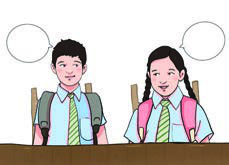
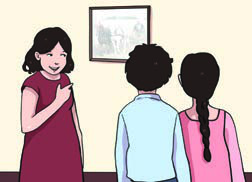
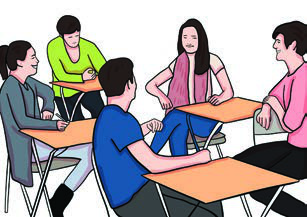
Then practise from bare clues. Given Rupal, play chess, last night, you say: Rupal was playing chess last night. Given Funurbu and his friend, talk on the phone, Saturday evening, you say: Funurbu and his friend were talking on the phone on Saturday evening. The clue tells you the subject, the action and the time; you supply was or were and the -ing form.
Writing II: From Pictures to a Story
Jumbled sentences are a story waiting to be assembled. Take the tale of Ram and Anu. One day Ram saw Anu riding on his lost donkey. Ram told Anu to return it. Anu insisted the donkey belonged to him. So Ram covered the donkey's eyes and asked Anu the colour of its eyes. Anu said they were brown, but they were actually black. Anu was caught, and Ram got his donkey back. Every sentence clicks into place because each one needs the one before it.
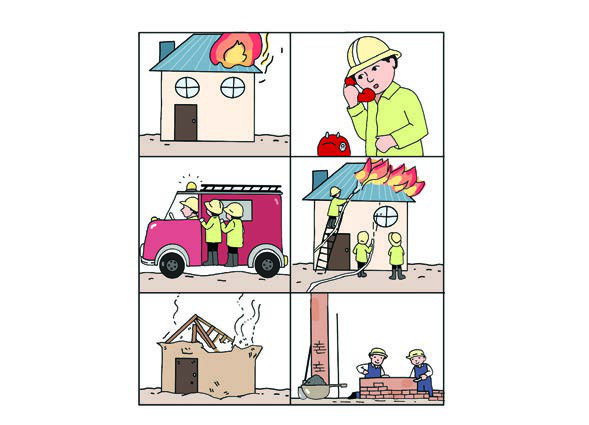
Now a story from pictures alone. Yesterday, my friend Anjali was going to school. On the way she saw a house on fire. Flames were rising from the roof. A man rushed to the telephone and called the fire brigade. Soon a fire engine arrived with a team of firefighters. They put a ladder against the wall and sprayed water on the burning roof while people watched from below. At last the fire went out, but the house was badly damaged and smoke was still coming from it. Some days later, workers were rebuilding the walls with bricks, and the family hoped to have their home again. Notice the mix of tenses doing their proper jobs: was going and were rising for actions in progress, saw and arrived for sudden events.
Grammar II: The Past Perfect Tense
The past perfect tense shows that one past action was completed before another past action. It is formed with had plus the past participle: By the time they left the mall, they had seen amazing displays.
The past participle is the third form of a verb: gone, seen, planned, been, eaten. With regular verbs it looks like the past form, but with irregular verbs it is often different: go, went, gone.
Think of it as the past behind the past. Last weekend, Madhavi and her friends went to a newly opened mall. They had never been there before. Each time they had planned to visit it, some other work came up and they had to cancel. Going to the mall is past; the planning and cancelling happened even earlier, so those verbs wear had. By the time they left, they had seen amazing displays, and they felt lucky that nobody with them had been there before.
The signpost words are before, after, by the time and already. The earlier action takes had plus the past participle; the later action takes the simple past. Jill had phoned her dad before she left her office. When she arrived, the match had already started. After Eric had prepared the delicious meal, he called his friends.
Do not put both actions in the past perfect. Only the earlier one takes had. Write After the man had come home, he fed the cat, never After the man had come home, he had fed the cat. And never follow had with a past form: it is had gone, not had went.
Project Work and Extra Practice
The project pulls the whole unit together. In a group of four, find or create a short story with your teacher's help, then draw a storyboard that tells it: a row of pictures, one for each event, in the right order. Each picture is one sentence of the story made visible. When every group presents, the class votes for the best story. A good storyboard needs exactly what this unit has been teaching: events in order, causes before effects, and past tense verbs to tell it aloud.
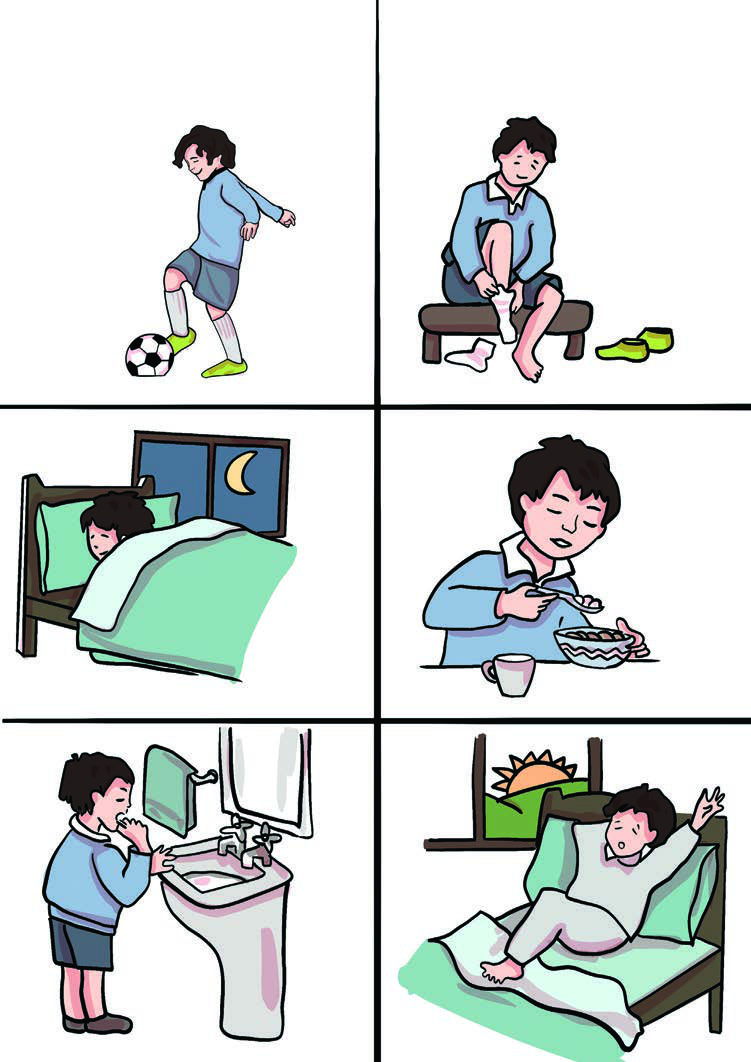
For extra practice, put these six moments of a boy's day in order and tell the story to a friend. One good telling: The boy woke up when the sun rose. He brushed his teeth at the basin. Then he ate his breakfast. He put on his socks and shoes. In the afternoon he played football. At night he went to bed and slept while the moon shone outside. While your friend tells the story, listen closely and judge one thing only: is every verb in the past tense? Checking a friend's verbs is the fastest way to sharpen your own.
The full lesson is waiting for you
The notes are free to read in full. A free account opens the rest of the practice, and tracks your progress and confidence score for every subject. Presentations and videos need approval from Learn Yeti.