Asking About Height, Weight and Distance
We measure the world all the time. A mountain has a height, a sack of sugar has a weight, and a school has a distance from home. English has a small family of questions for all of this, and every one of them begins with the word How. How tall asks about height. How much asks about weight, quantity or price. How far asks about distance. How long asks about length or time. Look at how each question below is answered with a number and a unit.
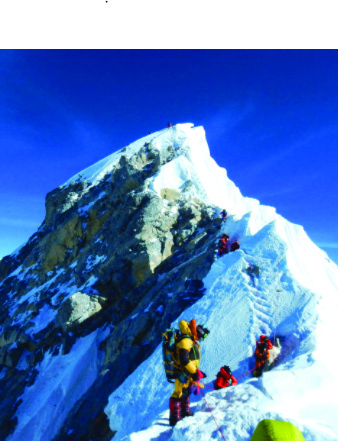
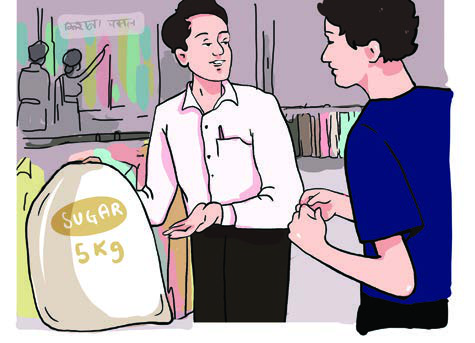
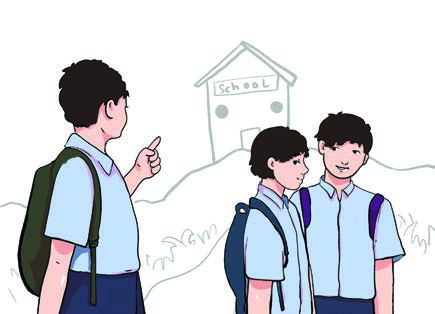
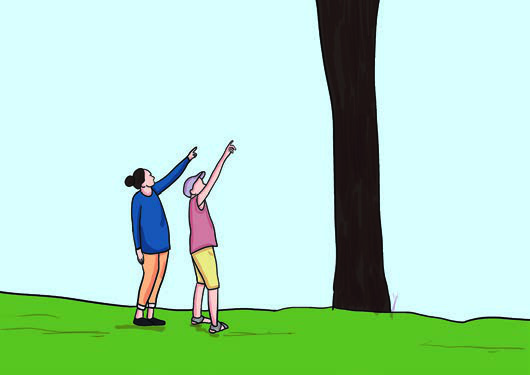
Notice two things in these answers. First, every answer carries a number and its unit together: 8848.86 metres, 5 kg, five kilometres. A number without its unit tells the listener nothing, because 20 could be metres, feet or minutes. Second, when we are not certain of the exact figure, we soften the answer with the word about. Nobody has measured that tree, so we say it is about 20 metres tall.
A measurement answer always has a number and a unit. Add the word about when the number is an estimate, not an exact measurement.
A Song About Tall Trees
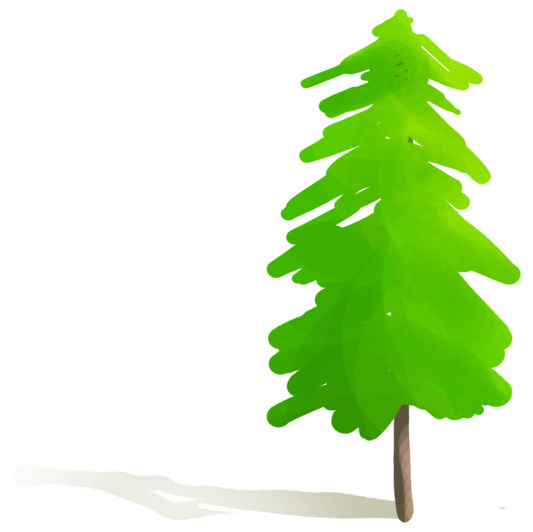
The unit opens with a short poem called Tall Trees by Eillen Mathias. The poet describes trees as if they were giant living watchers. Their roots, which she calls their feet, stand in the earth, while their tops, their heads, reach into the sky. From that height the trees watch the clouds passing above them. Then evening comes. At dusk the birds hurry back to rest, and the tall trees shelter them safely in their nests. Finally night falls, the trees seem to peep at the world, and the moon shines down on a world that has gone to sleep. The poem moves through one whole evening: daytime clouds, dusk and the returning birds, then night and the moon.
The poet talks about trees as if they could watch, shelter and peep, which are things people do. This way of writing makes the trees feel alive and friendly, and it is the main beauty of the poem.
Personification is describing a thing as if it were a person. When a poem says the trees watch the clouds, it gives the trees a human action, so the trees are personified.
Reading: Mt. K2
K2 is the second highest mountain in the world. It is 8,611 metres tall, and only Mt. Everest, at 8848.86 metres, stands above it. K2 is also called Mount Godwin Austen, and local people call it Dapsang or Chogori. It is located in the Karakoram Range and lies in the Gilgit-Baltistan portion of Kashmir, which is under the rule of Pakistan. The glacier-covered mountain rises from its base at about 4,570 metres on the Godwin Austen Glacier.
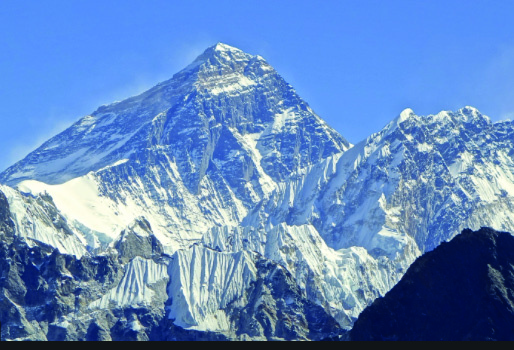
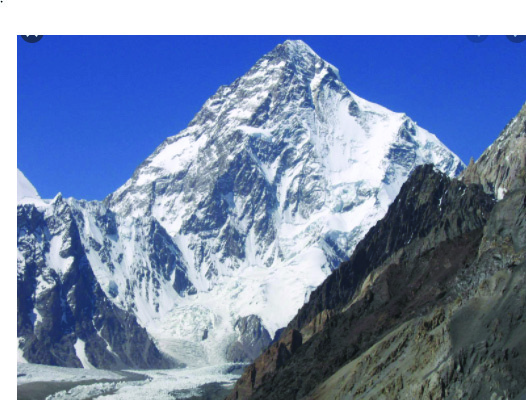
The mountain was discovered in 1856 by Colonel T. G. Montgomerie of the Survey of India. He named it K2 because it was the second peak he measured in the Karakoram Range, so the name is simply Karakoram peak number two. The longer name, Mount Godwin Austen, honours the peak's first surveyor, Colonel H. H. Godwin Austen, an English geographer of the nineteenth century.
The Story of Climbing K2
People tried for more than fifty years to reach the top of K2. The table below shows the main attempts and how high each one climbed before turning back.
| Year | Who climbed | What happened |
| 1902 | An Anglo-Swiss expedition | Made the first attempt and ascended to 5,670 metres on the northeastern crest |
| 1909 | An Italian expedition | Reached approximately 6,100 metres by the southeastern ridge |
| 1938 | An American expedition led by Charles Houston | Reached about 7,925 metres via the Abruzzi Ridge |
| 1939 | Another American-led expedition | Followed the same route and reached about 8,380 metres |
| 1953 | Another expedition led by Houston | Reached 7,900 metres on the Abruzzi Ridge |
| 1954 | An Italian expedition | Conquered the Abruzzi Ridge and reached the summit at 6 p.m. on July 31 |
The successful team of 1954 was a large one. It consisted of five scientists, a doctor, a photographer and 12 others, including a Pakistani. Their victory came at a price, because during the ascent one of the guides, Mario Puchoz, died of pneumonia.
Why is K2 so feared? The mountain is prone to frequent and severe storms, which make the already dangerous climbing conditions on its slopes even more challenging, and humans find functioning at such high elevations difficult. Because of this, K2 is one of the world's most difficult mountains to climb. The number of people who have reached its top constitutes only a small fraction compared with the number who have successfully climbed Mt. Everest. There have been fewer deaths on K2 than on Everest, but the proportion of those killed to the number who have attempted the climb is significantly higher. In simple words, fewer people try K2, and a larger share of those who try do not come back.
Word Stress
Stress is the extra force we put on one syllable of a word when we say it. The stressed syllable sounds louder and stronger than the others. In writing, the mark ' is placed just before the stressed syllable, so 'summit means the first syllable is stressed: SUM-mit.
Say each of these words from the reading aloud, and press harder on the marked syllable. English words do not all stress the same syllable, so each word has to be learnt with its own stress.
| Word | Say it as |
| 'portion | POR-tion |
| 'conquer | CON-quer |
| 'glacier | GLA-cier |
| 'summit | SUM-mit |
| 'fraction | FRAC-tion |
| ele'vation | ele-VA-tion |
| expe'dition | expe-DI-tion |
| pro'portion | pro-POR-tion |
| a'pproximately | a-PPROX-imately |
| suc'cessfully | suc-CESS-fully |
Subject-Verb Agreement
Subject-verb agreement means the verb must match its subject in number. A singular subject takes a singular verb, and a plural subject takes a plural verb. My friend is busy, but my friends are busy.
The basic rule is easy, but some subjects hide their real number. The phrase one of my friends looks plural because of the word friends, yet the subject is one, so the verb is singular. Twenty dollars looks plural, yet it is one amount of money, so it also takes a singular verb. The table below collects the rules with a correct sentence for each.
| Rule | Correct sentence |
| One of + plural noun takes a singular verb | One of my friends is very rich. He offers us parties on special days. |
| A plural subject takes a plural verb | My friends are busy doing their class work. |
| An amount of money, weight or distance is one unit, so the verb is singular | Twenty dollars is not a small amount. Ten kilos of sugar is sufficient for us. |
| Someone, everyone and each take a singular verb | Someone bangs on the door every night. |
| With either ... or, the verb agrees with the nearer subject | Either you or Hari is top of the class. |
| Police is a plural noun and takes a plural verb | Police were investigating the case carefully. |
| Uncountable nouns like furniture and scenery take a singular verb | This furniture costs a lot these days. The beautiful scenery attracts tourists. |
| A lot of + plural noun takes a plural verb | A lot of changes have occurred in the village. |
Do not let the noun next to the verb fool you. In the sentence The man with roses in his hands looks like your brother, the subject is the man, not roses, so the verb is looks. Always find the true subject first, then choose the verb.
Asking Questions with How
To build a measurement question, put How together with the describing word, then the verb, then the subject. How tall is a giraffe? How far has the pilot reached? How much can Shiva carry? If the words get jumbled, put them back in that order: How + describing word + verb + subject.
| Question | Asks about | Example answer |
| How tall ... ? | The height of a person, tree or building | How tall is your younger brother? He's 3'5". |
| How high ... ? | How far up something goes or reaches | How high can you reach? Up to that shelf. |
| How long ... ? | Length, or an amount of time | How long is the East West highway? It's 1027.67 kilometres. |
| How far ... ? | Distance between places | How far is Kathmandu from Pokhara? It's about 200 kilometres. |
| How much ... ? | Weight, quantity or price | How much does your bag weigh? It's about 2.5 kilograms. |
| How deep ... ? | Depth of water or a hole | How deep is Rara Lake? Its maximum depth is 167 metres. |
Speaking: Short Conversations About Measurement
These questions are for speaking, not only for writing. Practise the three conversations below with a partner, then make your own questions about the things around you: the time it takes to reach school, the weight of your bag, the distance to the bus park.
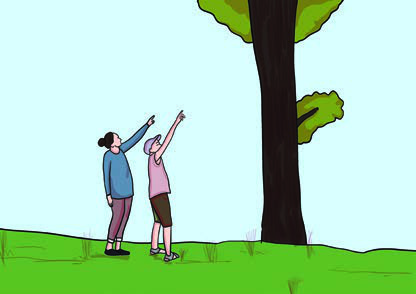
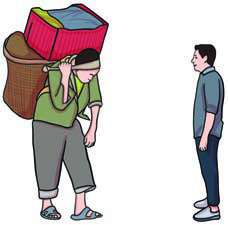
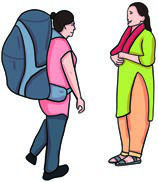
Notice that distance can be answered in two ways. You can give the length, about 3 km, or you can give the time it takes, about a 20 minute walk. Both are natural English.
Listening: The Panama Canal
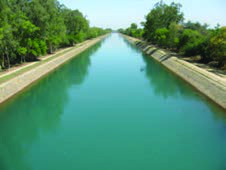
The listening task is about the Panama Canal, a famous man-made waterway. Before the audio plays, you look at the picture of a canal and answer three warm-up questions: what you see, whether you have seen one in your own locality, and what it is used for. A canal is a channel dug by people to carry water, often for irrigation, and a very large one can carry ships. Then you listen to the audio and complete five sentences, using one word only in each blank.
- The Panama Canal connects the Pacific and the ............... ocean. Listen for the name of an ocean.
- The ............... began to construct the canal in 1881. Listen for the name of a people or nationality.
- Almost ............... people died while building the canal. Listen for a number.
- The USA handed the canal to Panama in ............... . Listen for a year.
- Every year, almost 40,000 ............... come through the canal. Listen for a plural noun, the things that travel along a canal.
Read the sentences before the audio plays and guess what kind of word fits each blank: an ocean, a nationality, a number, a year, a plural noun. When you know what you are listening for, your ears catch it the first time.
Writing from an Idea Map: Rara Lake
An idea map is a diagram that puts a topic in the centre and its facts in circles around it. It collects everything you know about the topic in one place before you start writing.
The writing task gives you an idea map about Rara Lake and asks you to turn it into a short description. Here are the facts the map holds.
| Fact | Detail |
| Location | Mugu District |
| Fame | Biggest fresh water lake in Nepal |
| Area | 9.8 square kilometres |
| Height | 2,990 metres above sea level |
| Maximum depth | 167 metres |
| Surroundings | Surrounded by the smallest national park, Rara National Park |

To write from an idea map, do not copy the circles one by one in any order. First decide a sensible order: name the place and where it is, then say what it is famous for, then give its measurements, and finish with its surroundings. Then turn each fact into a full sentence, and join related sentences smoothly. A model description is given in the examples for you to compare with your own.
Reading a School Prospectus
A prospectus is a printed document that introduces a school, college or other institution. It tells new students and their parents what the institution offers: its programmes, facilities, fees and admission process.
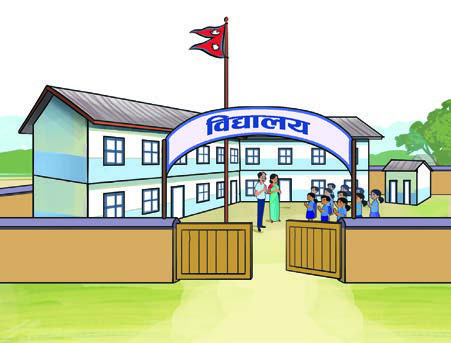
The reading text is the prospectus of Saraswati Secondary School, Ilam. The school was established in 2018 BS and has been running classes from grade 1 to 12 since 2070 BS. Its vision is to develop the institution as a centre for academic excellence, and its mission is to provide quality education to students of underprivileged and marginalised communities and to create an excellent, inclusive environment. It runs Montessori based pre-primary classes, basic level classes from 1 to 8, and secondary level classes from 9 to 12. Its salient features include highly qualified teachers, regular meetings with students and guardians, weekly tests with support classes, practical classes, a well-equipped computer lab, library and science lab, free WiFi, audio-visual classes and a well-managed cafeteria. It offers scholarships to deserving students and to students from underprivileged and marginalised groups. Any student fulfilling the basic criteria can apply for the entrance test to grades 6, 9 and 11, uniform is compulsory, and the school charges only nominal fees for bus fare. Its contact is Ilam Municipality-9, Ilam, email [email protected].
| Section of a prospectus | What it tells the reader |
| Introduction | The school's name, place and the year it was established |
| Vision | The long-term dream the school works towards |
| Mission | What the school does now to reach that dream |
| Programmes | The levels and classes the school runs |
| Salient features | The most important facilities and services |
| Scholarships | Who gets financial help |
| Admission process | How a new student can join |
| Uniform and fees | What students wear and what they pay |
| Contact | Address and email of the school |
Writing Your Own Prospectus
Now design a similar prospectus for your own school. Work through the outline below, collect the real facts about your school for each part, and add a photo if possible. Your teacher can help you check the facts.
- Introduction: the name of your school and when it was established
- Vision: to develop the school as a centre of excellence
- Mission: to provide quality education to all, as an inclusive school
- Major programmes: the classes and levels it runs
- Main features: science lab, library, canteen, classroom equipment and so on
- Admission process: how new students join
- Fee structure: what students pay
- Scholarships: who receives support
Some, Any and Other Quantity Words
Some is used in positive statements, and in offers and requests: We saw some tigers at the zoo. Would you like to have some tea?
Any is used in questions and in negative sentences: Do you have any children? I didn't see any children. I haven't got any money.
One sentence can show both words at work: We saw some tigers at the zoo, but we didn't see any elephants. The first half is positive, so it takes some. The second half is negative, so it takes any. An offer is the exception to the question rule. Would you like some tea? uses some, because the speaker expects and hopes the answer is yes.
English also has quantity words that say roughly how much or how many, without giving a number. Which one you choose depends on whether the noun can be counted.
| Word | Used with | Example |
| many | Countable nouns | I have many friends. |
| several | Countable nouns | She has several books. |
| a few | Countable nouns, a small number | I have a few pages left to read. |
| few | Countable nouns, almost none | Few people came to the meeting. |
| a little | Uncountable nouns, a small amount | Would you like a little water? |
| much | Uncountable nouns, mostly in negatives and questions | I don't have much money. |
| a bit of | Uncountable nouns | Give him a bit of food. |
A few and few look alike but feel opposite. I have a few pages left sounds hopeful, some pages remain. Few people came to the meeting sounds disappointed, almost nobody came. The little word a changes the whole feeling of the sentence.
Project Work
Visit two or three schools, colleges or other institutions in your locality and collect as many prospectuses as you can. Bring them to class, present them, and talk briefly about each one: whose it is, what sections it has, and what it tells you that the others do not. Comparing real prospectuses will show you which sections every institution includes and which features each one is proud of.
The full lesson is waiting for you
The notes are free to read in full. A free account opens the rest of the practice, and tracks your progress and confidence score for every subject. Presentations and videos need approval from Learn Yeti.