What People Can and Cannot Do
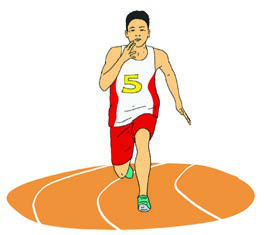
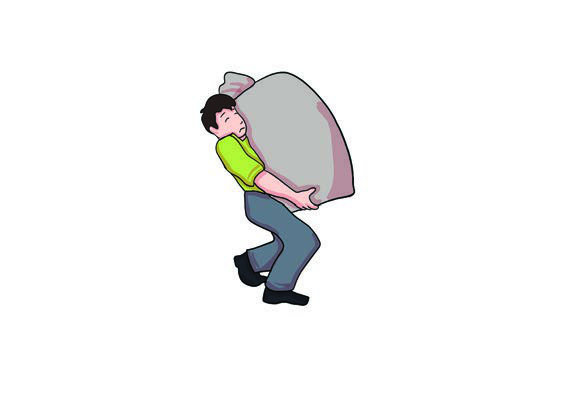
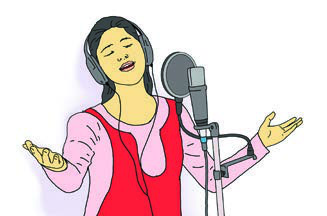
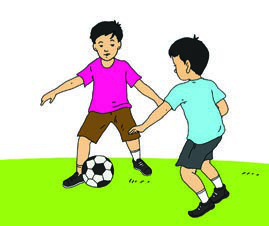
Every person is able to do some things and unable to do others. A runner can run very fast because he trains every day. A man carrying a huge sack cannot walk quickly because the load is too heavy. A singer can sing sweetly because she has practised for years. Two boys can play football because they play together every evening. English talks about all of this with four small words: can, can't, could and couldn't. This unit teaches you to use them, to ask other people about their abilities, and to give the reason with because.
A Song of Can and Few Can
Before the grammar, here is a song built on two little words: any and few. Each line puts an easy action beside a harder one. Anyone can make a promise; only a few people keep their word. Anyone can start; only a few can stay to the end. Sing it, and notice how often the word can appears.
Any man can claim, few can find.Any girl can blink, few can lie.Anyone can promise, few can raise.Anyone can try, but a few can stay.Any brain can hide, few can stand.Any kid can fly, few can land.Any gang can scatter, few can form.Any kid can chatter, few can inform.Any soul can sleep, few can die.Any dog can weep, few can cry.Everyone complains, few can state.Anyone can stop, few can wait.
After singing, talk with a friend: what can any woman, man, girl, brain, kid, gang, soul or dog do in this song, and what can only a few do? The song is really saying that starting is easy and finishing well is rare.
A Terrifying Night
Shortly after the war, the writer and his brother were invited to spend a few days' holiday with their uncle, who had just returned from abroad. The uncle had rented a cottage in the country, though he rarely spent much time there. When the brothers arrived, they understood why. The cottage had no comfortable furniture, many of the windows were broken, and the roof leaked, which made the whole house damp.
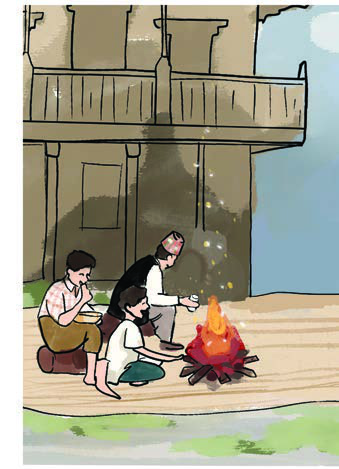
On their first evening they sat around the fire after supper, listening to the uncle's stories of his adventures in distant countries. The writer was tired after the long train journey and would have preferred to go to bed, but he could not bear to miss a single one of his uncle's exciting tales.
The uncle was in the middle of describing a terrifying experience when a loud crash came from the bedroom above, the very room where the two boys were going to sleep. The uncle laughed loudly and said it sounded as if the roof had fallen in. When they opened the bedroom door, they could see nothing at first because of the thick clouds of dust that filled the room. As the dust began to clear, a strange sight met their eyes. A large part of the ceiling had collapsed, falling right onto the pillow of the writer's bed. If he had gone to bed early, he would have been seriously injured, perhaps killed.
That night everyone slept on the floor of the sitting room downstairs, because nobody wished to risk their life under a roof that might collapse at any moment. The very next morning they left for London, and the uncle gave up his cottage in the country. This was not the kind of adventure they cared for.
The story is full of the grammar of this unit. The writer couldn't bear to miss the stories. They could see nothing because of the dust. They couldn't sleep upstairs because the roof might fall in. Grammar lives inside stories, not beside them.
Can and Cannot: Ability Now
Can shows that somebody has the ability to do something now. It is followed by the base form of the verb: I can swim. The negative is cannot, usually shortened to can't.
I can touch the ceiling because I'm tall. He can swim two kilometres because he has practised a lot. I cannot play tennis because I have never played it. I cannot touch the ceiling because I'm too short. To make a question, put can before the person: Can he drive a car? Can the children read yet? The short answers are simple: Yes, I can. No, I can't.
Never put the word to after can or could. Say She can swim two kilometres, not She can to swim. The verb also never takes s: He can swim, never He can swims.
Could and Couldn't: Ability in the Past
Could shows ability in the past. Its negative is could not, shortened to couldn't. I could run fast when I was a child. I couldn't speak English when I was in grade one.
Use could and couldn't whenever the ability belongs to an earlier time. I could play football very well when I was a child. Namita couldn't call you yesterday. The question form works the same way as with can: Could you draw well when you were a child? Yes, I could. When you say what somebody can or cannot do, it is natural to add the reason too: She couldn't come to school yesterday because she was ill.
Because and Because Of: Giving Reasons
Because gives the reason for something and is followed by a full clause, a group of words with its own subject and verb: We had to hurry indoors because it was raining.
Because of also gives a reason, but it is followed by a noun or a noun phrase, never a clause: We stopped playing tennis because of the rain.
Here is the test. Look at what follows the gap. If you can find a subject and a verb there, choose because: I am late because the traffic was terrible. If only a thing follows, choose because of: I am late because of the traffic. Two more words, as and since, behave exactly like because and take a full clause: As it was really cold, I put on my gloves and my hat. Luca bought the shoes since they were perfect.
| Word | What follows it | Example |
| because | a clause with a subject and a verb | He can't come to school because he is ill. |
| because of | a noun or noun phrase | He can't come to school because of his illness. |
| as, since | a clause, just like because | As she hated cats, she wasn't happy when her husband bought three. |
Do not write because of it was raining. Because of cannot hold a verb. Either drop the of and keep the verb, because it was raining, or keep the of and drop the verb, because of the rain.
The Letter R in Speech
Say the word train aloud. The r sits before a vowel sound, so it comes out clear and strong. Now say war. Here the r sits after the vowel, at the end of the word, and many English speakers hardly pronounce it at all. The same soft r hides in brother, for, our, were, other, otherwise and wear. The strong r stands in train, story, roof and very. Listen to your teacher say each word, then repeat it, paying attention to what your tongue does with the r.
| Where the r sits | Words | How it sounds |
| before a vowel sound | train, story, roof, very | clear and strong |
| after a vowel, at the end or before a consonant | war, brother, for, our, were, other, otherwise, wear | weak, often almost silent |
Asking About Ability
To ask about somebody's ability, put can before the person and answer with a short answer. Practise these little exchanges aloud with a partner.
- A: Can you lift this table? B: Yes, I can.
- A: Can you speak English? B: No, I can't.
- A: Can you help me? B: Yes, I can.
- A: Can you play the piano? B: No, I can't.
Then take the questions around your classroom. Find at least one person who can name ten colours, raise one eyebrow, name three countries in Africa, draw an elephant, make a paper bird, sing a song, bark like a dog, dance, say the English alphabet backwards, or hold their breath for ten seconds. Ask them to show you, write their name beside the activity, and report back to the class like this: Sunita can name ten colours.
Every profession is really a bundle of abilities. A farmer can grow vegetables and fruits on his or her farm, and a dentist can treat you when you have a toothache. Match a person to their work by asking what that person can do.
| Person | What they can do |
| Farmer | grow vegetables and fruits on the farm |
| Painter | paint houses and buildings |
| Cook | cook nice dishes in a restaurant |
| Musician | play the drums in a band |
| Carpenter | make furniture from wood |
| Teacher | teach kids new things at school |
| Magician | do tricks that make you surprised |
| Dentist | treat you when you have a toothache |
| Waiter | serve your food in a restaurant |
| Scientist | do experiments in a laboratory |
| Police officer | catch thieves and robbers |
Listening for Can and Can't
First, make your own list of things you can and can't do, and share it with your friends. Then comes a listening task. You will hear a girl and a boy talking about their abilities. Before the audio plays, read the table you must fill. For the girl, the lines are: play basketball, play baseball, run pretty fast, jump high, play soccer, sing, and play an instrument. For the boy: play an instrument, cook very well, cook basic things, cook an omelette, and bake cookies.
While you listen, put a tick beside each thing the speaker can do and a cross beside each thing they can't do. The trick is to catch the small word just before the activity: can gets a tick, can't gets a cross, and the two sound almost the same, so listen closely. When the audio ends, try to recall the names of any sports and any food you heard, make a list of them, and say who in your class can play or cook those things.
The Echoing Green
The Echoing Green is a short poem by William Blake. It paints one whole spring day on a village green, the open grassy ground where children play, from sunrise to sunset. Before reading, think: do you like greenery, and why?
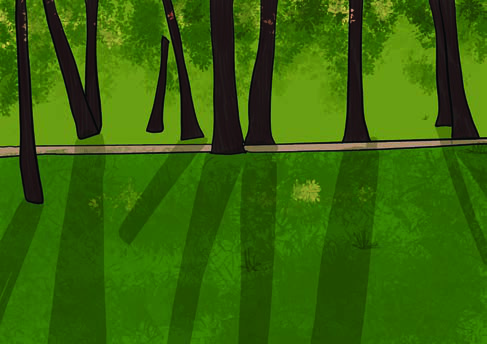
The sun does arise,And make happy the skies.The merry bells ringTo welcome the Spring.The sky-lark and thrush,The birds of the bush,Sing louder around,To the bells' cheerful sound.While our sports shall be seenOn the Echoing Green.Old John, with white hairDoes laugh away care,Sitting under the oak,Among the old folk,They laugh at our play,And soon they all say.'Such, such were the joys.When we all girls and boys,In our youth-time were seen,On the Echoing Green.'Till the little ones wearyNo more can be merryThe sun does descend,And our sports have an end:Round the laps of their mothers,Many sisters and brothers,Like birds in their nest,Are ready for rest;And sport no more seen,On the darkening Green.
In the first stanza it is morning. The sun arises and makes the skies happy, the merry bells ring to welcome the spring, and the sky-lark and thrush, the birds of the bush, sing louder to the cheerful sound of the bells. The green is called echoing because it rings with bells, birdsong and the shouts of children at play.
In the second stanza, Old John with his white hair sits under the oak among the old folk. Watching the children play, the old people laugh and remember that such were their own joys when they were girls and boys on this very green. In the last stanza the day ends. The little ones grow weary and can be merry no more, the sun descends, and the children gather round the laps of their mothers, like birds in their nest, ready for rest. The echoing green of the morning has become the darkening green of the evening.
The poem moves like a day: bright morning, busy play, quiet evening. Between the words echoing and darkening lies one whole happy day, and Blake hints that a whole life passes the same way, from play to rest.
Writing Stories and Paragraphs
A story only makes sense in order, so a useful writing skill is putting jumbled sentences back into their proper sequence. Try it with the story of the hare and the tortoise. Here is how to work.
- Find the sentence that introduces the characters and the situation. That is almost always the opening.
- Look for time words such as one day, soon, meanwhile, and at last. They tell you what happened earlier and what happened later.
- Follow cause and effect. A hare cannot wake up before he lies down to sleep.
- Read your finished order aloud and check that each sentence leads naturally into the next.
The same unit asks for three more pieces of writing. First, a story of your own from bare hints: a thirsty crow searches for water, finds a pitcher, cannot drink because the water is low, has an idea, drops pebbles into the pitcher, and drinks when the water rises. The hints are given in the present, but a story is told in the past tense: searched, found, could not drink, dropped. Second, a paragraph about a frightening incident that happened to you, your family or your friends, written in the past tense with a clear beginning, middle and end. Third, rewriting a description of the poem using present simple verbs. Remember the rule: with he, she, it or a singular noun, the present simple verb takes s or es. The sun shines. The sky looks beautiful. Birds sing.
Reading a News Story
A headline is the short line in large letters at the top of a news story. It tells the main event in the fewest possible words.
A news report begins with a headline, then a dateline giving the place and date, such as Kathmandu, March 29, and then the facts. One report in this unit is headlined Nepal Wins Three Nations Football Tournament. It tells us that Nepal claimed the Three Nations Football Cup by defeating Bangladesh 2-1 at Dasharath Stadium in Kathmandu, with Kyrgyzstan finishing third. Sanjog Rai scored Nepal's first goal in the 18th minute, his first ever international goal, and Vishal Rai doubled the lead in the 41st minute. Mahbubur Rahman pulled one back for Bangladesh in the 83rd minute. Champion Nepal received 5,000 US dollars and runners-up Bangladesh received 3,000 US dollars. It was the third time the two teams had met in a final, after the South Asian Games finals of 1994 and 1999, and the tournament was organised by the All Nepal Football Association, ANFA, though it is not recognised by FIFA. Reading a news story means hunting facts: who, what, when, where, and how many.
Project: What People in Your Town Can Do
Meet at least five people from your village or town who have different professions. Ask each one what they can do and what they can't do, and write the answers in a table with four columns: Name, Profession, Can do, Can't do. For example, Nitesh is a driver; he can drive a bus, but he can't fly an aeroplane. When everyone has finished, compare your tables with each other. You will practise real questions, real short answers, and you will learn something about the working people around you.
The full lesson is waiting for you
The notes are free to read in full. A free account opens the rest of the practice, and tracks your progress and confidence score for every subject. Presentations and videos need approval from Learn Yeti.