Pictures That Tell a Story
A good description turns a picture into sentences. Look carefully, then say what you can see, who is in the picture, what they are doing, where they are, and how the picture makes you feel. Five sentences built from those five questions can describe almost anything. Try it on the four pictures below before you read on.
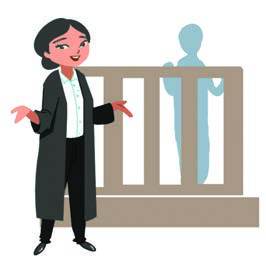
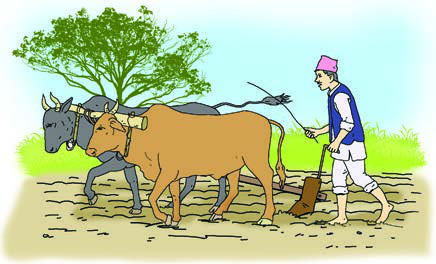
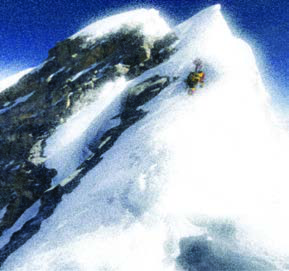
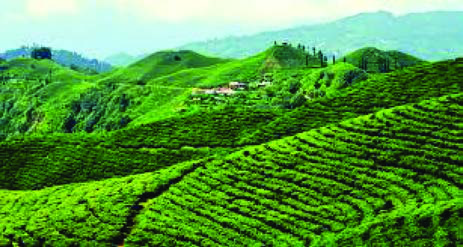
One picture shows a woman who could be a lawyer arguing a case in court. Another shows a farmer at work with a wooden plough and a stick in his hand. The third shows a climber close to a summit, and the fourth shows hills covered with tea bushes. Different people, different work, different places, yet describing them all uses the same five questions.
Songs describe feelings in the same way, and they use rhyme to do it. When you sing along to a happy song, listen for the rhyming words at the ends of the lines, because they are what make a song easy to remember. Then try collecting rhymes of your own.
Rhyme: two words rhyme when they end with the same sound. Space rhymes with face, place, race, case and lace. You rhymes with do, too, blue, true and new.
Dr. Sanduk Ruit, the Doctor Who Restores Eyesight
Dr. Sanduk Ruit is an ophthalmologist, a doctor who treats diseases of the eye. He was born on September 4, 1954 in Olangchunggola, a remote mountainous village in Taplejung, Nepal. It was one of the most remote locations in the country, with no electricity, no school and no health facility. He was the second of his parents' four children.
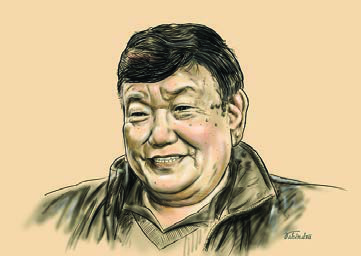
The nearest school was eleven days' walk away, in Darjeeling. His father, a small-time businessman, made his children's education a priority and sent him to St. Robert's School there. In 1969 Ruit passed his SLC from Siddhartha Vanasthali School in Kathmandu. From 1972 to 1976 he studied MBBS at King George's Medical College in Lucknow, India, and then at the All India Institute of Medical Sciences in Delhi. He also studied in the Netherlands, Australia and the United States.
In 1980, while working on the Nepal Blindness Survey, Ruit met Fred Hollows, an Australian eye surgeon who soon became his mentor. Hollows helped him choose his life's path: to restore eyesight to people who are unnecessarily blind. Ruit went on to study with Hollows at the Prince of Wales Hospital in Sydney, and the two held one firm idea, that all people with treatable blindness have the right to restored eyesight. In 1995 Ruit developed a new lens that could be produced far more cheaply than western ones. It is now used in over 60 countries, his method is taught in medical schools in the United States, and despite being far cheaper it has the same success rate as western techniques.
In 1994 Ruit and The Fred Hollows Foundation founded the Tilganga Eye Centre, now called the Tilganga Institute of Ophthalmology. It has performed over 90,000 operations and trained over 500 medical personnel from around the world. As a tribute to his remarkable achievements, he has received prestigious awards: the Ramon Magsaysay Award in June 2006, the Padma Shri, India's fourth highest civilian honour, in 2018, and the Suprasiddha Prabal Janasewashree (First) from the Government of Nepal in 2021. Today he is the co-founder of the Himalayan Cataract Project, whose mission is to bring eyesight back to anyone who needs it, regardless of his or her ability to pay.
One life can change thousands of lives. A boy from a village with no school became the doctor whose cheap lens has given people their eyesight back in more than 60 countries.
| Year | Event |
| 1954 | Born in Olangchunggola, Taplejung |
| 1969 | Passed his SLC from Siddhartha Vanasthali School, Kathmandu |
| 1972-1976 | Studied MBBS at King George's Medical College, Lucknow |
| 1980 | Met Fred Hollows during the Nepal Blindness Survey |
| 1994 | Founded the Tilganga Eye Centre with The Fred Hollows Foundation |
| 1995 | Developed a new low-cost lens, now used in over 60 countries |
| 2006 | Received the Ramon Magsaysay Award |
| 2018 | Received the Padma Shri from the Government of India |
| 2021 | Received the Suprasiddha Prabal Janasewashree (First) from the Government of Nepal |
Words That End in -ologist
English builds the names of many specialists from the ending -ologist. If you know the first part of the word, you can guess the whole meaning. Say each word slowly, in parts, and put the stress on the syllable just before the ending: oph-thal-MOL-o-gist, zo-OL-o-gist, psy-CHOL-o-gist.
-ologist: an ending that names an expert, a person who studies or treats a particular thing. A zoologist studies animals; a dermatologist treats the skin.
| Word | Who the person is |
| ophthalmologist | a doctor who treats eye diseases |
| radiologist | a doctor who works with X-rays and scans |
| biotechnologist | a scientist who uses living things to make useful products |
| zoologist | a scientist who studies animals |
| psychologist | a specialist who studies the mind and behaviour |
| dermatologist | a doctor who treats the skin |
| ornithologist | a scientist who studies birds |
| criminologist | a specialist who studies crime and criminals |
In psychologist the first p is silent: say sy-KOL-o-gist. In ophthalmologist do not swallow the middle: oph-thal-MOL-o-gist.
Who, Which and Where: Two Sentences Become One
Read these two sentences. Dr. Sanduk Ruit is an ophthalmologist. He cures people's eyes. Both talk about the same person, so English lets us join them into one: Dr. Sanduk Ruit is an ophthalmologist who cures people's eyes. The joining words who, which and where each have their own job, and choosing the right one depends on what the shared word names.
Who joins sentences about a person. She is the girl. She cuts my hair. Together: She is the girl who cuts my hair.
Which joins sentences about a thing or an animal. Olangchunggola is a remote place. It lies in Taplejung. Together: Olangchunggola is a remote place which lies in Taplejung.
Where joins sentences about a place, when something happens in that place. This is the house. I was born here. Together: This is the house where I was born.
To combine two sentences into one, work through these steps.
- Find the word the two sentences share, such as the girl and she.
- Choose who for a person, which for a thing or an animal, and where for a place.
- Put the joining word straight after the shared noun and drop the repeated word.
- Read the new sentence aloud to check that it sounds complete.
Never use which for a person. The boys which were dancing is wrong; say the boys who were dancing. And after where, drop words like here and there: this is the house where I was born, never where I was born here.
Describing People, Scenes and Objects
A relative clause is exactly what you need to point out one person among many. Question: Who is the woman wearing a white coat? Answer: The woman who is wearing a white coat is a doctor. In the same way, the man who is standing in front of the red bus is a driver, and the man who is laying bricks is a mason.
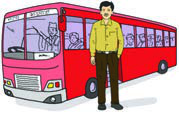
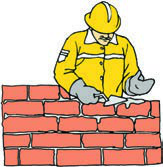
Look at pictures of people at work with a careful eye. If every doctor, pilot, carpenter and police officer you see drawn is a man, that is a problem with the pictures, not with the jobs. Women drive buses, fly planes, build houses and run shops too, and saying so is part of describing pictures honestly.
A whole scene is described the same way, one sentence at a time. Look at the garden below and try five sentences of your own before reading the model.
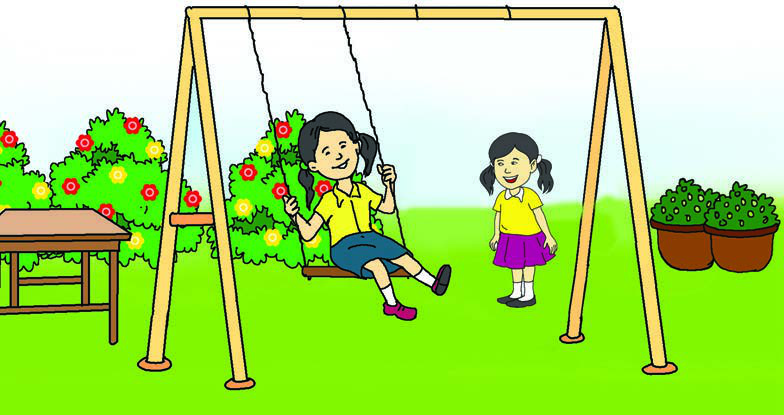
Here is one model. Two girls are playing in a garden. One girl, who is wearing a blue skirt, is swinging on a wooden swing. Her friend, who is in a yellow t-shirt, is watching her happily. Flowering bushes grow behind them and two flower pots sit on the right. A wooden table stands on the left.
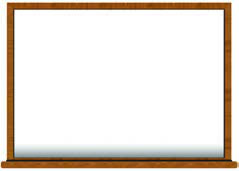
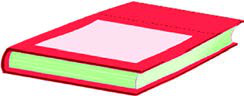
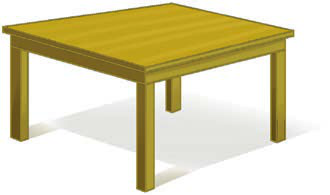
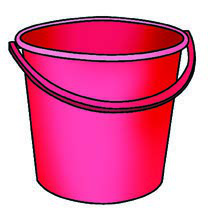
Objects are described by answering three small questions: what is it made of, what does it look like, and what is it used for. The pencil is made of wood. It is long. It is used for drawing. Practise the same three sentences on the things below: a board, a book, a table and a bucket.
Listening for Details About Everyday Things
You will hear short descriptions of four everyday things: a fan, a pillow, a wheelbarrow and a bag of coffee. Before the audio plays, name each object aloud and say what it is used for. That prepares your ear for the words that are coming. Then listen and complete each sentence with exactly one word from the audio.
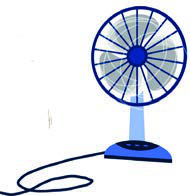
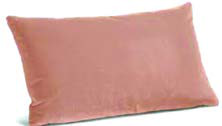
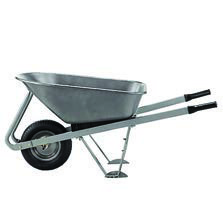

Listen for particular kinds of words. For the fan, a material and a describing word about the room. For the pillow, a shape and a use. For the wheelbarrow, a place and the parts it has beside its one wheel. For the coffee, a colour and something it gives us. Write only one word in each blank, and check your spelling once the audio ends. Afterwards, talk to your friends about the same four objects: say what each one is, what it is made of and what it is used for.
Kathmandu, the Capital City
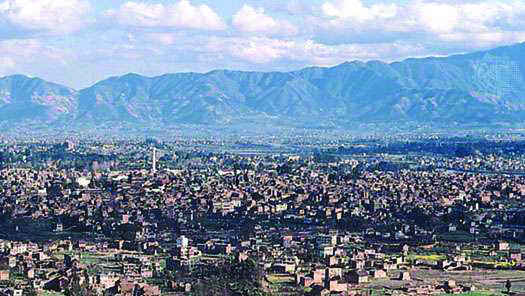
Kathmandu is the capital of Nepal. It lies in a hilly region at 4,344 feet, which is 1,324 metres, above sea level. The city was founded in 723 by Raja Gunakamadeva. Its present name comes from Kasthamandap, a wooden temple said to have been built from the wood of a single tree in 1596. In the 1970s the construction of new roads and the expansion of air travel were centred upon Kathmandu, and the city became the hub of the national transportation system.
The city has two faces. Its present day streets contrast strongly with the older sectors of narrow streets and brick houses with carved doors and windows. Destruction caused by an earthquake in 1934 CE led to the construction of many modern-style buildings. The city's most notable building is the old palace of the Malla Kings, which includes the Taleju temple, built in 1549 by Raja Mahindra Malla. The palace's main gate is guarded by a figure of the god Hanuman, in a small adjoining square.
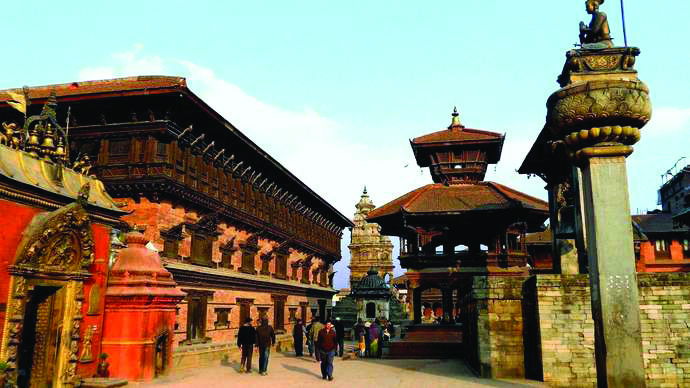
To the east lies Tundikhel, the parade ground from which important government pronouncements were formerly made first to the army. There stands a tall tower built by Bhimsen Thapa, a former prime minister. On the outskirts of Kathmandu are many palaces built by the Rana family. Singha Durbar, once the official residence of the Rana prime ministers, now houses the government secretariat. About 3 miles northeast rises the great white dome of Boudhanath, a Buddhist shrine revered by Tibetan Buddhists.
The surrounding Kathmandu Valley, noted for its vast historic and cultural importance, was designated a UNESCO World Heritage site in 1979 CE. Vulnerable to urban sprawl, it was placed on the List of World Heritage in Danger in 2003 CE, and it was removed from that list in 2007 CE after conservation efforts by the government. On April 25, 2015, an earthquake of magnitude 7.8 struck central Nepal, with its epicentre about 50 miles northwest of Kathmandu. Some 9,000 people were killed and about 16,800 were injured throughout Nepal by the main quake and its many aftershocks. Kathmandu was severely damaged, especially the buildings of its historic centre, and tens of thousands of people were made homeless.
Asking Questions with Wh-Words
Every answer hides a question. My name is Ram Karki answers What is your name? I'm from Dhading answers Where are you from? Banks open at 10 o'clock answers When do banks open? A question that begins with a wh-word asks for information, not for yes or no.
Wh-question: a question that begins with a question word such as what, where, when, why, who, whose or how, and asks for information rather than for yes or no.
| Question word | Asks about | Example |
| What | things and information | What is your name? |
| Where | places | Where are you from? |
| When | time | When do banks open? |
| Why | reasons | Why is she sad? |
| Who | people | Who is she? |
| Whose | possession | Whose book is this? |
| How | manner, and amounts with many or much | How does he run? |
To make a question for an answer, find the information the answer gives and choose the word that asks for it. They went to Spain names a place, so ask Where did they go? He writes novels names a thing, so ask What does he write? Twenty students is a number, so ask How many students are there? Notice that a helping verb such as do, does or did moves in front of the subject, and the main verb returns to its base form: He runs fast becomes How does he run?
Writing a Biography and Describing Your Place
A biography is the written story of a real person's life. It moves in the order of the life itself, so plan it with these clues before you write.
- Full name, date of birth and place of birth
- Early life and family
- Educational details, highlighting any major achievements
- His or her contribution to society
- Why he or she is famous
- Awards and achievements
A paragraph about your own village or town follows clues in the same way: its name, its location, the area it covers, where the name comes from, its special features, and what you like and dislike about it. Keep the sentences short and put the facts first, the way a text about a city gives its height, its founder and its famous buildings before anything else.
For project work, collect information from the library about one famous person from Nepal or abroad, and arrange the name, date of birth, place of birth, major contributions and awards on a poster or a mind map. A mind map puts the person's name in the centre and hangs each fact from its own branch, so the whole life fits on one page.
Adjective or Adverb?
Adjective: a word that describes a noun. It comes before the noun or after a verb like is: an easy question, the weather is clear.
Adverb: a word that describes a verb and tells how something is done. Most adverbs are made by adding -ly to an adjective: clearly, easily.
Choose by asking what the word is describing. Mary pronounces every word clearly, because clearly tells how she pronounces. We like to go sailing in clear weather, because clear describes the weather, a noun. The teacher asked us an easy question, and I answered it easily.
The adverb of good is well, never goodly. You speak English very well, but your English is very good. Good describes the noun English; well tells how you speak.
The full lesson is waiting for you
The notes are free to read in full. A free account opens the rest of the practice, and tracks your progress and confidence score for every subject. Presentations and videos need approval from Learn Yeti.