Signs Are Sentences Without Words
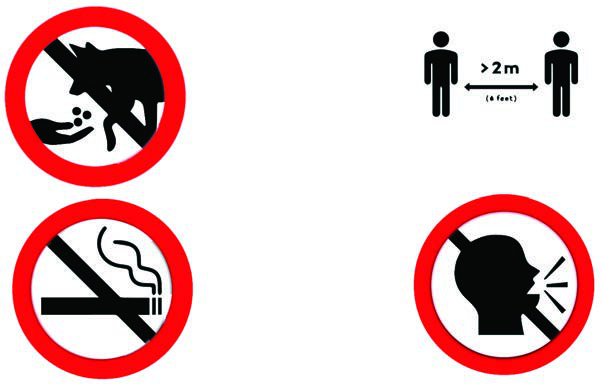
Look around any public place and you will find small pictures giving you orders. A red circle with a line through a hand feeding an animal tells you that feeding is forbidden. Two figures with an arrow between them marked more than 2 m tell you to keep your distance. A crossed-out cigarette forbids smoking, and a crossed-out shouting face tells you not to yell at or near other people. A sign is really a short sentence with the words removed. When we put the words back, we say things like this: You mustn't feed the animals. You must keep a distance of more than two metres. You mustn't smoke here. You mustn't shout at others.
The words that turn a sign into a sentence belong to a small family of helping verbs. This unit is built around them. They come in pairs that are close in meaning: can and could, will and would, may and might, ought to and should, have to and must, don't have to and needn't, able to and can, mustn't and can't. Learn them as pairs and you will always have a second way to say the same thing.
A modal verb is a helping verb, also called an auxiliary verb, that sits before the main verb and adds a meaning such as permission, necessity, possibility or advice. It never takes s, ing or ed. Example: You must wear a mask. Here must is the modal and wear is the main verb.
When Someone Is Sick at Home
Covid-19 is a disease caused by the coronavirus, and during its spread the World Health Organization prepared a poster for ordinary families. Its message is practical: life has to continue even where the disease is spreading, so a family with one sick member needs a clear plan. The plan has three jobs. Isolate the sick person. Reduce contact with the virus. Take care of the sick person. Notice how much of this advice is written with modal verbs, because health advice is a set of rules.
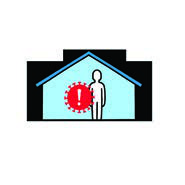
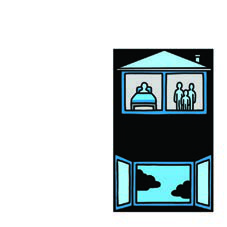
First, isolate the sick person. Isolate means keep away from others. Prepare a separate room, or at least a separated space, and keep distance from the rest of the family. The room must be well ventilated, which means fresh air can enter and move around it, so the windows should be opened frequently.
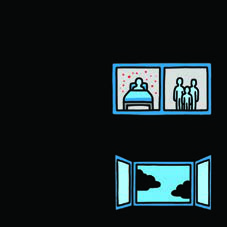
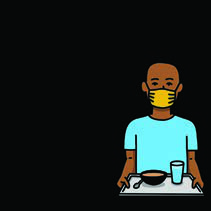
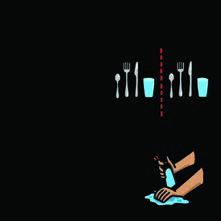
Second, reduce contact with the virus. The family chooses one member to be the contact person, someone who is not at high risk and who meets the fewest people outside. Anyone in the same room as the sick person wears a medical mask. The sick person gets separate dishes, cups, eating utensils and bedding, and nobody else uses them. Surfaces that hands touch often, such as door handles and table tops, are cleaned and disinfected frequently. Disinfect means clean with a substance that kills germs.
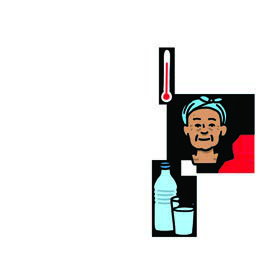
Third, take care of the sick person. Watch the symptoms regularly. Symptoms are the changes in your body or mind that show you are not healthy, such as fever or a cough. Pay special attention if the person is old or already weak, because they are at higher risk of serious illness. Make sure the sick person rests and stays hydrated, which means the body takes in and holds enough water.
Danger Signs: When to Call for Help
Most sick people recover at home with rest and care. But four signs mean the illness has become serious: difficulty breathing, loss of speech or mobility, confusion, and chest pain. These are called danger signs because home care is no longer enough when they appear.
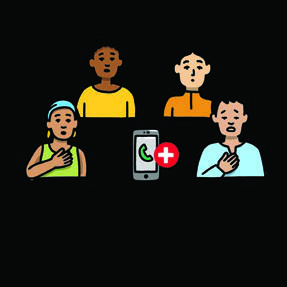
Difficulty breathing, chest pain, confusion, and loss of speech or mobility are emergencies. Do not wait to see if they pass. Call your healthcare provider immediately if the sick person shows any one of them.
The Modal Toolbox: must, mustn't, have to, can and can't
Study these sentences and watch what each helping verb does. You can put your shoes there. You are allowed to put your shoes there. Those two sentences mean the same thing: permission. You can't leave your car there, it is a no parking zone. You are not allowed to drive a tractor without a driving licence. Both of those refuse permission. I must call an electrician to get the light fixed. You have to have a driving licence to drive a tractor. Both of those say something is necessary. You mustn't worry about me. That forbids something. You don't have to have a licence to ride a bicycle. That says something is simply not necessary.
can gives permission or states ability. It means the same as are allowed to. Example: You can park your bike here for a maximum of 25 minutes.
can't refuses permission or states that something is impossible. It means the same as are not allowed to. Example: Visitors can't park their cars in the staff car park.
must says something is necessary, often because the speaker feels it strongly. Example: Baggage must be attended every time.
mustn't forbids something completely. It is a prohibition, not a choice. Example: You mustn't hit your friend again.
have to says something is necessary because of a rule or a situation outside the speaker. Example: You have to have a driving licence to drive a tractor.
don't have to says something is not necessary. It means the same as needn't. Example: You don't have to go to the bank. You can pay online.
| Verb | What it does | Example |
| can / are allowed to | gives permission | You can put your shoes there. |
| can't / are not allowed to | refuses permission | You can't leave your car there. |
| must | says it is necessary | I must call my sister. It's her birthday today. |
| mustn't | forbids it | You mustn't be late to class. |
| have to | necessary because of a rule | You have to attend every lesson. |
| don't have to / needn't | not necessary | You don't have to walk. I can drive you. |
mustn't and don't have to look like a pair but mean opposite kinds of things. You mustn't swim here means swimming is forbidden. You don't have to swim means swimming is not necessary, but you may if you want. Never use don't have to for a prohibition.
Guessing with must, might, could and can't
The same small verbs also let us make guesses about what is true. When you are sure something is true, use must. I saw the neighbours this morning, so they must be in their house. When you are sure something is impossible, use can't. You have just had lunch, so you can't be hungry already. When something is only possible, use might or could. It is not raining now, but it might rain later. For a guess about the past, put have plus the past participle after the modal. Where has Manshu gone? I am not sure. She might have gone to the bank. And could works for past ability and its negative for past impossibility: I had to work that evening, so I couldn't go to the party.
Modals of deduction are must, can't, might and could when they express how sure the speaker is. must be means I am sure it is true, can't be means I am sure it is not true, and might be or could be mean it is possible.
Speaking: Telling What a Sign Means
Now put the toolbox to work on real signs. For each sign, decide whether it orders you to do something or forbids you from doing something, then say it with must or mustn't. A finger on closed lips: you must keep silence. A crossed-out mobile phone: you mustn't use your mobile phone here. A turn arrow marked only: you must turn right only. No parking from 8:30 AM to 5:30 PM: you mustn't park here during office hours. Keep left: you must keep to the left. A crossed-out camera: you mustn't take photographs. A person using a dustbin: you must throw litter in the bin. Danger, keep out: you mustn't enter. A masked face: you must wear a mask. Caution, slippery floor: you must walk carefully. Chemical storage: you mustn't eat or drink here. Crossed-out pets: you mustn't bring pets. 18 plus: you mustn't enter if you are under eighteen.
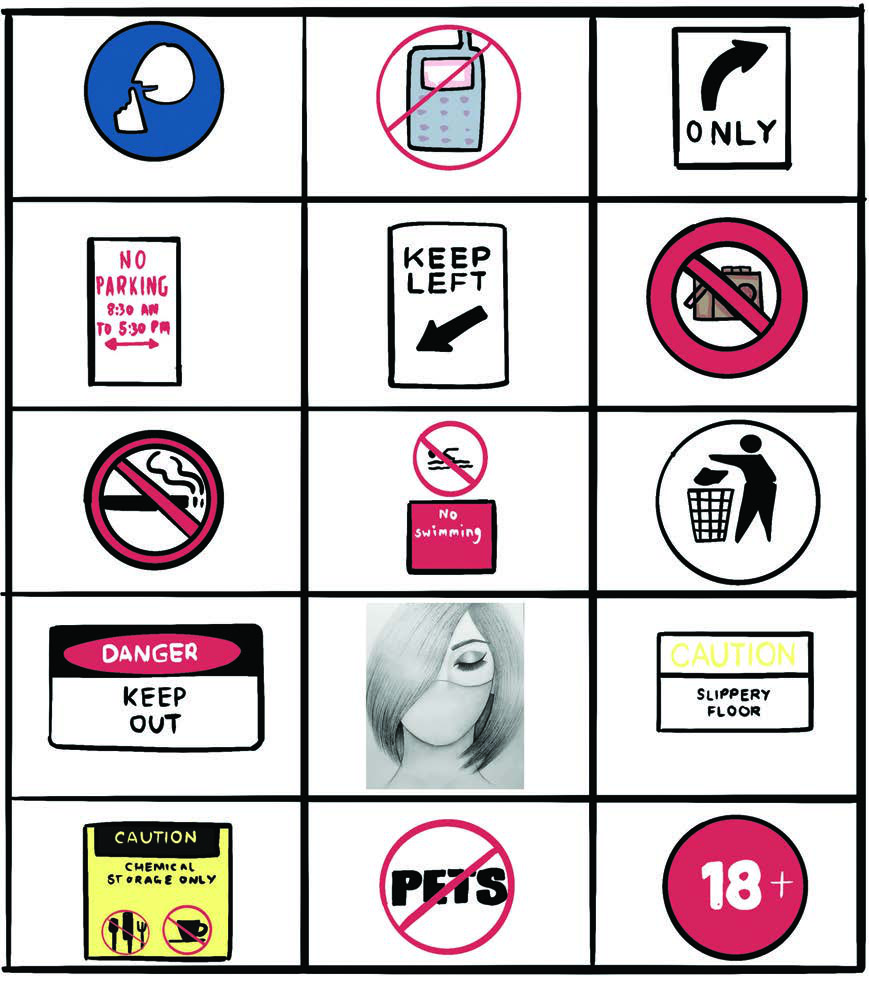
have to is the natural verb for a list of duties. If Dinesh's list for today says pay the electricity bill, buy a pair of sandals, buy a kilo of sugar, wash clothes and brush shoes, and cook food in the evening, then we say: Dinesh has to pay the electricity bill. He has to buy a pair of sandals and a kilo of sugar. He has to wash his clothes and brush his shoes. In the evening he has to cook food. Notice has to, because Dinesh is one person. The same frames carry any how to talk: how to pass an exam, how to be a good student. You have to attend classes regularly. You must revise your notes. You should ask questions when you are confused. You don't have to study all night. You mustn't cheat. You shouldn't waste your time on the phone.
Listening: Cooking with Grandmother
Before listening, study the picture and predict. An old woman is cooking something in a pan over a small fire while a girl sits beside her. They look like a grandmother and her granddaughter cooking together at home. Predicting like this prepares your ear for what the audio will say.
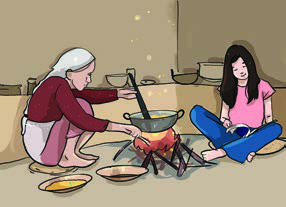
The listening task is a table of unfinished sentences, and the audio supplies the missing last words. The stems tell you exactly what to listen for: what the grandmother is going to cook, what the girl must wear, what they must mix everything to get, what the dough must be rolled with, what the grandmother is not going to let the girl slice, what the girl can cut, what the girl must be careful with, how long they shouldn't bake the pizza for, what they are going to the park to have, and what they are taking along with their roller skates. Read the stems before the audio plays, so that when a sentence begins you already know which word is coming. Most blanks are nouns, and one is a length of time, so listen for numbers there.
The second listening task asks for two-word verbs like should wear. A two-word verb here is a modal plus a main verb: should wear, must mix, must be, can cut, shouldn't bake. Every time you hear a modal, catch the verb that follows it and write the pair down. This task shows you that the grammar of this unit is not only in books. People use it every time they explain how to do something.
Reading: Rules of the Central Zoo
The Central Zoo at Jawalakhel, Lalitpur publishes rules for its visitors, and every rule is a real example of the grammar above. Respect the animals: treat them with the respect they deserve, never yell at or taunt them, never bang on their enclosures, and never throw objects into their habitats. Respect your boundaries: never cross a fence or barrier and never try to touch an animal, because an animal with teeth can bite and an animal with claws can scratch. Do not feed the animals: they eat diets approved by a veterinarian, and human food may make them sick. The one exception is the Feed Your Friends programme, where visitors may feed certain animals with approved food bought from the gift shop. No smoking anywhere in the zoo, including the parking lot, to reduce fire hazards. No pets, because pets are prohibited to protect both the zoo animals and your own animal. And children must be supervised at all times: anyone under the age of 16 must be accompanied by an adult.
Read those rules again and underline the rule language: never, do not, may, can, must be. A rule is always built from permission words and prohibition words. That is why this reading sits in a grammar unit.
Writing Rules of Your Own
Now you write the rules. The first task is a one-page leaflet for junior students on how to stay safe from Covid-19. A leaflet works because it is short and visual, so plan it like a poster rather than an essay.
- Give the leaflet a big clear title, such as Stay Safe from Covid-19.
- Write five to seven short commands using must, mustn't and should: You must wash your hands with soap. You must wear a mask in crowded places. You must keep a distance of two metres. You mustn't touch your face with unwashed hands. You should stay home if you feel sick.
- Add a simple picture beside each command so a small child understands it without reading.
- End with one line saying where to get help, such as: If you feel sick, tell your teacher or your parents.
The second task is a set of school rules, where the sentence frames do the work: You must attend every lesson. You mustn't be even one minute late. You must do all your homework. You mustn't look at your watch to check the time. You should come early and do your homework before the class. You must bring all your textbooks. You shouldn't worry about making mistakes when you are speaking. The third task is at least six rules for your school library or computer lab, and the project asks groups of four or five to gather information about Covid-19 from different sources, turn it into rules for protecting yourself, and display those rules at different places around the school.
A Story About Rules and Lies
The unit closes with a story about four college students who partied all night instead of studying for the next day's test. In the morning they dirtied themselves with grease, went to the Dean, and claimed that a tyre of their car had burst on the way back from a wedding, so they had pushed the car all the way and could not sit the test. The Dean calmly gave them a re-test after three days, but placed each student in a separate classroom. The paper had two questions: your name for one point, and which tyre burst for ninety-nine points, with four options: front left, front right, back left, back right. The trick is simple and clever. If the story were true, all four would name the same tyre without needing to agree. Because it was a lie, each student had to guess, and four separate guesses agreeing by chance is very unlikely. The Dean's second question was a lie detector built from one fact the liars had never planned. The story earns its place in this unit: the students broke a rule they had to follow, and no trick could hide it.
The full lesson is waiting for you
The notes are free to read in full. A free account opens the rest of the practice, and tracks your progress and confidence score for every subject. Presentations and videos need approval from Learn Yeti.