Magnets and Magnetic Substances
A magnet is an object that pulls iron filings, nails and pins towards itself. Inside every magnet there is a certain pulling power, and this power is called magnetic force. It is because of this force that a magnet draws some objects towards it. A magnet does not pull everything, though. A piece of wood, a plastic pen or a pinch of stone dust lying beside a magnet does nothing at all, while a small iron pin placed beside it jumps and clings to it.
Magnet: a magnet is an object that attracts iron filings, nails, pins and similar objects towards itself.
Magnetic force: the attracting power present in a magnet is called magnetic force.
Magnetic substance: an object that a magnet attracts towards itself is called a magnetic substance. Iron and steel are magnetic substances.
Non-magnetic substance: an object that a magnet does not attract is called a non-magnetic substance. Wood, plastic, glass and stone are non-magnetic substances.
Magnets are made in several shapes. Three that you will meet often are the U shaped magnet, which looks like a horseshoe, the long four sided bar magnet, and the magnetic compass, whose needle always settles pointing north and south.
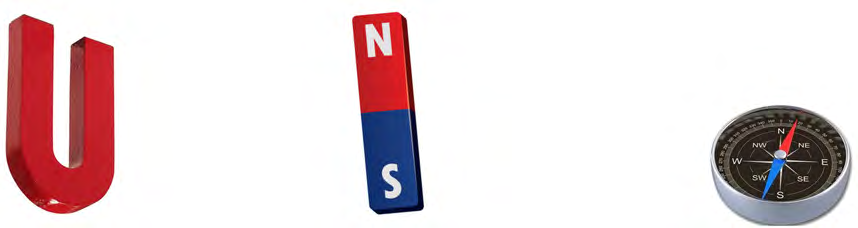
A magnet is hidden inside many of the machines around us. The devices listed below all use magnets.
- Radio
- Telephone
- Electric motor
- Transistor
- Microphone
- Fan
- Loudspeaker
- Generator
Long ago a shepherd named Magnes went out to graze his sheep wearing shoes with iron nails in them. As he was walking, his shoe suddenly stuck fast to the ground. He pulled with all his strength and still could not free it. When he searched for the reason, he found that a magnet lay in that ground and had gripped the iron nails. That is how the magnet was discovered, and at the same time people learned that a magnet attracts magnetic substances such as iron.
The Magnetic Field
How far a magnet's power reaches can be seen with one simple piece of work. Take a bar magnet, some iron filings and a sheet of white paper, and work through the steps below.
- Step 1: Lay the bar magnet on the table and spread the white paper over it so that the magnet sits right in the middle.
- Step 2: Sprinkle the iron filings gently over the paper.
- Step 3: Tap the paper lightly with your finger and watch how the filings settle.
- Step 4: Observe how far from the magnet the filings have been pulled into a pattern, and where they simply stay as they fell.
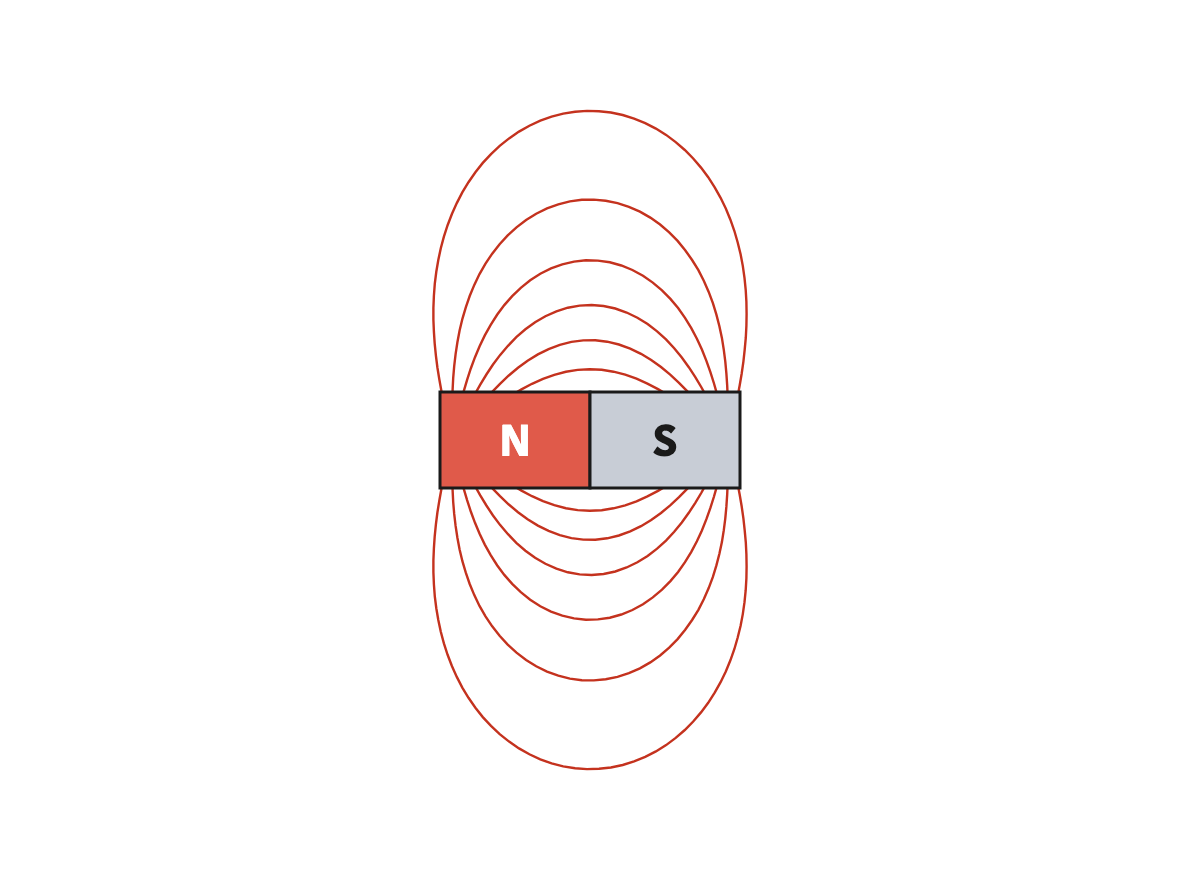
The filings that lie near the magnet are pulled into a clear pattern. The filings lying beyond a certain distance are not disturbed at all. This tells us that the effect of a magnet's force does not go past a certain region. The region around a magnet, as far out as the magnet can still pull iron filings or any magnetic substance towards itself, is called its magnetic field.
Magnetic field: the region around a magnet in which the effect of that magnet can be felt is called its magnetic field.
Every magnet has its own capacity to pull magnetic substances. A strong magnet has a magnetic field that stretches far out from it, while a weak magnet has a field that reaches only a short way.
The Poles of a Magnet
Look carefully at the pattern the filings make and something else becomes clear. Even in a single magnet, the strength is not the same everywhere. A great many filings gather at the two ends, while very few gather in the middle. So the magnetic force is much greater at the two ends of a magnet than in its middle. These strong ends are called the poles of the magnet.
Magnetic pole: the part of a magnet where the magnetic force is strongest is called a magnetic pole.
Every magnet has two poles, a north pole and a south pole. However small a piece you break a magnet into, each piece still has both of these poles.
Ways of Making a Magnet
There are several ways of making a magnet, but only magnetic substances can be used. A non-magnetic substance can never be turned into a magnet. You may rub a wooden stick or a plastic pen for as long as you like and it will still not become one. Of the magnetic substances, iron and steel are the ones most often used. A magnet made in this way is called an artificial magnet.
Artificial magnet: a magnet made by treating a magnetic substance in one of several ways is called an artificial magnet.
Two of the ways of making an artificial magnet from a magnetic substance are given below.
- (a) Stroking method
- (b) Electrical method
The Stroking Method
A magnetic substance can be turned into a magnet by stroking it with a permanent magnet. There are several ways of doing this, and the one given here is stroking the magnetic substance in one direction only. For it you need a magnetic substance such as an iron strip or an iron nail, and a permanent bar magnet.
- Step 1: Place the iron strip or nail on the table.
- Step 2: Touch one end of the object with the north pole of the bar magnet and draw it along to the other end.
- Step 3: When you reach the far end, lift the magnet away, bring it back to where you started and stroke again in the same direction.
- Step 4: Keep stroking in this one direction for a while.
- Step 5: Now bring the iron strip or nail close to some iron filings, pins or small nails and watch.
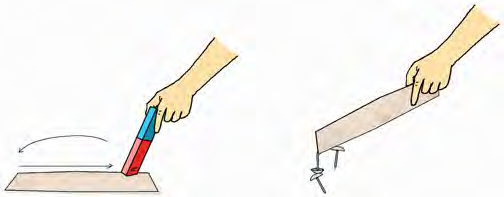
After it has been stroked for a while, the magnetic substance becomes a magnet and starts pulling iron filings and pins. There is a rule in this. At the end where the stroking magnet is lifted away, the opposite pole is produced in the new magnet. Nails, pins and blades can all be made into magnets by this same method.
The Electrical Method
A magnet can also be made with the help of electricity. For this you need an iron nail and about one metre of copper wire covered with an insulating layer. The wire must be an insulated one, because if the bare turns touch one another the current takes a short path across them and no magnet is formed.
- Step 1: Wind the copper wire around the iron nail about 80 to 100 times, all in the same direction.
- Step 2: Join the two ends of the wound wire to the two terminals of a cell.
- Step 3: Bring the nail close to magnetic objects such as iron filings, pins, nails or a blade, and watch.
- Step 4: Now disconnect one end of the wire from the cell and observe whether the nail still pulls the objects or not.
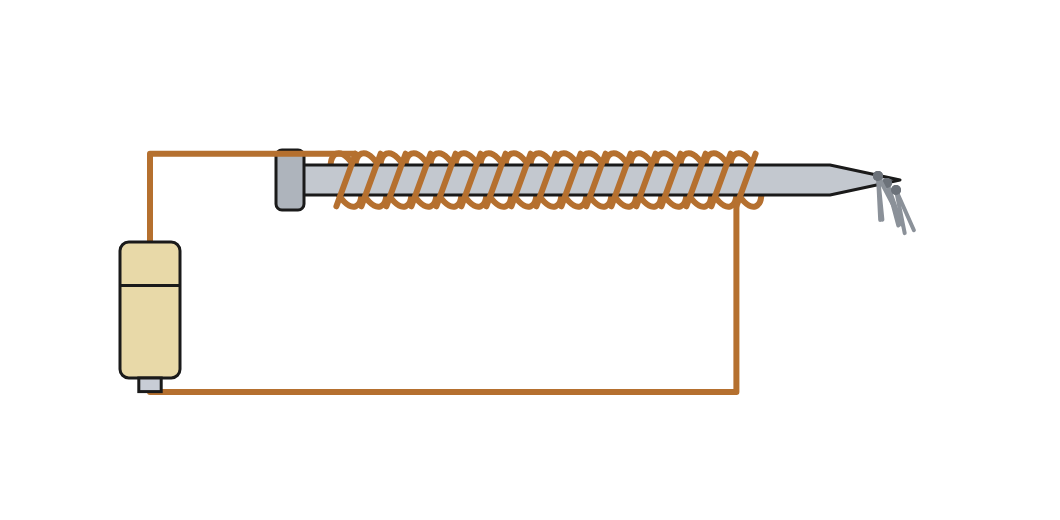
While the wire is joined to the cell the nail picks up pins and filings, but the moment one end is disconnected the nail stops pulling them. This shows that a magnet made with electricity is a temporary one. When it is needed, current is passed and the electromagnet is formed. When it is not needed, the current is stopped and the magnetism disappears.
Electromagnet: a magnet made by using electricity is called an electromagnet. Such a magnet is temporary.
When making a magnet this way, never use the mains line fitted in your house or school as the source of electricity. Use a cell only.
Changing the Strength of an Electromagnet
The strength of an electromagnet can be increased or decreased as needed, and that is its most useful quality of all. Its strength depends on two things: the number of turns of wire and the number of cells.
| Change made | Effect on the magnetic strength |
| Number of turns of wire increased | The strength increases |
| Number of turns of wire decreased | The strength decreases |
| Number of cells increased | The strength increases |
| Number of cells decreased | The strength decreases |
Where Electromagnets Are Used
Because an electromagnet becomes a magnet only while it is wanted and loses its magnetism when it is not, it is used inside many machines. The electric fan, the electric motor and the electric bell all use one. Look around your own home, hunt for such devices and ask your parents about them, then make a list of the ones you find.
Electricity and Its Sources
We need electricity for many of the things we do every day. Cooking, ironing clothes, washing clothes and lighting up a room all call for it. Telephones, televisions, radios, computers, heaters, irons, electric motors and air conditioners are all run by electricity as well. These days most industries and factories run on it too. That is why electricity is counted as an essential source of energy in the modern age.
Electricity can be produced in several ways. The cell, the photo cell, the dynamo and the generator are the main devices that produce it.
Source of electricity: a device that produces electricity is called a source of electricity.
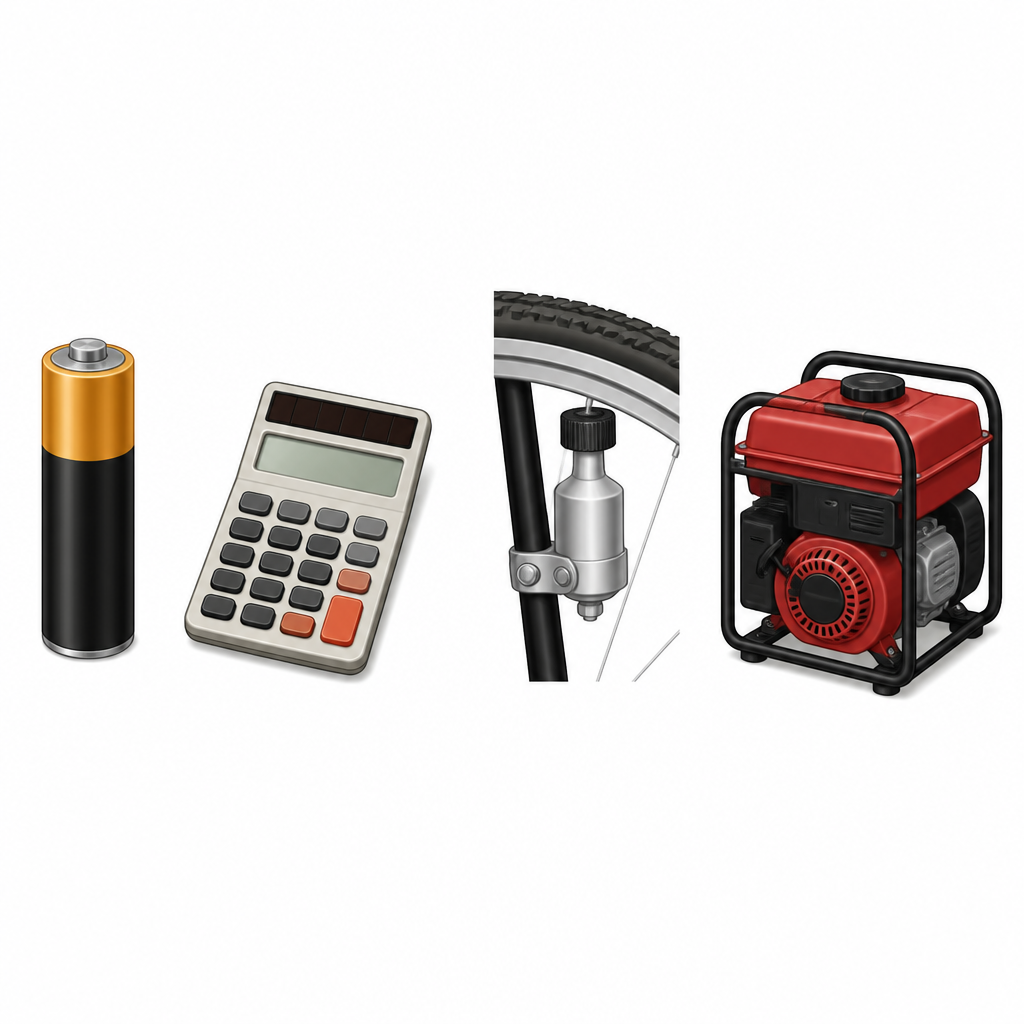
The Cell
You have certainly seen cells being used in a torch, a radio or a wall clock. A cell changes chemical energy into electrical energy. That electrical energy is then changed, with the help of a device, into light, heat, sound and other forms of energy. This is how a torch gives light, a heater gives heat and a radio gives sound.
Cell: a cell is a device that produces electricity by changing chemical energy into electrical energy.
The Simple Cell
We have all seen a dry cell. A simple cell is a cell you can put together yourself in a beaker. For it you need a beaker or a glass tumbler, one copper plate, one zinc plate, two pieces of copper wire, dilute sulphuric acid and a torch bulb.
Sulphuric acid is used in a simple cell, so you must never work with one except under your teacher's supervision and with the teacher's help.
- Step 1: With your teacher watching and helping, fill the beaker about half full with dilute sulphuric acid.
- Step 2: Dip one copper plate and one zinc plate into the acid, keeping them apart so that they do not touch each other.
- Step 3: Join both plates with conducting wires.
- Step 4: Connect those wires to the bulb and observe whether the bulb glows or not.
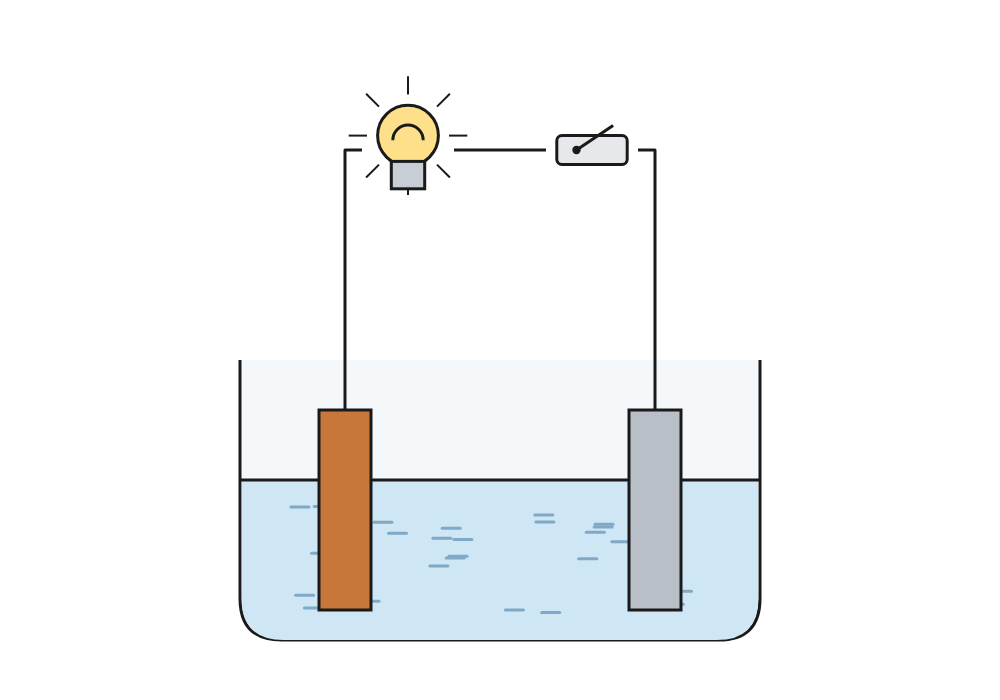
A simple cell produces electricity by changing chemical energy into electrical energy, and the bulb lights up. It has its limits, though. Because it holds sulphuric acid, it is not easy to carry from one place to another. It cannot produce much electricity. It cannot be used for very long either. For all these reasons a simple cell is of little use in daily life.
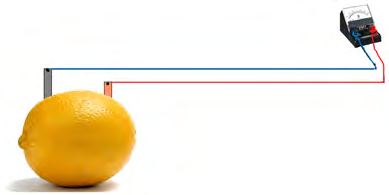
The same idea can be tried without any acid at all. Push a copper plate and a zinc plate into a lemon, a little apart from each other. Now join the plates to a galvanometer with copper wire and watch whether the needle moves. Then try the same thing with an apple, a potato and a pomelo, and find out for yourself whether electricity can be drawn from them too.
The Electric Circuit
Join a dry cell, some copper wire, a switch and a bulb together and watch what happens. Press the switch and the bulb glows. Now open the switch and look again: the bulb does not glow. In this arrangement the dry cell supplies the electricity, the copper wire gives the electricity a path, the switch opens and closes that path, and the bulb turns the electrical energy into light.
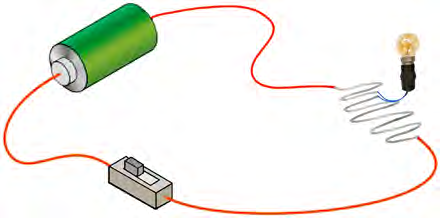
Electricity is a form of energy. It can be changed into light, heat, sound and magnetic energy. We use electrical energy to light lamps, run heaters, run fans and work radios, televisions and computers. The path along which electricity flows is called an electric circuit. Every electric circuit must have a source of electricity such as a cell, a conducting wire, and a load such as a bulb.
Electric circuit: the regular path made by joining a source of electricity, a conducting wire and a load so that electricity can flow is called an electric circuit.
Load: a device that runs with the help of electricity is called an electrical appliance, or a load. Lamps, heaters, fans, radios and televisions are electrical loads.
- Source of electricity: the dry cell, the photo cell, the dynamo and the generator.
- Conducting wire: the path that carries the electricity from one place to another.
- Load: the device that uses the electrical energy to do work, such as a bulb.
Closed and Open Circuits
When the switch is turned on the lamp glows, and a circuit in this state is called a closed circuit. When the switch is turned off, or a wire has come loose somewhere, the lamp does not glow, and a circuit in that state is called an open circuit. Put briefly, a circuit in which the load is working is a closed circuit, and a circuit in which the load is not working is an open circuit.
| Closed circuit | Open circuit |
| The path of the circuit is unbroken everywhere. | The path of the circuit is broken at some point. |
| Electricity flows through it. | Electricity does not flow through it. |
| The load works and the lamp glows. | The load does not work and the lamp stays dark. |
Symbols Used in Circuit Diagrams
Drawing an electric circuit with pictures that show the real shape and build of each device is fiddly, hard and slow. So circuits are drawn instead with a symbol for each device. The names of some important devices, and the symbols used for them, are given below.
| Device | What its symbol looks like |
| Wire | A plain straight line |
| Wires not joined | One wire reaches the other but does not join it |
| Wires joined | Two wires cross and are joined together |
| Switch | Two small circles in the line, with a bar that can be lifted off one of them |
| Electric cell | One long upright line and one short one, the long line being positive and the short one negative |
| Battery | Two or more cell symbols drawn in a row and joined |
| Resistance (load) | A zigzag line like the teeth of a saw |
| Lamp or bulb | A circle joined into the line |
| Fuse | A thin wire joining two small circles |
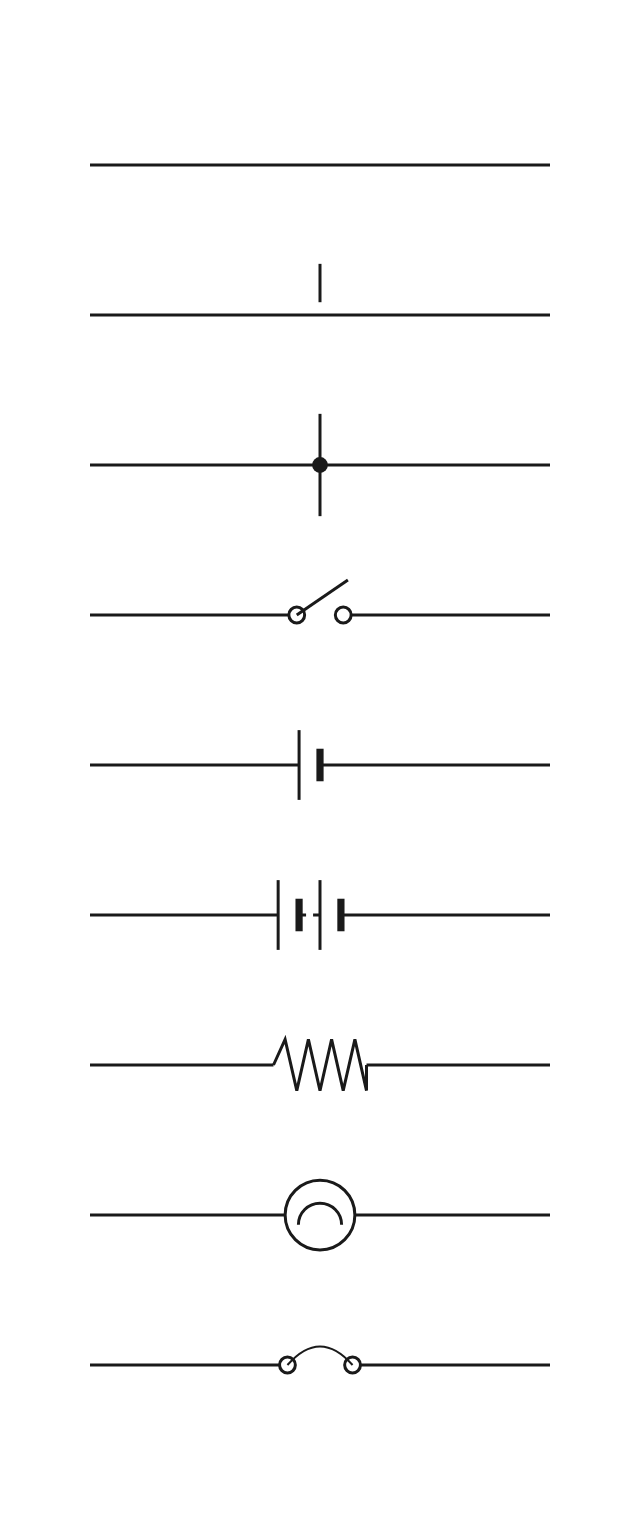
Now use these symbols to draw again the circuit made of a dry cell, conducting wire, a switch and a bulb. Compare it with a drawing of the real objects and judge for yourself how much easier and quicker this way is.
Effects of Current Electricity
Electrical energy can be changed into other forms of energy and made to do many kinds of work. This is called the effect of current electricity. Current electricity has several such effects.
Light effect: bulbs and tube lights glow and give light.
Heat effect: heaters and irons grow hot and give out heat.
Magnetic effect: a nail wound with wire becomes an electromagnet.
Chemical effect: passing electricity through a solution brings about a chemical change.
The Heating Effect of Current
Take a dry cell, some copper wire, a switch and a piece of nichrome or constantan wire, and join them together on a table or a wooden board. Turn the switch on and wait a little while. Then observe whether the nichrome or constantan wire has become hot or not.
Do not touch the nichrome or constantan wire with your hand. The nichrome wire must be kept on a surface that will not burn.
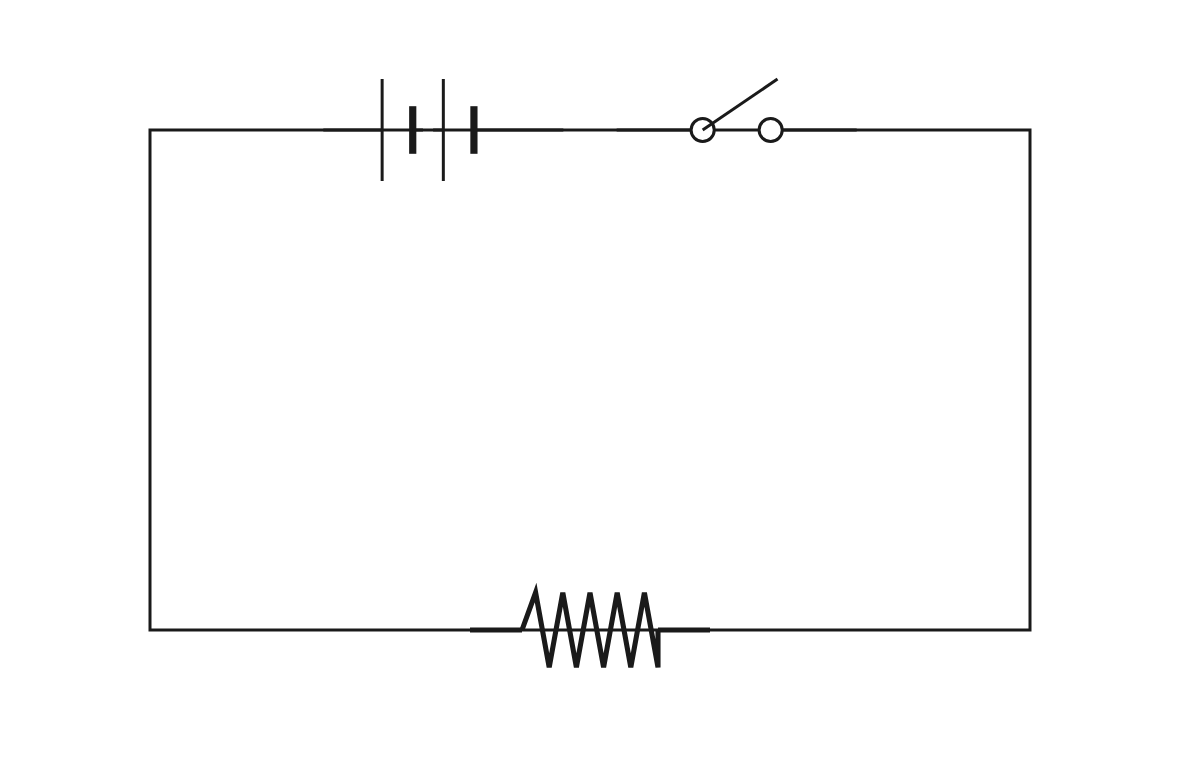
When electricity is passed through the coil of certain metals, that coil grows very hot and gives out heat. This process is called the heating effect of electricity. It is put to use in room heaters, cooking heaters, electric kettles for boiling water, immersion rods for heating water and irons for pressing clothes.
Heating effect of electricity: the process by which electrical energy is changed into heat energy is called the heating effect of electricity.
Heating element: the metal coil that grows very hot when electricity passes through it and changes electrical energy into heat energy is called a heating element.

The Fuse
Sometimes more electricity flows in a circuit than the circuit is built to carry. When that happens, the various electrical devices joined to the circuit can be damaged and a fire can break out. To guard against such an accident, a safety measure is fitted into the circuit, and the fuse is what is used for this.
Fuse: a fuse is a short piece of wire that melts at a low temperature, and it is joined into the electric circuit.
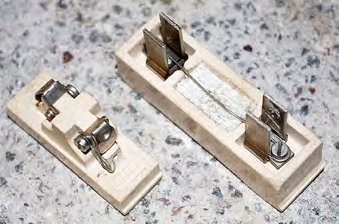
If too much electricity tries to flow in the circuit, the fuse wire melts. The moment it melts the circuit becomes open and the flow of electricity stops. In this way both the appliances and the house are saved. Fuse wire is used by setting it into a holder and a socket. If the wire has grown hot and melted, the case is opened, a fresh fuse wire is fitted and the circuit is used again.
If a fuse keeps blowing, never replace it with a thicker copper wire. A thick wire will not melt, so the circuit never opens, and the danger of fire becomes greater instead of less.
How a fuse works can be understood from one easy piece of work. Tie a small piece of nylon thread across a length of iron wire and heat one part of the wire with a candle. Observe which point the thread breaks at first. The weak point giving way first and breaking the path is exactly the way a fuse works.
The MCB
When a fuse wire melts it has to be replaced, and that job is troublesome and not easy for everyone. This is why the MCB was developed. The MCB is the improved form of the fuse. It too switches off by itself when more current flows than is needed, and by stopping the flow it saves us from accidents. As soon as it is switched on again, it starts working.
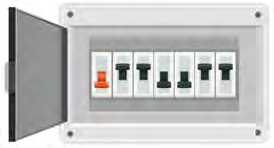
| Fuse wire | MCB | |
| It melts when too much electricity flows. | It switches itself off when too much current flows. | |
| Once it has melted a new wire must be fitted. | It works again as soon as it is switched on. | |
| Changing the wire is troublesome and not easy for everyone. | It is easy to use. |
Some Words Used in This Unit
Conductor: a substance through which electricity flows. Copper and iron are conductors.
Insulator: a substance through which electricity does not flow. Plastic, rubber and wood are insulators.
| Word | Meaning |
| Constantan | An alloy made from copper and nickel |
| Nichrome | An alloy made from nickel and chromium |
| Heating element | The coil of wire that heats up when electricity flows through it |
The full lesson is waiting for you
The notes are free to read in full. A free account opens the rest of the practice, and tracks your progress and confidence score for every subject. Presentations and videos need approval from Learn Yeti.