Units of Measurement Around Us
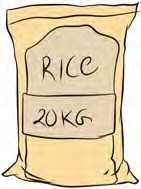
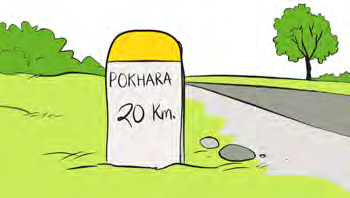
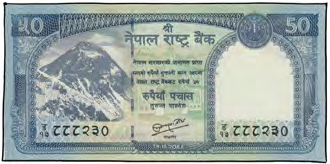
Walk into any shop in Nepal and you will see numbers with special words after them. A packet of cooking oil says 1 litre. A sack of rice says 20 kg. A milestone beside the highway says Pokhara 20 km. A bank note says 50 rupees. These special words are units of measurement. A unit tells you what kind of thing the number is counting: an amount of liquid, a weight, a distance or a sum of money. Without the unit, the number means nothing. Twenty what? Twenty kilograms of rice is a heavy sack, but twenty kilometres is a long bus ride.
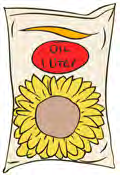
- The litre (l) measures liquids such as oil, milk and water.
- The kilogram (kg) measures weight, such as a sack of rice or a bag of sugar.
- The kilometre (km) measures distance, such as the road from your town to Pokhara.
- The rupee (Rs. or NRs.) measures money, the price of everything you buy.
You can practise this kind of talk without leaving your classroom. Look around for one minute. You will see a duster, a bench, a bag, a bottle, a map. Say the name of each object and what it is used for: a duster cleans the board, a bottle holds one litre of water, a bag carries books. Naming things and their uses is the first step towards asking about them, which is what this whole unit is about.
A Song About Falling Leaves
Before the shopping begins, there is a song to sing. The poet George Cooper wrote about the season when summer ends and the days grow cold. In his poem the wind talks to the leaves as if they were little children, calling them out to play in the meadows.
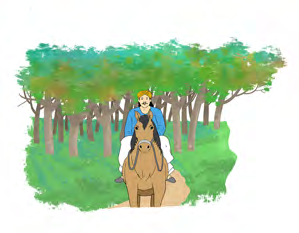
"Come, little leaves", said the wind one day,"Come to the meadows with me and play;Put on your dresses of red and gold,For summer is past, and the days grow cold."Soon as the leaves heard the wind's loud call,Down they came fluttering one and all;Over the meadows they danced and flew,All singing the soft little songs they knew.
The poem describes autumn. The leaves put on dresses of red and gold, which is how leaves really change colour before they fall. When the wind blows, they come fluttering down and dance over the meadows. The poet makes the wind and the leaves behave like people. Giving human actions to things that are not human makes a poem lively, and it is why this one is such a pleasure to sing aloud.
Reading a Price List
A price list is a table that shows the names of the items a shop sells and the price of each one, so that a buyer knows the cost before asking.
You see price lists on the walls of grocery stores, hotels, stationery shops and vegetable stalls. Here is the price list of a store called All in One Store. Every price is given per kilogram, which means that is the cost of one kilogram of the item.
| Item | Type | Price per kg (NRs.) |
| Pokhreli Rice | Rice | 80 |
| Jira Masino Rice | Rice | 80 |
| Indian Basmati Rice | Rice | 100 |
| Mansuli Rice | Rice | 65 |
| Sona Mansuli Rice | Rice | 60 |
| Taichin Beaten Rice | Rice | 120 |
| Normal Beaten Rice | Rice | 70 |
| Big Black Gram (Big Mas) | Daal | 160 |
| Small Black Gram (Small Mas) | Daal | 150 |
| Big Green Gram (Big Moong) | Daal | 160 |
| Red Lentil (Musuro) No. 1 | Daal | 130 |
| Red Lentil (Musuro) No. 2 | Daal | 120 |
| Split Red Gram (Rahar) | Daal | 180 |
| Split Bengal Gram (Chana Daal) | Daal | 160 |
A price list is made for comparing. Run your finger down the price column. Among the rice items, Taichin Beaten Rice is the most expensive at NRs. 120 per kg, and Sona Mansuli Rice is the cheapest at NRs. 60. Pokhreli Rice and Jira Masino Rice have equal prices, NRs. 80 each. Among the daal items, Split Red Gram is the most expensive at NRs. 180, and three items share the same price of NRs. 160: Big Black Gram, Big Green Gram and Split Bengal Gram. Reading a table this way answers real questions, such as which beaten rice you can afford with only 100 rupees. Taichin costs 120, which is more than you have, so you buy Normal Beaten Rice at 70.
To compare prices, use these phrases: cheaper than, costlier than, more expensive than, the cheapest, the most expensive. Sona Mansuli is cheaper than Mansuli. Indian Basmati is costlier than Pokhreli.
How Many and How Much
To find out about a quantity, English gives you two questions, and choosing between them depends on one thing: can the noun be counted?
A countable noun names things you can count one by one, so it has a plural form: one pen, two pens; one book, ten books.
An uncountable noun names something you cannot count one by one, such as water, milk, rice, time or money. It has no plural form; nobody says two waters.
How many asks about the number of countable things, and a plural noun follows it: How many pens do you have?
How much asks about the amount of an uncountable thing: How much water do you drink a day?
Practise in pairs. One of you asks, the other answers honestly. The pictures below all take How many, because each one shows things or people that can be counted.
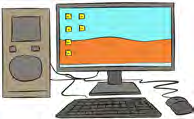

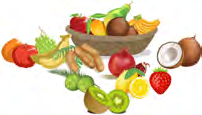


For things that cannot be counted one by one, the question changes to How much. The next pictures ask about tea, time and exercise, which are all uncountable.
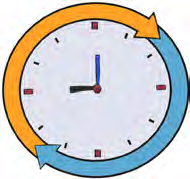
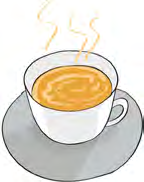
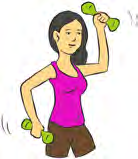

Money and time always take How much, even though you can count rupees and hours. Say How much money do you have, never How many money. The nouns money and time are themselves uncountable; only their units, rupees and hours, are countable.
Words That Show Quantity
Answers about quantity do not always need an exact number. English has a set of quantity words that say roughly how much or how many. Study these sentences: I saw many wild animals when I visited Chitwan National Park. There is not much water in the bucket. Is there any delicious food? I am feeling hungry. I have no time to cook. Last night, I read a few pages. Each coloured word above tells an amount without giving a number.
many: a large number of countable things. I saw many wild animals in Chitwan National Park.
much: a large amount of an uncountable thing, used mostly in questions and negatives. There is not much water in the bucket.
some: an amount that is present, used in positive sentences. I usually have some toast for breakfast.
any: used in questions and negative sentences. Is there any delicious food? I do not have any homework.
no: not even one, not even a little. I have no time to cook.
a few: a small number of countable things. Last night, I read a few pages.
a little: a small amount of an uncountable thing. I drank a little orange juice.
a lot of: a large number or amount, and it works with both kinds of noun. My sister makes a lot of really nice food.
| Amount | With countable nouns | With uncountable nouns |
| Question word | How many? | How much? |
| Large amount | many, a lot of | much, a lot of |
| Small amount | a few | a little |
| Present, or asked about | some, any | some, any |
| None at all | no, not any | no, not any |
Do not swap a few and a little. A few goes with countable nouns and a little with uncountable ones. A few pages is right, a little pages is wrong. A little juice is right, a few juice is wrong.
Listening for Prices at the Market
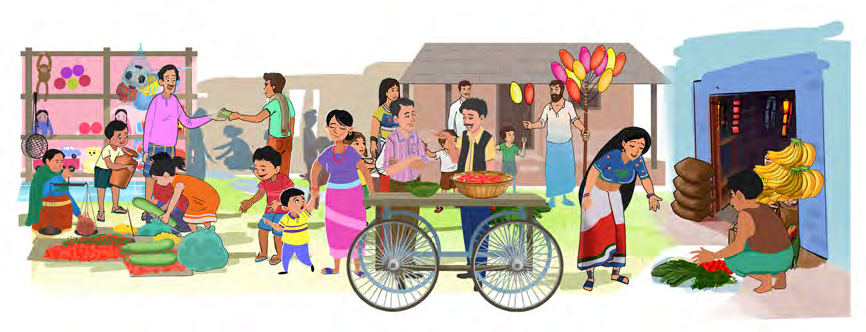
A market like this is full of quantity talk. A seller weighs cabbages on a scale, a buyer asks the price of tomatoes, a child begs for a balloon. Perhaps there is a weekly market like this in your own locality, called a haat bazaar in many places, where you go with your family to buy vegetables such as cabbage, broccoli, cauliflower and lady's finger. Every conversation there uses the language of this unit: How much is a kilo of cauliflower? Give me two kilos, please.
When you listen for prices, do two things. First, read the table you must fill so you know exactly which words to catch. Then, while listening, write only the item and its number, such as cabbage 40. You can turn notes into full sentences afterwards; you cannot rewind a real conversation.
Writing a Report from a Table
A table holds facts in rows and columns. A report turns those same facts into flowing sentences that anyone can read aloud. This is a writing skill you will use again and again, so learn the shape of it.
- Begin by saying what the table gives information about.
- Report each price in a full sentence, always writing the number with its unit, such as NRs. 80 per kg.
- Put items with equal prices together in one sentence instead of repeating yourself.
- Compare the items using cheaper than, costlier than and more expensive than.
- Finish by naming the most expensive item and the cheapest one.
Watch the method work on this table of stationery prices.
| S.N. | Item | Price (NRs.) |
| 1 | Pilot pen | 80 |
| 2 | Gel pen | 30 |
| 3 | Pencil box | 100 |
| 4 | Geometry box | 150 |
| 5 | Ruler | 40 |
| 6 | Marker | 50 |
Model report: The table gives information about the price of some stationery items. A pilot pen costs NRs. 80 while a gel pen costs only NRs. 30. The price of a pencil box is NRs. 100 and a geometry box costs NRs. 150. A ruler costs NRs. 40 and a marker costs NRs. 50. Different items have different prices. The geometry box is costlier than the pencil box, and the gel pen is cheaper than the pilot pen. The geometry box is the most expensive item and the gel pen is the cheapest one.
Reading an Advertisement
An advertisement is a notice or poster that tells people about goods for sale and tries to make them want to buy.
A discount is an amount taken off the usual price of an item. A 20 percent discount means you pay 20 rupees less on every 100 rupees of the price.

Read the poster the way you read a price list, but notice what is new. The heading shouts the special offer: a 20 percent discount for two weeks on the occasion of New Year. Then each item wears its price on a star: colour pencils Rs. 90, pens Rs. 20, exercise books Rs. 50, pencil boxes Rs. 75 and calculators Rs. 350. The pens are the cheapest item at Rs. 20, and the calculator is the most expensive at Rs. 350. The word Hurry Up and the short time limit are there on purpose; an advertisement wants you to buy quickly, so a careful reader always checks the real prices before deciding whether the offer is truly good.
Multiword Verbs
A multiword verb is a verb joined with a small word such as up, on, off, in, out or into, and together the pair makes a new meaning. Put means to place, but put on means to dress.
Multiword verbs fill everyday English. Before school you get up, put on your uniform and fill in your diary. At school you hand in homework and line up for assembly. At home you turn on the light to study and turn it off before you sleep, and you look after your little sister. The meaning of the pair is often quite different from the meaning of the verb alone, so learn each pair as one word. The common ones are listed below with their meanings.
| Multiword verb | Meaning |
| clean up | make clean |
| fill in | supply information |
| fill out | complete a form |
| give back | return |
| hand in | submit |
| hand over | give something to somebody |
| hold up | delay |
| line up | form in a line |
| look over | examine |
| look up | find information |
| point out | indicate |
| put on | dress |
| set up | arrange |
| try out | test |
| take off | undress |
| turn off | deactivate |
| turn on | activate |
| wrap up | finish |
| bump into | encounter |
| look after | care |
| bend over | incline body forward |
| check in | register |
| check out | leave |
| get away | escape |
| get together | meet |
| get up | arise |
| shut up | stop talking |
| slip up | make a mistake |
| break down | stop functioning |
| end up | finish |
| grow up | increase |
| pass away | die |
| show up | appear |
Project: Your Own Price List
Now take the unit out of the classroom. Make a group of five and visit a grocery store near your school or home. Politely ask the shopkeeper the price of any ten items available there, note each item with its price and unit, and arrange your notes into a neat price list with three columns: serial number, item and price. Back in class, compare your list with the lists other groups made. Are potatoes cheaper near your house or near the school? You can also do a home version: ask your parents the price of the food items in your kitchen and make a price list of ten different items, or prepare a price list of the stationery items you own. Every list you make is practice in the real skill of this unit, which is handling quantities, prices and units in clear English.
The full lesson is waiting for you
Create a free account to unlock activities, practice tests, presentations and videos - and to track your progress and confidence score for every subject.
The litre measures liquids, the kilogram measures weight, the kilometre measures distance and the rupee measures money.
11 more points to remember - sign in to see the rest.
Question 1 of 16