Things You Can Do and Things You Cannot
Every day people around you are busy doing things. A man pours hot tea into cups. A boy climbs a tree. A porter carries a heavy sack on his back. A girl takes a book down from a shelf. Some of these activities you can do yourself. Some you cannot do yet, and some you can only do with another person's help. Think about each one: could you make tea safely? Could you climb that tree? Could you lift that sack alone?
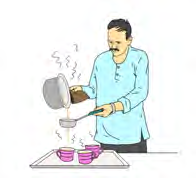
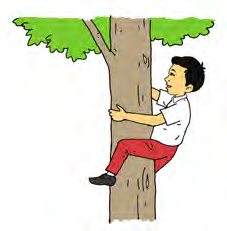
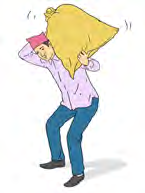
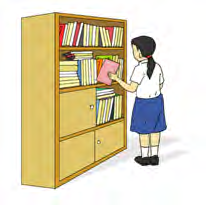
Even animals can do some things and cannot do others. This little song about a hen says it in a fun way. Sing it aloud and listen for the words can and can't.
A hen can lay a big brown egg.A hen can stand on just one leg.A hen can run, a hen can walk.A hen can say, "Bawk, bawk, bawk".But do you know what a hen can't do?A hen can't read and write like you.
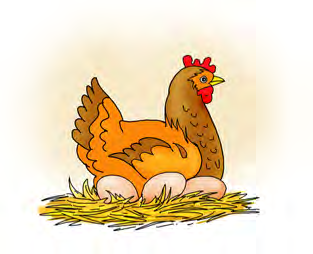
Everyone, even a hen, can do some things and cannot do others. English uses the little word can to talk about ability, and can't for the things we are not able to do. Tell a friend three things you can do and one thing you cannot do.
The Baby Quail: A Story of Love and Truth
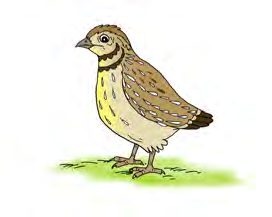
Once upon a time, the Enlightened Being was born as a tiny quail. The little bird had small feet and small wings, but they were still too weak. He could not walk and he could not fly. His mother and father worked hard every day to bring him food.
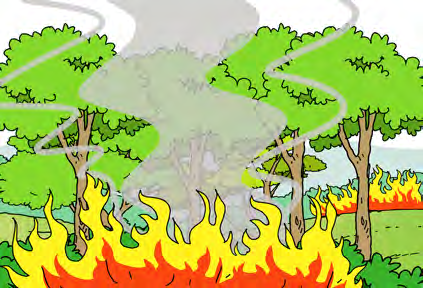
One day a big fire broke out in the forest. As soon as the smoke appeared, every bird that was able to fly flew away. The fire spread and came closer and closer to the baby quail's nest, but his parents stayed beside him. At last the fire came so close that even they had to fly away to save their own lives. All the trees, big and small, were burning and crackling with a loud noise. The little quail watched everything being destroyed. He could not save himself. At that moment he seemed completely helpless.
Alone in the nest, the baby quail began to think. He remembered how much his parents had loved him. Without any selfishness they had built a nest for him and fed him without greed. When the fire came, they stayed with him until the very last moment, long after all the other birds had gone. Their kindness was so great that they risked their lives, yet they were still powerless to save him. Since they could not carry him, they were forced to fly away alone. The little bird thanked them in his heart and hoped they would be safe, well and happy wherever they were.
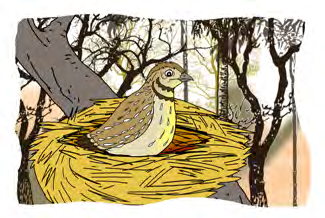
Now the quail was all alone with no one to ask for help. He had wings, but he could not fly. He had feet, but he could not run. But one thing still worked: his mind. Then an amazing miracle happened inside his little body. The Enlightened Being within him became active, and the bird felt powerful. He received the godly power of wish. So the little bird wished, "May this land exist with the power of truth. May all birds and other beings who are still trapped by the fire be saved. And may this spot be safe from fire for a million years!" And what the bird wished came true.

A quail is a small, round bird with a short tail and short wings that lives on the ground and cannot fly far.
A miracle is a wonderful and surprising event that ordinary rules cannot explain.
Learn these words from the story. They also help you complete sentences with words of similar meaning.
- Enlightened Being: a very wise and holy being; the Buddha in one of his earlier lives
- crackling: making sharp snapping sounds, the way burning wood does
- helpless: powerless, unable to do anything to help yourself
- kindness: the quality of being caring and gentle to others
- amazing: very surprising
- exist: to live or to be real
- close: near; the fire got so close means the fire came so near
- safe: out of danger
The story teaches that love, gratitude and truth are powerful. The quail's parents loved him without selfishness, the quail thanked them instead of blaming them, and his honest wish saved the whole forest.
Asking About Ability: Can and Can't
Can is used before the base form of a verb to say that someone has the ability to do something: I can swim. She can sing.
Cannot, usually shortened to can't, says that someone does not have the ability: A hen can't read. I cannot ride a bike.
To ask about ability, put can before the person: Can you climb up a tree? The short answers are Yes, I can. and No, I can't. Practise with a friend. One of you asks, the other answers honestly, then you swap.
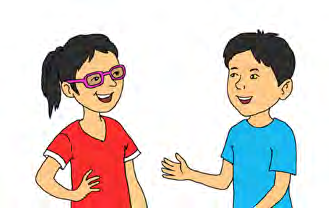
Now look at these people. Ask and answer about each one: What can she do? She can sing. Can he swim? Yes, he can.

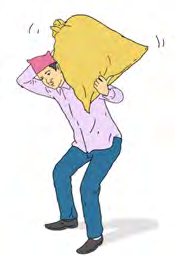
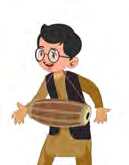
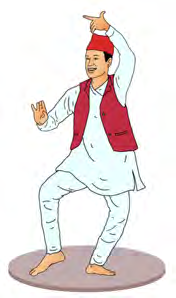
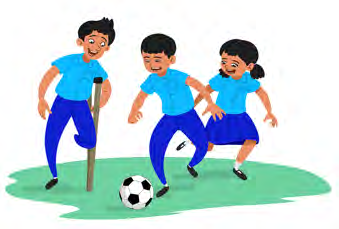
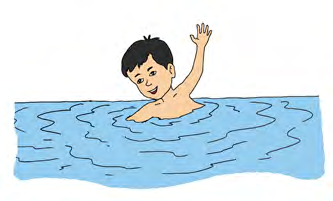
A tick and cross table can also tell you what people can and can't do. Read this table and make sentences: Madan can play table tennis. Nima can't ride a bike. Aarim can type fast but he can't speak Newari. Only Nima can speak Newari.
| Ability | Madan | Ashim | Aarim | Nima |
| play table tennis | ✓ | ✓ | ✗ | ✓ |
| ride a bike | ✓ | ✗ | ✓ | ✗ |
| type fast | ✓ | ✓ | ✓ | ✗ |
| speak Newari | ✗ | ✗ | ✗ | ✓ |
The verb after can never takes s, ed or ing. Write She can sing, not She can sings or She can singing. The same rule works for can't: He can't swim.
Listening for Details at a Hospital

Look at the picture before you listen. It shows a teaching hospital with a help desk, benches for waiting, and people talking. Guessing from the picture prepares your ears: the speakers will probably talk about meeting a doctor. To meet a doctor you usually go to the help desk or ticket counter, tell them your problem, give your name, and get a time to see the doctor. When you listen to a conversation like this, do not try to catch every word. Listen for the details questions usually ask about: the names of the speakers, the name of the doctor, where someone works, and the day and time the doctor is available. Listen once for the main idea, then listen again to complete sentences with exact words such as an office, the afternoon, or a doctor's name like Raghu Yadav.
Giving Reasons: Because, Since, As and Because Of
When you say why something happens, you are giving a reason. English has several reason words, and they are not used in exactly the same way. Study these sentences. He was absent yesterday in the class because he was sick. As we lost the quarter-final game, we could not qualify for the semi-final. Amar is awarded because of his honesty. Since I was hungry, I wanted to eat something first. As he wasn't ready, we went without him.
Because introduces a reason that is new to the listener and needs to be emphasised. It is followed by a subject and a verb: He was absent because he was sick.
As and since introduce a reason the listener already knows. The focus falls on the result, not the reason, so these often start the sentence: Since I was hungry, I wanted to eat something first.
Because of is followed by a noun or noun phrase, never by a full sentence: Amar is awarded because of his honesty.
Compare the two forms carefully. We can say He got success because he worked hard, with a subject and verb after because. We can also say He got success because of his hard work, where his hard work is only a noun phrase. Both are correct, but mixing them up is wrong: He got success because of he worked hard is not English.
Because of never takes a full sentence after it. Write We stayed home because of the rain, never We stayed home because of it was raining. If you want a subject and a verb, use because, since or as instead.
Putting a Jumbled Story in Order
Sometimes the sentences of a story are given to you all mixed up, and your job is to arrange them so the story makes sense. Use this method.
- Find the opening sentence first. Story openers often begin with words like Once upon a time or There was.
- Find the sentence that introduces the main character next.
- Follow the chain of events. Ask yourself after each sentence: what must happen next for this to make sense?
- Watch small clue words. A sentence with it or the rabbit must come after the sentence that first names that thing.
- Keep the ending for last. It usually tells the result, such as everyone becoming happy.
- Read your finished order aloud. If any sentence sounds sudden or confusing, it is in the wrong place.
Here is a jumbled story about a lion and a rabbit arranged correctly with this method. A good title for it is The Clever Rabbit.
- Once upon a time, there was a dense forest.
- A lion was the king of that forest.
- The lion ordered the animals to come in front of it turn by turn so that it would eat them.
- There came the turn of a rabbit.
- The rabbit reached late.
- The lion became angry and jumped to kill it.
- The rabbit told the lion that there was another king in the forest.
- The rabbit took the lion to a deep well and showed the lion's own image into the water.
- The lion was killed.
- All animals became happy.
You should also be able to write a paragraph about an interesting event of your own life. Choose one event, not your whole life. Start by saying when and where it happened, describe what happened in order, and end with how you felt. For example: Last year I climbed the hill behind my village with my uncle. We left early in the morning with some bread and a bottle of water. The climb was hard and I fell once, but my uncle helped me up. From the top we could see our whole village looking as small as a toy. I felt proud because I had not given up.
On Another's Sorrow
When and why do you feel sorrow? This poem by the English poet William Blake asks whether anyone can watch another person suffer and feel nothing. The poet's answer, repeated like a bell, is No, no! Never can it be!
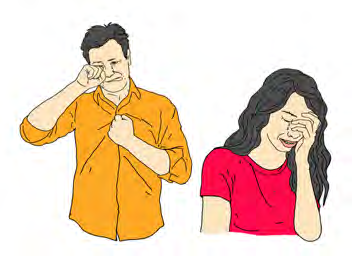
Can I see another's woe,And not be in sorrow too?Can I see another's grief,And not seek for kind relief?Can I see a falling tear,And not feel my sorrow's share?Can a father see his childWeep, nor be with sorrow filled?Can a mother sit and hearAn infant groan, an infant fear?No, no! Never can it be!Never, never can it be!And can he who smiles on allHear the wren with sorrows small,Hear the small bird's grief and care,Hear the woes that infants bear.And not sit beside the nest,Pouring pity in their breast,And not sit the cradle near,Weeping tear on infant's tear?And not sit both night and day,Wiping all our tears away?O no! Never can it be!Never, never can it be!
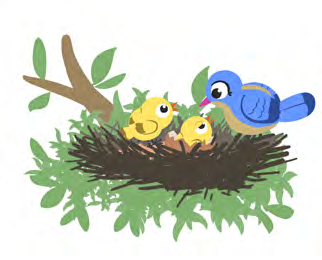
The first stanzas talk about people. If I see someone's woe, I feel sorrow too, and I look for a way to give kind relief. A father cannot watch his child weep without being filled with sorrow, and a mother cannot sit calmly while her infant groans in fear. Then the poem turns to God, called he who smiles on all. Even the smallest sorrows do not escape him. He hears the tiny wren, the small bird's grief, and the woes that infants bear. He sits beside the nest and near the cradle, pours pity into every sad heart, and stays night and day wiping all our tears away.
- woe: great sadness or trouble
- grief: deep sorrow, especially after losing something or someone
- relief: help that removes pain or worry
- groan: to make a low sound of pain
- wren: a very small brown songbird
- pity: the feeling of sadness for another's suffering
- cradle: a small bed for a baby
- infant: a very young child or baby
The poem is built on rhyme. Words at the ends of lines share the same final sound: woe rhymes with too in sound pattern, and tall would rhyme with all and small. Finding rhyming pairs trains your ear for English sounds.
| Word | Rhyming words from the poem |
| hear | tear, fear, near |
| rest | nest, breast |
| hay | day, away |
| tall | all, small |
| leaf | grief |
The poem and the quail story teach the same lesson from two sides. The quail's parents could not leave their suffering child, and Blake says no one with a heart can see another's sorrow without sharing it.
Project: Draw and Display the Story
Work in a group. Take the story of the clever rabbit and the lion, and draw a set of pictures that tell it: the dense forest, the proud lion king, the rabbit arriving late, the well, and the happy animals at the end. Put the pictures in the correct order, write one sentence under each, and display your set in the class. Drawing the story is another way of proving you understand its order.
Verb Forms in Different Tenses
A verb changes its form to show when an action happens. English has three main times, present, past and future, and each has four forms: simple, continuous, perfect, and perfect continuous. That makes twelve tense forms in all. Read each example aloud and notice how the verb changes while the meaning of time changes with it.
| Tense | Example |
| Present simple | I work hard. |
| Present continuous | I am writing a poem. |
| Present perfect | I have painted a picture. |
| Present perfect continuous | I have been living here for seven years. |
| Past simple | I went to the zoo yesterday. |
| Past continuous | I was dancing at this time yesterday. |
| Past perfect | I had slept when she arrived. |
| Past perfect continuous | I had been singing for an hour when he left. |
| Future simple | I will work hard next year. |
| Future continuous | I will be taking an exam at this time tomorrow. |
| Future perfect | I will have completed the poem by 10 am tomorrow. |
| Future perfect continuous | I will have been working on this book for three months by tomorrow. |
Notice the helping verbs. The continuous forms use am, was or will be with an ing verb. The perfect forms use have, had or will have with the past participle, like painted or slept. When you meet a new sentence, find the helping verb first and you can name its tense.
The full lesson is waiting for you
Create a free account to unlock activities, practice tests, presentations and videos - and to track your progress and confidence score for every subject.
Can + base verb shows ability: I can swim. She can sing.
11 more points to remember - sign in to see the rest.
Question 1 of 16