Hobbies and Why People Choose Them
A hobby is something you do in your free time simply because you enjoy it. Nobody pays you for it and nobody marks it. Yet a hobby does much more than fill empty hours. A good one can ignite your creativity, bring out talents you did not know you had, and give you a way to rest after a long day of study or work.
Hobby: an activity done regularly in one's leisure time for pleasure, not for money and not as a duty.
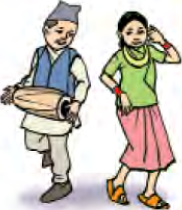
Look around your own neighbourhood and you will see how varied hobbies are. One person paints on Saturdays, another sings, and an older couple dances at every festival. Choosing a hobby for yourself can be surprisingly hard. You want something that genuinely interests you, but you may also want something you can enjoy with friends.
People also divide between the outdoors and the indoors. Some spend their free time outside, fishing, camping, hunting or hiking. Others would rather stay in with a good book, or browse online courses to hone a skill they already have.
Where you live matters as well. How popular a hobby is depends on individual preference and on culture. Fishing, for example, is the most prevalent hobby in England, while hiking is the most in-demand hobby in China.
Two things shape the hobby a person chooses: their own preferences and the culture they live in.
Common Hobbies Around the World
Some hobbies turn up in almost every country. The best thing about most of them is that they cost very little, and the ones that need some learning are easy to master. Seven of the most common are reading, dancing, collecting antiques, painting, photography, writing and knitting. Each is described below, with what it needs and what it gives back.
Reading as a Hobby
Reading is one of the most popular hobbies across many cultures. It is fun, and it is also a way of improving yourself. Some people read for information and some read to be entertained. Either way there is a book for everyone, because books come in so many genres: adventure, mystery, science fiction, biography, poetry and many more.
Reading also needs no special equipment, unlike most other hobbies. A visit to the local library or a few downloaded PDFs are enough. If you want company, a book club lets you meet new people and share your reviews. Best of all, you can read almost anywhere: on a bus, under a tree or curled up in bed.
Dancing
Almost everyone loves to dance, even those of us who are terrible at it. Put on some music and let your body move to the beat. No wonder dancing is one of the most popular hobbies today.
Dancing improves your flexibility and mobility. As a physical activity it lets you burn off extra energy and let off steam, and it is a form of exercise that feels like play. You can dance around your living room, take it up a notch by joining a dance studio, or follow an online dance course.
Collecting Antiques

An antique is an old object valued for its age, beauty or quality, such as an old radio, a brass lamp or a carved wooden chest. Collecting antiques has become a passionate hobby for many people, and more people around the world are learning to appreciate old, well-made things.
If you have an eye for tasteful decoration, this hobby may suit you, because antiques make a home look interesting. With antiques, the older the better. Each piece may hide years of stories, and you never know what treasure you might find. A related hobby is refurbishing old furniture, which means repairing and renewing it until it looks fresh again.
Painting

Painting lets you be creative, relaxed and expressive. To begin, walk into any art supply shop, buy some paints and brushes, and you are ready. You do not have to be a great painter. Start with something simple and paint whatever comes into your mind. Many people find painting therapeutic, which means it calms and heals the mind. You can work on a canvas held up by an easel, or go big and paint murals on walls. The choice is yours.
Photography

When you have a break, take your phone or camera to a park and take pictures. You do not need to be a professional or own the best equipment on the market. What you need is a good eye, a camera or smartphone, and a basic understanding of skills such as lighting, depth and exposure. Exposure is the amount of light that reaches the camera, and it decides whether a photograph comes out too dark, too bright or just right.
Photography is a rewarding hobby because it preserves memories. Years later a photograph can bring back a birthday, a trip or a face, and your best pictures can hang on your walls.
Writing as a Hobby

Writing is popular because of the freedom it gives. People write about everything and anything, from how they spent their day to a new recipe. Keeping a journal of your daily activities helps you handle stress, relax and get more done, and studies show that many of the world's most successful people keep journals.
If you know a lot about one particular topic, or niche, you can write a blog to share your knowledge and connect with like-minded people. You could also try writing a poem or even a book. A piece of writing does not have to feel important before you put it down on paper.
Knitting

Knitting is one of the most rewarding common hobbies. It makes good use of free time, improves your winter wardrobe and gives you homemade gifts for family and friends. You can knit mittens, hats, scarves and blankets to keep warm in cold weather. It also exercises your hands and improves coordination.
Best of all, knitting travels with you. You can knit on the bus, while watching your favourite shows, while listening to music, or even while hanging out with friends.
| Hobby | What you need | What it gives you |
| Reading | A book, a library or some PDFs | Fun and self-improvement, anywhere |
| Dancing | Music and a little space | Flexibility, mobility, a way to let off steam |
| Collecting antiques | An eye for tasteful decoration | Old treasures full of stories |
| Painting | Paints and brushes | Creativity and calm |
| Photography | A camera or smartphone | Memories preserved, pictures for your walls |
| Writing | A notebook, a journal or a blog | Freedom, less stress, more productivity |
| Knitting | Wool and needles | Warm clothes, gifts, better hand coordination |
Sounding Out Consonant Clusters
Say the word 'string' slowly. Before the vowel you hear three consonant sounds in a row, /s/, /t/ and /r/, with nothing between them. Now say 'milk'. After the vowel come two consonants together, /l/ and /k/. Groups like these are called consonant clusters.
Consonant cluster: a group of two or more consonant sounds that come together in a word with no vowel sound between them, such as /str/ in 'street' or /lk/ in 'milk'.
A cluster can come at the beginning of a word, in the middle or at the end. English allows up to three consonants at the start of a word and even more at the end, which is why a word like 'twelfth' feels like a tongue-twister. Every consonant in a cluster must be sounded, and no extra vowel may be slipped in to make it easier.
Do not add a vowel before or inside a cluster. Say 'street', not 'istreet' or 'sitreet', and 'spleen', not 'ispleen'. The extra vowel adds a syllable the word does not have.
A cluster is about sounds, not letters. In 'scratch' the letters 'tch' stand for a single sound, /tʃ/, so the only cluster is /skr/ at the start. In 'hundredth' the letters 'th' make one sound, /θ/, which joins the /d/ before it.
| Word | Cluster | Where it comes |
| scout | /sk/ | beginning |
| instant | /nst/, /nt/ | middle, end |
| pulp | /lp/ | end |
| help | /lp/ | end |
| street | /str/ | beginning |
| frustrating | /fr/, /str/ | beginning, middle |
| golf | /lf/ | end |
| twelfth | /tw/, /lfθ/ | beginning, end |
| scratch | /skr/ | beginning |
| spurious | /sp/ | beginning |
| spleen | /spl/ | beginning |
| sprout | /spr/ | beginning |
| blog | /bl/ | beginning |
| sclerosis | /skl/ | beginning |
| trout | /tr/ | beginning |
| hundredth | /ndr/, /dθ/ | middle, end |
Talking About Likes, Dislikes and Preferences
Talking about hobbies means constantly saying what we like, what we cannot stand and what we would choose instead. English has a set of phrases for each, and most of them are followed by the -ing form of a verb.
- Liking: I like, love, enjoy or adore reading classics. I'm crazy about sandy beaches. I'm fond of painting. I'm keen on photography.
- Not minding: I don't mind helping passengers. This means it is fine; you neither love nor hate it.
- Disliking: I don't like, hate, can't stand, loathe or detest walking long distances.
- Preferring one thing to another in general: I prefer lying on a beach to hang-gliding.
- Preferring an action in a particular situation: I'd prefer to stay home rather than go out. I would rather sleep than play outdoor games.
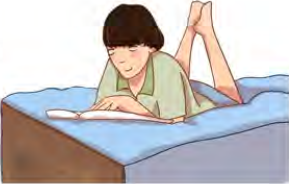
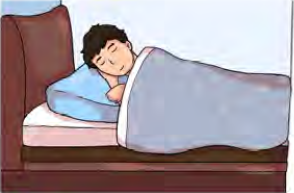
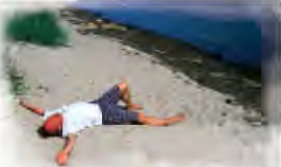
prefer ... to ...: compares two things or activities in general. Pattern: prefer + noun or -ing + to + noun or -ing. I prefer tea to coffee. I prefer walking to cycling.
would prefer to ... rather than ...: states a choice in one particular situation. Pattern: would prefer to + base verb + rather than + base verb. I'd prefer to walk rather than take the bus today.
After 'prefer', use 'to', not 'than'. Say 'I prefer football to cricket', never 'I prefer football than cricket'. 'Than' belongs with 'rather' and 'would rather'.
In a real conversation you also react to someone else's idea. One person makes a suggestion, a second agrees happily, and a third declines politely and gives a reason.
The same phrases work when you talk about jobs. Discussing a teacher's work, one person might say 'I love explaining things to children', another 'I don't mind marking homework', and a third 'I can't stand speaking in front of a big class'.
The Passive Voice in the Present Simple
Compare 'Ganga feeds the dogs.' with 'The dogs are fed by Ganga.' Both report the same fact. The first sentence starts with the doer, Ganga. The second starts with what receives the action, the dogs. We choose the passive when the receiver matters more than the doer, or when the doer is unknown.
Active voice: the subject performs the action. Ganga feeds the dogs.
Passive voice: the subject receives the action, and the doer is either added after 'by' or left out. The dogs are fed by Ganga.
Agent: the doer of the action in a passive sentence, introduced by 'by'. It is often left out when it is unknown, unimportant or obvious.
In the present simple, the passive is made with am, is or are followed by the past participle of the main verb.
| Sentence type | Active | Passive |
| Positive | The gardener waters the flowers. | The flowers are watered by the gardener. |
| Negative | They don't sell tickets here. | Tickets are not sold here. |
| Yes/No question | Does Ram clean the room? | Is the room cleaned by Ram? |
| Wh-question | What do they sell here? | What is sold here? |
| Pronoun object | They often invite us. | We are often invited. |
To change an active sentence into the passive, work through these steps in order.
- Step 1: Find the object of the active verb. It becomes the subject of the passive sentence.
- Step 2: Choose am, is or are so that it agrees with the new subject.
- Step 3: Put the main verb in its past participle form.
- Step 4: Move the old subject after 'by', changing a pronoun to its object form (I to me, we to us, they to them), or leave it out if it adds nothing.
- Step 5: Keep time and place words, such as 'every day' or 'in London', in the sentence.
Take 'The police catch a lot of criminals in London.' The object is 'a lot of criminals', which is plural, so the helping verb is 'are'. The past participle of 'catch' is 'caught'. 'By the police' can go, because it is obvious who catches criminals. The result is 'A lot of criminals are caught in London.'
Drop the agent when it is a vague word such as people, they, somebody or someone. 'Somebody cleans the office' becomes 'The office is cleaned', not 'The office is cleaned by somebody'.
Some active sentences have two verbs. The passive then changes only the verb that describes the action done to the object.
- Engineers have to build a stronger bridge. → A stronger bridge has to be built by engineers.
- They are sure to punish the cheats. → The cheats are sure to be punished.
- We expect visitors not to touch the paintings. → Visitors are expected not to touch the paintings.
Verbs of saying and believing, such as say, think, believe, expect and suppose, have a special passive. 'People say that the old fort is haunted' can become 'It is said that the old fort is haunted' or 'The old fort is said to be haunted'. A few verbs, like 'know', take 'to' instead of 'by', and 'nobody' becomes a negative: 'Nobody knows his address' becomes 'His address is not known to anybody'.
Passives with Being and Having
Verbs of liking and disliking, such as like, love, adore, enjoy, don't mind, hate, loathe, detest and can't stand, are followed by an -ing form. When that -ing idea is passive, English uses 'being' or 'having'.
being + past participle: used after a verb of liking or disliking when the action is done to the subject person. I like people praising me → I like being praised.
having + object + past participle: used when the action is done to something that belongs to the subject. I don't like people taking my photographs → I don't like having my photographs taken.
| Active | Passive |
| Mina loves people clapping for her. | Mina loves being clapped for. |
| I hate someone waking me up early. | I hate being woken up early. |
| He enjoys the barber cutting his hair. | He enjoys having his hair cut. |
| She can't stand people touching her phone. | She can't stand having her phone touched. |
Ask what the action lands on. If it lands on the person, use 'being': 'I hate being shouted at.' If it lands on something the person owns, use 'having' with that thing: 'I hate having my name shouted.'
From Passive Back to Active
Turning a passive sentence into the active reverses the steps. Find the doer and make it the subject, then put the main verb in the right active form. When no doer is given, supply a sensible one such as people, they or someone.
- Rice is grown by farmers on the plains. → Farmers grow rice on the plains.
- The school gate is locked at five. → The guard locks the school gate at five.
- The thief is believed to be in the city. → People believe that the thief is in the city.
- I love being praised. → I love people praising me.
- He hates having his bag searched. → He hates people searching his bag.
Writing an Essay on Hobbies and Careers
Hobbies often point towards careers. A child who loves drawing may grow up to be an architect; one who spends hours with a camera may become a photojournalist. An essay on this topic shows how what you enjoy now might shape the work you do later.
- Title: short and clear, for example 'My Hobbies and My Future'.
- Introduction: name your hobbies and state the main idea, that they may lead you to a career.
- Body paragraphs: one hobby in each. Describe it, say what skills it builds, and connect those skills to a career.
- Conclusion: sum up and look ahead to what you hope to become.
Link each hobby to a career through a skill. Reading builds language and patience; photography builds an eye for detail. The skill is the bridge between the hobby and the job.
A sample body paragraph: 'My other hobby is photography. On Saturdays I walk around my town with my father's old camera, photographing markets, temples and people at work. It has taught me to notice light, to wait patiently for the right moment and to tell a story in a single frame. These are exactly the skills a photojournalist needs, and showing people what is happening in their own country through a newspaper is a career I would love.'
The Poem: Climbing
Think of climbing a big tree as a child: every branch you reach shows you a little more of the world. In 'Climbing', by the American poet Amy Lowell, a young speaker climbs an apple tree and imagines that each branch is a step on a staircase leading up to a shining town in the sky.
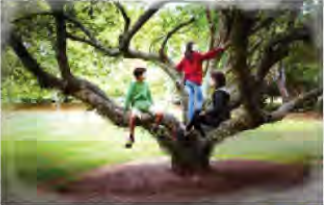
High up in the apple tree climbing I go,With the sky above me, the earth below.Each branch is the step of a wonderful stairWhich leads to the town I see shining up there.Climbing, climbing, higher and higher,The branches blow and I see a spire,The gleam of a turret, the glint of a dome,All sparkling and bright, like white sea foam.On and on, from bough to bough,The leaves are thick, but I push my way through;Before, I have always had to stop,But to-day I am sure I shall reach the top.Today to the end of the marvelous stair,Where those glittering pinnacles flash in the air!Climbing, climbing, higher I go,With the sky close above me, the earth far below.
What the Poem Means
- Stanza 1: The speaker climbs high into an apple tree, with the sky above and the earth below. She imagines the branches as the steps of a wonderful staircase leading to a town shining above her.
- Stanza 2: As she climbs higher the branches sway, and she glimpses a spire, the gleam of a turret and the glint of a dome, all sparkling like white sea foam.
- Stanza 3: She moves from bough to bough and pushes through the thick leaves. Every time before, she has had to stop, but today she is sure she will reach the top.
- Stanza 4: She is set on reaching the end of the marvelous stair, where glittering pinnacles flash in the air. The last line echoes the first, but now the sky is close above and the earth far below.
The speaker is a child, and the town is her imagination at work. From high in a tree, distant rooftops, towers and sunlit clouds can look like a magical city. Underneath, the poem is about determination. She has failed before, yet she keeps climbing, and her reward is a view that nobody on the ground can see.
The message: do not give up halfway. Keep going one step at a time, even after earlier failures, and you can reach your goal.
The sky stands for high goals and dreams, and the earth for the ordinary place where we start. At the beginning the sky is simply 'above' and the earth 'below'. At the end the sky is 'close above' and the earth 'far below'. That small change in the words measures how far she has climbed.
Metaphor: a comparison that says one thing is another, without 'like' or 'as'. Each branch is the step of a wonderful stair.
Simile: a comparison that uses 'like' or 'as'. All sparkling and bright, like white sea foam.
Rhyming couplet: two lines in a row whose last words rhyme, such as go and below, or stair and there.
The poem has four stanzas of four lines each, and every stanza is made of two rhyming couplets, so the rhyme scheme is aabb. The repetition of 'climbing, climbing' copies the rhythm of a climber pulling up from one branch to the next. The poem is also full of words of light: shining, gleam, glint, sparkling, bright, glittering and flash. The higher she climbs, the brighter the world becomes.
Listening for Hobbies
A listening practice on hobbies begins with two pictures. Name the hobby each one shows, and decide which of the two you would choose and why.
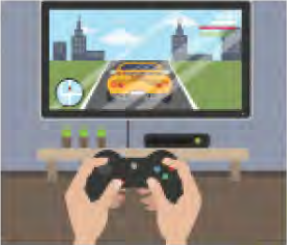
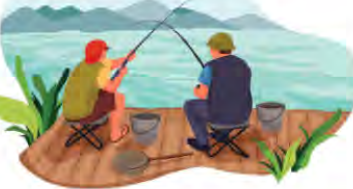
Next comes a recorded talk about ten hobbies: reading, crafting, bird watching, gardening, playing video games, travelling, fishing, watching television, listening to music and collecting. First you number the ten from 1 to 10 in the order the speaker mentions them. Then you listen again and match the beginnings of seven sentences about hobbies with their endings. Finally you rank the ten hobbies by your own choice.
- Read all ten hobbies before the recording starts, so you recognise each one the moment you hear it.
- Listen for signal words that mark a new point: first, next, another popular hobby, finally.
- Expect synonyms. 'Birding' means bird watching, and 'crafts' or 'craft websites' belong with crafting.
- If you miss one, keep going. Fill the gap on the second listening rather than losing the next three.
- Know two phrases before you listen: to 'get a bad rap' means to be criticised, often unfairly, and an 'intergenerational' activity is one that people of different ages, such as grandparents and grandchildren, do together.
Writing a Job Advertisement
When a school, office or company has a vacancy, a job that needs to be filled, it announces it in a newspaper, on a notice board or online. A vacancy advertisement must be short, clear and complete, because a reader decides within seconds whether to apply.
Vacancy advertisement: a public notice that announces an empty post and tells suitable people how to apply for it.
- A heading such as 'Vacancy Announcement' or 'Teacher Wanted'.
- The name and address of the organisation.
- The post, its level and the number of posts.
- The required academic qualification.
- The required experience and any other skills.
- Salary and facilities, or a note that they follow the organisation's rules.
- How to apply and which documents to send.
- The deadline for applications.
- Contact details.
Here is a short model for a different post:
- VACANCY ANNOUNCEMENT
- Green Valley Secondary School, Dharan, invites applications for the following post.
- Post: School Librarian (1 post, full time)
- Qualification: Bachelor's degree in Library Science or an equivalent subject
- Experience: at least one year of work in a school or public library
- Other skills: basic computer skills and a friendly manner with children
- Salary: as per the school's rules
- How to apply: send an application, a CV and copies of certificates to the school office
- Deadline: within 15 days of the publication of this notice
- Contact: school office, Sunday to Friday, 10 a.m. to 4 p.m.
Write in short lines, not long sentences. Every line should answer a question an applicant would ask: what job, who can apply, how, and by when.
Paraphrasing
Paraphrasing: restating a piece of writing in your own words and your own sentence structure while keeping its full meaning.
A paraphrase is not a summary. A summary keeps only the main points and is much shorter. A paraphrase keeps every idea, so it is about the same length as the original, and it adds nothing of its own: no opinion and no extra facts.
Original: 'Although smartphones were designed to bring people closer, many families now spend their evenings in the same room without talking, each member absorbed in a separate screen.'
Paraphrase: 'Smartphones were meant to connect people. Yet in many homes today, family members sit together in the evening in silence, each one busy with their own device.'
- Step 1: Read the original until you fully understand it.
- Step 2: Note the key ideas, names and numbers.
- Step 3: Put the original aside and write the ideas in your own words.
- Step 4: Change the sentence structure as well as the words, for example by splitting a long sentence or joining short ones.
- Step 5: Compare your version with the original to check that no idea is lost and none is added.
Swapping a few words for synonyms while keeping the original sentence pattern is not paraphrasing. Names, numbers and technical terms stay as they are; everything else should be rebuilt.
Project: A Hobbies and Careers Chart
Hobbies and careers can be connected in real life, not just in an essay. A small survey of your friends shows how. You interview at least five friends about their hobbies, note down the careers they might choose, and present what you find as a chart for the class. These questions make a good interview:
- What do you like doing in your free time?
- How long have you had this hobby?
- What skills has it given you?
- What career might you choose, and is it linked to your hobby?
The full lesson is waiting for you
The notes are free to read in full. A free account opens the rest of the practice, and tracks your progress and confidence score for every subject. Presentations and videos need approval from Learn Yeti.