Science and Experiment in the Laboratory
Science begins with a question. A scientist notices something odd, asks why it happens, makes a guess, and then tests that guess by doing something carefully and watching the result. That test is an experiment. A school laboratory is where you practise the habit: you look closely, you measure, you change one thing at a time, and you write down what you see.
Two kinds of equipment appear in almost every laboratory. A microscope lets you see things far too small for the eye, such as the cells of an onion skin or the tiny creatures in a drop of pond water. Glassware holds, heats, mixes and measures liquids, and each piece has a shape that suits its job.
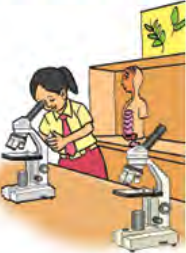
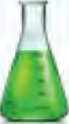
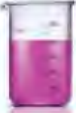
Microscope: magnifies objects too small to be seen with the naked eye.
Round-bottom flask: heats a liquid evenly because heat spreads around its curved base.
Conical flask: mixes and swirls liquids safely through its narrow neck.
Beaker: holds and heats liquids; the marks on its side give only a rough volume.
Measuring cylinder: measures the volume of a liquid accurately.
Science also has a way of speaking. Scientists describe what happens under a condition: if you heat ice, it melts; if you lower the pressure on water, it boils sooner. This 'if this, then that' pattern runs through the whole unit. You meet it in the article about boiling water, in the conversations you practise, and finally in the grammar of conditional sentences.
Reading Popular Science Writing
The first reading, 'Yes, You Can Boil Water at Room Temperature', is by Rhett Allain, a physicist who writes about science for ordinary readers. This kind of writing is called popular science. Its job is to take a real scientific idea and make it clear to people who have never studied physics, without making the idea false.
Popular science writing: journalism that explains a scientific idea to general readers in plain, lively language, using questions, everyday comparisons and simple experiments.
Notice the tools Allain uses. They are worth copying when you write an explanation of your own.
- A hook from daily life: the article opens with cooking instructions on a box of rice, not with a formula.
- Questions that lead the reader on: 'But why?', 'What are the bubbles in the boiling water made of?' Each section answers one question and raises the next.
- An everyday comparison, called an analogy: the speeds of water molecules are compared with the heights of a crowd of adults.
- A friendly, spoken voice: contractions like 'it's' and 'don't', and playful words such as 'Boom' and 'Trust me'.
- An experiment the reader can try at home, with a large plastic syringe.
Read an explanation as a chain. Find the question each paragraph answers, and you will find its main idea.
Why Rice Cooks Slowly on a Mountain
Some packets of rice print a second set of cooking instructions for high altitude, telling cooks in high places to cook the rice longer. Allain jokes that nobody cooks rice on top of Mount Everest, but the question is serious. Why should the place where you cook change the cooking time?
Altitude: the height of a place or object above sea level or above the ground.
Boiling point: the temperature at which a liquid boils. For water at sea level it is 100°C, which is 212°F.
Most people will tell you that water boils at 100°C. That is true only at sea level. As you climb higher, the boiling point of water falls by about 1°F for every 500 feet you rise. In Denver, a city in the United States about a mile above sea level, water boils at about 203°F instead of 212°F. The water bubbles just as fiercely, but it is not as hot, so food in it cooks more slowly. The same thing happens in the hill towns of Nepal, which is why pressure cookers are so common there.
To understand why height matters, you need two ideas: water vapour, and pressure.
Water Vapour and Vapour Pressure
Water is unusual. On the surface of the Earth you can find it in all three phases at once: solid ice, liquid water, and a gas. The gas phase of water is called water vapour.
Water vapour: water in the form of a gas.
If you could zoom into a glass of water with super vision, you would see that it is made of a huge number of water molecules. Each molecule is made of three atoms: two hydrogen atoms and one oxygen atom. Allain asks us to picture them simply as tiny balls.
Molecule: a group of atoms bonded together. A water molecule has two hydrogen atoms and one oxygen atom.
These tiny balls never stop moving. They jiggle about while staying fairly close to their neighbours. This movement is not caused by currents in the water. It is thermal motion, and the hotter the water, the faster the molecules move. They do not all move at the same speed, though. There is an average speed, but some molecules are much faster and some much slower, just as a group of adults has an average height while a few people are very tall.
Thermal motion: the random, jiggling movement of particles caused by heat. The higher the temperature, the faster the motion.
Those few fast molecules matter. A glass of water left on a table does not stay entirely liquid. Its fastest molecules have enough thermal energy to break away from the surface and fly off as water vapour. No boiling is needed for this. It also works the other way: some vapour molecules strike the liquid and join it again. Turning from a gas back into a liquid is called condensation.
Condense: to change from a gas or vapour into a liquid. The process is condensation.
Now close the container. Molecules keep leaving the liquid and molecules keep returning, and after a while the two rates become equal. For every molecule that escapes, one comes back. This balanced state is called equilibrium, and the pressure of the water vapour at that moment is the vapour pressure. You can see that the vapour is there: drops of water condense on the inside walls of a closed container.
Equilibrium: a state in which opposing forces or changes are balanced, so nothing seems to change overall.
Vapour pressure: the pressure of the water vapour above the liquid when evaporation and condensation are in equilibrium. It rises as the water gets hotter.
What the Bubbles in Boiling Water Are
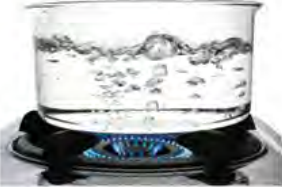
Watch a pan of water come to the boil and big bubbles rise through it. What is inside them? Not air: there is nowhere for that much air to come from. Not hydrogen and oxygen either, because heating water in a pan does not split its molecules. The bubbles are water vapour. Each one is a small pocket of water in the gas phase.
Two things must happen for a bubble to form. First, the water must be hot enough. As the temperature rises, the average speed of the molecules rises, until some of them have enough energy to push their neighbours back and open up a pocket of vapour.
Second, the bubble must survive. The vapour inside pushes outward, and the water around it pushes inward. If the push from outside is stronger, the bubble is crushed as soon as it forms. The bubble lasts only when the vapour pressure inside is equal to the pressure outside. So water has to be heated until its vapour pressure rises to match the pressure around it. That temperature is its boiling point.
Water boils when its vapour pressure becomes equal to the pressure outside it. 100°C is simply the temperature at which this happens at sea level.
Do not write that water boils 'because it reaches 100°C'. The real condition is about pressure. Change the pressure and the boiling temperature changes with it.
Where the Outside Pressure Comes From
The pressure pressing on a bubble has two sources.
- The water itself. Deeper water must hold up the water above it, so its pressure is higher. Water pressure depends on the depth, the density of the water and the strength of gravity. In an ordinary glass, though, this is tiny: two centimetres below the surface the pressure is only about 0.2 percent higher than the air pressure.
- The atmosphere. The air above pushes down on the surface of the liquid and raises the pressure all through it. This is by far the larger part.
Now the mountain makes sense. The higher you go, the less air there is above you, so the atmosphere presses down less. With less pressure outside, the vapour pressure of the water reaches it at a lower temperature, and the water boils sooner and cooler. The air is held against the Earth by the Earth's gravitational field, and in high places there is simply less of it on top of you.
Boiling Water Without Heating It
If lower pressure lowers the boiling point, then taking away enough pressure should make water boil with no heating at all. It does. With a vacuum pump and a strong container, water will boil at room temperature, and it stays cool enough to hold in your hand while it bubbles.
Vacuum: a space or container from which the air has been removed.
Allain shows a cheaper version using a large plastic syringe. This is how it works:
- Draw some water into a large plastic syringe, leaving as little air inside as possible.
- Seal the nozzle. Allain used hot glue and a rubber stopper, held with a Lego piece.
- Warm the sealed syringe a little, to about 42°C, which is a little over 100°F.
- Pull the plunger out firmly. This lowers the pressure in the water.
- Watch bubbles appear. The water is boiling although it is only warm.
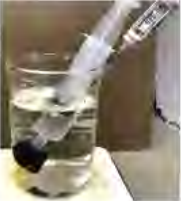
Warm the syringe only in a beaker of hot tap water, never over a flame, and do this with an adult. A sealed plastic syringe heated directly can soften, burst or scald your hand.
Why warm the water at all? Pulling a plunger by hand cannot make a perfect vacuum, so the pressure never falls all the way. Starting with warmer water raises its vapour pressure a little, so the two pressures can meet. The pull is hard work, but it can be done.
This is exactly what happens to rice cooked on a mountain, except that no giant hand is pulling a plunger. The Earth's gravity holds the atmosphere down, and high up there is less of it pressing on the pot. The answer to the rice packet's puzzle is pressure.
Hearing Words That Sound Alike
English spelling does not always show how a word sounds. Two words can look different and sound exactly the same, and two words can look almost the same and sound different. Training your ear to hear the difference makes your listening and your spelling more accurate.
Homophones: words that are pronounced the same but differ in spelling and meaning, such as 'weight' and 'wait', or 'flour' and 'flower'.
Pairs that sound the same are usually homophones. Pairs that differ usually change only one vowel sound, so listen closely to the middle of the word. These are the vowel contrasts that cause most trouble:
| Sound change | Different pairs | How to hear it |
| short e and long a | pen / pain, fell / fail, wet / wait | The long a glides, as if it ended in a short y. |
| ear and air | deer / dare, fear / fair, peer / pair | For ear the tongue starts high; for air it starts lower. |
| short u and short e | but / bet, luck / leck | Short u is made with the mouth relaxed and open. |
| short e and short a | bed / bad, men / man | For short a the mouth opens wider. |
Some pairs that look different are true homophones: peace and piece, weight and wait, whole and hole, write and right. Say each pair aloud and decide for yourself whether your mouth moves differently. If it does not, the words are the same in sound.
'Said' is pronounced like 'bed', not like 'maid'. It does not rhyme with 'made'.
Talking About Conditions and Results
In everyday talk we constantly predict what will happen if something else happens. A natural way to practise this is a chain: one person asks, the next answers with a condition and its result, and a third adds a further result.
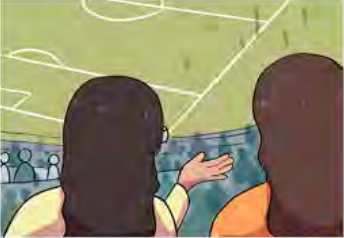
We also talk about situations that are only imagined. Here the question uses 'were' and 'would', and the answer gives a reason with another imagined condition.
- To ask about a likely result: What do you think will happen if...?
- To ask about an imagined situation: What would you do if...? If you were..., what would you...?
- To give advice: If I were you, I would...
- To give a reason: Because if..., ...
Conditional Sentences: Real Conditions
Conditional sentence: a sentence with two clauses. The if-clause states a condition, and the main clause states the result that depends on it.
Either clause may come first. When the if-clause comes first, put a comma after it: 'If you heat ice, it melts.' When the main clause comes first, no comma is needed: 'Ice melts if you heat it.' The meaning is the same.
Zero conditional: If + present simple, present simple. It states general truths, scientific facts and habits, where the result always follows.
- If water reaches its boiling point, it turns into vapour.
- If you mix oil and water, the oil floats on top.
- If I feel cold in the morning, I drink hot tea.
First conditional: If + present simple, will / can / may + base verb. It describes a real possibility in the present or future and its likely result.
- If you take the medicine on time, you will feel better soon.
- If it snows tonight, the road to Jomsom may close.
- You can borrow my bicycle if yours is broken.
The main clause can also be an instruction, using the imperative: 'If you see Maya, give her this letter.' Proverbs often drop the 'if' altogether and still carry the condition: 'Save the small coins, and the big money will look after itself.'
Never put 'will' in the if-clause. 'If it will rain, we will stay home' is wrong. Say 'If it rains, we will stay home.'
Conditional Sentences: Imagined Conditions
Second conditional: If + past simple, would / could / might + base verb. It describes a situation that is imagined, untrue or unlikely in the present or future.
- If I had wings, I would fly over the Annapurna range.
- If we owned a boat, we could cross the lake in ten minutes.
- If I were you, I would apologise to her.
The verb in the if-clause is in the past tense, but the time is not past. 'If I had wings' is about now, and it means 'I do not have wings.' In careful English, 'were' is used for every subject in this type: if I were, if she were, if it were.
Use 'could' in the main clause to show ability and 'might' to show a possibility. To make a condition sound even less likely, use 'were to': 'If the dam were to break, the whole valley would flood.'
'Would' belongs in the main clause, not the if-clause. 'If I would be rich, I would travel' is wrong. Say 'If I were rich, I would travel.'
Unless, Provided That and As Long As
'If' is not the only word that introduces a condition. Three others appear often, and each changes the meaning slightly.
Unless: means 'if not'. 'You will miss the bus unless you hurry' means 'You will miss the bus if you do not hurry.'
Provided (that) / As long as: mean 'only if'. They stress that the result depends on this one condition being met.
- The dog won't bite unless you tease it.
- You may use the laptop provided that you finish your homework first.
- The plants will grow well as long as they get enough sunlight.
'Unless' already contains 'not'. 'Unless you don't study, you will fail' says the opposite of what you mean. Write 'Unless you study, you will fail.'
Writing Step-by-Step Instructions
Instructions tell a reader how to do something, one action at a time. Good instructions let the reader follow along without asking a single question. They share these features:
- Each step begins with an imperative verb: draw, add, fold, pour, turn.
- Each step gives only one action.
- The steps are in the exact order the reader will do them.
- Sequence words guide the reader: first, next, then, after that, finally.
- Position words say where things go: on top of, above, below, beside, inside.
- Shape words are exact: a circle, a semi-straight line, a creaky or wavy line.
A drawing that grows stage by stage is a perfect subject for instructions, because each stage adds one part. In the picture below, the jellyfish is built up from left to right.
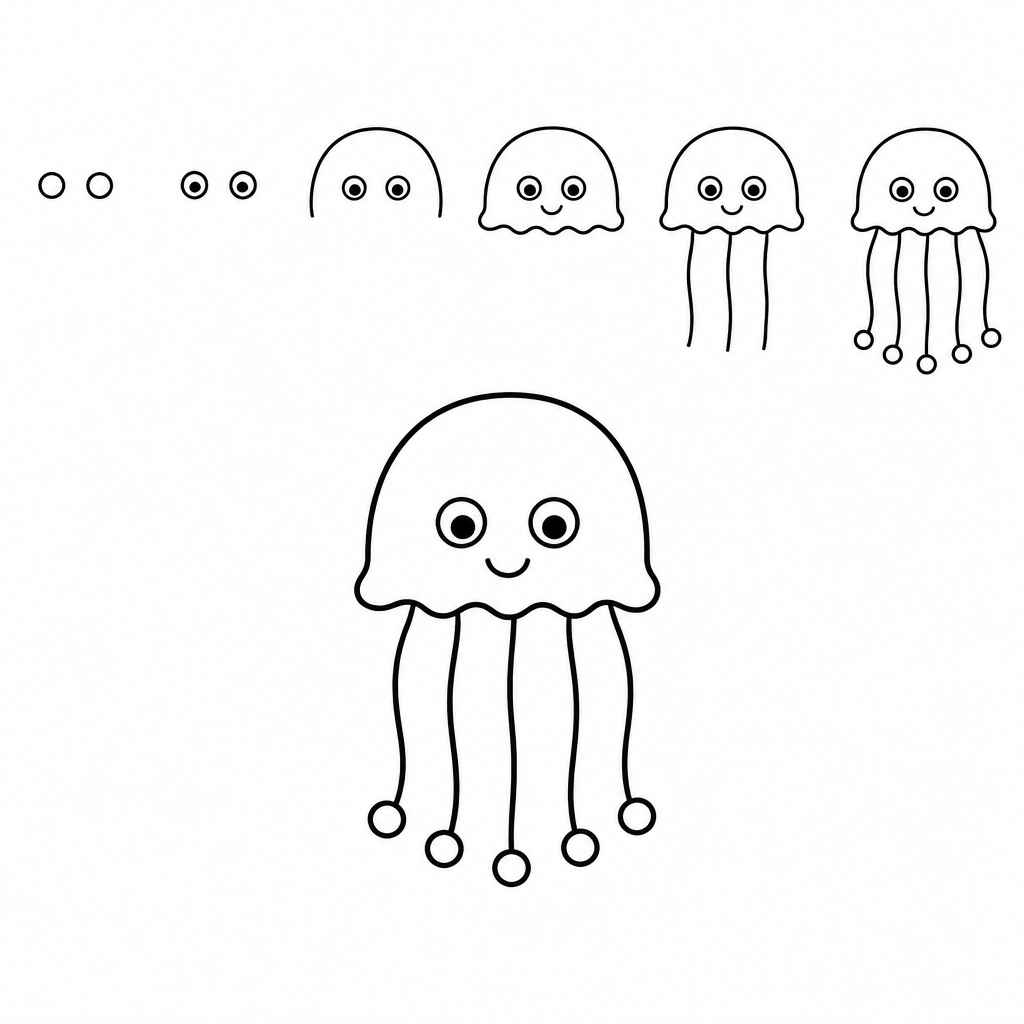
Here is a model set of instructions for a different drawing, a simple fish. Notice how every step starts with a verb and names a shape and a position.
- First, draw a large oval in the middle of the page for the body.
- Next, draw a triangle at the right end of the oval for the tail, with one point touching the body.
- Then draw a small circle near the left end of the oval for the eye.
- After that, draw a short curved line below the eye for the mouth.
- Draw two semi-straight lines on top of the body for the fin.
- Finally, draw three creaky lines below the fish to show the water.
The Voice of the Rain
The second reading is a poem by Walt Whitman, the American poet who lived from 1819 to 1892 and wrote the famous collection 'Leaves of Grass'. Whitman wrote in free verse, so the poem has no fixed rhyme and no regular beat. Its lines are long and flow like speech.
Free verse: poetry with no regular rhyme scheme or metre, whose rhythm follows natural speech.
Personification: giving human qualities to something that is not human. In this poem the rain speaks and describes itself.
And who art thou? said I to the soft-falling shower,Which, strange to tell, gave me an answer, as here translated:I am the Poem of Earth, said the voice of the rain,Eternal I rise impalpable out of the land and the bottomless sea,Upward to heaven, whence, vaguely form'd, altogether changed, and yet the same,I descend to lave the droughts, atomies, dust-layers of the globe,And all that in them without me were seeds only, latent, unborn;And forever, by day and night, I give back life to my own origin, and make pure and beautify it;(For song, issuing from its birth-place, after fulfilment, wandering,Reck'd or unreck'd, duly with love returns.)
The poem is a conversation with two voices. The poet asks the gentle shower, in old-fashioned English, 'And who art thou?', which means 'And who are you?' Strangely, the rain answers, and the poet 'translates' its reply for us. The rain calls itself 'the Poem of Earth'.
The Rain's Journey and the Song's Journey
The rain's answer describes the water cycle as a journey that never ends. Follow it in order:
- It rises, invisible and impossible to touch, out of the land and the deep sea. This is evaporation.
- It goes up to the sky and takes a vague shape as clouds. This is condensation.
- It comes down as rain to wash the dry places, the tiny particles and the dust of the globe.
- It wakes the seeds that were lying hidden and unborn in the soil, and they grow.
- It gives life back to the earth it came from, and makes it clean and beautiful.
- Then it rises again, and the cycle begins once more.
One line holds a paradox: the rain is 'altogether changed, and yet the same'. Vapour, cloud and raindrop look completely different, yet each is still water. The rain changes its form but never its nature.
The last two lines sit in brackets, as if the poet is thinking aloud. A song, he says, behaves like the rain. It is born in the poet's heart, goes out into the world, wanders, does its work, and then comes back to its birthplace with love, whether anyone noticed it or not ('reck'd or unreck'd'). The rain gives life to the earth that made it; a song gives joy back to the heart that made it. That is why the rain can call itself a poem.
Whitman also builds the poem on opposites: rising and descending, upward and down, day and night, changed and the same, reck'd and unreck'd. The pairs show a movement that swings one way and then back, like the cycle itself.
The rain and the song both leave their source, travel, give something to the world, and return. Nature, like poetry, moves in a circle.
Listening for Facts: A Tower of Liquids
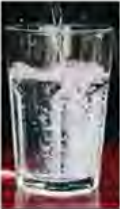
The listening task is about an experiment in which several liquids are poured into one glass and settle in separate layers, with small objects dropped in to see where they stop. Before you listen, look at the picture and ask yourself two things: what is in the glass, and why do the layers stay apart?
Density: how much mass is packed into a given space. A denser liquid is heavier for the same volume, so it sinks below a less dense one.
The science behind the tower is simple. A thick syrup or honey is denser than water, and water is denser than vegetable oil, so they stack from the bottom up in that order. A solid object sinks until it reaches a liquid denser than itself, and floats there. Water and oil do not mix because water molecules are strongly attracted to each other and not to oil, so the oil is pushed out and floats as a separate layer.
When you complete sentences from a recording, prepare before it starts:
- Read every gapped sentence first and guess what kind of word fits: a number, a noun, or a comparing word like 'higher' or 'lower'.
- Listen for the names of the liquids and the order in which they are poured.
- Listen for comparisons of density: more than, less than, higher, lower.
- Listen for numbers, such as how many minutes the mixture is left to settle.
- Listen for where each object comes to rest, and write the answer while the speaker is still talking.
- Check your spelling at the end.
Imagining the Past: The Third Conditional
Sometimes we imagine a past that did not happen: we think about a different choice and a different result. This is often a regret, or a lesson learned.
Third conditional: If + past perfect, would have / could have / might have + past participle. It imagines a past condition that did not happen and its result.
- If we had left earlier, we would have caught the bus. (We did not leave early, and we missed it.)
- If she had studied the map, she would not have got lost.
- If the village had collected rainwater, the drought might have been less severe.
Here are all four types side by side.
| Type | If-clause | Main clause | Use |
| Zero | present simple | present simple | general truths and facts |
| First | present simple | will + base verb | real, likely future |
| Second | past simple | would + base verb | imagined present or future |
| Third | past perfect | would have + past participle | imagined past |
Conditionals Without If
In formal English, a condition can be written without 'if'. Drop 'if' and move the helping verb to the front of the clause. This is called inversion.
Inverted conditional: a conditional clause with 'if' removed and the helping verb (had, were or should) placed before the subject.
| With if | Without if |
| If I had known, I would have helped. | Had I known, I would have helped. |
| If she were here, she would agree. | Were she here, she would agree. |
| If you should need help, call me. | Should you need help, call me. |
Only 'had', 'were' and 'should' can be moved this way. 'Did I know the answer, I would tell you' is wrong. Use 'If I knew the answer, I would tell you.'
Writing a Letter to the Editor
Letter to the editor: a formal letter sent to a newspaper for publication, in which a reader raises a public problem so that both the public and the authorities notice it.
The model letter in this unit is written by a resident of Koteshwor, Kathmandu, to the editor of a national daily. She complains that her area has faced a shortage of water for a long time, that the water tank is too small for the residents' needs, and that people still waste water while bathing, washing clothes and dishes, and gardening. She warns that neighbours may soon quarrel over a few trickles of water. Then she suggests solutions: a general meeting of residents, messages on local cable TV and community radio, a door-to-door campaign, talks by water conservation experts, reusing water, and rainwater harvesting.
A letter to the editor follows a fixed layout. Set out the parts in this order:
- Your address, at the top.
- The date.
- The receiver: 'The Editor', the name of the newspaper, and its address.
- The salutation: 'Dear Sir' or 'Dear Sir/Madam'.
- Opening paragraph: the purpose of the letter, such as 'Through this letter I would like to draw the attention of the concerned authorities to...'
- Body paragraphs: the problem, its causes and its effects, with facts.
- Suggestions: practical steps that could solve it.
- Closing line: a hope that action will be taken.
- 'Thanking you', then 'Yours truly' or 'Yours faithfully', and your name.
Keep the tone formal, polite and firm. Complain about the problem, not about people. Notice how often a good complaint uses conditionals: 'If this goes on unchecked, people are likely to fight', 'If we organize a door-to-door campaign, it is sure to make the residents aware', and 'Had we gone for rainwater harvesting, it would certainly have lessened the crisis.' The grammar of this unit is exactly the grammar of persuasion.
Writing a Letter of Complaint
A letter of complaint goes straight to the person or office that can fix the problem: a ward chairperson, a mayor, or the chief of a municipality. The layout is the same as a letter to the editor, but the receiver is the authority, and many writers add a subject line such as 'Subject: Unmanaged garbage in our locality' below the address. The letter has three jobs: describe the problem, explain the harm it causes, and suggest measures.
For a problem like unmanaged garbage, the harms to public health you might mention include:
- a bad smell that makes the area unpleasant to live in
- flies, mosquitoes and rats that breed in the waste
- diseases such as diarrhoea, typhoid, cholera and dengue
- blocked drains that cause flooding in the rainy season
- smoke and poisonous gases when garbage is burnt in the open
Useful measures to suggest: regular collection by the municipality, separate bins for decomposable and non-decomposable waste, composting kitchen waste at home, fines for dumping in public places, and awareness campaigns in schools and on local radio.
Project: How a Local Technology Works
Every community uses technology, and much of it is local and clever: a traditional water mill that grinds grain with the force of a stream, a biogas plant that turns dung into cooking gas, an improved cooking stove that burns less wood, a solar water heater on a roof, or a suspension bridge across a river. The project asks you to study one of these and explain how it works.
A working principle is the scientific idea that makes a machine work. A biogas plant, for example, works because bacteria break down dung and water in a sealed tank without air, giving off methane gas that burns. When you present, move from what it is, to its parts, to the principle, to its benefits. A labelled drawing on the board helps your listeners follow you.
The full lesson is waiting for you
The notes are free to read in full. A free account opens the rest of the practice, and tracks your progress and confidence score for every subject. Presentations and videos need approval from Learn Yeti.