What It Takes to Succeed
Success means reaching a goal you have worked towards. It might be passing an examination with good marks, winning a match, starting a business that grows, or learning a skill that once seemed impossible. When it comes, people celebrate. A team jumps and shouts, a family throws a small party, friends send messages and a school puts a notice on its board. Success and celebration go together, and both need language. We tell the stories of how success was won, and we find the right words to congratulate the people who won it.

Look at any celebration and you see only the final moment. Behind a trophy lie early mornings, injuries, defeats and practice in the rain. When people who have achieved something big talk about how they did it, the same qualities come up again and again:
- Hard work: doing the practice, the reading or the training every day, not only when you feel like it.
- Perseverance: continuing to try after something goes wrong.
- Self-belief: trusting that you can do it even when others doubt you.
- Learning from failure: asking what went wrong and doing it differently next time.
- Patience: accepting that big goals take years, not weeks.
- Support: teachers, parents, friends and teammates who help along the way.
Success is rarely a straight road. Most successful people failed many times before they succeeded. What made the difference is that they did not stop.
Walt Disney: An Example of Struggle and Success
Walt Disney is a name almost everyone knows. He was an American animator, filmmaker and theme park developer, and his work changed the entertainment world in the twentieth century and after it. Mickey Mouse, Snow White and Disneyland all began with him. Yet when you look closely at his life, you find an unhappy childhood, one business failure after another, and setbacks that would have made most people give up. He is one of the best examples of a person who started from humble beginnings and reached extraordinary success.
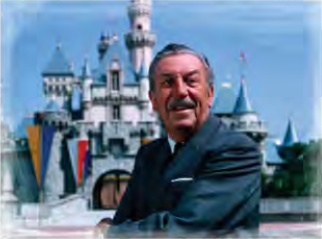
His story is told in a biographical article: a piece of factual writing about a real person's life. It moves through his life in the order things happened, and each paragraph takes the reader to a new stage, usually marked by a year or a place. Reading it well means following that order, noticing the turning points, and asking what each failure led to.
Biography: a true account of a real person's life written by someone else. A short biography in a magazine or newspaper is often called a biographical article.
Chronological order: the order in which events actually happened, from the earliest to the latest. Biographies are usually written in chronological order.
A Hard Childhood
Walt Disney was born in Chicago in 1901 and grew up in Missouri. He was the fourth son in a family of five siblings. His father, Elias, was a domineering man who was said to be abusive, and he could not earn enough to make ends meet for the family. Young Walt found solace in drawing. It was his escape from a stressful home. One by one he watched his older brothers run away from home to get away from their father.
At sixteen he dropped out of school to join the Army, but he was rejected because he was underage. Instead he joined the Red Cross, which sent him to France for a year to drive an ambulance. He returned to the United States in 1919.
One Failure after Another
Back home, Disney became an apprentice at a commercial art studio in Kansas City. He was itching to start something of his own, and in 1920 he and his older brother Roy launched their own cartoon business, Laugh-O-Gram Studios. A couple of years later the company went bankrupt.
With his first business gone, Disney packed his bags and travelled to Los Angeles with only forty dollars, hoping to become an actor. He failed at that too. But there was a silver lining. He noticed that California had no animation studios at all, so he persuaded Roy to join him in the West and set up a studio. Not long after, he had his first major success: a cartoon character called Oswald the Lucky Rabbit.
Oswald was lucky and became a star of one-reel cartoons, but Disney's own luck ran out. He travelled to New York to renegotiate his contract and discovered that his producer had taken his team of animators away from him. Worse, Disney no longer had any legal rights to Oswald. He could have fought the loss in court or spent years plotting revenge. He did neither. He walked away and started again.
Mickey Mouse and a Rocky Road
On the train ride back to California, having just lost everything he had built, Disney created a new character: Mickey Mouse. The years that followed were hard. He lived on cheap meals of beans and his debts kept growing. Investors rejected the idea of his mouse more than 300 times before one finally accepted it. In the late 1920s Mickey Mouse came to life on film, and Disney earned his way back to the top of his industry.

Even success did not make life easy. Disney was overworked, and tensions with his employer, who took away his longest-serving and best animator, led to a nervous breakdown. He took time off with his wife to recover and came back with a bold new idea: a full-length animated feature film. It was Snow White and the Seven Dwarfs (1937), and it was a huge success at the box office.
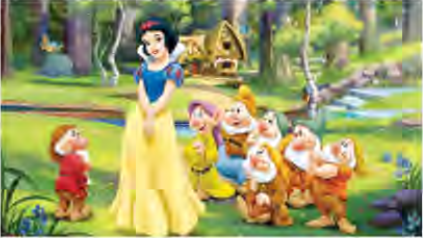
The films that came next, Pinocchio (1940), Fantasia (1940) and Bambi (1942), were duds: they did not make money. Then, at the start of the Second World War, his animators went on strike, and his mounting debt grew to more than four million dollars.
Television and Disneyland
After the war the company was slow to rebuild. During this time Disney learnt to diversify his business. The big film studios pressured him to stay with cinema, but he turned to television instead. The gamble paid off. Shows such as The Mickey Mouse Club and Davy Crockett were so successful that Disney was able to harness enough money to launch his biggest venture yet: Disneyland.
Disneyland opened on 17 July 1955 in Anaheim, California. Like most of his enterprises, it got off to a rocky start. Forged tickets brought in far more visitors than expected, and the queue stretched seven miles. The temperature rose to about 100 degrees Fahrenheit, the new asphalt melted under women's high heels, the drinking fountains did not work and some rides broke down. Critics called the opening day 'Black Sunday'.

As always, Disney's determination and perseverance turned the endeavour around. Disneyland became a colossal success. It cleared his financial debts, and it is still an important part of the business empire he built.
What Disney's Life Teaches
Speaking about the benefits of failure, Disney once said: 'All the adversity I've had in my life, all the troubles and obstacles have strengthened me. You may not realise it when it happens, but a kick in the teeth may be the best thing in the world for you.' He meant that a painful defeat can teach us more than an easy victory, because it forces us to become stronger.
- Failure is not the end. Disney lost a company, a career in acting and his most successful character, and each loss led to something bigger.
- Walk away from anger. Instead of seeking revenge over Oswald, he put his energy into Mickey Mouse.
- Keep trying after rejection. His mouse was turned down more than 300 times.
- Be willing to change direction. Moving into television, against advice, gave him the money for Disneyland.
- Perseverance is the quality that finally made him a successful entrepreneur.
Disney's success was not a matter of luck. It was built from failures he refused to let stop him.
Syllables and Word Stress
A long word like 'extraordinarily' can look frightening, but a dictionary tells you exactly how to say it. It gives the pronunciation in phonetic symbols between slashes, the part of speech, and a small mark showing which syllable is stressed. Two ideas make sense of all of this.
Syllable: a unit of spoken sound built around one vowel sound. 'Cat' has one syllable, 'suc-cess' has two and 'cel-e-bra-tion' has four.
Word stress: the syllable in a word that is said louder, longer and on a higher note than the others. In dictionaries the mark ˈ is placed just before the stressed syllable, and a low mark ˌ shows a weaker, secondary stress.
To work out a word's pronunciation from a dictionary, follow these steps:
- Step 1: Find the word and read its phonetic spelling between the slashes.
- Step 2: Note the part of speech: noun, verb, adjective or adverb.
- Step 3: Count the vowel sounds in the phonetic spelling. Each vowel sound is one syllable.
- Step 4: Find the ˈ mark. The syllable straight after it carries the main stress.
- Step 5: Say the word aloud, clapping once on each syllable and more loudly on the stressed one.
| Word | Pronunciation | Part of speech | Syllables | Stressed syllable |
| extraordinarily | /ɪkˈstrɔːdnrəli/ | adverb | six | second |
| success | /səkˈses/ | noun | two | second |
| failure | /ˈfeɪljə(r)/ | noun | two | first |
| celebration | /ˌselɪˈbreɪʃn/ | noun | four | third |
| determination | /dɪˌtɜːmɪˈneɪʃn/ | noun | five | fourth |
Count sounds, not letters. 'Venture' has seven letters and three written vowels, but only two syllables: VEN-ture. The final 'e' is silent.
Words ending in -tion or -sion are almost always stressed on the syllable just before the ending: cel-e-BRA-tion, an-i-MA-tion, de-ter-mi-NA-tion.
Congratulating Someone
When someone shares good news, the polite and warm response is to congratulate them: to tell them you are happy about their success. A good congratulation names the achievement, shows real pleasure, and often praises the effort behind it. The person congratulated replies with thanks.

Useful expressions for congratulating, from simple to more formal:
- Well done!
- That's wonderful news!
- You did it! So proud of you.
- Congratulations! You deserve this success.
- Congratulations on your hard work.
- My sincere, heartfelt or warmest congratulations to you.
- I commend you on your accomplishments.
Useful replies: 'Thank you very much.' 'Thanks, that's very kind of you.' 'Thank you. I couldn't have done it without your support.'
We say 'congratulations ON something': congratulations on your result, congratulations on your new job. Never 'congratulations for'. The word itself is usually plural: 'Congratulations!', not 'Congratulation!'.
Prepositions
Preposition: a word placed before a noun or pronoun to show how it is related to another word in the sentence, in time, place, direction or some other way. Examples: in, on, at, under, between, for, of, into.
In 'Disney moved to Los Angeles in 1923 with forty dollars', the word 'to' shows direction, 'in' shows time and 'with' shows possession. A preposition is small, but choosing the wrong one changes the meaning or sounds wrong to an English speaker. Many prepositions simply have to be learnt with the words they go with.
In, On and At
These three are the most common prepositions of time and place. For time, think of them as moving from large periods down to exact points.
| Preposition | Time | Place |
| in | months, years, seasons, centuries, long periods: in July, in 1955, in the morning, in her twenties | inside an area or space: in Nepal, in the room, in the dark |
| on | days and dates: on Sunday, on 17 July, on my birthday | on a surface or line: on the table, on the wall, on the road |
| at | exact times and points: at 7 o'clock, at noon, at night, at the moment | at a point or place: at the door, at school, at the bus stop |
Some fixed uses do not follow the pattern neatly and are best learnt as they are:
- at a temperature or speed: Water boils at 100 degrees Celsius. The city is growing at a great pace.
- at an age: He started work at the age of 16.
- at the moment, meaning now: She is not at home at the moment.
- in my opinion: In my opinion, the film was too long.
- on the radio, on television, on the phone: I heard it on the radio.
- on a trip, on holiday: We went on a trip to Godawari.
- a knock at the door: There was a knock at the door.
Other Prepositions of Time
| Preposition | Use | Example |
| from ... to | the start and end of a period | The library is open from 10 am to 4 pm. |
| between ... and | a point somewhere inside a period | I'll arrive between 9:00 and 9:15. |
| in | within a stated time from now | Finish the test in the next 30 minutes. |
| for | a length of time | She has lived here for ten years. |
| since | the point when something began | She has lived here since 2016. |
| by | not later than | Submit your project by Friday. |
| until | up to a point, then stopping | We waited until midnight. |
Other prepositions show different relations. 'Under' shows a lower rank: ten people work under the manager. 'Of' links a quantity to a noun: a great deal of noise. 'Into' shows change or movement to the inside: the talk turned into an argument. 'For' goes with certain verbs: I am looking for my keys.
'Between' pairs with 'and', and 'from' pairs with 'to'. Say 'between 5 and 6' or 'from 5 to 6'. Never mix them as 'between 5 to 6'.
Prepositional Phrases
Prepositional phrase: a group of words that begins with a preposition and ends with a noun or pronoun, working together as one unit of meaning. Examples: in cash, on board, out of reach.
| Phrase | Meaning | Example |
| in cash | with notes and coins, not a card or cheque | He paid for the bicycle in cash. |
| at playing | skilful when playing something | Sita is excellent at playing the flute. |
| interested in | wanting to know or do more about | Are you interested in science? |
| with each other | one with another | The two teams shook hands with each other. |
| out of their hand | out of their control | When the crowd grew angry, things got out of their hand. |
| in a hurry | needing to do something quickly | Sorry, I'm in a hurry to catch the bus. |
| out of reach | not possible to reach or contact | Keep medicines out of reach of children. |
| on a diet | eating less or eating only certain foods | My uncle is on a diet for his heart. |
| at large | free and not yet caught | The tiger that escaped is still at large. |
| on board | on a ship, plane, bus or train | All the passengers on board were safe. |
| of the situation | connected with what is happening | The teacher took control of the situation. |
Writing a Message of Congratulation
Message of congratulation: a short, warm piece of writing that praises a person or group for an achievement and wishes them well. A school often puts one on its notice board.
- A heading that catches the eye, such as 'Congratulations!'
- Who is congratulating, and whom: the school, on behalf of teachers and students.
- The achievement, stated clearly: what was won, where and who organised it.
- How the writer feels: happy, proud, delighted.
- Praise for the effort: hard work, dedication, teamwork.
- Any reward: a trophy, a certificate or a cash prize.
- Best wishes for the future, and the name of the sender at the end.
Here is a model for a quiz team's victory:
CONGRATULATIONS, QUIZ CHAMPIONS!
On behalf of the whole school, we warmly congratulate our quiz team, Sabina Rai, Aayush Thapa and Nirmala BK, on winning first place in the District Level Inter-school Quiz Contest organised by the District Education Development Unit. We are all extremely happy and proud of you. Your weeks of reading, your quick thinking and your calm teamwork on stage have brought great honour to our school. The trophy and your certificates will be displayed in the school hall. We wish you the very best for the provincial round. Keep shining!
Principal, on behalf of the teachers, staff and students
Writing a Letter of Congratulation
Letter of congratulation: a personal letter written to someone on an important achievement, such as a promotion, a result or a new job, to share their joy and wish them further success.
- The writer's address and the date, at the top right.
- A salutation: Dear Uncle, Dear Aunt, Dear Rita.
- Opening paragraph: say how you heard the news and congratulate the person at once.
- Middle paragraph: praise the qualities and effort that led to the success, and say what it means to you and the family.
- Closing paragraph: wish them well in the new role and send regards to others.
- A closing line and your name: Yours affectionately, Your loving niece.
A model letter to an aunt who has become a head teacher:
Suryabinayak, Bhaktapur. 25 June 2026
Dear Aunt,
Mother told me this morning that you have been appointed Head Teacher of your school. My heartiest congratulations to you! I shouted with joy when I heard the news.
Everyone in the family knows how hard you have worked for this. For twenty years you have taught with patience, stayed late to help weak students and never missed a day without reason. Your students love you, and now your whole school will benefit from your care. You have always been my role model, and today I am prouder of you than ever.
I wish you every success in your new responsibility. Please give my love to Uncle and my cousins. I hope to visit you during the Dashain holiday.
Yours affectionately, Prakriti
If by Rudyard Kipling
Rudyard Kipling was a British writer born in Bombay, India, in 1865. He died in 1936. He wrote poems, stories and novels, including The Jungle Book, and in 1907 he became the first English-language writer to win the Nobel Prize in Literature. His poem 'If', published in 1910, is written as a father's advice to his son about how to become a mature, balanced person. It has four stanzas of eight lines. Almost the whole poem is one long sentence: a chain of conditions, each beginning 'If you can...', with the reward held back until the final two lines.
Stanza: a group of lines forming one section of a poem, like a paragraph in prose. 'If' has four stanzas.
Personification: giving human qualities to an idea or object. Kipling calls Triumph and Disaster 'impostors', and makes the Will speak the words 'Hold on!'
If you can keep your head when all about youAre losing theirs and blaming it on you,If you can trust yourself when all men doubt you,But make allowance for their doubting too;If you can wait and not be tired by waiting,Or being lied about, don't deal in lies,Or being hated, don't give way to hating,And yet don't look too good, nor talk too wise:If you can dream, and not make dreams your master;If you can think, and not make thoughts your aim;If you can meet with Triumph and DisasterAnd treat those two impostors just the same;If you can bear to hear the truth you've spokenTwisted by knaves to make a trap for fools,Or watch the things you gave your life to, broken,And stoop and build 'em up with worn-out tools:If you can make one heap of all your winningsAnd risk it on one turn of pitch-and-toss,And lose, and start again at your beginningsAnd never breathe a word about your loss;If you can force your heart and nerve and sinewTo serve your turn long after they are gone,And so hold on when there is nothing in youExcept the Will which says to them: 'Hold on!'If you can talk with crowds and keep your virtue,Or walk with Kings, nor lose the common touch,If neither foes nor loving friends can hurt you,If all men count with you, but none too much;If you can fill the unforgiving minuteWith sixty seconds' worth of distance run,Yours is the Earth and everything that's in it,And, which is more, you'll be a Man, my son!
What the Poem Means
The first stanza is about calm and honesty. 'Keep your head' means stay calm while everyone around you panics and blames you. Trust yourself when others doubt you, but understand why they doubt. Be patient. When people lie about you, do not lie back; when people hate you, do not hate in return. And do all this without showing off or acting as if you are wiser than everyone else.
The second stanza is about balance. Dream and think, but do not let dreams rule you or let thinking replace action. Triumph and Disaster are called 'impostors' because neither is what it seems: success does not last forever and failure is not final, so treat them the same. If dishonest people twist your honest words to trap fools, bear it. If the work of your life is broken, bend down and rebuild it, even with old, worn-out tools.
The third stanza is about risk, loss and will. Be brave enough to risk everything you have won on a single chance, and if you lose, start again from the beginning without complaining. When your heart, nerves and muscles are exhausted, keep going with nothing left but willpower, the Will that tells them 'Hold on!'. This is exactly the quality Disney showed after losing Oswald.
The fourth stanza is about character and time. Mix with ordinary crowds without losing your good values, and with powerful people without becoming proud, keeping 'the common touch'. Do not let enemies or friends hurt you deeply, and value everyone, but depend on nobody too much. Finally, 'fill the unforgiving minute with sixty seconds' worth of distance run': a minute never comes back, so use every second fully. The reward is the whole Earth and, more than that, becoming a true Man, a mature and good person.
The poem lists the qualities of a complete person: calm, self-trust, patience, honesty, humility, balance between success and failure, courage to rebuild, a strong will, virtue and the wise use of time.
Listening to a Speech about Success

The speaker is Barack Obama, who served as President of the United States from 2009 to 2017. In a famous speech to school students, he talks about every young person's responsibility, his own difficult childhood, his wife Michelle's hard work, and famous people who failed many times before they succeeded. The listening task asks you to do three things: choose the correct answer from three alternatives, listen again and fill blanks with the exact words or phrases you hear, and then retell the main points of a motivational speech to the class.
While you listen, focus on these details:
- What the speaker says every individual is responsible for discovering.
- Who raised him, how old he was when his father left, and what his mother struggled with.
- Why he calls himself lucky, and what he is not proud of.
- Why Michelle Obama worked hard.
- Who he says the most successful people in the world are, and the examples he gives: the Harry Potter book and Michael Jordan.
- Numbers: how many times something was rejected.
Good listeners prepare before the audio begins:
- Read every question and every option first, so you know what you are listening for.
- Predict the kind of answer: a person, a number, a reason or a word.
- During the first listening, choose answers and jot down key words, not whole sentences.
- During the second listening, check your choices and catch the exact words for the blanks.
- For retelling, note only the main idea of each part of the speech, then speak in your own words.
Writing a Speech: Failure as a Pillar of Success
Speech: a formal talk given to an audience. A written speech is drafted to be heard, so it greets the audience, speaks to them directly and uses clear, memorable sentences.
A pillar holds up a building. Calling failure a pillar of success means that success stands on the lessons we learn from failing. A speech on this idea needs a clear shape:
- Greeting: Respected chairperson, principal, teachers and my dear friends.
- Introduction: give your name and topic, and open with a question, a quotation or a short story.
- Body: explain why failure teaches, then support the idea with examples of famous people.
- Advice: tell the audience what to do when they fail.
- Conclusion: sum up in one strong line and thank the audience.
Strong examples to use: Walt Disney, whose company went bankrupt and whose Mickey Mouse was rejected more than 300 times; J. K. Rowling, whose first Harry Potter book was turned down by twelve publishers; Michael Jordan, who was left out of his high school basketball team and became one of the greatest players ever; and Thomas Edison, who made hundreds of failed experiments before his electric light bulb worked.
A model opening: 'Respected chairperson, teachers and friends, good morning. Put up your hand if you have ever failed at something. Look around. Every hand is up, and that is good news, because today I want to show you that failure is not the opposite of success. It is the pillar on which success stands.'
Project Work: Interviewing a Successful Person
Success stories are not only found in famous lives. A farmer who started commercial farming, a teacher who built a library, a shopkeeper who grew a small business or an athlete from your district all have stories worth recording. The project is to interview one such person and write a report on how they became successful.
- Choose a person and ask politely for a meeting, explaining the purpose.
- Prepare questions in advance about their childhood, their goal, their difficulties and failures, what kept them going, and their advice to young people.
- During the interview, listen carefully, take notes and ask follow-up questions such as 'What did you do next?'
- Thank the person at the end.
- Write the report with a title, an introduction naming the person and the date of the interview, a body telling their journey in chronological order, and a conclusion with the lesson you learnt.
Useful interview questions: What did you want to become when you were young? What was the hardest moment on your way? Did you ever want to give up? What helped you keep going? What advice would you give students like us?
The full lesson is waiting for you
The notes are free to read in full. A free account opens the rest of the practice, and tracks your progress and confidence score for every subject. Presentations and videos need approval from Learn Yeti.