Famous People and Places of Nepal
A country is known partly through its people and partly through its places. When Nepalis talk about Nepal, they name the writers, singers, climbers, saints and leaders who shaped it, and the airports, temples, lakes and mountains that visitors travel a long way to see. This unit moves between those two things: the life of a person and the character of a place.
Talking about a well-known person usually means answering a few plain questions. Who is this? When and where did they live? What did they do? Why do people still remember them? Look at the three portraits below and try to answer those four questions for anyone you recognise. If you do not recognise a face, you can still describe it: the age, the expression, the spectacles, the beard, the headscarf, the way the hands are held.
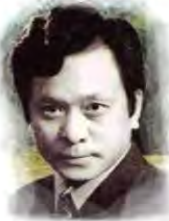
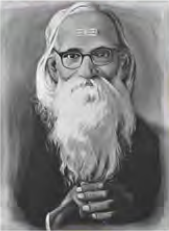
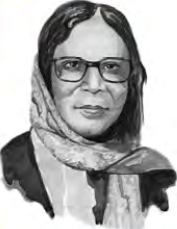
Talking about a place asks different questions. Where is it? What does it look like? What happened there, and what can a visitor do? The two places below could hardly be more different. One is a tiny airstrip high in the Himalaya; the other is a square of palaces and temples in one of the oldest cities of the Kathmandu Valley.
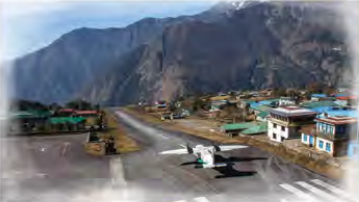
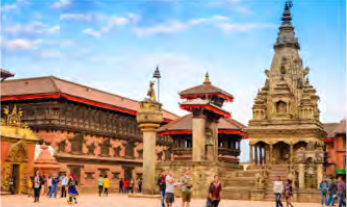
Lukla, in Solukhumbu district, is where most trekkers and climbers begin the walk towards Mount Everest. Its runway is short and slopes uphill, with a steep drop at one end and a mountain wall at the other, so pilots have almost no room for error. That is why it is often called one of the most difficult airports in the world. Bhaktapur Durbar Square lies east of Kathmandu. Its royal palace, famous for its fifty-five carved windows, stands among stone temples and brick courtyards, and the whole square is part of the Kathmandu Valley World Heritage Site. Visitors come for the woodcarving, the pottery and the thick curd served in clay bowls.
Every skill in this unit is about one of two things. For people: a writer telling her own life story, a biography of a poet, and describing what someone looks like. For places: a famous mountain in Brazil, your own village or town, and a tourist destination you want a friend to visit.
Reading I: A Writer Remembers Her Beginning
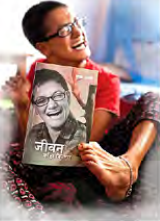
Jhamak Ghimire is one of the most admired writers in Nepal. She was born with a severe physical disability. She could not speak, and her hands and legs did not have the strength to walk, hold or work. She taught herself to write with her foot, and went on to become a poet, a newspaper columnist and an author. Her autobiography, Jivan Kanda Ki Phul, won the Madan Puraskar, the best-known literary prize in Nepal. Its English translation by Michael Hutt is called A Flower in the Midst of Thorns.
Autobiography: the story of a person's life written by that person. It is told in the first person, using 'I', 'me' and 'my', and it gives the writer's own feelings and judgements about what happened.
The passage 'Me at the Beginning of Life' is the opening chapter of that autobiography. It does not simply list events. It is reflective and poetic: the writer looks back at her infancy and childhood and asks what her life meant, why she was treated the way she was, and who loved her. The sentences are often long and heavy with feeling, and the writing uses images such as fate drawing lines on a baby's brow, a thorn that pricks people's eyes, and a grandmother white-haired like the moon over a hill.
Apostrophe (as a figure of speech): speaking directly to someone who is absent or dead, or to a thing or an idea as if it could listen. 'Mother, you wanted fortune to draw a good line of fate' and 'Blessed Nature!' are both examples.
Notice how often the writer turns away from the reader to speak to someone else. She speaks to her mother, to Nature and, above all, to her grandmother. This makes the chapter feel like a private conversation that the reader is allowed to overhear, and it is one reason the text is so moving.
Understanding Me at the Beginning of Life
The chapter opens with a thought about life itself. The writer has come to believe that life is a beautiful flower of creation, but she is not sure that her own life fits that definition. She survived because, even while her heart wept, laughter kept stirring somewhere inside the pain. She admits that the truth of her life is bitter and its reality dull and tasteless, and that she has cried while turning the pages of memory.
She then recalls a folk belief. On the sixth day after a baby is born, the baby is bathed and put to sleep with an exercise book and a pen under the pillow, because fortune is believed to come that night and write the child's line of fate. Her mother did this, hoping for a good fate across her daughter's brow. The writer says, with some bitterness, that fortune did not draw her line well that night.
Her early life, she says, was filled with ill fortune. She had neither the sweetness nor the joy of life, and she lived almost as an animal lives; the only difference she can name is that she ate rice. Society made it worse. People believed she was cursed by the gods and was paying for sins from a former life, so she became 'a thorn that pricked everyone's eyes'. No one looked at her with sympathy. She could only suffer in silence and ask herself, 'How am I to blame for all of this?', because she had no voice, no language and no gestures with which to ask it aloud.
Then comes the central argument of the chapter. Nature, she says, became a mother to her and wiped her tears, and her own mother was not at fault either; the fault was fate's. She asks whether disability simply means being born with a bodily weakness. If so, why does the world not call Homer, Nikolai Ostrovsky or Helen Keller incomplete? They were weak in body too, yet they wrote history and left the world a new way of seeing. Her point is that a person's worth is not measured by the body. The difference, she says, is that she was born in a very different world, where she lived an unequal and low life.
Growing aware of the world did not make things easier. Awareness became a curse, because now she understood everything she could not do. She longed to speak, to run on the hills, and to fill a basket with wild flowers, but she had no voice and no strength in her legs or hands. Those unfulfilled wishes fell back on her like wounds.
The last part of the chapter belongs to her grandmother. The family was poor; it was hard to manage two meals a day, and her parents often went hungry at mealtimes so the children could eat. Her grandmother went without food herself to feed her, kept her close at night, wrapped her in an old petticoat and carried her in a bamboo basket. The writer believes that without this care she might never have survived. Because of her grandmother she came to know the many colours of life. The grandmother has since died, but the chapter ends by saying she still lives in the writer's heart and mind.
The chapter moves from pain to gratitude. It questions a society that blamed a child for her own body, argues that disability does not make a person incomplete, and honours the grandmother whose love kept her alive.
Words Spelt Alike but Said Differently
English has pairs of words that are spelt in exactly the same way but are pronounced differently, and the pronunciation changes the meaning. You cannot tell which one is meant from the spelling alone. You have to look at the sentence and work out what job the word is doing: is it a noun, a verb or an adjective, and is it present or past?
Heteronym: a word that has the same spelling as another word but a different pronunciation and a different meaning, such as 'tear' (to rip) and 'tear' (a drop from the eye).
| Word | Use | Say it like | Meaning | Example |
| read | verb, present | 'reed', rhymes with need | to look at writing and understand it | I read the news every morning. |
| read | verb, past | 'red', rhymes with bed | the past tense of read | Yesterday I read the whole chapter. |
| live | verb | rhymes with give | to be alive; to have your home | My cousins live in Ilam. |
| live | adjective | rhymes with five | being alive; happening now | The zoo keeps a live python. |
| wind | noun | rhymes with pinned | a movement of air | The wind slammed the door shut. |
| wind | verb | rhymes with find | to turn something around something else | Wind the string round the kite stick. |
| wound | noun | rhymes with tuned | an injury | The wound on his knee has healed. |
| wound | verb, past of wind | rhymes with round | turned around something | She wound the rope around the post. |
| tear | verb | rhymes with bear | to rip a solid material | Do not tear the page out. |
| tear | noun | rhymes with fear | a drop of water from the eye | A tear ran down her cheek. |
| use | verb | 'yooz', ending in a z sound | to utilise | May I use your phone? |
| use | noun | 'yoos', ending in an s sound, rhymes with juice | a way in which something is used | This old tin still has a use. |
'Wound' is the one most students get wrong. The injury is said like 'woond'. The past tense of the verb 'wind' is said like 'round'. 'The nurse cleaned the wound' and 'He wound up the clock' use two different sounds.
Describing a Person
Describing a person well means working from the general to the particular, in an order a listener can follow. Start with what anyone would notice first, such as age, height and build, then move to the face and hair, then clothes, and finish with anything unusual: the way the person walks, a voice, a scar, a habit. A witness describing a stranger to the police needs exactly this skill, and so does anyone writing a character in a story.
| Feature | Useful words |
| Age | young, in his teens, in her twenties, middle-aged, elderly |
| Height | tall, short, of medium height |
| Build | slim, thin, well-built, stocky, plump, athletic |
| Complexion | fair, wheatish, dark-skinned, tanned |
| Face | oval, round, square, long; a pointed chin, high cheekbones, a moustache |
| Eyes | large, small, almond-shaped, deep-set, dark brown, bright |
| Hair | short, long, shoulder-length, straight, wavy, curly, black, grey, tied back |
| Clothes | a half-sleeved shirt, faded jeans, a checked kurta, rubber slippers, sports shoes |
| Manner | walks quickly, limps slightly, speaks softly, smiles a lot |
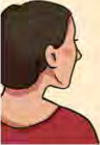
Here is a short exchange at a police post. Notice how the inspector's questions pull out the details in a useful order.
Use the present tense for features that do not change and the past tense for what you saw at that moment: 'He is tall and has curly hair', but 'He was wearing a green jacket'.
To practise, work with a partner and take turns describing a friend, a teacher or a parent. Cover age, face, general appearance, build, the way they walk, hair and dress. Your partner should be able to picture the person, or even guess who it is, from your words alone.
Some words describe a body accurately but sound rude. Say 'well-built' or 'plump' rather than 'fat', and 'slim' rather than 'skinny', especially when describing someone you know.
Describing a Place

A good description of a place makes the listener feel they are standing in it. Begin with one sentence that gives your overall impression. Then say what lies near you, what can be seen from there, what can be heard, which animals or people you meet, and when the place is at its best. End with how the place makes you feel. Concrete details work far better than words like 'nice' or 'good'.
Here is a model. 'My village lies at the foot of a green hill, beside a fast, noisy river. Every house has a small kitchen garden, and in spring the terraces are bright with mustard flowers. On clear mornings you can see a line of white peaks far to the north. Monkeys sometimes come down from the forest to steal maize, and the whole village chases them away with pots and sticks. In the evening, smoke rises from the kitchens and you can hear children calling one another home. I have lived in bigger places since, but none of them feels as peaceful.'
- My village is a small, quiet place in the hills of ...
- There is a ... near my house.
- From the village you can see ...
- The forest is full of ...
- The best time to be here is ..., when ...
- Evenings here are ...
Use those sentence starters to tell your partner about your own village or town, then change places and listen.
Relative Clauses and Relative Pronouns
When we point someone out in a photograph, we rarely stop at a name. We add a piece of information that tells the listener exactly who we mean: 'the girl who plays the piano', 'the boy whose father runs the shop'. That added piece is a relative clause.
Relative clause: a clause that gives more information about a noun that comes just before it. It begins with a relative pronoun or a relative adverb, such as who, whom, whose, which, that, where or when.
Relative pronoun: the word that begins a relative clause and links it back to the noun it describes. Who, whom, whose, which and that are relative pronouns; where and when do the same job for places and times.

Every clause in that conversation that starts with who, whose or where is a relative clause. Each one follows the noun it describes: 'the boy who sings in the school band', 'the boy whose sister teaches us maths', 'the lake where we had our picnic'.
| Word | Used for | Example |
| who | a person, as the subject of the clause | The girl who won the race is my cousin. |
| whom | a person, as the object of the clause | The teacher whom we invited could not come. |
| whose | belonging to a person or thing | I met a farmer whose goats had wandered off. |
| which | a thing or an animal | The bus which leaves at six is always full. |
| that | a person or a thing, in defining clauses only | This is the book that everyone is reading. |
| where | a place | This is the hospital where I was born. |
| when | a time | I remember the day when the floods came. |
To choose between who and whom, ask what the person does in the clause. In 'the girl who won the race', the girl does the winning, so she is the subject and we use who. In 'the teacher whom we invited', we do the inviting and the teacher receives it, so the teacher is the object and we use whom. A preposition at the end of the clause is another sign that whom is needed: 'the friend whom I want to sit with'.
The relative pronoun replaces the pronoun it stands for. Do not keep both. 'The book which I bought it yesterday' is wrong; write 'The book which I bought yesterday'.
Defining and Non-defining Relative Clauses
Defining relative clause: a relative clause that tells us which person or thing we mean. Without it the sentence loses its meaning. It has no commas. Example: 'Students who finish early may leave.'
Non-defining relative clause: a relative clause that adds extra information about a person or thing we have already identified. The sentence still makes sense without it. It is separated by commas and never begins with 'that'. Example: 'My mother, who is a farmer, grows a lot of vegetables.'
Compare two sentences. 'Students who finish early may leave' means only the students who finish early may leave; the clause picks them out from the rest. 'My mother, who is a farmer, grows a lot of vegetables' does not pick out one mother from many, because you have only one. The clause simply adds a fact about her, so it goes between commas. Remove it and 'My mother grows a lot of vegetables' is still complete.
A non-defining clause with which can also comment on a whole idea rather than one noun. In 'She didn't tell her teacher about her problem, which was her mistake', the word which refers to the whole fact of not telling the teacher.
Never use 'that' after a comma. 'Kathmandu, that is the capital, is crowded' is wrong. Write 'Kathmandu, which is the capital, is crowded'.
Joining Two Sentences with a Relative Pronoun
Two short sentences about the same person or thing can often become one smoother sentence. Follow these steps.
- Step 1: Find the word in the second sentence that refers back to a noun in the first, such as he, she, it, him, her, his or the same noun repeated.
- Step 2: Choose the relative pronoun that fits: who for a person as subject, whom for a person as object, whose for possession, which or that for a thing, where for a place, when for a time.
- Step 3: Replace the referring word with the relative pronoun and move the clause so it sits straight after the noun it describes.
- Step 4: Decide whether the clause identifies the noun or only adds information. If it only adds information, put commas around it.
Example 1. 'I have a neighbour. She keeps bees.' The word she refers to the neighbour and is the subject, so we use who: 'I have a neighbour who keeps bees.'
Example 2. 'I saw a soldier. His bravery impressed everyone.' The word his shows possession, so we use whose: 'I saw a soldier whose bravery impressed everyone.'
Example 3. 'This is the palace. Bhimsen built it.' The word it is the object and refers to a thing, so we use which or that: 'This is the palace which Bhimsen built.'
Example 4. 'There lived a giant in a forest. Nobody dared to go there.' The word there refers to a place, so we use where: 'There lived a giant in a forest where nobody dared to go.'
Example 5. 'My grandfather taught me to read. He was a village teacher.' The second sentence only adds information about someone already identified, so it becomes a non-defining clause with commas: 'My grandfather, who was a village teacher, taught me to read.'
Writing a Biography
Biography: the story of a person's life written by someone else. It is told in the third person, using 'he', 'she' or the person's name, usually in the past tense, and it follows the order in which things happened.
An autobiography and a biography tell the same kind of story from two different positions. Jhamak Ghimire writes 'I' because she is telling her own life. A biography of her would say 'she' and would be written by someone looking in from outside, more interested in facts, dates and achievements than in private feelings.
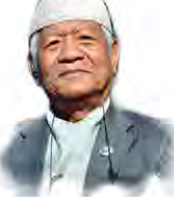
Til Bikram Nembang Limbu, known to readers as Bairagi Kainla, is a Nepali poet. These are the facts from which a short biography of him can be built.
| Heading | Facts |
| Birth | August 9, 1939, Panchthar, Nepal |
| Education | Learnt his letters at home and was taught by local teachers; later earned a Bachelor's degree in Arts |
| Publications | Bairagi Kainlaka Kavitaharu; Sappok-Chomen: Limbu Jatima Kokh-Puja; Nawacoit Mundhum; and others |
| Contributions | Poet; former Chancellor of the Nepal Academy; a pioneer of the Third Dimension movement in Nepali literature |
| Awards | Sajha Puraskar, 2031 B.S.; Vishist Shrasta Samman, 2066 B.S.; Jagdamba Shree Award, 2076 B.S.; and others |
Notes like these are not yet a biography. To turn them into one, organise them into paragraphs.
- Opening: who the person is and why they matter, in one or two sentences.
- Early life: birth, family and place, and early education.
- Work: what the person did, what they wrote or built, and the roles they held.
- Recognition: awards and honours, in the order they were received.
- Closing: what the person's work means today.
Here is a model. 'Til Bikram Nembang Limbu, better known by his pen name Bairagi Kainla, is one of the most original poets in Nepali literature. He was born on August 9, 1939, in Panchthar in eastern Nepal. He learnt his letters at home, where local teachers taught him, and he later completed a Bachelor's degree in Arts.'
'Kainla is remembered as one of the pioneers of the Third Dimension movement, which set out to make Nepali poetry bolder and less bound by old rules. His poems were collected in Bairagi Kainlaka Kavitaharu. He also studied and recorded the culture of the Limbu people in works such as Sappok-Chomen: Limbu Jatima Kokh-Puja and Nawacoit Mundhum. He served as Chancellor of the Nepal Academy.'
'His work has been widely honoured. He received the Sajha Puraskar in 2031 B.S., the Vishist Shrasta Samman in 2066 B.S. and the Jagdamba Shree Award in 2076 B.S. Through both his poetry and his research, he has given Nepali readers a new way of writing and a deeper knowledge of one of the country's oldest cultures.'
Nepal uses two calendars. When a biography mixes them, label every year: A.D. for the international calendar and B.S. for Bikram Sambat. '1939' and '2031 B.S.' are not in the same system.
Reading II: Sugarloaf Mountain
The second reading is a travel article, written to make a place sound worth visiting. It is organised as a short introduction followed by five numbered facts, each in its own paragraph. This kind of writing uses vivid adjectives such as spectacular, iconic, breathtaking and tranquil, and speaks directly to the reader as 'you'.
Sugarloaf Mountain is a natural landmark in southeastern Brazil. It overlooks the city of Rio de Janeiro and stands at the entrance to Guanabara Bay. In Portuguese it is called Pao de Acucar. It takes its name from its shape, which looks like the cone of refined sugar that was used in the nineteenth century. It is a tall granite cone with a rounded top, about 1299 feet, or 396 metres, high.
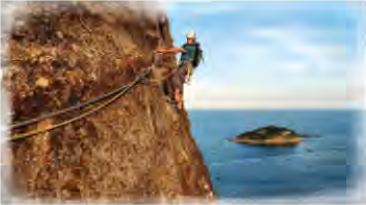
Rock climbing. Sugarloaf is one of the largest and most popular city rock-climbing destinations in the world. There are 270 different routes up its sides, so many climbers can be on the rock at once, climbing high above the Atlantic and the sprawling city. Visitors can try it themselves or simply watch.
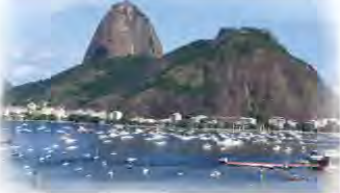
Neighbouring mountains. Sugarloaf is not the only landmark on the peninsula. Two neighbouring hills, Morro de Babilonia, or Babylon Mountain, and Morro de Urca, or Urca's mountain, add to the peaceful beauty of the area. Both are open to the public and to climbers, and Morro de Urca has a play area for children and a restaurant.

A film star. The mountain has appeared in Hollywood blockbusters. Its first screen appearance was in the 1942 film 'Now, Voyager', starring Bette Davis. In the 1979 James Bond film 'Moonraker', a scene takes place in one of its cable cars, and it has even been mentioned in the cartoon series 'The Simpsons'.

Guanabara Bay. The historic bay in front of the mountain has a name that means 'the bosom of the sea'. In the sixteenth century the colonial government built several fortifications around it. The bay holds more than 130 islands, and its scenery is best seen from high above as you tour the mountain.
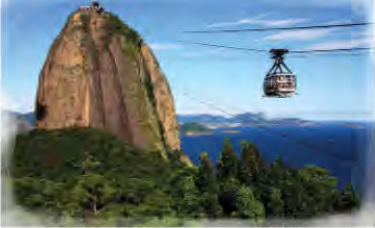

The cable car ride. Two cable cars carry visitors to the summit, where they can see Rio de Janeiro from a height of 1296 feet. The cars have glass panels, so the views open up below as you rise. Because the mountain sits on a peninsula stretching into the Atlantic, the view combines a bustling city, a tranquil bay and a sparkling ocean. The article ends by promising that the journey up is as enjoyable as the summit itself.
Each paragraph of the article carries one fact, and each fact could be given a heading: Rock Climbing, Neighbouring Mountains, Hollywood Star, Guanabara Bay and Awesome Cable Car Ride. Spotting the one idea in each paragraph is how you match paragraphs to headings.
Adjectives Ending in -ing and -ed
Many adjectives are made by adding -ing or -ed to a verb. The article uses several: a sprawling city, a bustling city, views that unfolded. These two endings are easy to confuse, but the rule behind them is simple.
Participial adjective: an adjective formed from a verb by adding -ing or -ed. The -ing form describes the thing or person that causes a feeling or has a quality. The -ed form describes the person who feels it.
'The film was boring' means the film caused the feeling. 'The audience was bored' means the audience felt it. So the lesson is interesting and the students are interested; the news is surprising and we are surprised; the flight was terrifying and the passenger was terrified.
| Verb | -ing adjective: causes the feeling | -ed adjective: feels it |
| annoy | an annoying noise | annoyed children |
| interest | an interesting book | interested readers |
| surprise | a surprising result | a surprised crowd |
| bore | a boring lecture | a bored student |
| excite | an exciting trip | excited students |
| terrify | a terrifying storm | a terrified passenger |
| tire | a tiring climb | tired climbers |
'I am boring' does not mean you feel bored. It means you make other people feel bored. When you are talking about your own feeling, you need the -ed form: 'I am bored', 'I am interested', 'I was terrified'.
Listening for a Description

Before listening to anyone describe a person, it helps to practise describing one yourself. In this picture the girl has large, dark, almond-shaped eyes that look bright and friendly. Her face is oval, with a pointed chin and a wide smile. Her hair is long, dark and wavy, parted to one side and falling over her shoulders.
The listening task is a conversation in which a boy asks a girl called Emma to help him find someone in a crowd. To help, Emma needs to know what that person looks like, so the conversation is full of describing words. You complete six sentences about what the boy is looking for, his friend's body, the hair of the girl he is looking for, what his friend is wearing, what the girl is like, and the moment Emma spots her.
- Read all six sentences before the audio starts, so you know what you are waiting to hear.
- For each blank, predict the kind of word it needs: a person, a word for body build such as slim or athletic, a hair word such as curly or blonde, an item of clothing, or a quality such as a smile or a personality.
- Listen for the feature words in the table under Describing a Person: build, hair, clothes and manner.
- Write the key word quickly and move on; you can tidy spelling afterwards.
- At the end, read each completed sentence to check that it makes grammatical sense.
After listening, turn the skill around and describe the physical appearance of one of your friends in five sentences. Aim for one sentence each on age and height, build, face, hair, and clothes.
Prepositions of Time, Place, Movement and Manner
Preposition: a word placed before a noun or pronoun to show its relationship to another word in the sentence, such as its place, time, direction or manner. In, on, at, by, with, since, for, from and to are common prepositions.
Prepositions are short words that cause a lot of mistakes, because the right one often depends on a fixed pattern rather than on logic. Learn them in groups.
| Preposition | Use | Example |
| at | an exact time; a point or an institution | at 9:15 pm; a student at Tribhuvan University |
| on | a day or a date; a surface | on Friday; on November 2; on the table |
| in | a month, a year, a part of the day; inside a city, country or building | in 2002; in the morning; in Dharan; in a house |
| since | from a point in the past until now | since 2002; since Monday |
| for | a length of time | for two years; for ages |
| by | a means of transport; beside | by plane, by bus; a house by the river |
| across | on the other side of | across the street |
| to | movement towards a place | travel to Pokhara; drive to the lake |
| from ... to | the start and end of a movement | from one end of the lake to the other |
| as far as | the limit of a movement | walk as far as the edge of the desert |
| with | having a feature | a tall boy with long brown hair |
| after | later than an event | a few days after his accident |
Some prepositions simply belong to a particular adjective or verb and must be learnt together with it: afraid of, pleased with, interested in, good at, die of an illness or injury, receive something from someone, arrive in a city, arrive at a building.
Since and for are a common trap. Since names the starting point: 'I have lived here since 2020.' For names the length: 'I have lived here for four years.' Both usually go with the present perfect tense.
We travel 'by bus' and 'by plane' with no article. As soon as you add an article or a possessive, the preposition changes: 'on the bus', 'in my car', 'on the plane'.
Writing a Letter or Email about a Tourist Destination
Writing to a friend abroad about a place in Nepal combines two skills from this unit: describing a place and giving interesting facts, as the Sugarloaf article does. Because it goes to a friend, the tone is warm and informal, but the facts must still be accurate and well organised.
- Greeting: Dear Anna, or Hi Anna,
- Opening: a friendly line about your friend or your last contact, then the reason for writing.
- Body: two or three paragraphs of interesting facts about the place, such as what to see, what to do, what to eat and when to go.
- Invitation: ask your friend to visit, and offer to show them around.
- Closing: a warm sign-off such as With love or Your friend, and your name.
Subject: Come and see Bhaktapur with me!
Dear Anna, thank you for the photos of your school's winter festival. They made me want to show you something from my own country, so this email is about my favourite place in Nepal: Bhaktapur.
Bhaktapur is an old royal city a short drive east of Kathmandu. Walking through it feels like stepping back several hundred years. Its Durbar Square is full of stone temples and a royal palace famous for its fifty-five carved wooden windows. Close by stands Nyatapola, a five-storey temple which is the tallest pagoda in Nepal. The city is part of the Kathmandu Valley World Heritage Site.
There is plenty to do as well as to see. In Pottery Square you can watch potters shaping clay on their wheels, and in the narrow lanes you will find woodcarvers at work. You must also try the city's famous curd, which is thick, sweet and served in little clay bowls. If you come in April, you can see Bisket Jatra, the festival held at the Nepali New Year, when huge wooden chariots are pulled through the streets.
The best time to visit is autumn, when the sky is clear and the weather is mild. Why don't you come next October? You can stay with my family, and I will be your guide. Write back soon and tell me what you think. With love, Pema
Telling the Life Story of a Community Personality
Every community has someone who has made a special contribution: a teacher who opened a school, a health worker, a musician, a social worker, a farmer who introduced a new crop. Preparing that person's life story puts the biography skill to work on someone real, and presenting it to the class practises speaking.
- Choose the person and ask their permission, or ask the permission of their family.
- Collect facts: birth, family, education, work, contribution and any honours. Interview the person or people who know them, and check any written records.
- Arrange the facts in the order they happened, under the same headings used for a biography.
- Write the life story in the third person and the past tense, joining ideas with transition words.
- Practise presenting it aloud in about three minutes, and end with why this person matters to your community.
Linking Ideas with Transition Words
Transition words: words and phrases, also called linking words, that join ideas in a paragraph or essay and show how one sentence relates to the next, for example by adding, comparing, giving a reason, showing time or concluding.
A biography, a letter or an essay is easier to follow when the reader can see how each sentence connects to the one before. Transition words do that job. Group them by what they signal, and choose the one that says the relationship you mean.
| Purpose | Transition words |
| To add information | and, again, besides, further, furthermore, moreover, in addition, what's more, too, next, finally, first, second |
| To make a comparison or contrast | whereas, but, yet, on the other hand, however, nevertheless, on the contrary, by comparison, compared to, conversely, meanwhile, in contrast, although |
| To show similarity | similarly, in the same way, by the same token, in like manner, equally, likewise |
| To prove an argument | because, for, since, for the same reason, obviously, evidently, indeed, in fact, in any case, that is |
| To show an exception | yet, still, however, nevertheless, in spite of, despite, of course, once in a while, sometimes |
| To show time | immediately, thereafter, soon, after a few hours, then, later, previously, formerly, next |
| To repeat an idea | in brief, as mentioned earlier, as I noted before |
| To clarify | that is to say, namely, specifically, more precisely, in other words |
| To emphasise a point | definitely, obviously, in fact, indeed, absolutely, naturally, unquestionably, without a doubt, certainly, undeniably |
| To show sequence | first, second, third, next, then, following this, at this point, afterwards, subsequently, finally, before this, simultaneously |
| To give an example | for example, for instance, in this case, take the case of, to illustrate |
| To summarise or conclude | to sum up, in brief, on the whole, in conclusion, as I have said, therefore, thus, as a result, consequently |
See how they work together in one paragraph: 'Jhamak Ghimire could not speak or walk. However, she taught herself to write with her foot. At first, few people believed she could become a writer. Later, her autobiography won the Madan Puraskar. In other words, the child whom her society had pitied became one of its most respected voices. In conclusion, her life shows that ability is not decided by the body.'
The full lesson is waiting for you
The notes are free to read in full. A free account opens the rest of the practice, and tracks your progress and confidence score for every subject. Presentations and videos need approval from Learn Yeti.